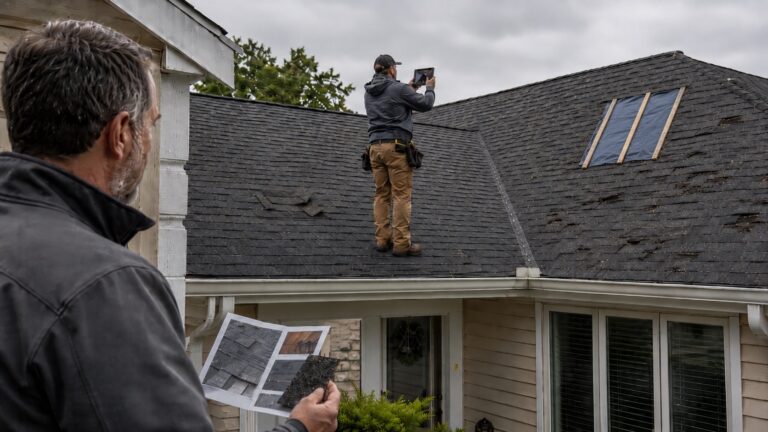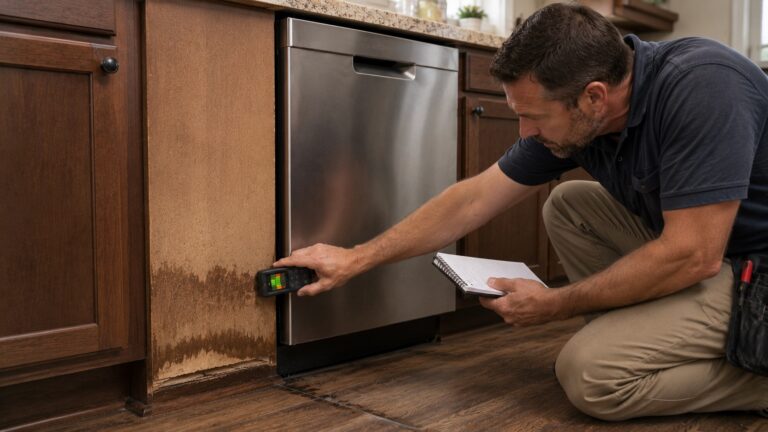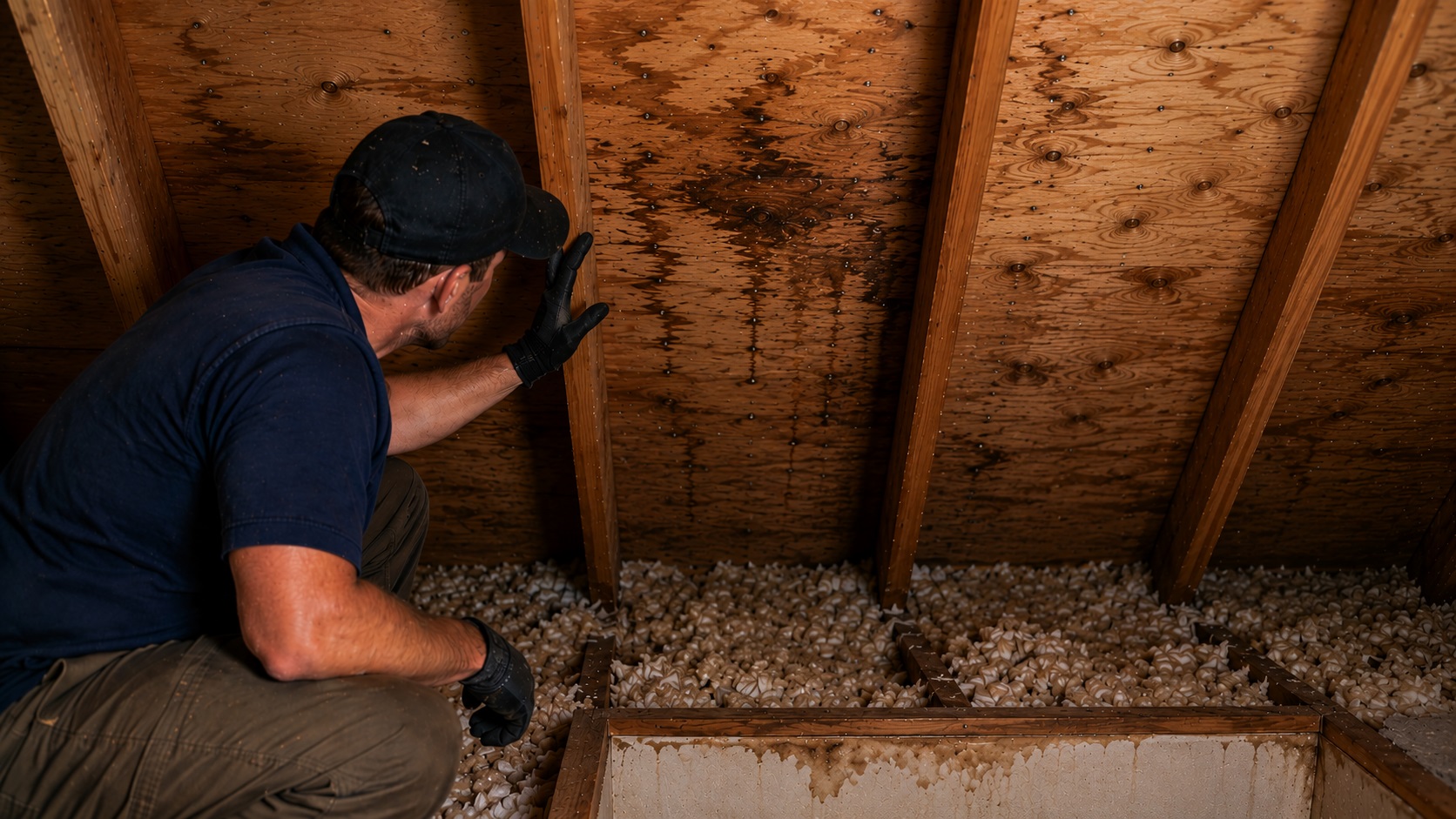
How Much Does Roof Leak Repair Cost?
Roof leak repair usually costs about $400 to $3,000 for many residential repairs. Small leaks caught early may cost $150 to $1,000. Larger leaks involving flashing, vents, valleys, underlayment, decking, attic insulation, or interior water damage can cost $1,000 to $6,000 or more.
The cost depends less on the drip itself and more on where the water is entering, what roofing material is involved, how difficult the area is to access, and whether water has already damaged materials below the roof surface. A missing shingle on an easy-to-reach roof may be a small repair. A leak around a chimney, skylight, roof valley, or old flashing system can be much more expensive because the roofer may need to remove and rebuild part of the roof assembly.
Roof leaks should not be ignored, even when they seem small. Water can travel under shingles, along rafters, through insulation, and into ceiling materials before it becomes visible indoors. If the leak is connected to aging materials, failed flashing, storm damage, or repeated moisture problems, it may also point to broader common roofing material failures rather than a simple patch.
How Much Roof Leak Repair Usually Costs
Most roof leak repairs fall into a broad range because a “roof leak” can mean many different things. Some repairs involve replacing a few shingles or a cracked pipe boot. Others involve rebuilding flashing, repairing a valley, replacing damaged decking, or correcting multiple weak points on an aging roof.
As a general planning range, a small roof leak may cost a few hundred dollars to around $1,000. A moderate leak involving vents, flashing, shingles, or limited underlayment repair may cost roughly $700 to $3,000. A more serious leak with damaged decking, attic insulation, ceiling materials, or multiple leak points can cost $3,000 to $6,000 or more.
| Roof Leak Repair Type | Approximate Cost Range | What It Usually Means |
|---|---|---|
| Small shingle or fastener leak | $150–$750 | Limited repair, small area, easy access |
| Pipe boot or roof vent leak | $250–$1,200 | Replace or reseal boot, vent, flashing, or nearby shingles |
| Flashing leak repair | $300–$1,500+ | Repair or replace flashing at walls, chimneys, valleys, or penetrations |
| Skylight leak repair | $500–$2,500+ | Reseal, flashing repair, curb repair, or skylight replacement |
| Chimney leak repair | $500–$3,000+ | Flashing, counterflashing, masonry, cricket, or crown-related repairs |
| Valley leak repair | $700–$3,500+ | Shingle removal, underlayment repair, valley flashing correction |
| Leak with decking or attic damage | $1,500–$6,000+ | Roof repair plus sheathing, insulation, or hidden moisture issues |
| Emergency tarp or temporary repair | $200–$1,000+ | Temporary protection before permanent repair |
These ranges are approximate. Roof leak repair cost varies by roof height, pitch, material, region, weather conditions, leak location, and how long the leak has been active. A roofer may also change the estimate after opening the area if damaged underlayment, rotten decking, or hidden moisture is discovered.
The fastest cost increases usually come from three things: failed flashing, hidden decking damage, and interior water damage. A leak that only needs a small exterior repair may stay under $1,000, but a leak that requires removing roofing materials, replacing rotten sheathing, drying attic insulation, or repairing ceiling drywall can quickly move into the higher ranges.
Why Roof Leak Repair Costs Vary So Much
This is why a proper repair starts with identifying the leak source. A quick patch may cost less, but it may not solve the problem if the water is entering through failed flashing, a valley, a chimney transition, or deteriorated roofing materials. Understanding how moisture problems start, spread, and return is especially important with roof leaks because the visible drip is often only the final symptom.
The Leak Source
The source of the leak is one of the biggest cost factors. A missing shingle or cracked pipe boot is usually less expensive to repair than a chimney flashing failure, skylight leak, or valley leak. Some leaks are isolated and easy to access. Others require removing surrounding shingles, rebuilding flashing, replacing underlayment, or correcting water flow patterns.
The more complicated the leak path, the more labor and material the repair usually requires. A roofer may need to inspect the roof surface, attic, flashing details, vents, and nearby roofing materials before giving a reliable quote.
The Roofing Material
Roofing material affects both labor and material cost. Asphalt shingles are usually among the less expensive materials to repair because they are common, easier to match, and relatively straightforward to replace. Metal, tile, slate, wood, and specialty roof systems can cost more because they require different tools, materials, and repair methods.
Some materials are also harder to work on without causing additional damage. Tile and slate can crack if walked on incorrectly. Metal roof leaks may involve fasteners, seams, panels, flashing, or seal details. Low-slope roofs may require membrane repair rather than shingle replacement.
Roof Pitch, Height, and Access
A leak on a low, easy-to-access roof usually costs less than the same leak on a steep, high, complex, or difficult roof. Steeper roofs slow the work and may require additional safety equipment. Second-story roofs, dormers, valleys, chimneys, and tight areas can all increase labor time.
Access also matters during bad weather. If the roof is wet, icy, steep, or unsafe, the first visit may only involve temporary protection until conditions are safe.
Age and Condition of the Roof
An older roof can make a leak repair more expensive because surrounding materials may be brittle, curled, cracked, soft, or difficult to tie into. A small repair is easier when the surrounding shingles, flashing, underlayment, and decking are still in good condition.
If the roof is near the end of its service life, a roofer may recommend a broader repair or replacement discussion instead of another patch. This does not mean every leak requires a new roof, but repeated leaks on an aging roof should be evaluated carefully.
Hidden Moisture Damage
Homeowners often first notice a roof leak from indoor symptoms such as ceiling stains, peeling paint, damp attic insulation, or musty odor. If you are still trying to confirm whether a roof leak is present, review the signs of roof leaks inside the house before assuming the visible stain shows the entire affected area.
Emergency Timing
Emergency roof leak repairs can cost more, especially during storms, after-hours calls, or widespread weather events. If the roof is unsafe to repair immediately, the first visit may only include tarping or temporary water control.
Once the weather clears, the roof should still be inspected and repaired properly so the leak does not return during the next storm.
Roof Leak Repair Cost by Leak Source
The source of the roof leak has a major effect on the repair cost. Some leaks are small, isolated, and easy to fix. Others involve roof transitions, flashing systems, valleys, chimneys, skylights, or hidden decking damage. A good estimate should identify where the water is entering, not just where it appears inside the home.
Missing or Damaged Shingles
Repairing a small area of missing, cracked, or lifted shingles may cost about $150 to $750 when the roof is easy to access and the surrounding materials are still in good condition. This is often one of the lower-cost roof leak repairs.
The cost rises if the missing shingles exposed the underlayment for a long time, if nearby shingles are brittle, or if water has reached the decking underneath. A simple shingle replacement is only reliable when the materials around the repair still have enough life left to seal properly.
Pipe Boot Leaks
Pipe boot leaks commonly cost about $250 to $1,200 depending on the roof height, boot condition, surrounding shingles, and whether the boot needs to be replaced or only resealed. Rubber pipe boots can crack, split, or loosen over time from sun exposure and temperature changes.
Repeated caulking is usually not a long-term fix when the boot itself is deteriorated. If the rubber is cracked or pulled away from the pipe, replacing the boot or installing a proper repair detail is usually more reliable than adding more sealant.
Roof Vent Leaks
Roof vent leak repairs may cost about $250 to $1,500 depending on the type of vent and the source of the leak. The problem may be cracked vent housing, failed flashing, loose fasteners, lifted shingles, deteriorated sealant, or water entering around the vent base.
Vent leaks can be deceptive because water may travel along the underside of the roof deck before showing up inside. The repair should address the vent assembly and the surrounding roofing materials, not just the visible interior stain.
Flashing Leaks
Flashing leak repairs often cost about $300 to $1,500 or more. The price depends on where the flashing is located and how much surrounding material must be removed to repair it. Flashing is used where the roof meets walls, chimneys, valleys, dormers, vents, skylights, and other transitions.
Flashing leaks often cost more than simple shingle repairs because the roofer may need to rebuild the transition instead of patching the surface. Failed flashing can let water enter behind the roofing material, which means the leak path may not be visible from the ground. For a deeper explanation of this failure pattern, see why roof flashing failures cause leaks.
Chimney Leaks
Chimney leak repairs may cost about $500 to $3,000 or more. The cost depends on whether the issue is step flashing, counterflashing, chimney masonry, chimney crown damage, missing cricket, cracked sealant, or water entering where the chimney meets the roof.
Chimney leaks can be more expensive because they may involve both roofing and masonry details. A roofer may repair flashing, but damaged mortar, cracked crowns, or masonry absorption may require additional work. If the chimney is large or located in a difficult roof area, labor costs may increase.
Skylight Leaks
Skylight leak repairs often cost about $500 to $2,500 or more. The repair may involve resealing, replacing flashing, correcting the curb, repairing surrounding shingles, or replacing the skylight if the unit itself has failed.
Not every skylight leak is caused by the skylight glass. Water may enter through failed flashing, poor installation, condensation, curb problems, or deteriorated roofing around the unit. The cost depends on whether the skylight can be repaired or must be replaced.
Valley Leaks
Roof valley leak repairs may cost about $700 to $3,500 or more because valleys handle a large volume of water. A valley leak may require removing shingles, replacing underlayment, correcting flashing, and restoring the water path so rain drains properly.
Valley leaks can be more serious than they look because water naturally concentrates in these areas. If the underlayment is damaged or the valley was installed poorly, patching only the visible spot may not stop the leak.
Decking or Sheathing Damage
If the leak has damaged roof decking or sheathing, the repair can cost $1,500 to $6,000 or more depending on how much material must be removed and replaced. The roofer may need to take off shingles and underlayment to access the damaged wood.
Decking damage raises the cost because the repair is no longer just on the surface. Soft, rotten, swollen, or delaminated roof sheathing must be replaced before the roofing materials above it can perform properly.
Roof Leak Repair Cost by Roofing Material
Roofing material affects leak repair cost because materials differ in price, labor, installation method, fragility, and availability. The same leak source may cost more or less depending on whether the roof is asphalt shingle, metal, tile, slate, wood, or low-slope membrane.
Asphalt Shingle Roof Leak Repair
Asphalt shingle roof leaks are often among the less expensive to repair because shingles are widely available and many roofers work with them regularly. Small shingle, pipe boot, or flashing repairs may be relatively affordable when the roof is accessible and the surrounding shingles are not brittle.
The cost rises when the shingles are old, curling, cracking, or difficult to match. A repair also becomes harder if the leak has damaged underlayment or decking below the shingles.
Metal Roof Leak Repair
Metal roof leak repair can vary widely depending on the system. Leaks may occur at fasteners, seams, penetrations, flashing, panel laps, or transitions. Some repairs are simple fastener or seal replacement, while others require specialized work on panels or flashing details.
Metal roofs require the right repair method because incorrect sealants, fasteners, or patching can create new leak points. The cost is often higher when the roof has complex seams, difficult access, or a specialized panel system.
Tile Roof Leak Repair
Tile roof leak repair can cost more because tiles are fragile and may need to be carefully removed and replaced to access the underlayment below. The visible tile may not be the actual waterproof layer. Often, the underlayment and flashing details beneath the tile determine whether the roof leaks.
The repair cost rises if matching tiles are hard to find, if several tiles break during access, or if the underlayment has failed over a larger area.
Slate or Specialty Roof Leak Repair
Slate and specialty roofs are usually more expensive to repair because the materials are costly, fragile, and require specialized skill. A small leak may still be expensive if the roofer must carefully remove and reinstall surrounding pieces without damaging them.
These roofs should not be treated like standard asphalt shingle roofs. Improper repair can cause more damage and make future leaks more likely.
Flat or Low-Slope Roof Leak Repair
Flat and low-slope roof leaks are often repaired differently from steep-slope shingle leaks. The problem may involve membrane seams, punctures, flashing, drains, ponding water, or edge details. Repair cost depends on the roofing system and how much membrane or flashing must be corrected.
Low-slope leaks can be difficult to trace because water may travel under membrane layers before appearing indoors. If ponding water or drainage failure is part of the problem, the repair may need more than a surface patch.
What Is Usually Included in a Roof Leak Repair Quote?
A roof leak repair quote should explain what the roofer inspected, where the leak is likely entering, what materials will be replaced or repaired, and what is excluded. A quote that simply says “fix leak” is not detailed enough for a homeowner to compare with other estimates.
Leak Source Identification
A good quote should identify the likely source of the leak. This may include a damaged shingle, cracked pipe boot, failed flashing, chimney transition, skylight detail, valley problem, roof vent, nail pop, or damaged underlayment.
If the source is not obvious, the roofer may need attic access, water testing, or additional investigation. For a fuller inspection process, see how to detect hidden roof leaks. Here, the important cost point is simple: the harder the leak is to trace, the more the estimate may depend on investigation time.
Materials and Labor
The quote should list the roofing materials being repaired or replaced. This may include shingles, pipe boots, vent flashing, step flashing, counterflashing, underlayment, nails, sealant, decking, or other roof components.
Labor is often the largest part of a roof leak repair. Even a small material replacement can require careful removal, access, safety setup, weather timing, and tie-in work so the repair sheds water correctly.
Flashing, Seal, or Penetration Repairs
If the leak is around a transition or penetration, the quote should explain whether the contractor is resealing, replacing flashing, rebuilding the detail, or only applying a temporary patch. These are not the same level of repair.
For example, caulking a flashing gap may cost less than rebuilding step flashing, but it may not last if the flashing was installed incorrectly or has failed under the shingles. A clear quote should tell the homeowner whether the repair is temporary, limited, or intended as a permanent correction.
Cleanup and Debris Removal
Most roof leak repair quotes include basic cleanup of roofing debris from the work area. Larger repairs may include disposal of shingles, damaged underlayment, rotten sheathing, old flashing, or other removed materials.
If the repair involves interior debris, wet insulation, ceiling drywall, or mold-contaminated material, that may be separate from the roofing quote. Exterior roofers typically repair the roof source, not necessarily the entire water-damage path inside the home.
Repair Warranty or Workmanship Guarantee
Some roof leak repairs include a workmanship warranty or limited repair guarantee. The terms may vary depending on the age of the roof, the type of repair, and whether the roofer is repairing one leak point or a broader failing area.
A warranty on a small repair may not cover unrelated leaks, future storm damage, surrounding old shingles, or interior water damage. Homeowners should ask exactly what the repair warranty covers and what it excludes.
What May Cost Extra During Roof Leak Repair?
A roof leak repair quote may only include the exterior roof work needed to stop water entry. It may not include emergency tarping, attic drying, insulation replacement, ceiling repair, mold remediation, or water damage restoration unless those items are clearly listed. This is one of the biggest reasons homeowners are surprised by the total cost after a roof leak.
Emergency Tarping or Temporary Protection
If water is actively entering during a storm, the first service call may be temporary. A roofer may install a tarp, seal a small area, or create a short-term water-control measure until the weather is safe enough for a permanent repair.
Emergency tarping may cost a few hundred dollars to $1,000 or more depending on roof height, slope, access, storm conditions, and the size of the area being covered. This cost may be separate from the final roof repair.
Roof Inspection or Leak Investigation
Some roofers include a basic inspection with the estimate. Others may charge for a detailed leak investigation, especially if the source is hidden, the leak is intermittent, or water testing is needed.
A roof leak can be difficult to trace because water may enter at one location and appear inside the home somewhere else. Paying for a careful inspection can prevent wasted money on patching the wrong area.
Decking or Sheathing Replacement
Damaged roof decking or sheathing can add significant cost. If the wood below the shingles is soft, rotten, swollen, delaminated, or weakened, the roofer may need to remove roofing materials, replace the damaged wood, install underlayment, and rebuild the roof surface above it.
This often cannot be fully priced until the damaged area is opened. A quote may start as a leak repair and increase when the roofer discovers that water has been reaching the roof deck for a long time.
Attic Insulation Drying or Replacement
Roof leaks often soak attic insulation before the homeowner sees water on the ceiling. Wet insulation may lose performance, hold moisture against framing, create odor, or contribute to mold risk if it stays damp.
Drying or replacing attic insulation may be separate from the roof repair. A roofer may stop the leak, but another contractor may be needed to remove wet insulation, dry the attic area, or evaluate mold concerns.
Ceiling Drywall, Paint, and Interior Repair
Interior ceiling damage is often not included in a roof leak repair quote. A roofer usually repairs the exterior source of the leak. Ceiling drywall, texture, paint, trim, lighting damage, and insulation repair may be handled by a separate restoration or drywall contractor.
This matters because a small roof repair can still lead to a larger total project if water has damaged finished materials inside the home. If you see stains, sagging drywall, peeling paint, or musty odor after a leak, compare those symptoms with the signs of water damage from roof leaks.
Mold Remediation
Mold remediation may cost extra if the roof leak has been active long enough to support mold growth in the attic, ceiling cavity, insulation, or wall materials. Mold is more likely when the leak is slow, hidden, recurring, or trapped inside materials that do not dry quickly.
Roof leak repair stops the water source, but it does not automatically remove mold that has already formed. Mold remediation should be treated as a separate scope unless the contractor specifically includes it.
Water Damage Restoration
If the roof leak caused soaked insulation, wet drywall, damaged flooring, or widespread interior moisture, water damage restoration may be needed. This can include drying, demolition, cleaning, moisture monitoring, and rebuilding.
Water damage restoration cost should be separated from the roof repair cost so the homeowner understands what each contractor is fixing. The roof repair stops the entry point. Restoration addresses the damage that happened after water entered.
Emergency Roof Leak Repair vs Permanent Repair
Emergency roof leak repair controls active water entry. Permanent repair corrects the failed roof detail so the leak does not return. These services may be billed separately.
What Emergency Repair Usually Does
Emergency repair may include tarping, temporary sealing, covering missing shingles, or protecting an exposed area until weather conditions improve. This can reduce immediate water entry and limit additional damage.
Why Permanent Repair May Cost More
Permanent repair may require replacing shingles, rebuilding flashing, correcting a roof penetration, replacing underlayment, repairing decking, or addressing the roof feature that caused the leak. This work takes more time and may need dry weather.
A permanent repair costs more because it solves the water entry path instead of only covering it. If the roofer installs a tarp first, ask whether the cost of the tarp is separate from the final repair or credited toward the permanent work.
When Roof Leak Repair Becomes a Replacement Discussion
Many roof leaks can be repaired, especially when they are localized and caught early. A leak around a pipe boot, one flashing detail, a small shingle area, or a vent does not automatically mean the entire roof needs replacement.
However, leak repair becomes a replacement discussion when the roof is old, brittle, repeatedly leaking, storm-damaged, or failing in several areas. At that point, another patch may only delay a larger repair while water keeps finding new weak points.
Repeated Leaks
If the roof has leaked more than once in different areas, the problem may be broader than one bad shingle or one cracked seal. Repeated leaks can point to aging materials, poor installation, widespread flashing problems, ventilation-related deterioration, or storm damage.
In this situation, a repair quote should be weighed against the likelihood of more leaks soon. The cost of multiple repairs can add up quickly if the roof is near the end of its useful life.
Widespread Shingle Deterioration
If shingles are curling, cracking, losing granules, lifting, or breaking easily, a small repair may not hold well. The roofer may have difficulty tying new shingles into old brittle materials without damaging surrounding areas.
This does not always require immediate replacement, but it changes the repair decision. A leak repair on a roof with widespread deterioration may be temporary by nature.
Soft or Rotten Decking
Soft decking is a major cost signal. If water has weakened the roof sheathing, the repair must address the damaged wood before new roofing materials can perform correctly.
Small decking repairs may be manageable, but widespread soft decking can make the project much larger. If the roof structure has been wet for a long time, the homeowner may need a more detailed repair plan.
Multiple Failed Flashing Areas
Flashing failures at chimneys, walls, skylights, valleys, and penetrations can become expensive when several areas are failing at once. One flashing repair may be reasonable. Multiple flashing failures on an older roof may suggest broader installation or aging problems.
If another repair may only delay the same problem, compare the estimate with the guide on whether to repair or replace roof leak damage.
Roof Leak Repair Quote Red Flags
A roof leak repair quote should explain the suspected leak source, the repair area, the materials being replaced, and whether the work is temporary or permanent. Be cautious with quotes that only say “seal leak,” “patch roof,” or “repair as needed” without identifying the flashing, vent, shingle area, valley, chimney, skylight, or roof transition involved.
A very low quote may be reasonable for a small exposed problem, but it may also mean the contractor is only sealing the surface. A stronger quote explains what will be removed, what will be replaced, how the repair will tie into surrounding roofing materials, and what interior damage is not included.
How to Compare Roof Leak Repair Quotes
Roof leak repair quotes should be compared by scope, not only by price. A low quote may cover a temporary patch, while a higher quote may include removing shingles, replacing flashing, repairing underlayment, and checking for damaged decking.
Confirm the Leak Source
The quote should explain where the roofer believes water is entering. If the leak source is not identified, the repair may be guesswork. Ask whether the roofer inspected the roof surface, attic area, flashing details, vents, valleys, and nearby materials.
Ask Whether the Repair Is Temporary or Permanent
Some repairs are temporary by design. A tarp, emergency seal, or short-term patch can protect the home until a permanent repair is possible. The quote should clearly state whether the work is temporary protection or a lasting repair.
Compare Materials Being Replaced
Ask whether the repair includes shingles, underlayment, flashing, pipe boots, vent components, decking, nails, sealants, or other materials. A quote that only adds sealant is not the same as a quote that replaces failed flashing or damaged roof components.
Ask What Interior Damage Is Excluded
Most roofing quotes do not include interior water damage unless the contractor specifically offers restoration services. Ask whether ceiling drywall, attic insulation, mold cleanup, paint, trim, or flooring damage is excluded.
If the leak has already affected the interior, review water damage restoration cost separately so the total project budget is realistic.
Evaluate the Roofer’s Explanation
A good roofer should be able to explain why the leak happened, what will be repaired, how the repair sheds water, and what problems may remain outside the repair area. If the explanation is vague, the estimate may not be reliable.
For larger or recurring leaks, review how to choose a roofing contractor for leak repairs before signing a contract. The lowest price is not always the best choice if the repair does not address the actual water path.
How to Reduce Roof Leak Repair Costs Without Ignoring the Problem
The best way to reduce roof leak repair cost is to act early, identify the real leak source, and avoid paying for temporary patches that do not solve the water path. A small leak is usually cheaper to repair before it reaches decking, attic insulation, ceiling drywall, framing, or mold-prone materials.
Do Not Wait for the Leak to Get Worse
A roof leak may seem minor when it only creates a small ceiling stain, but the visible stain is often the last point in the water path. Water may already be moving through underlayment, roof decking, insulation, or ceiling materials before it appears indoors.
Waiting can turn a small roof repair into a larger moisture repair. Once insulation, sheathing, rafters, or drywall stay wet, the project may include drying, demolition, or mold remediation in addition to the roof repair.
Use Temporary Protection Only as a Short-Term Step
A tarp or temporary seal can reduce damage during a storm, but the leak source still needs to be corrected once conditions allow.
Keep Gutters and Roof Drainage Clear
Clogged gutters, backed-up valleys, blocked roof drainage, or debris around roof transitions can make water collect where it should not. Keeping drainage paths clear can reduce the risk of leaks and help small problems show up before they become major damage.
This does not mean gutters cause every roof leak. It means water should be moved off the roof and away from vulnerable roof edges, valleys, walls, and penetrations as efficiently as possible.
Repair Failed Flashing Properly
Flashing leaks are often not solved by adding more caulk. If flashing is loose, missing, rusted, poorly installed, or buried incorrectly under roofing materials, the repair may need to rebuild the detail so water sheds correctly.
A proper flashing repair may cost more than a quick sealant patch, but it is often cheaper than paying for repeated leaks, ceiling damage, and hidden moisture after every storm.
Address Interior Moisture Quickly
After the roof source is repaired, any wet interior materials should be dried or evaluated. Wet insulation, ceiling drywall, attic wood, and wall cavities can hold moisture after the roof stops leaking.
Stopping the roof leak does not automatically dry the materials below it. Sagging drywall, soaked insulation, or lingering musty odor should be treated as a separate interior moisture problem.
Can Insurance Help Pay for Roof Leak Repair?
Insurance coverage depends on the cause of the leak and the policy. Sudden storm damage, wind damage, falling debris, or accidental damage may be treated differently from age-related wear, poor maintenance, long-term deterioration, or repeated leaks that were not repaired.
Homeowners should document the leak, take photos, save repair invoices, and contact the insurance company before assuming the roof repair or interior water damage will be covered. Some policies may cover resulting interior damage but not the roof repair itself if the cause is considered wear and tear.
Because coverage rules vary, this article should not be used as an insurance decision. It should help the homeowner understand the repair cost and prepare better documentation before speaking with the insurer.
When to Hire a Roofing Contractor for a Leak
A roofing contractor is usually worth hiring when the leak is active, the source is not obvious, the roof is steep or high, flashing is involved, water is entering near a chimney or skylight, decking may be damaged, or the leak has returned after a previous repair.
Professional repair is also important when the leak affects attic insulation, electrical areas, ceiling drywall, or multiple rooms. If the leak is connected to broader moisture problems, review when to hire a roofing contractor for moisture problems before relying on another short-term patch.
Key Takeaways
- Roof leak repair usually costs about $400 to $3,000 for many residential repairs.
- Small leaks caught early may cost $150 to $1,000, while larger leaks with decking, insulation, flashing, or interior damage can cost $1,000 to $6,000 or more.
- The biggest cost factors are leak source, roof material, roof pitch, roof height, access difficulty, roof age, hidden moisture, and emergency timing.
- Flashing, chimney, skylight, valley, and decking repairs usually cost more than simple shingle or pipe boot repairs.
- Roof leak repair usually fixes the exterior water entry point, but ceiling drywall, insulation, mold, and water damage restoration may cost extra.
- Repeated leaks, widespread shingle deterioration, multiple flashing failures, or soft decking may shift the decision from repair toward replacement.
Frequently Asked Questions About Roof Leak Repair Cost
What is the average cost to repair a roof leak?
Many roof leak repairs cost about $400 to $3,000. Small leaks may cost a few hundred dollars if they are caught early and easy to access. Larger leaks involving flashing, valleys, chimneys, skylights, decking, or interior water damage can cost several thousand dollars.
How much does emergency roof leak repair cost?
Emergency roof leak repair may cost about $200 to $1,000 or more for temporary tarping, emergency sealing, or short-term protection. The permanent repair may cost extra after the roof can be inspected and repaired safely.
Is a small roof leak expensive to fix?
A roof leak becomes more expensive when water reaches decking, insulation, framing, ceiling drywall, or electrical areas. Even if the exterior repair is small, interior drying and material replacement can add hundreds or thousands of dollars if the leak stays active through multiple storms.
Does roof leak repair include ceiling damage?
Usually not unless the contractor specifically includes interior repair. A roofer typically repairs the exterior roof source. Ceiling drywall, paint, insulation, mold remediation, and water damage restoration may be separate costs.
Why did my roof leak repair quote increase after inspection?
A quote may increase if the roofer discovers damaged decking, failed underlayment, rotten wood, multiple leak points, old brittle shingles, or interior moisture damage. Some problems are not visible until shingles, flashing, or attic materials are inspected more closely.
Is it cheaper to repair or replace a leaking roof?
Repair is usually cheaper when the leak is localized and the roof is otherwise in good condition. Replacement may be more cost-effective when the roof is old, repeatedly leaking, storm-damaged, or failing in multiple areas. The right decision depends on the roof’s age, condition, and the likelihood of future leaks.
Can I repair a roof leak myself?
Small temporary measures may be possible from the ground or inside the attic, but roof work can be dangerous and a visible leak does not always reveal the true entry point. DIY caulking or patching may fail if the problem is flashing, underlayment, decking, or roof-system failure. Steep roofs, active leaks, chimneys, skylights, and valleys are usually better handled by a roofing professional.
Will insurance cover roof leak repair?
Insurance coverage depends on the cause of the leak and the policy. Sudden storm damage may be handled differently from normal wear, old roofing materials, poor maintenance, or long-term leaks. Document the damage, take photos, and contact the insurer before assuming the repair is covered.
Conclusion
Roof leak repair cost depends on the leak source, roof material, access difficulty, and whether water has damaged materials below the roof surface. Before approving a quote, ask where the water is entering, what materials will be repaired or replaced, whether the work is temporary or permanent, and what interior damage is excluded.