Signs Recurring Mold Indicates Hidden Damage Behind Walls, Floors, or Ceilings
Recurring mold is not always a sign of major hidden damage, but it should never be ignored when it keeps returning in the same area. A small patch of surface mold in a humid bathroom may be caused by condensation, poor airflow, or dust on the surface. Mold that comes back after cleaning, drying, painting, or repair may point to a deeper moisture problem behind the visible surface.
The difference is the pattern. Mold that returns once after a humid week is different from mold that keeps appearing along the same baseboard, around the same ceiling patch, behind the same cabinet, or near the same window trim. Repeated mold in one location often means the material is staying damp, the moisture source was not corrected, or the damaged area extends beyond what you can see.
Hidden damage can involve damp drywall, wet insulation, swollen trim, damaged cabinet material, subfloor moisture, ceiling material deterioration, or wood framing that has been repeatedly exposed to moisture. The visible mold may be only the first clue. The more it appears with odor, staining, peeling paint, swelling, softness, or surface failure, the more carefully the area should be inspected. When those symptoms involve sagging, soft flooring, unstable trim, or weakened framing, they may also overlap with broader signs of structural moisture problems.
This article focuses on the warning signs that recurring mold may indicate hidden damage. For the broader reason these problems repeat throughout a home, see why moisture problems keep returning. The goal here is to help you tell when mold is likely just a surface issue and when it may be pointing to concealed water damage.
When Recurring Mold Is More Than a Surface Problem
Mold becomes more concerning when it behaves like a symptom instead of a one-time surface growth. Surface mold usually appears where moisture collects on the face of a material. Hidden damage is more likely when mold returns because moisture is feeding the area from behind, below, or above the surface.
For example, mold on a bathroom wall may be surface-level if it forms on painted drywall after repeated showers and improves when ventilation is corrected. But mold that returns in the exact same lower wall area after cleaning may indicate damp drywall behind the paint, moisture behind the baseboard, or water entering from a nearby fixture.
The same logic applies to ceilings, floors, cabinets, and window areas. If the mold returns after the visible surface is cleaned, the moisture may be inside the wall cavity, under the flooring, above the ceiling, behind trim, or inside porous material that was never fully dried or removed.
Recurring mold is especially important after a previous leak, flood, roof problem, plumbing repair, appliance leak, bathroom overflow, window leak, or water-damage repair. In those cases, the home has already shown that moisture reached the area. If mold returns afterward, it may mean the material never fully recovered.
Surface mold tends to follow room conditions
Surface mold usually follows humidity, condensation, poor airflow, or frequent wetting on exposed surfaces. It may appear on bathroom walls, window corners, closet walls, painted ceilings, or furniture backs where air does not move well. When the moisture condition improves, the mold is less likely to return quickly.
Surface mold is usually less concerning when the material underneath is firm, dry, odor-free, and visually stable. If there is no bubbling paint, soft drywall, swollen trim, spreading stain, or repeated musty odor, the mold may be related to the surface environment rather than hidden damage.
Hidden damage tends to follow material changes
Hidden damage is more likely when mold recurrence appears with changes in the material itself. Soft drywall, peeling paint, swollen baseboards, stained trim, crumbling cabinet material, lifted flooring, musty odor, or ceiling sagging all suggest that moisture may be affecting more than the surface.
In these situations, cleaning the visible mold may only remove the part of the problem you can see. If the material behind it remains damp, mold can return again. A whole-home approach to finding and preventing moisture problems throughout the home helps connect visible mold symptoms to the systems that may be feeding them.
Mold Returning in the Same Spot
Mold that returns in the same spot is one of the strongest clues that the area has an ongoing moisture condition. The location matters because repeated growth in the exact same area usually means that spot is staying damp, collecting condensation, receiving water, or drying more slowly than surrounding areas.
This does not mean every same-location mold patch proves hidden damage. A cold bathroom corner or poorly ventilated closet may develop surface mold repeatedly because of condensation. But when mold returns in the same spot after cleaning and appears with staining, odor, softness, swelling, or previous water damage, hidden moisture becomes much more likely.
Same-location recurrence often points to a moisture path. The source may be a slow plumbing leak, exterior wall leak, roof leak, window leak, damp insulation, floor-wall moisture, or moisture trapped behind a previous repair. In many cases, hidden moisture causes recurring mold because the visible surface is only the place where the moisture finally shows itself.
Mold along seams, corners, and trim lines
Mold that returns along seams, corners, and trim lines deserves attention because these areas often hide moisture movement. Corners can be colder and less ventilated. Trim lines can trap moisture. Seams and patch edges can reveal moisture moving from one material to another.
For example, mold that keeps returning where a wall meets the floor may suggest moisture behind the baseboard or under the flooring. Mold around a ceiling patch may suggest moisture above the drywall. Mold along a window trim edge may suggest water entering around the frame or flashing. Mold at a drywall seam may suggest moisture inside the wall cavity or a repair that did not fully address the surrounding material.
Mold returning around a previous repair
Recurring mold around a repaired area is often more concerning than mold on an untouched surface. If mold returns around fresh paint, a drywall patch, new caulk, replaced trim, or a repaired cabinet, the repair may have covered damp material or failed to correct the original source.
This is different from ordinary surface mold because the area was already known to have a problem. If the same location fails again, the first repair may have restored appearance without correcting moisture, drying, or hidden material damage. That repair-related pattern is covered more directly in how improper repairs can lead to mold return.
Mold that returns after specific triggers
Recurring mold is easier to understand when you connect it to a trigger. Mold that returns after rain may point to roof, siding, window, basement, or exterior wall moisture. Mold that returns after showers may point to bathroom ventilation, shower enclosure leaks, or wall moisture. Mold that returns after appliance use may point to a dishwasher, washing machine, refrigerator water line, water heater, drain, or supply-line issue.
The trigger does not always reveal the exact source, but it helps narrow the pattern. A mold spot that changes after rain is different from one that changes after a shower. A baseboard mold line that worsens after appliance cycles is different from a closet wall that gets moldy during humid weather. The more specific the trigger, the more likely the mold is connected to a repeat moisture condition rather than a random surface problem.
Musty Odor That Comes Back After Cleaning
A musty odor that returns after cleaning is one of the most important warning signs of possible hidden damage. Mold odor does not always mean there is a large visible colony, but it often means moisture is still affecting a material somewhere nearby. If the visible mold is gone but the smell returns, the source may be behind the surface.
This is especially concerning when the odor comes back after the room has been closed for several hours, after rain, after showers, after appliance use, or during humid weather. Those conditions can reactivate moisture patterns that are not obvious when the room is dry, ventilated, or recently cleaned.
For example, a bathroom may smell clean after the wall is wiped down, but the musty smell may return the next morning if moisture remains behind baseboards or inside a wall cavity. A cabinet may look clean after the visible mold is removed, but the odor may return if the cabinet base, toe kick, or wall behind the cabinet is still damp. A repaired ceiling may look normal but smell musty after rain if insulation or framing above it is wet.
Odor alone does not show exactly where the hidden damage is located. It should be treated as a clue that needs to be compared with other signs, such as staining, softness, swelling, recurring mold patterns, or known water sources nearby.
Why odor can remain when the surface looks clean
Visible cleaning only addresses the surface you can reach. If moisture remains behind drywall, under flooring, inside insulation, behind trim, or inside porous cabinet material, the area may still produce odor even when the visible surface looks clean.
This pattern often means the visible mold was only the surface expression of a deeper moisture problem.
When musty odor is more concerning
A musty smell is more concerning when it appears with other hidden-damage clues. These include recurring stains, soft drywall, swollen trim, peeling paint, warped flooring, damp cabinet material, or mold that keeps returning in the same location.
Odor is also more concerning when it follows a water event. If a room begins smelling musty after a roof leak, plumbing leak, appliance leak, basement seepage, window leak, or water-damage repair, hidden damp material may still be present. In that situation, the odor should not be dismissed just because the visible surface has been cleaned.
Soft, Swollen, or Crumbling Materials
Material damage is one of the clearest differences between surface mold and possible hidden damage. Surface mold may grow on dust, paint, or condensation-prone areas without changing the material underneath. Hidden damage is more likely when the material itself becomes soft, swollen, crumbly, distorted, or unstable.
These changes matter because mold is often only one symptom of a moisture problem. Water can weaken drywall, swell trim, soften cabinet materials, damage subfloors, loosen adhesives, and affect ceiling materials. If mold returns along with material breakdown, the issue is no longer just a surface cleaning problem.
Soft drywall
Drywall that feels soft, spongy, crumbly, or uneven near recurring mold should be taken seriously. Drywall can look mostly normal on the front while the paper facing, gypsum core, or back side has been affected by moisture. If the area dents easily, flakes apart, bulges, or feels weaker than nearby drywall, hidden water damage may be present.
Soft drywall is especially concerning near showers, sinks, exterior walls, window frames, ceilings below plumbing, and lower wall areas near baseboards. These locations often hide moisture behind the visible surface.
Swollen trim or baseboards
Baseboards and trim can swell when moisture reaches the back side, bottom edge, or wall cavity behind them. The front surface may be painted and clean, but the edge against the wall or floor may stay damp. If mold returns along the same trim line and the trim looks swollen, separated, stained, or wavy, hidden moisture may be present.
This is common after minor flooding, appliance leaks, bathroom leaks, window leaks, and wet floor events because the covered joint behind the trim can dry more slowly than exposed surfaces.
Crumbling cabinet or ceiling materials
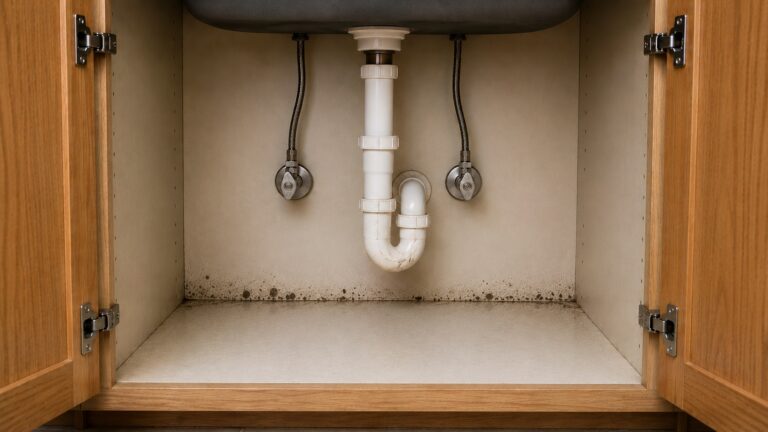
Cabinet bottoms, toe kicks, ceiling tiles, and damaged ceiling drywall can hold moisture and lose strength over time. Particleboard and other engineered wood products may swell, crumble, or split after repeated wetting. Ceiling materials may stain, sag, or soften if moisture remains above them.
If mold returns on or near these materials, the problem may extend deeper than the surface. Cleaning visible mold from a weakened material does not restore its structure or remove moisture trapped inside it.
Stains, Peeling Paint, and Bubbling Surfaces
Recurring stains and surface failure often mean moisture is still moving through the material. Paint may peel, bubble, darken, or blister when moisture reaches the back side of the coating or pushes through the surface. Stains may return when water carries discoloration from inside the material or from the cavity behind it.
This is why a stain that comes back after painting deserves attention. The problem may not be the paint. The problem may be moisture moving from behind the painted surface. If mold returns near that same stain, hidden damage becomes more likely.
Stains that return around repair edges
Staining around the edge of a repair is especially important. A drywall patch may look clean in the center, but moisture can show up around the perimeter if the surrounding material is still damp. A ceiling patch may stain around the edges if water is still entering from above. A painted wall repair may discolor near the seam if the hidden material behind it was not fully dried.
These edge patterns suggest that the visible repair did not include the full affected area. The center may have been replaced or painted, while the adjacent material remained damp or damaged.
Paint that bubbles or peels repeatedly
Bubbling paint can appear when moisture is trapped behind the coating. Peeling paint can appear when the surface loses adhesion because of dampness, contamination, or repeated wetting. If the same area bubbles or peels again after repainting, the surface may still be receiving moisture.
This is often seen near showers, windows, exterior walls, basement walls, ceilings below leaks, and lower wall areas. When it appears with recurring mold, it should be treated as a moisture symptom rather than only a paint problem.
Surface failure after a previous repair
If mold returns together with bubbling paint, failed caulk, stained patch edges, or swelling trim after a repair, the area may still be affected by moisture. These are also common signs of moisture returning after repairs, especially when they appear in the same place that was previously cleaned, dried, patched, or painted.
Repeated surface failure is one of the easiest ways to tell that the repair may not have solved the underlying condition. The surface is reacting because the material below it is still changing.
Mold Around Baseboards, Trim, or Floor Edges
Mold that keeps returning around baseboards, trim, or floor edges often points to moisture hiding in a covered joint. These areas are easy to underestimate because the visible mold may look like a thin surface line. Behind that line, moisture may be trapped where the wall meets the floor, where trim covers drywall, or where flooring meets the wall.
Baseboards and trim reduce airflow along the lower wall. If water reached that area during a leak, flood, bathroom overflow, appliance problem, or window leak, the covered edge may stay damp longer than the open wall surface. This can allow mold to return even after the exposed face has been cleaned.
Recurring mold along trim is more concerning when the trim is swollen, separated, stained, soft, or warped. It is also more concerning when the floor next to it feels soft, smells musty, or changes shape. Those signs suggest the problem may involve the lower wall, the back side of the trim, the subfloor edge, or moisture under the finished flooring.
Why lower wall mold often returns
Lower walls are vulnerable because gravity pulls water down, and many leaks eventually collect near the floor. A small plumbing leak, appliance leak, window leak, or wall cavity moisture problem may first become visible as mold or staining near the baseboard. If only the visible surface is cleaned, the moisture path may remain hidden behind the trim.
This is common after dishwasher leaks, washing machine leaks, refrigerator water line leaks, toilet leaks, sink leaks, and minor flooding. The floor may appear dry after cleanup, but the covered wall edge may still contain damp material.
When baseboard mold suggests hidden damage
Baseboard mold is more likely to suggest hidden damage when it returns in the same stretch of wall, appears after a known leak, or comes with material changes. Watch for trim that pulls away from the wall, paint that cracks along the top edge, dark staining at the bottom, soft drywall above the trim, or flooring that lifts near the wall.
These patterns do not automatically prove structural damage, but recurring mold with swelling, odor, or softness usually means moisture is affecting more than the exposed paint.
Flooring or Ceiling Changes Near Recurring Mold
Flooring and ceiling changes near recurring mold deserve careful attention because they can indicate moisture above or below the visible surface. Floors and ceilings often hide layers. A finished floor may cover underlayment and subflooring. A ceiling may cover insulation, framing, plumbing, HVAC components, or roof-related moisture.
When mold returns near these areas, look for changes in shape, strength, texture, and odor. Hidden damage is more likely when the surface does not just discolor but begins to move, soften, sag, lift, or separate.
Flooring warning signs
Recurring mold near flooring is more concerning when the floor feels soft, spongy, cupped, lifted, or uneven. These changes may suggest moisture under the finished floor, damp underlayment, adhesive failure, or subfloor damage. Mold near the edge of flooring can also indicate moisture traveling from under the floor toward the wall.
Pay special attention to flooring near appliances, sinks, toilets, tubs, exterior doors, sliding doors, basement walls, and laundry areas. These locations often combine water sources with hidden edges where moisture can remain after the surface looks dry.
Ceiling warning signs
Recurring mold on or near a ceiling patch can indicate moisture above the ceiling. This may come from a roof leak, plumbing leak, condensation, wet insulation, or an HVAC drain issue. A ceiling problem is more concerning when stains return after painting, the surface sags, the drywall feels soft, or the mold appears after rain or plumbing use.
Ceiling moisture should be treated carefully because gravity can hide the true source. The visible mold may appear several feet away from the actual leak path. If the ceiling is sagging, actively wet, dripping, or near electrical fixtures, avoid disturbing the area and have it evaluated before more cleaning or patching is attempted.
Changes that suggest the problem is spreading
Hidden damage becomes more likely when mold is no longer limited to a small spot. Spreading stains, widening discoloration, expanding soft areas, new odor, and changes in nearby trim or flooring can all suggest that the moisture problem is moving through connected materials.
When mold recurrence appears with a spreading pattern, it is useful to step back and look at the whole moisture behavior instead of treating each visible spot separately. A guide on how to detect repeated moisture problems can help connect timing, location, and triggers across the home.
How to Tell Surface Mold From Possible Hidden Damage
The most practical way to evaluate recurring mold is to compare the mold pattern with the condition of the surrounding material. Surface mold usually depends on room conditions. Hidden damage usually shows up through repeated location-specific growth, material changes, odor, or moisture triggers.
No single sign proves everything. A musty odor can come from several sources. A stain may be old or active. Mold near a corner may be caused by condensation. But when several signs appear together, the chance of hidden damage increases.
A practical first check is to compare the suspect spot with nearby unaffected material. Press gently beside the mold and then several feet away, look for matching stains on the opposite side of the wall or ceiling, check whether the floor or trim changes shape, and note whether the odor or staining changes after rain, showers, plumbing use, or appliance cycles.
Recurring mold is more likely surface-level when:
- It appears on exposed surfaces in humid or poorly ventilated rooms.
- The material underneath is firm, dry, and stable.
- There is no swelling, softness, peeling paint, or recurring stain.
- The mold improves when humidity, condensation, or airflow is corrected.
- There is no known leak, flood, water stain, or previous repair in that area.
- The mold does not return quickly after cleaning and moisture control.
Recurring mold is more likely connected to hidden damage when:
- It returns in the same exact location after cleaning.
- It appears around seams, patch edges, trim lines, floor edges, or ceiling stains.
- There is a musty odor even when the visible surface looks clean.
- Drywall, trim, cabinets, flooring, or ceiling materials feel soft, swollen, or unstable.
- Paint bubbles, peels, darkens, or stains again after repair.
- The problem worsens after rain, showers, plumbing use, appliance cycles, or humid weather.
- The area has a history of leaks, flooding, water damage, or repeated repairs.
This comparison helps avoid two common mistakes. The first mistake is assuming every mold spot means hidden structural damage. The second mistake is assuming recurring mold is harmless because the surface can be cleaned. The better approach is to read the mold pattern together with material condition, moisture triggers, and the history of the area.
Use tools as clues, not final proof
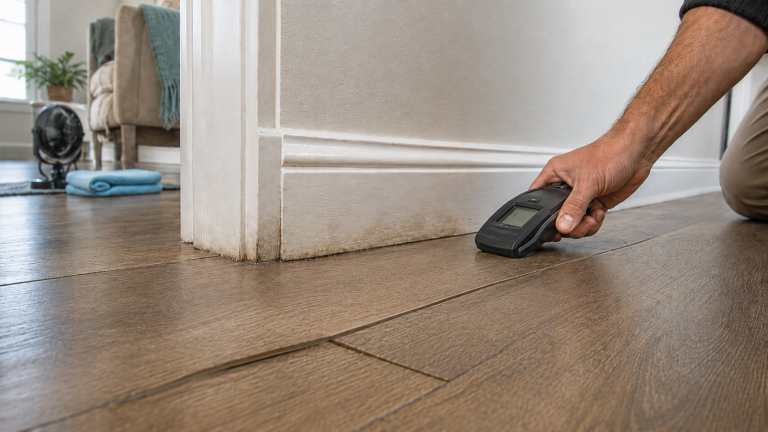
Moisture meters, pinless meters, thermal cameras, and borescopes can help screen suspicious areas, but they should not be treated as the only evidence. A moisture meter can help compare a suspicious wall or floor area with nearby unaffected material. A thermal camera may show temperature differences that deserve investigation, but temperature differences are not the same as confirmed moisture. A borescope may help inspect small accessible cavities when used appropriately.
These tools are most useful when combined with real symptoms: same-location mold, odor, swelling, staining, or softness. Homeowners comparing inspection tools may find a guide to moisture meters for hidden water damage helpful, but tool readings should always be interpreted in context.
When Recurring Mold Needs Professional Inspection
Recurring mold does not always require a professional inspection, but it should be taken more seriously when the same area fails repeatedly or appears with hidden-damage warning signs.
Professional inspection is especially important when mold returns after repeated cleaning, drying, painting, caulking, patching, or repair.
Call a professional when materials are soft, sagging, or unstable
Soft drywall, sagging ceiling material, spongy flooring, swollen trim, crumbling cabinets, or unstable wall surfaces suggest that moisture may have damaged the material itself. These symptoms go beyond ordinary surface mold. They may require evaluation of drywall, insulation, subflooring, framing, or nearby leak sources.
If recurring mold appears with broader signs of structural moisture problems, the issue should be inspected before more cosmetic repairs are attempted. Cleaning the surface may remove visible mold temporarily, but it will not correct weakened or repeatedly damp material.
Call a professional when mold is connected to a hidden water source
Mold that returns near plumbing, roofing, exterior walls, windows, appliances, crawl spaces, basements, or ceilings may involve a water source that is not fully visible. A slow leak inside a wall, a roof leak above a ceiling, or moisture under flooring can continue long after the visible surface is cleaned.
Professional help is also wise when the problem appears near electrical outlets, ceiling fixtures, HVAC equipment, or structural framing. These areas can involve safety concerns that go beyond mold cleanup.
Call a professional when odor persists after cleaning
A persistent musty odor can mean damp material remains hidden. If the odor returns after cleaning and ventilation, or if it gets stronger after rain, showers, appliance use, or humid weather, the visible surface may not be the whole problem.
Odor does not prove the exact location of hidden damage, but recurring odor with mold, staining, or softness is a strong reason to investigate further. This is especially true in enclosed areas such as wall cavities, cabinets, closets, basements, crawl spaces, and finished ceiling spaces.
What to Do Next if You Suspect Hidden Damage
If recurring mold may indicate hidden damage, the next step is not to keep cleaning the same spot over and over. Repeated cleaning may reduce visible mold temporarily, but it does not solve damp material, hidden leaks, trapped moisture, or damaged porous surfaces.
The safer approach is to pause and evaluate the moisture pattern. Look at where the mold returns, when it returns, what nearby materials are changing, and what water sources are close to the area. This helps determine whether the issue is likely surface-level or hidden behind the finished surface.
Stop covering the area until the source is understood
Avoid painting, caulking, installing trim, laying flooring, or covering the area with panels until the moisture source is understood and the affected materials are dry. Covering the area too soon can hide warning signs and trap moisture inside the material.
If the mold returned after a previous repair, the repair may have been completed before the moisture condition was corrected. In that case, another cosmetic repair may repeat the same cycle.
Track when the mold returns
Timing can reveal important clues. Mold that returns after rain may point toward roof, window, door, siding, basement, or exterior wall moisture. Mold that returns after showers may point toward bathroom humidity, failed caulk, wall moisture, or ventilation issues. Mold that returns after appliance use may point toward a hidden hose, drain, or connection problem.
Write down when the mold appears, whether the area smells musty, and whether stains, swelling, or softness change over time. These patterns can help identify whether the moisture source is constant, seasonal, weather-driven, or tied to a specific fixture or appliance.
Inspect nearby materials, not only the mold spot
Look beyond the visible mold. Check the surrounding wall, trim, flooring, ceiling, cabinet base, and nearby fixtures. A small mold patch may be the visible edge of a larger moisture pattern. The surrounding material may show clues before the mold becomes widespread.
Pay attention to patch edges, trim joints, floor-wall intersections, cabinet backs, ceiling stains, window corners, and baseboard lines. These areas often reveal hidden moisture before the main surface looks damaged.
Use mold removal guidance only after moisture is addressed
Cleaning is still part of the solution, but it should come after the moisture condition is understood. If the source remains active, mold can return no matter how thoroughly the surface is cleaned.
For broad cleanup and prevention context, use a guide on how to remove mold permanently. For this specific situation, the key point is that recurring mold with hidden-damage signs should be investigated before it is cleaned again, sealed, or painted over.
Frequently Asked Questions
Does recurring mold always mean hidden damage?
No. Recurring mold can be caused by surface humidity, condensation, dust, or poor airflow. However, recurring mold is more concerning when it returns in the same location with musty odor, stains, soft drywall, swollen trim, peeling paint, flooring changes, or a history of leaks or repairs.
How do I know if mold is behind drywall?
Possible signs include mold returning in the same spot, musty odor from the wall area, soft or uneven drywall, bubbling paint, recurring stains, mold along seams, or discoloration near plumbing, windows, exterior walls, or previous repairs. These signs do not prove exactly what is behind the drywall, but they justify further inspection.
Should I remove baseboards if mold keeps coming back?
Not automatically. However, recurring mold along baseboards can indicate moisture behind the trim or at the floor-wall joint. If the trim is swollen, stained, separated, soft, or musty, the area may need closer inspection. Large areas, repeated failures, or suspected hidden water damage should be evaluated carefully before removing materials.
When should I call a professional for recurring mold?
Call a professional when mold keeps returning after repeated cleaning or repairs and the area also shows signs of hidden damage, such as soft drywall, swollen trim, persistent odor, ceiling stains, flooring changes, suspected plumbing or roof leaks, electrical fixtures nearby, or possible structural material damage.
What Recurring Mold Patterns Usually Mean
- Recurring mold is not always hidden damage, but repeated same-location growth deserves attention.
- Musty odor, soft drywall, swollen trim, peeling paint, stains, and flooring changes make hidden damage more likely.
- Mold around baseboards, seams, patch edges, ceilings, and floor lines can point to moisture behind the visible surface.
- Surface cleaning alone may not solve mold that is being fed by hidden moisture or damaged porous material.
- Professional inspection is appropriate when recurring mold appears with material damage, persistent odor, hidden water sources, or structural concerns.
The Bottom Line on Recurring Mold and Hidden Damage
Recurring mold should be read as a pattern, not just a stain. When mold returns once on a humid surface, the problem may be simple condensation or poor airflow. When it keeps returning in the same place with odor, stains, swelling, softness, peeling paint, or material movement, hidden damage becomes more likely.
The most important step is to look beyond the visible mold before cleaning, sealing, or repainting the area again. Check the location, timing, nearby water sources, and condition of surrounding materials. If the signs point to moisture behind walls, under floors, above ceilings, or inside damaged materials, the hidden moisture condition needs to be found before the mold can stop returning.