How to Salvage Materials After Flood Damage
After a flood, one of the hardest decisions is knowing what can be saved and what needs to be removed. Some materials can be cleaned, dried, and reused. Others may hold contamination, moisture, odor, or mold risk even after they look dry on the surface. The difference depends on the material, the water source, how long the material stayed wet, and whether it can be fully cleaned and dried.
Flood-damaged materials should not be judged by appearance alone. A cabinet may look usable while the base is swollen. A wall may look intact while wet insulation is trapped behind it. A carpet may feel dry on top while the padding underneath is still saturated. A piece of solid wood furniture may be worth saving, while particleboard furniture in the same room may already be breaking down.
The safest approach is to sort materials quickly, remove what cannot be reliably cleaned or dried, expose wet building layers, and delay rebuilding until the remaining materials are dry. This helps prevent mold, recurring odor, and hidden structural moisture. For the broader recovery strategy, see how to prevent recurring moisture damage.
Quick rule: hard, washable materials are usually the best salvage candidates; saturated porous materials are usually the worst. Solid wood, plywood, cabinets, trim, and subfloors fall in the middle and should be judged by contamination, swelling, odor, softness, and moisture readings.
Why Flood-Damaged Materials Need Fast Sorting
Flood cleanup becomes harder when wet materials are left in place. Water continues moving through absorbent materials, seams, cavities, and wall-floor connections, which increases the risk of odor, swelling, mold growth, delamination, and structural weakening. Fast sorting means separating materials into practical groups: discard, clean and dry, inspect further, and professional evaluation.
Floodwater affects materials differently
Different materials respond to flooding in very different ways. Hard plastic storage bins may be washable. Ceramic tile may survive with proper cleaning. Solid wood may dry if it is handled quickly. Carpet padding may need to be removed almost immediately. Fiberglass insulation can hold water inside wall cavities. Particleboard may swell and lose strength after saturation.
This is why a material-by-material decision is better than a single rule for everything in the room. Salvage depends on whether the material absorbs water, whether it was contaminated, whether it remains structurally stable, and whether drying can be verified.
Wet materials can hide moisture after the room looks better
A flooded room can look better after standing water is removed while moisture remains behind baseboards, inside wall cavities, under flooring, beneath cabinets, inside upholstery, or along subfloor seams. The goal is not only to make the room look normal again; it is to remove unsalvageable materials, dry what can be saved, and avoid sealing hidden moisture inside the home. For a whole-home view of moisture recovery, see how to find, fix, and prevent moisture problems in homes.
Delay changes what can be saved
Some materials are salvageable only if they are handled quickly. Solid wood, plywood, and some trim may recover if exposed and dried early, but they may warp, delaminate, loosen at joints, or grow mold if they sit damp for days. Delay is especially damaging for carpet, padding, drywall, insulation, mattresses, books, cardboard, and upholstery because moisture and contamination move below the surface. If you are unsure how quickly moisture can create mold risk, see how long water damage takes to cause mold.
How to Decide What Can Be Salvaged After Flooding
The best way to decide whether a flood-damaged material can be salvaged is to look at three factors together: what the material is made of, what kind of water touched it, and how long it stayed wet. A hard, washable item exposed briefly to clean water is very different from an absorbent item soaked by outdoor floodwater.
A material is more likely to be salvageable when it is hard, nonporous, structurally stable, exposed for a short time, not moldy, not sewage-contaminated, and able to dry completely. A material is less likely to be salvageable when it is absorbent, contaminated, moldy, swollen, delaminated, structurally weakened, or impossible to dry fully.
Porous materials are hardest to save
Porous materials absorb water into their structure. Once water gets inside, surface cleaning may not reach the moisture, debris, or contamination trapped below. These materials are also harder to dry evenly because air cannot always reach the inside layers.
Examples of high-risk porous materials include:
- Carpet padding
- Carpet backing
- Drywall
- Fibrous insulation
- Upholstered furniture
- Mattresses and pillows
- Books, papers, and cardboard
- Particleboard and some pressed-wood products
- Acoustic ceiling tiles
Some porous materials can be dried after limited clean-water exposure, but many are not practical or safe to salvage after real flooding. If the material is contaminated, moldy, deeply saturated, or impossible to inspect internally, removal is often the safer choice.
Nonporous materials are usually easier to recover
Hard, nonporous materials are more likely to survive flooding because they do not absorb water deeply. They may still need cleaning, disinfecting when appropriate, drying, and rust prevention, but they are usually easier to evaluate than absorbent materials.
Examples of more salvageable materials include:
- Glass
- Metal
- Ceramic
- Hard plastic
- Some sealed tools
- Tile surfaces
- Concrete and masonry surfaces
Even with these materials, flood residue matters. Mud, sewage, chemicals, and fuel residue can make cleanup more complicated. But in general, hard surfaces are much more realistic to clean and dry than soft, absorbent materials.
Water source changes the decision
The source of the floodwater is one of the most important salvage factors. Clean water from a broken supply line may allow more materials to be saved if cleanup begins immediately. Outdoor floodwater, stormwater, sewage, or drain backup water should be treated as potentially contaminated.
Clean-water exposure may allow some materials to be dried and reused. Contaminated water is different. It can carry bacteria, sewage residue, mud, chemicals, pesticides, fuel, or other hazards into porous materials. Once those contaminants soak into carpet, padding, insulation, drywall, mattresses, or upholstered furniture, drying alone does not make the material safe.
When contamination is involved, the salvage list gets much shorter. Hard, washable items may still be cleaned. Absorbent items usually need removal or professional evaluation.
For contaminated floodwater and post-flood cleanup safety, see the EPA’s Flood Cleanup to Protect Indoor Air and Your Health guide. For mold-specific cleanup after disasters, the CDC also provides a Homeowners and Renters Guide to Mold Cleanup After Disasters.
Drying time matters as much as material type
A material that could have been saved shortly after flooding may become unsalvageable if it stays wet too long. Wet materials do not fail all at once. They change over time. Odor develops, adhesives loosen, finishes peel, wood swells, paper facing separates, and mold risk increases.
This is why flood cleanup should begin with sorting and exposure. Materials that can be cleaned and dried should be moved into a dry area when safe. Materials that are clearly ruined should be removed so they do not keep adding moisture and contamination to the room.
Materials That Usually Cannot Be Salvaged After Flooding
Some materials are poor candidates for salvage because they absorb water deeply, hold contamination, dry slowly, or lose their original structure after saturation. Keeping these materials can make the home smell damp, slow the drying process, and increase the risk of mold behind finished surfaces.
The word “usually” matters. A professional restorer may sometimes save specialized items under controlled conditions. But for ordinary homeowner recovery, the following materials are commonly removed after significant flood exposure, especially when the water was contaminated or the material stayed wet for more than a short time.
Carpet padding
Carpet padding is one of the first materials to remove after flooding. It acts like a sponge under the carpet, holding water against the subfloor and preventing air from reaching the floor below. Even when the carpet surface feels dry, the padding may still be wet.
Wet padding can also hold odor, dirt, and contamination. Because it is relatively inexpensive compared with the risk of failed recovery, it is usually replaced rather than salvaged. If carpet and subfloor recovery is the main issue in the room, see carpet and subfloor flood recovery for the more detailed floor-specific process.
Wet insulation
Wet fibrous insulation is usually removed when it becomes saturated. Insulation can hold water inside wall cavities, floor cavities, and attic or basement assemblies. When it stays wet, it reduces drying airflow around framing and can hide moisture against wood, sheathing, and drywall.
Insulation that has been soaked by floodwater may also be contaminated. Even if the surface dries, the material may not return to its original performance. If insulation remains wet inside a closed cavity, the framing around it may stay damp long after the room appears clean. For a more specific replacement guide, see when insulation must be replaced after flooding.
Flood-soaked drywall
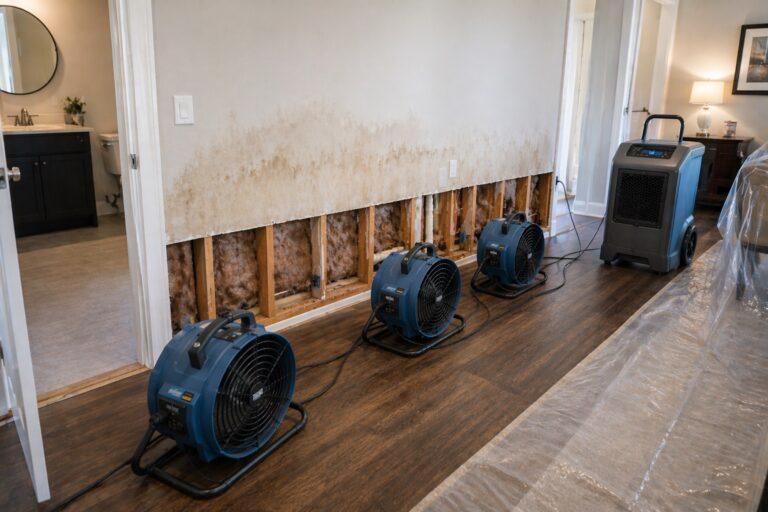
Drywall is often removed when it has absorbed floodwater, become soft, crumbled, swollen, moldy, or contaminated. The gypsum core and paper facing can wick water upward from the floor, especially along the base of walls. The lower wall may look only lightly stained while moisture has spread behind the surface.
Drywall decisions depend on water source, saturation height, drying speed, and whether insulation or framing behind the wall is wet. This article should not become a full drywall replacement guide. For that narrower repair topic, see drywall replacement after flooding.
Moldy porous materials
Porous materials that have visible mold are usually poor salvage candidates. Mold can grow into openings, fibers, paper layers, and crevices that are difficult to clean completely. This is especially true for carpet, ceiling tiles, cardboard, paper goods, upholstered items, and other absorbent materials.
Cleaning the surface may improve appearance without removing the growth or moisture inside the material. If a porous item is moldy, smells musty, and cannot be fully dried or cleaned, it should usually be discarded.
Mattresses, pillows, and upholstered furniture
Mattresses, pillows, cushions, stuffed toys, and upholstered furniture are difficult to salvage after flooding because they absorb water deeply. They can hold moisture, odor, and contamination far below the surface. Even if the fabric dries, the inner layers may remain damp or unsanitary.
If these items were touched by sewage, stormwater, groundwater, or muddy floodwater, replacement is usually the safer choice. Sentimental value may justify asking a specialist about certain items, but ordinary household upholstery is rarely worth the risk after contaminated flooding.
Particleboard and swollen pressed-wood products
Particleboard, MDF, and many pressed-wood products often fail after saturation. They can swell, crumble, delaminate, lose fastener grip, and remain uneven after drying. This is common in lower cabinet boxes, low-cost furniture, shelving, vanities, base trim, and some doors.
Once particleboard swells or breaks down, drying does not restore its original shape or strength. If the material feels soft, puffy, crumbly, or distorted, replacement is usually more reliable than salvage.
Books, papers, cardboard, and absorbent stored items
Books, documents, cardboard boxes, paper records, and absorbent stored items can be difficult to save after flooding. They absorb water quickly and can develop mold or odor while still looking partly intact. Cardboard boxes can also transfer contamination to the floor, shelving, and surrounding materials.
Important papers and photographs may need special drying or restoration if they have sentimental or legal value. But ordinary soaked paper goods, cardboard, and moldy stored items should usually be removed from the home so they do not continue feeding moisture and odor.
Materials That May Be Salvageable If Cleaned and Dried Quickly
Some flood-damaged materials can be saved when the water exposure was brief, contamination is limited, and drying begins quickly. These materials are usually hard, dense, nonporous, or structurally durable enough to tolerate cleaning and drying.
Salvage does not mean ignoring sanitation. Even durable materials may need cleaning, rinsing, disinfecting when appropriate, and complete drying. The difference is that these materials are more likely to release water and residue instead of absorbing them deeply.
Metal, glass, ceramic, and hard plastic
Metal, glass, ceramic, and hard plastic are usually among the most salvageable flood-damaged materials. They do not absorb water like carpet, insulation, drywall, or upholstery. If they are not damaged, they can often be cleaned, dried, and reused.
Examples include glass containers, ceramic dishes, metal shelving, plastic storage bins, hard plastic outdoor furniture, and some tools. Metal items may need fast drying and rust prevention. Plastic bins may need to be cleaned inside and out, especially if floodwater entered them or contaminated the lids.
Tile, concrete, and masonry
Tile, concrete, brick, block, and masonry are often salvageable, but they still require cleaning and drying. These materials do not rot like wood, but they can hold residue, moisture, silt, and salts after flooding. Concrete can also release moisture slowly after the surface looks dry.
The main risk is often the material attached to or placed over the hard surface. Carpet over concrete, drywall against masonry, wood baseboards on a slab, and cabinets sitting on tile can all trap moisture even when the hard surface itself survives.
Solid wood items
Solid wood may be salvageable if the water exposure was brief and the wood remains structurally stable. Solid wood furniture, trim, doors, and some framing can sometimes dry without needing replacement. However, solid wood should still be inspected for warping, splitting, mold, staining, loosened joints, or finish damage.
Solid wood is more recoverable than particleboard, but it is not automatically safe to keep. If it was soaked by contaminated floodwater, stayed wet too long, or developed mold in joints and cracks, it may need professional cleaning or disposal.
Some structural framing
Wood framing may be salvageable after flooding if it remains solid, is exposed for drying, and can be verified dry before walls or flooring are closed. Framing is not usually discarded simply because it got wet once. The larger concern is whether it stayed wet, became contaminated, grew mold, or lost structural integrity.
Homeowners should not remove or alter load-bearing framing on their own. If studs, joists, beams, sill plates, or subfloor supports appear soft, dark, moldy, cracked, or unstable, the issue needs professional evaluation. For broader warning signs, see signs of structural moisture problems.
Some plywood and subfloor materials
Plywood and some subfloor materials may be salvageable if they are exposed quickly, dried thoroughly, and remain structurally sound. A subfloor that dries flat, feels solid, and does not show persistent odor or elevated moisture may be able to stay in place.
However, subfloor salvage is not automatic. Plywood can delaminate, OSB can swell at seams, and particleboard can break down badly after saturation. If the floor feels soft, spongy, uneven, or unstable, it should not be covered with new flooring until the damage is evaluated.
For a deeper look at floor-system drying, see how to dry subfloors after water damage. This article should guide the salvage decision, while the subfloor article can carry the more detailed drying workflow.
Materials That Need Careful Judgment
Some flood-damaged materials fall into a middle category. They are not automatically ruined, but they are not automatically safe to keep either. These materials need closer inspection because their salvageability depends on construction, water exposure, contamination, drying access, and whether hidden layers are involved.
Cabinets and vanities
Cabinets are often difficult to judge after flooding because the visible doors may look better than the cabinet box, toe-kick, or back panel. A cabinet made from solid plywood may sometimes dry if it was exposed briefly and opened quickly. A cabinet made from particleboard or MDF may swell, crumble, or lose fastener strength after saturation.
Inspect cabinet bottoms, side panels, toe-kick areas, shelf edges, and the back against the wall. Watch for swelling, soft material, peeling laminate, musty odor, dark staining, or separation at joints. If floodwater reached inside the cabinet or under the cabinet base, the cabinet may need removal so the wall and floor behind it can dry.
Trim, baseboards, and doors
Trim and doors vary widely by material. Solid wood baseboards may sometimes be removed, cleaned, dried, and reinstalled. MDF trim often swells and loses its shape after water exposure. Hollow-core doors may warp or separate internally, while solid wood doors may be recoverable if dried slowly and evenly.
Baseboards need special attention because they can hide wet drywall edges and moisture at the wall-floor joint. If a baseboard looks swollen or pulls away from the wall, there may be trapped moisture behind it. Removing damaged trim can help expose wet wall edges and speed drying.
Engineered wood and laminate flooring
Engineered wood and laminate flooring are often difficult to salvage after flooding. Water can enter seams, swell cores, loosen adhesives, and damage locking edges. Even if the surface looks acceptable at first, the material may cup, buckle, or separate later.
These floors are especially risky when water reached the underlayment or subfloor. If the flooring traps moisture underneath, the subfloor may stay damp while the finished surface hides the problem. Any flooring that has swollen, lifted, cupped, separated at seams, or developed soft areas should be evaluated before it is left in place. For the narrower floor-removal decision, see when flooring must be replaced after flooding.
Furniture and stored belongings
Furniture salvage depends on material and construction. Solid wood furniture may sometimes be saved if dried carefully. Metal and plastic furniture are often easier to clean. Upholstered furniture, particleboard furniture, mattresses, and fabric-covered items are much harder to salvage after floodwater exposure.
Stored belongings should be sorted quickly. Hard plastic containers may be cleaned, but cardboard boxes usually fail and can feed mold growth. Clothing and washable fabrics may be cleaned if contamination is limited, but items exposed to sewage or heavy flood contamination may not be worth saving.
Appliances and electronics
Appliances and electronics should be handled carefully after flooding. Do not plug in or test electrical items that were exposed to water. Internal components may be wet, corroded, or unsafe even if the exterior looks dry.
Large appliances, HVAC components, water heaters, outlets, extension cords, and electronics should be evaluated according to manufacturer guidance or by a qualified professional. This article should not give electrical repair instructions. The safe homeowner decision is to keep wet electrical items disconnected until they are inspected or replaced.
How to Sort Flood-Damaged Materials Safely
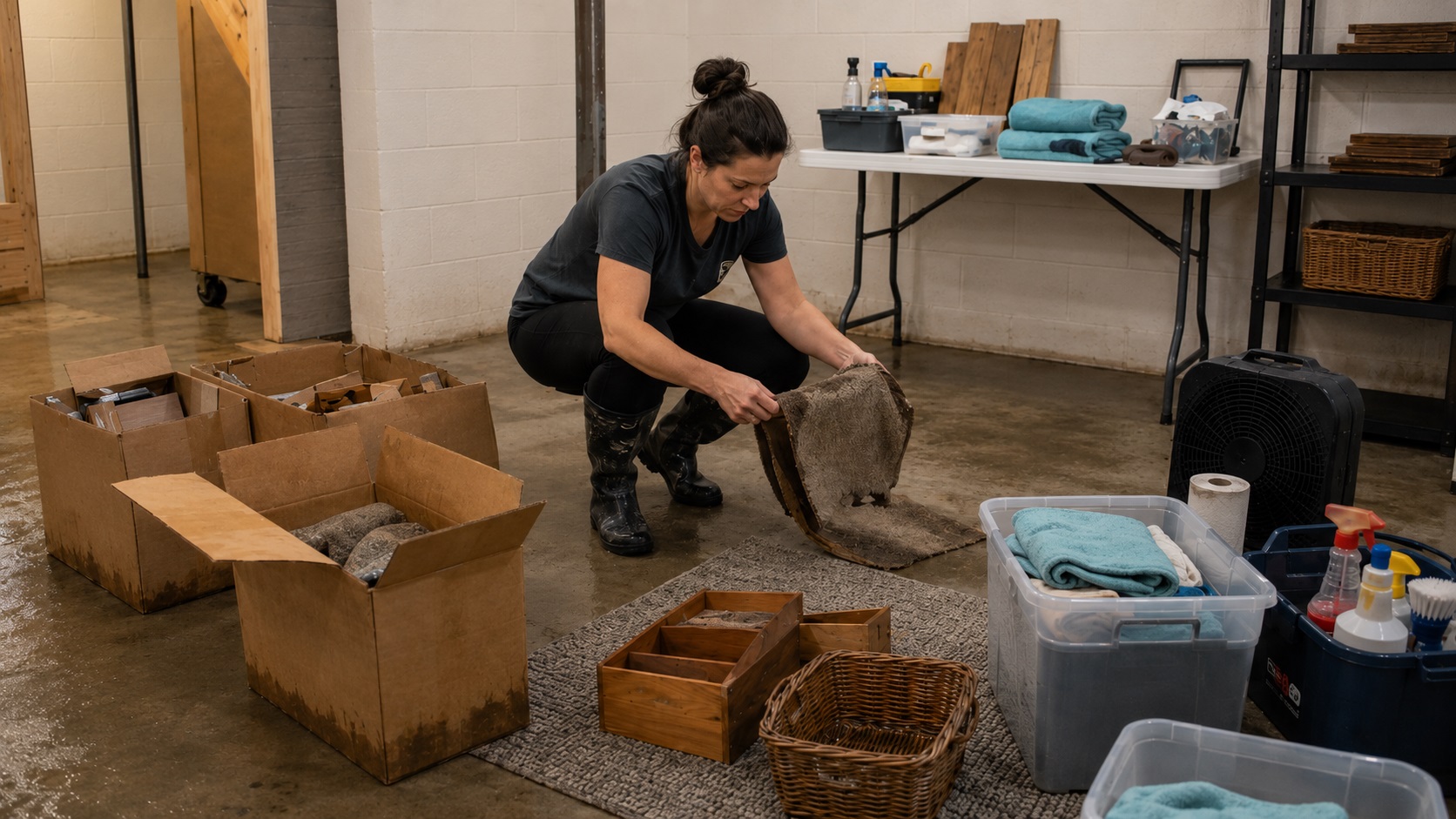
Sorting flood-damaged materials is easier when you create clear categories. Instead of deciding item by item while standing in a wet room, group materials by risk: discard, clean and dry, inspect further, and professional evaluation.
Start with safety and documentation
Before removing materials, make sure the area is safe. Do not enter standing water if electrical systems may be affected, and do not handle wet electrical items while power may still be connected. Wear gloves, boots, eye protection, and a suitable mask or respirator when handling wet or moldy materials. If sewage, drain backup, or outdoor floodwater was involved, avoid direct contact with contaminated materials.
Photograph flood lines, damaged rooms, wet materials, and discarded items before removal when documentation may be needed. Do not let documentation delay emergency removal of dangerous or moldy materials, but keep a basic record before major cleanup whenever possible.
For broader post-flood safety concerns, see safety hazards to watch for after flooding.
Create four sorting groups
A practical flood cleanup sorting system uses four groups:
- Discard: Saturated porous materials, sewage-contaminated items, moldy absorbent materials, swollen particleboard, soaked padding, and wet insulation.
- Clean and dry: Hard plastic, glass, ceramic, metal, tile, concrete surfaces, and other washable nonporous materials.
- Inspect further: Cabinets, trim, doors, subfloor panels, solid wood furniture, and semi-porous materials.
- Professional evaluation: Structural framing, electrical systems, HVAC equipment, widespread mold, sewage damage, and multi-room flooding.
This sorting system helps prevent two common mistakes: throwing away everything unnecessarily and saving materials that are unsafe or impractical to restore. When in doubt, place a questionable material in the inspect-further group instead of rebuilding around it.
Move cleanable items away from wet materials
When possible, move salvageable hard items to a clean, dry area for washing and drying. Do not place cleaned items back into a damp room while the building materials are still drying. Wet drywall, carpet, insulation, or cabinets can continue releasing moisture and odor into the space.
Keep contaminated and cleanable items separated. Do not stack washable items on wet carpet, damp cardboard, or moldy furniture. Cross-contamination can turn a salvageable item into a cleanup problem.
Remove unsalvageable materials early
Unsalvageable wet materials should be removed early because they keep moisture inside the home. Wet padding, soaked insulation, moldy cardboard, and crumbling particleboard can continue raising humidity and slowing the drying of nearby surfaces.
Removal also helps expose hidden damage. Once wet flooring, baseboards, or lower wall materials are removed, you may find damp subflooring, wet framing, or hidden staining that could not be seen before.
How to Dry Salvageable Building Materials
Salvageable materials still need proper drying, but this article should stay focused on salvage decisions. A material is not truly salvaged until it is clean, dry, stable, and no longer contributing moisture to the home. For the full drying sequence, see how to dry a house after flood damage.
Open wet assemblies so air can reach them
Building materials dry best when wet layers are exposed. Carpet may need to be lifted. Padding may need to be removed. Baseboards may need to come off. Cabinets may need to be pulled if water is trapped underneath. Wall cavities may need professional opening if insulation or framing is wet.
Drying only the visible surface can leave moisture hidden in the assembly. This is why many flood recovery failures happen after the room looks clean but is rebuilt too soon.
Use airflow and dehumidification together
Airflow helps carry moisture away from surfaces, but dehumidification removes that moisture from the room air. If you use fans without reducing humidity, moisture may simply move from one material into the air and then condense or settle elsewhere.
Use fans to move dry air across exposed materials and dehumidifiers to lower moisture in the room. In humid weather, opening windows may slow drying instead of helping. In dry outdoor conditions, ventilation can help remove moisture, but indoor humidity should still be monitored.
Verify drying before rebuilding
Do not reinstall flooring, drywall, insulation, cabinets, or trim until the underlying materials are dry. Check dryness with visual inspection, touch, odor, and moisture readings. A moisture meter is most useful on wood framing, subfloors, trim, and other materials where hidden moisture may remain below the surface.
Use comparison readings when possible. Test the flooded area and compare it with a similar unaffected area of the home. This helps you understand whether the material is still elevated compared with normal conditions. If you need a tool for this kind of checking, see the best moisture meters for hidden water damage.
When Structural Materials Need Professional Evaluation
Some flood-damaged materials are not just finish materials. They help support the home. When water affects subfloors, joists, beams, sill plates, load-bearing walls, stair framing, or structural sheathing, the decision is no longer just “clean or discard.” The question becomes whether the material is still strong enough to perform its job.
Structural materials may be salvageable after flooding if they are exposed, dried, and remain sound. But they should not be covered, sealed, or rebuilt around until moisture and damage are evaluated. A dry-looking structural member can still be weakened if it is soft, decayed, delaminated, cracked, or moldy.
Watch for structural warning signs
Call for professional evaluation if you notice signs that the flood affected structural components. These warning signs include:
- Soft or spongy subfloor areas
- Sagging or uneven floors
- Swollen OSB or plywood seams
- Cracked, split, or delaminated wood
- Dark staining with musty odor
- Joists or beams that feel soft when probed
- Loose fasteners or framing connections
- Water damage near load-bearing walls
- Movement around stairs, posts, or foundation edges
If these conditions are present, avoid covering the damaged area with new flooring, cabinets, drywall, or trim. The damaged material may need additional drying, repair, reinforcement, or replacement before finishes are restored.
Do not remove load-bearing materials yourself
Homeowners can often remove ruined contents, wet carpet padding, or damaged trim safely when conditions are otherwise safe. Structural components are different. Do not cut, remove, notch, sister, or modify joists, beams, posts, studs, headers, or sill plates without proper evaluation.
If floodwater reached structural framing, the safest DIY role is to expose what can be safely exposed, keep the area dry, document the damage, and bring in a qualified contractor, restoration professional, or structural specialist when needed. For more detail on identifying serious warning signs, see how to evaluate structural safety after water damage.
Do not seal damp structural wood
Painting, sealing, or encapsulating damp wood can trap moisture inside the material. This can slow drying and hide future deterioration. Before structural wood is sealed, enclosed, painted, or covered, it should be dry and stable.
This is especially important in crawl spaces, basements, wall cavities, and subfloor systems where moisture can stay hidden. If you seal the surface before the material is dry, the home may look repaired while the wood continues to hold moisture inside.
Common Mistakes When Trying to Save Flood-Damaged Materials
Many flood recovery problems happen because homeowners try to save too much or rebuild too soon. The desire to protect belongings and reduce repair costs is understandable, but some shortcuts create larger moisture problems later.
Mistake 1: Saving wet carpet padding
Wet carpet padding is one of the most common sources of failed recovery. It holds water below the carpet, keeps the subfloor damp, and can create odor even after the carpet surface looks dry. In most flood situations, removing and replacing padding is safer than trying to dry it in place.
Mistake 2: Rebuilding before materials are dry
Replacing drywall, trim, flooring, cabinets, or insulation before the underlying structure is dry can trap moisture inside the home. This often leads to musty odors, bubbling finishes, mold growth, or repeated repairs.
Before rebuilding, verify that framing, subflooring, wall cavities, and floor edges are dry. Do not assume a material is dry because the surface looks clean.
Mistake 3: Treating bleach as a complete flood recovery solution
Bleach is not a substitute for removing wet materials or drying the structure. It may help disinfect some hard surfaces when used correctly, but it does not remove moisture, restore swollen materials, or make contaminated porous materials safe to keep.
Using strong chemicals on porous materials can also create a false sense of security. If the material is still wet, moldy, or contaminated inside, surface treatment does not solve the underlying problem.
Mistake 4: Relying on fans without dehumidification
Fans move air, but they do not remove moisture from the room. If the room stays humid, fans may simply move damp air around. Effective drying usually requires both airflow and humidity control.
This matters most in basements, closed rooms, and humid weather. If the air is already damp, wet materials may dry slowly even with fans running.
Mistake 5: Keeping materials because they look normal
Flood damage is often hidden inside layers. Drywall may be wet behind the paint. Cabinets may be swollen underneath. Subfloor seams may hold moisture. Furniture may have water trapped inside upholstery. A normal-looking surface does not prove that the material is dry or safe.
Use smell, touch, moisture checks, and material behavior to guide decisions. Persistent odor, swelling, softness, staining, and mold are all reasons to question salvage.
When to Call a Restoration Professional
Professional restoration is not necessary for every small clean-water incident, but it becomes important when floodwater is contaminated, damage is widespread, materials are difficult to dry, or structural components may be affected.
Call a restoration professional when:
- Sewage or drain backup touched materials.
- Outdoor floodwater entered the home.
- Several rooms or an entire basement were affected.
- Wet materials sat for more than 24 to 48 hours.
- Drywall, insulation, cabinets, or wall cavities are wet.
- Subfloors, joists, or framing feel soft or unstable.
- Visible mold is present.
- Musty odor remains after cleanup.
- Electrical systems, HVAC equipment, or appliances were exposed to water.
- You cannot fully expose and dry affected materials.
A professional can help determine which materials are worth saving, which should be removed, and whether hidden moisture remains behind finished surfaces. For a deeper decision guide, see when to call water damage restoration services.
FAQs About Salvaging Materials After Flood Damage
What materials should be thrown away after a flood?
Materials that usually need to be thrown away include saturated carpet padding, wet fibrous insulation, moldy porous materials, soaked mattresses, pillows, upholstered furniture, cardboard, particleboard that has swollen, and any absorbent material contaminated by sewage or outdoor floodwater.
Can wood be saved after flood damage?
Some wood can be saved if it is solid, exposed quickly, dried thoroughly, and remains structurally stable. Solid wood and some framing may recover. Particleboard, MDF, swollen OSB, delaminated plywood, or moldy wood may need replacement or professional evaluation.
Should wet insulation always be removed?
Saturated insulation usually needs to be removed, especially after floodwater exposure. Wet insulation can hold moisture inside wall or floor cavities and keep surrounding wood damp. It may also lose performance and hide mold or contamination.
Can drywall be dried after flooding?
Drywall may dry after a very minor clean-water exposure, but flood-soaked drywall often needs removal when it is soft, crumbling, swollen, moldy, or contaminated. If insulation behind the drywall is wet, the wall cavity usually needs to be opened so the hidden layers can dry.
Can cabinets be saved after flooding?
Cabinets may be salvageable if they are made from solid plywood or solid wood, were exposed briefly, and can dry completely. Particleboard cabinets often swell and fail after saturation. Cabinets may also need removal if water is trapped underneath or behind them.
Can flood-damaged furniture be cleaned?
Hard furniture made of metal, plastic, or solid wood may be cleanable depending on contamination and damage. Upholstered furniture, mattresses, particleboard furniture, and fabric-covered items are much harder to salvage after flooding because they absorb water deeply.
How do I know when a material is dry enough to keep?
A material is more likely to be safe to keep when it has no musty odor, no softness, no swelling, no visible mold, no delamination, and moisture readings are similar to unaffected materials nearby. Dryness should be verified before the material is covered, sealed, painted, or built over.
Is it safe to clean flood-damaged materials myself?
Small clean-water incidents may be manageable for careful homeowners, but sewage, outdoor floodwater, widespread damage, mold, wet wall cavities, structural damage, electrical exposure, or HVAC exposure should be handled by qualified professionals.
Flood Material Salvage Checklist
- Flood-damaged materials should be sorted quickly into discard, clean-and-dry, inspect-further, and professional-evaluation groups.
- Salvage depends on material type, water source, contamination, drying time, and structural stability.
- Hard nonporous materials such as glass, metal, ceramic, and hard plastic are usually easier to save.
- Porous materials such as carpet padding, insulation, drywall, upholstery, cardboard, and mattresses are much harder to salvage.
- Contaminated floodwater makes porous material salvage much less realistic.
- Structural materials should not be covered or sealed until they are dry and stable.
- Professional help is needed when floodwater is contaminated, damage is widespread, or structural components may be affected.