When to Replace Ice Maker Water Lines Before They Crack or Leak
Ice maker water lines should usually be replaced every 5 to 10 years, depending on the tubing material, condition, routing, and how often the refrigerator has been moved. Replace the line sooner if it is plastic, brittle, yellowed, cloudy, cracked, kinked, crushed, corroded at the fittings, damp at either end, connected to an old saddle valve, or old enough that you cannot confirm its age.
An ice maker line may look too small to cause serious damage, but it can still leak behind the refrigerator where no one sees it right away. If the supply valve is open, the small tubing may stay under pressure even when the ice maker is not actively making ice. A slow leak can wet flooring, baseboards, cabinets, drywall, or subfloor materials before the source becomes obvious.
This article focuses on the small water line or tubing that feeds an ice maker. It does not cover every refrigerator leak source, water filter issue, defrost drain problem, or ice maker repair problem. For broader refrigerator supply-line timing, see this guide on when to replace refrigerator water lines. Here, the focus is narrower: when the ice maker feed line itself should be replaced before it cracks, kinks, or leaks.
How Often Should Ice Maker Water Lines Be Replaced?
A practical replacement range for ice maker water lines is every 5 to 10 years. Some lines may last longer when they are properly rated, protected, routed smoothly, and rarely disturbed. Others should be replaced much sooner because of age, plastic deterioration, tight bends, poor routing, or questionable fittings.
If the line is old plastic tubing and you do not know when it was installed, replacement is usually the safest choice. Plastic tubing can become brittle, cloudy, yellowed, cracked, or kinked over time. Since the line is small and often hidden behind the refrigerator, deterioration may not be obvious until moisture has already reached the floor or wall area.
You should replace an ice maker water line sooner if any of the following are true:
- The line is more than 10 years old.
- The line age is unknown.
- The tubing is plastic and looks yellowed, cloudy, brittle, cracked, or stiff.
- The line is kinked, crushed, flattened, or sharply bent.
- The fittings show rust, corrosion, mineral buildup, or dampness.
- The line is connected to an old saddle valve.
- The refrigerator has been moved, replaced, or pulled out for service.
- The tubing rubs against a cabinet edge, wall opening, or floor penetration.
- There is staining, swelling, musty odor, or dampness near the refrigerator.
Do not base the decision only on whether the line is leaking today. Ice maker tubing is a preventive replacement item because the line can weaken before it creates an obvious puddle. If the line is small, old, hidden, and pressurized, replacement is usually cheaper and safer than waiting for visible water damage.
For a broader comparison of washer hoses, dishwasher lines, refrigerator water lines, and ice maker tubing, see this guide on how long appliance water hoses usually last. This page stays focused on the smaller ice maker feed line because old tubing is easy to overlook.
Replacing questionable ice maker tubing is also part of practical preventive plumbing replacement planning. A small line behind the refrigerator may not seem urgent, but if it leaks long enough, it can affect flooring, trim, drywall, cabinets, or subfloor materials.
Why Small Ice Maker Lines Can Still Cause Water Damage
Ice maker water lines are small, but they may stay connected to a pressurized water supply. If the tubing cracks, a fitting loosens, or an old valve begins to seep, water can leak behind the refrigerator long before anyone notices.
The hidden location is the main risk. Ice maker tubing is often tucked behind the refrigerator, routed through cabinets, or passed through a wall or floor opening. A small drip may not flow to the front of the appliance right away. Instead, it can soak dust, flooring edges, baseboards, drywall, cabinet sides, or subfloor material behind the refrigerator.
Small ice maker lines become riskier when:
- The tubing is old plastic.
- The refrigerator fits tightly against the wall.
- The line is kinked or pinched when the appliance is pushed back.
- The tubing passes through a rough cabinet or floor opening.
- The shutoff valve is hidden, old, or hard to reach.
- The refrigerator is rarely pulled out for cleaning or inspection.
If water reaches flooring layers, drywall, trim, or subfloor material, the size of the tube matters less than how long the leak continues unnoticed. The broader plumbing damage guide explains how small plumbing leaks can still cause structural damage when moisture stays trapped in building materials.
If there is already visible staining, soft flooring, damp trim, musty odor, or water behind the appliance, the issue may no longer be just replacement timing. In that case, the guide to signs of water leaks behind refrigerators is a better next step because visible symptoms mean moisture may already be present.
Replace the Ice Maker Line When Installing or Moving a Refrigerator
A new refrigerator should not automatically reuse an old ice maker water line. If the existing tubing is plastic, kinked, brittle, connected to an old valve, or of unknown age, replacement is usually the safer choice. The appliance may be new, but an old line can still be the weak point in the water connection.
Moving the refrigerator can also damage the ice maker line. Pulling the appliance forward, turning it slightly, cleaning behind it, replacing flooring, or pushing it back into place can kink small tubing or strain fittings. A line that was barely holding up before the move may not be dependable afterward.
Replace the ice maker line during any of these situations:
- Installing a new refrigerator with an ice maker.
- Connecting a refrigerator that has never had an ice maker line before.
- Moving the refrigerator after many years in the same position.
- Replacing flooring near or under the refrigerator.
- Remodeling cabinets around the refrigerator opening.
- Finding old plastic tubing behind the appliance.
- Finding an old saddle valve or corroded shutoff connection.
The line should have enough slack for the refrigerator to move without pulling on the fitting, but it should not be so loose that it coils, folds, or gets trapped under the appliance. Small tubing is easy to pinch when the refrigerator is pushed back, especially if no one guides the line into a smooth path.
After the refrigerator is pushed back into place, check the line path again if you can. A line that looked smooth while the appliance was pulled forward can still fold, twist, or press against the wall once the refrigerator is back in its final position.
Do not reuse old tubing just because it reaches
An old ice maker line may still reach the refrigerator connection, but that does not mean it should be reused. Old plastic tubing can crack when moved. Copper tubing can kink when bent sharply. Braided lines can twist or stress the fitting if pulled at an awkward angle.
If the line is old, questionable, or of unknown age, replace it instead of trusting it in a tight alcove where future inspection will be difficult.
Replace the line during flooring or cabinet work
Flooring and cabinet work are ideal times to replace the ice maker line because the refrigerator is already being moved. Once new flooring is installed, a hidden leak behind the appliance can be more expensive and frustrating. A small drip can affect underlayment, subfloor edges, baseboards, and nearby cabinet panels.
If the line passes through a cabinet or floor opening, make sure the new routing does not rub against sharp edges. Tubing that vibrates or moves against rough material can wear over time. A clean path reduces stress on the line and helps prevent future hidden leaks.
Signs an Ice Maker Water Line Should Be Replaced Immediately
An ice maker water line should be replaced immediately when the tubing, fitting, or valve condition makes the connection unreliable. You do not need to wait for a major leak. Since the line is usually hidden behind the refrigerator, small weaknesses can create hidden moisture before the problem becomes obvious.
When the refrigerator is safely pulled forward, look at the visible tubing, the shutoff valve, the fitting at the refrigerator, and any place where the line passes through a cabinet, wall, or floor opening. Run a dry paper towel around the fittings and under the tubing; even a small wet spot, mineral crust, or drip mark is a reason to stop and replace or repair the questionable connection. If the line is hard to access, connected to an old valve, or already damp, do not force the connection.
Brittle, yellowed, cloudy, or cracked plastic tubing
Old plastic ice maker tubing should be replaced if it is yellowed, cloudy, stiff, brittle, cracked, or flattened. Plastic tubing can weaken with age and movement, especially when the refrigerator has been pushed tight against the wall or pulled out several times.
If the line looks aged or you cannot confirm when it was installed, replacement is usually safer than leaving it in place.
Kinks, crushed sections, or sharp bends
Ice maker tubing should not be sharply kinked, pinched, crushed, or stretched tight. A kink can restrict water flow and create a weak point in the tubing. A crushed section may also fail later, even if it does not leak immediately.
Do not simply straighten an old kinked line and assume it is reliable. If the tubing has already been sharply bent, especially if it is plastic or copper, replacement is the safer choice.
Corrosion, mineral buildup, or damp fittings
The fittings matter as much as the tubing. Rust, greenish corrosion, white mineral crust, staining, or dampness near the valve or refrigerator connection can indicate slow seepage or failing parts. A small amount of moisture at the connection should not be ignored.
If you need a more connection-focused guide, see this article on how to inspect refrigerator water connections. For replacement timing, the rule is simple: if the ice maker line or fitting shows moisture, corrosion, or visible deterioration, replace the questionable parts before trusting the connection again.
Old saddle valves or hard-to-reach shutoffs
Many older ice maker lines are connected to saddle valves. These small piercing-style valves were common in older installations, but they can become clogged, corroded, difficult to shut off, or prone to seepage. If your ice maker line uses an old saddle valve, the tubing may not be the only part that needs attention.
A proper shutoff valve is usually a better long-term connection. If the valve is old, stuck, corroded, or leaking, call a plumber rather than trying to force the line loose.
For a broader warning-sign guide across washer hoses, dishwasher lines, refrigerator water lines, and ice maker tubing, see this article on the signs appliance water hoses are failing. For ice maker lines specifically, small tubing should be replaced when age, material condition, routing, or valve condition creates doubt.
Plastic, Copper, and Braided Ice Maker Lines
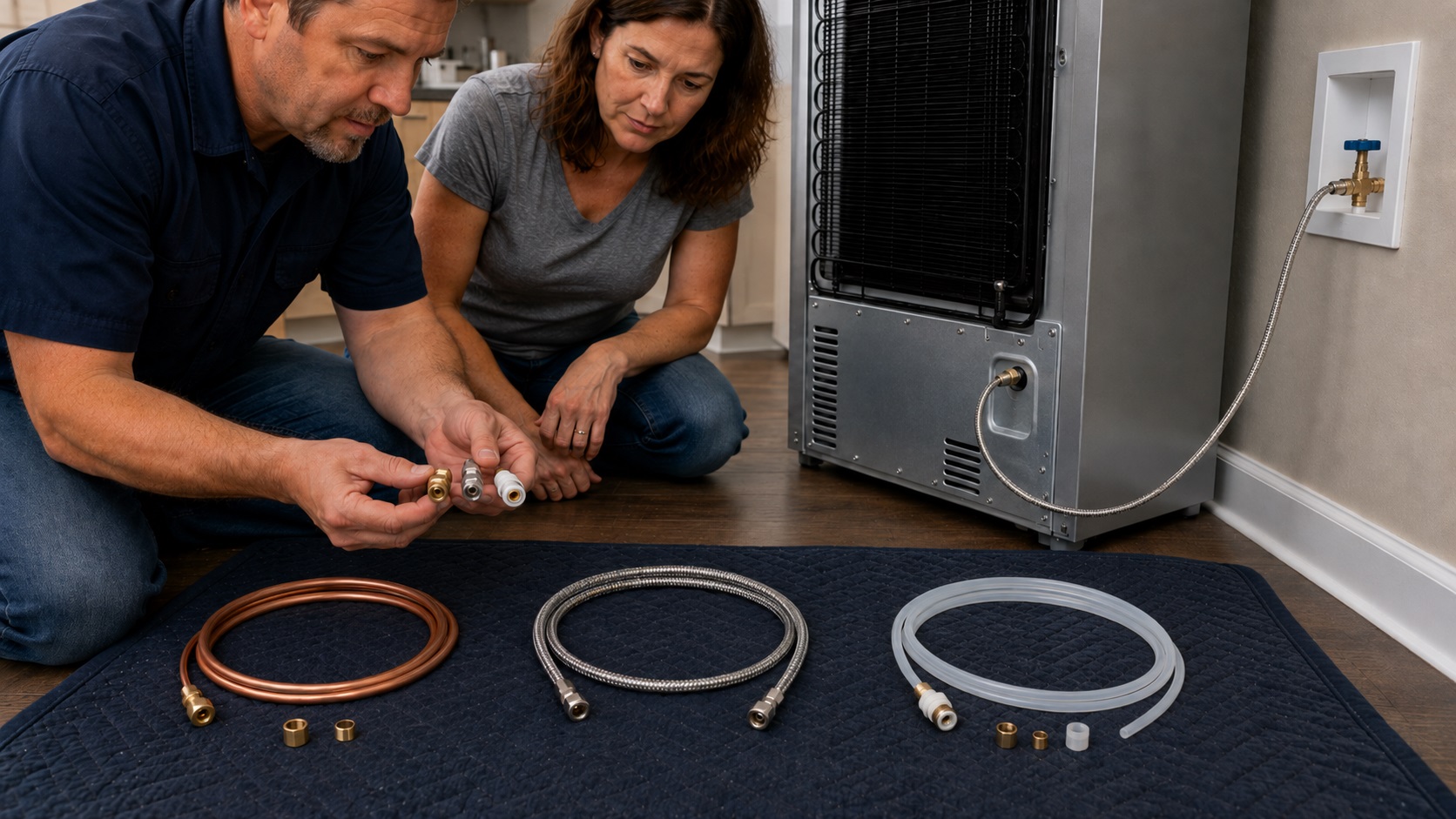
Ice maker water lines are commonly made from plastic tubing, copper tubing, or braided stainless-style supply lines. Each can work when properly rated and installed, but each has different replacement concerns. This section is not a product comparison; it only explains how material affects replacement timing.
Plastic ice maker tubing
Plastic tubing is common in older ice maker connections. It is flexible and inexpensive, but it is also more likely to become brittle, kinked, crushed, or cracked with age. Old plastic tubing is one of the most common reasons homeowners should replace an ice maker water line.
Plastic tubing should also be replaced if it rubs against a cabinet edge, runs through a rough floor opening, or sits where the refrigerator can pinch it.
Copper ice maker tubing
Copper tubing can be durable, but it is less forgiving when moved. A copper ice maker line can kink if it is bent too sharply behind the refrigerator. Once copper tubing has a sharp bend or crushed area, it may not be dependable even if it is not leaking yet.
Older copper lines should be replaced or professionally evaluated if they have sharp bends, corrosion at fittings, repeated movement history, or old compression connections. Copper can last a long time, but only when it is routed and connected correctly.
Braided ice maker lines
Braided ice maker lines are often easier to route and more resistant to exterior abrasion than plain plastic tubing. They can be a good replacement option when upgrading an old line, especially behind a refrigerator that may need to move for cleaning or service.
However, braided lines are not permanent. The inner tubing, washers, fittings, and outer braid can still wear out. Replace a braided line if it is kinked, frayed, corroded, damp at the fittings, or old enough that its condition is uncertain.
If you are ready to replace old tubing and want help comparing line options, the guide on choosing replacement ice maker water lines is the better place for product-specific guidance. This article stays focused on replacement timing and failure-risk awareness.
When to Call a Plumber Instead of Replacing the Line Yourself
Some ice maker water lines are simple to replace, but others are connected to old valves, hidden shutoffs, or fittings that should not be forced. The tubing may be small, but the connection is still part of the home’s water supply. If the valve or fitting fails during replacement, the problem can quickly become larger than the ice maker line itself.
Call a plumber if the ice maker line is connected to an old saddle valve, a stuck shutoff valve, a corroded fitting, or a valve that does not fully stop the water. Do not remove the line unless you know the water supply can be shut off safely at a working valve.
Professional help is also wise if the line runs through a wall, floor, cabinet cavity, or hard-to-reach space. In those cases, the visible tubing behind the refrigerator may only be one part of the connection. Replacing the line correctly may require rerouting, valve replacement, or a better access point.
You should also get help if there is already moisture damage near the refrigerator. Soft flooring, swollen trim, damp drywall, staining, or musty odor may mean the line has already leaked or another refrigerator moisture source is active. In that situation, replacing the ice maker tubing is only one part of preventing further damage.
If water is near an electrical outlet, appliance cord, or damaged flooring, stop using the area and address the safety risk before pulling the refrigerator farther out or touching wet connections.
FAQ
How long do ice maker water lines last?
Ice maker water lines often need replacement within 5 to 10 years, depending on material, condition, routing, and movement. Replace them sooner if the tubing is plastic, brittle, cracked, kinked, corroded, damp, connected to an old saddle valve, or of unknown age.
Should I replace plastic ice maker tubing?
Yes, if the plastic tubing is old, yellowed, cloudy, brittle, cracked, stiff, kinked, or unknown age. Plastic ice maker tubing can weaken over time, especially when it is hidden behind a refrigerator and exposed to movement or sharp bends.
Can I reuse an old ice maker water line with a new refrigerator?
It is usually better to replace an old ice maker water line when installing a new refrigerator. Reusing old tubing can carry hidden wear, kinks, old fittings, or valve problems into the new appliance setup. New tubing gives the connection a cleaner starting point.
Can an ice maker line leak if the ice maker is turned off?
Yes. If the supply valve is open, the line may still be under pressure even if the ice maker is not actively making ice. A cracked tube, loose fitting, old valve, or corroded connection can still leak behind the refrigerator.
Is copper or braided tubing better for an ice maker line?
Both can work when properly rated and installed. Copper can be durable but may kink when moved. Braided lines are often easier to route and more resistant to exterior abrasion, but they still need inspection and replacement if damaged, corroded, kinked, damp at the fittings, or old.
Before You Push the Refrigerator Back
Before the refrigerator goes back into place, replace any line that is old, brittle, kinked, corroded, damp, connected to an old saddle valve, made from aging plastic, or of unknown age. Because the line is small and usually hidden, it is easy to underestimate the risk.
If the refrigerator is being installed, moved, repaired, or pulled out for flooring or cabinet work, check the tubing and replace any questionable line before the appliance is pushed back into place. That one small step can prevent a hidden leak from starting behind a newly positioned refrigerator.