Best Asphalt Roof Cement and Roofing Tar Products for Small Repairs
Introduction
Small roof leaks often start around flashing, seams, roof penetrations, nail holes, cracked roof cement, or worn edges where water can slip under roofing materials. For these localized problems, homeowners often look for asphalt roof cement and roofing tar products for small repairs because they want a thick, tar-based material that can fill gaps, seal minor openings, and help protect vulnerable roof details from water intrusion.
This guide focuses only on asphalt roof cement, roofing tar, wet/dry roof cement, rubberized asphalt cement, and tar-based patching products. It does not cover roof repair tapes, butyl tapes, silicone caulks, liquid rubber coatings, elastomeric roof coatings, or complete roof leak repair kits. Those are separate product categories with different uses. If you are trying to understand why roof materials fail in the first place, start with our parent guide to common roofing material failures. For broader moisture prevention throughout the home, see our guide on how to find, fix, and prevent moisture problems in homes.
As an Amazon Associate, this site earns from qualifying purchases. This does not affect the price you pay. Our recommendations are based on research, product reliability, and real-world usability in moisture-prone environments.
Quick Picks Summary
- Best Overall: Henry 208 Wet Patch Roof Leak Repair Cement
- Best Rubberized Asphalt Cement: Henry 208R Rubberized Wet Patch Roof Cement, 1 Gallon Pail
- Best 1-Gallon All-Weather Roof Cement: Gardner-Gibson Black Jack All Weather Roof Cement, 1 Gallon
- Best Small Tube Wet/Dry Roof Cement: Black Jack Wet/Dry Surface Roof Cement Exterior, 10 Oz
- Also Consider for Small Asphalt Repairs: Red Devil 0636 Blacktop and Roof Repair Sealant
- Backup Asphalt Filler Option: DAP Roof Waterproof Asphalt Filler and Sealant
Asphalt Roof Cement and Roofing Tar Product Reviews
Best Overall: Henry 208 Wet Patch Roof Leak Repair Cement
Henry 208 Wet Patch Roof Leak Repair Cement is the strongest overall pick for homeowners who specifically want an asphalt-based roof cement rather than a general roof sealant. It is designed for localized roof leak repairs around common problem areas such as flashing edges, seams, roof projections, vent pipes, chimneys, and small openings where water may be entering. For a homeowner trying to stop a small roof leak before it leads to ceiling stains, attic dampness, insulation moisture, or mold risk, this is the most direct match for the article’s purpose.
This is not a cosmetic roof coating or a peel-and-stick patch. It is a thick, black, tar-like roof cement meant for practical repair work. That makes it useful when you need material that can bridge a small gap, cover a cracked area, or reinforce a vulnerable roof detail. It should still be used only on suitable roof surfaces and within the limits of a small repair. If the leak is recurring, widespread, or tied to roof age, also review our guide on why roof leaks return after repairs.
Key Features
- Asphalt-based wet patch roof cement for small roof leak repairs
- Useful around flashing, seams, roof edges, vents, chimneys, and minor openings
- Thick consistency helps fill and cover localized problem areas
- Good fit for homeowners who want a traditional roofing tar-style repair compound
- Available in a pail format that can handle more than one small repair area
Pros
- ✔ Strong fit for the asphalt roof cement and roofing tar category
- ✔ Better for small roof repair patches than broad liquid coatings
- ✔ Works well as the main recommendation because the use case is clear
- ✔ Good choice when a tube is too small for the repair area
Cons
- ✖ Messier to apply than a cartridge-style sealant
- ✖ Requires proper surface preparation and careful spreading
- ✖ Not a substitute for replacing failed flashing, rotten decking, or damaged shingles
- ✖ Larger container may be more than some homeowners need for one tiny repair
Best For
- Homeowners who want the most straightforward asphalt roof cement for small repairs
- Minor leaks around flashing, vent pipes, roof edges, and roof seams
- Small roof leak areas where a thick tar-based patch is more appropriate than tape or caulk
- DIY roof maintenance when the roof is otherwise in serviceable condition
Check the Henry 208 Wet Patch Roof Leak Repair Cement on Amazon to see current availability.
Best Rubberized Asphalt Cement: Henry 208R Rubberized Wet Patch Roof Cement, 1 Gallon Pail
Henry 208R Rubberized Wet Patch Roof Cement is the best pick in this list for homeowners who want a rubberized asphalt cement instead of a standard roof cement. Rubberized asphalt products are often chosen where some flexibility is helpful, such as around flashing edges, roof transitions, seams, and areas that may experience small amounts of movement from temperature changes. This does not mean it can fix structural roof failure, but it does make it a practical upgrade over basic tar-style cement for certain small repair situations.
The 1-gallon pail is also a better choice than the weaker cartridge listing that appeared during product research. The cartridge version had limited review strength and poor listing quality, while the 1-gallon pail is a cleaner choice for an affiliate comparison article. Use this product when the repair area is still small, but larger than what you would want to handle with a single tube.
Key Features
- Rubberized asphalt roof cement for wet patch-style roof repairs
- 1-gallon pail format for multiple small repair areas
- Useful around seams, flashing, roof details, and minor leak points
- Better flexibility than basic asphalt cement in some repair situations
- Designed for tar-based patching rather than full roof coating
Pros
- ✔ Rubberized formula gives it a more flexible repair profile
- ✔ Better fit than the low-rated cartridge version
- ✔ Good option for homeowners with several small leak-prone roof details
- ✔ Strong asphalt/tar-specific match for this article
Cons
- ✖ More material than needed for a single pinhole or tiny gap
- ✖ Still requires careful application and cleanup
- ✖ Not the right product for silicone, tape, or elastomeric coating use cases
- ✖ May be overkill for very small caulk-line repairs
Best For
- Homeowners who want a rubberized asphalt roof cement for small repairs
- Small roof leak areas where minor movement or expansion may be a concern
- Flashing edges, seams, roof penetrations, and older patched areas
- Readers who want a tar-based product but prefer a more flexible formula
Check the Henry 208R Rubberized Wet Patch Roof Cement on Amazon to see current availability.
Best 1-Gallon All-Weather Roof Cement: Gardner-Gibson Black Jack All Weather Roof Cement, 1 Gallon
Gardner-Gibson Black Jack All Weather Roof Cement is a strong alternative to Henry for homeowners who want a 1-gallon asphalt roof cement from another established roof repair brand. It fits the narrowed scope of this article well because it is a roof cement product rather than a tape, silicone, spray rubber, or roof coating. It is designed for patching and sealing localized roof areas, especially where cracks, splits, roof projections, seams, and flashing details need a thick repair compound.
This product is best treated as a practical all-weather roof cement for small-to-moderate localized repairs. It is especially useful when a homeowner has more than one repair area, such as a small seam near flashing plus an old patch around a vent boot. If you are dealing with repeated leaks around roof details, it may also be worth checking the symptoms in our guide to signs roof flashing is failing, because roof cement can only help if the underlying roof detail is still repairable.
Key Features
- Asphalt roof cement in a 1-gallon container
- Useful for cracks, splits, seams, flashings, and roof projections
- Thick patching consistency for localized roof repairs
- Good alternative to Henry roof cement products
- Better for tar-style roof patching than spray products or liquid coatings
Pros
- ✔ Strong fit for homeowners who want a traditional roof cement product
- ✔ 1-gallon size is useful for multiple small repairs
- ✔ Recognizable Black Jack / Gardner-Gibson product family
- ✔ Suitable for the article without drifting into tapes or sealants
Cons
- ✖ Pail application is less convenient than a caulk-gun tube
- ✖ Can be messy if the homeowner is inexperienced
- ✖ Not ideal for ultra-small precision gaps
- ✖ Not a complete roof repair solution for damaged shingles or failed flashing systems
Best For
- Homeowners who want a 1-gallon all-weather asphalt roof cement
- Multiple small roof repair spots on the same roof
- Localized cracks, splits, seams, roof projections, and flashing details
- DIY users who prefer a pail over a small tube
Check the Gardner-Gibson Black Jack All Weather Roof Cement on Amazon to see current availability.
Best Small Tube Wet/Dry Roof Cement: Black Jack Wet/Dry Surface Roof Cement Exterior, 10 Oz
Black Jack Wet/Dry Surface Roof Cement Exterior is the best small tube option in this narrowed list. It is useful when a homeowner does not need a full gallon of asphalt roof cement and wants a more controlled application from a tube. That makes it a practical choice for small gaps, short seams, flashing edges, nail holes, or limited roof details where a full pail would be wasteful or inconvenient.
This product should not be judged as the best value for larger repairs. Its strength is convenience, not coverage. A 10 oz tube is easier to store, easier to aim, and less intimidating for small touch-up repairs, but it is not the right choice for several long seams or broad patching areas. For small leak symptoms around vents or roof penetrations, also review our article on signs roof penetrations are leaking.
Key Features
- 10 oz tube format for smaller roof cement repairs
- Wet/dry roof cement style application
- Useful for short seams, flashing edges, small cracks, and localized openings
- Caulk-gun application is easier for precision work than a pail
- Good option when the repair area is small and limited
Pros
- ✔ More convenient than opening a full pail
- ✔ Better control for small roof details
- ✔ Good fit for homeowners making one or two limited repairs
- ✔ Less storage hassle after the project is finished
Cons
- ✖ Not enough material for larger patching jobs
- ✖ May seem expensive compared with pail-size products
- ✖ Not the best choice for multiple roof repair areas
- ✖ Tube application still requires good surface prep and careful smoothing
Best For
- Small roof cement touch-ups
- Homeowners who want a tube instead of a pail
- Short flashing gaps, nail holes, small cracks, and limited roof details
- DIY users who want less mess and easier handling
Check the Black Jack Wet/Dry Surface Roof Cement on Amazon to see current availability.
Also Consider for Small Asphalt Repairs: Red Devil 0636 Blacktop and Roof Repair Sealant
Red Devil 0636 Blacktop and Roof Repair Sealant is included as an “also consider” option rather than a main asphalt roof cement pick. It is relevant because it is an asphalt-based repair sealant that can be used for certain small roof-related sealing tasks, but it is not as pure a roofing tar or trowel-grade roof cement product as the Henry and Black Jack options above. That distinction matters for avoiding overlap with broader emergency roof sealant articles.
This product is best for homeowners who need a small cartridge-style asphalt repair sealant and do not want a pail. It may be useful around minor roof details, but it should not be presented as the heavy-duty tar patch option in this article. If your main goal is a fast temporary sealant for active weather-related leaks, that is a different product category from asphalt roof cement.
Key Features
- Asphalt-based blacktop and roof repair sealant
- Small cartridge format for limited repair areas
- Can be used for minor roof sealing tasks where appropriate
- More convenient than a trowel-grade pail
- Also useful for certain asphalt repair situations outside roofing
Pros
- ✔ Convenient cartridge format
- ✔ Useful as a backup small-repair asphalt sealant
- ✔ Easier to apply than heavy roof cement from a pail
- ✔ Good option when a homeowner wants a smaller product
Cons
- ✖ Not as roofing-tar-specific as the main picks
- ✖ Leans more toward a multi-use asphalt sealant
- ✖ Not ideal for larger roof cement patches
- ✖ Could overlap with emergency sealant use if described too broadly
Best For
- Small asphalt-based roof sealing tasks
- Homeowners who want a backup cartridge option
- Minor cracks, small gaps, and limited exterior asphalt sealing needs
- Users who do not want to open a full pail of roof cement
Check the Red Devil 0636 Blacktop and Roof Repair Sealant on Amazon to see current availability.
Backup Asphalt Filler Option: DAP Roof Waterproof Asphalt Filler and Sealant
DAP Roof Waterproof Asphalt Filler and Sealant is a useful backup option because it fits the asphalt roof repair category, but it should not be the main recommendation unless the Amazon listing has strong availability at the time you publish. It is a cartridge-style asphalt filler and sealant, which makes it a logical fit for small roof repair tasks around shingles, flashing, and minor openings. However, listing availability can be inconsistent, so it is safer to treat it as a backup product.
When available, this is a practical choice for homeowners who need a small amount of asphalt-based filler rather than a gallon of roof cement. It is most appropriate for minor roof repair work, not broad resurfacing or major roof failure. If roof damage is extensive or recurring, review our guide on when a roof must be replaced instead of repaired.
Key Features
- Asphalt-based roof filler and sealant
- Cartridge format for small repairs
- Useful around minor roof gaps, flashing details, and shingle-related openings
- More precise than trowel-grade pail application
- Best treated as a backup option due to availability concerns
Pros
- ✔ Good category fit when available
- ✔ Small tube format is convenient for minor repairs
- ✔ Asphalt-based rather than silicone or liquid rubber
- ✔ Useful backup if the preferred tube-style options are unavailable
Cons
- ✖ Availability may be inconsistent
- ✖ Not strong enough as the primary article recommendation
- ✖ Limited material compared with pail-size roof cement
- ✖ Not suitable for large roof repairs or failed roofing systems
Best For
- Homeowners who need a backup asphalt filler and sealant option
- Small roof gaps and minor flashing-related repairs
- Users who prefer a cartridge over a pail
- Situations where the main tube-style product is not available
Check the DAP Roof Waterproof Asphalt Filler and Sealant on Amazon to see current availability.
Product Comparison Table
| Product | Category | Best Use Case | Key Strengths | Main Limitation | Amazon Link |
|---|---|---|---|---|---|
| Henry 208 Wet Patch Roof Leak Repair Cement | Best Overall | General asphalt roof cement repairs around flashing, seams, vents, and small leak points | Strongest overall match for traditional roofing tar-style repair work | Messier than a tube and not ideal for tiny precision-only repairs | View on Amazon |
| Henry 208R Rubberized Wet Patch Roof Cement, 1 Gallon Pail | Best Rubberized Asphalt Cement | Small roof repairs where extra flexibility is useful | Rubberized asphalt formula in a practical pail size | More material than needed for a single tiny gap | View on Amazon |
| Gardner-Gibson Black Jack All Weather Roof Cement, 1 Gallon | Best 1-Gallon All-Weather Roof Cement | Multiple small roof repairs using a traditional roof cement | Good pail-format alternative from a recognized roof repair brand | Less convenient than a cartridge for very small repairs | View on Amazon |
| Black Jack Wet/Dry Surface Roof Cement Exterior, 10 Oz | Best Small Tube Wet/Dry Roof Cement | Small seams, nail holes, flashing gaps, and minor roof details | Caulk-gun format is easier for controlled application | Not enough material for larger patching jobs | View on Amazon |
| Red Devil 0636 Blacktop and Roof Repair Sealant | Also Consider for Small Asphalt Repairs | Small cartridge-style asphalt sealing tasks | Convenient backup option for minor asphalt-based sealing | Not as roofing-tar-specific as the main roof cement picks | View on Amazon |
| DAP Roof Waterproof Asphalt Filler and Sealant | Backup Asphalt Filler Option | Minor asphalt filler repairs when available | Small tube format and asphalt-based composition | Availability may be inconsistent | View on Amazon |
Buying Guide: How to Choose Asphalt Roof Cement or Roofing Tar for Small Repairs
The most important decision is whether you need a pail-style asphalt roof cement or a tube-style wet/dry roof cement. A pail is better when you have multiple small repairs, a larger flashing edge, a cracked old patch, or a roof detail that needs trowel-grade material. A tube is better when the repair is narrow, short, and easy to reach with a caulk gun.
Choose Henry 208 Wet Patch Roof Leak Repair Cement if you want the most direct asphalt roof cement recommendation. It is the best overall choice for homeowners who came looking for roofing tar for small repairs.
Choose Henry 208R Rubberized Wet Patch Roof Cement if you want a rubberized asphalt cement and the repair area may need a little more flexibility. This is useful around seams and details where temperature movement may stress a basic patch.
Choose Gardner-Gibson Black Jack All Weather Roof Cement if you want a 1-gallon pail from another established roofing brand. It is a good option if you are patching several small problem areas and want a traditional all-weather roof cement.
Choose Black Jack Wet/Dry Surface Roof Cement Exterior if you only need a small tube. It is the most practical choice for homeowners who want less mess and more control around a limited repair area.
Use Red Devil 0636 and DAP Roof Waterproof Asphalt Filler and Sealant as backup options. They can fit small asphalt repair needs, but they are not as strong as the primary roof cement picks for a dedicated roofing tar article.
If you need a peel-and-stick membrane, flashing tape, roof repair tape, silicone caulk, or a complete bundled roof leak kit, this is the wrong product category. Asphalt roof cement is best for tar-style patching, not for tape-based flashing repairs, preventive caulking, or full emergency repair kits.
Also think about the roof problem itself. Asphalt roof cement can help with small surface-level gaps and vulnerable roof details, but it should not be used to hide serious roof failure. If you see soft decking, recurring stains, sagging, widespread shingle damage, or repeated leaks, read our guide on signs roof decking is rotten before assuming a small patch is enough.
How to Apply Asphalt Roof Cement Without Trapping Water
Start by identifying the leak area as accurately as possible. Roof leaks can travel before they show up indoors, so the visible ceiling stain is not always directly below the exterior leak. If you are still tracing the source, see our guide on how to detect hidden roof leaks.
Clean the repair area before applying asphalt roof cement. Remove loose debris, dirt, failing old patch material, and loose granules where practical. The surface does not need to look new, but the roof cement needs a stable surface to grip. Do not apply fresh roofing tar over loose, crumbling, or peeling material and expect a durable result.
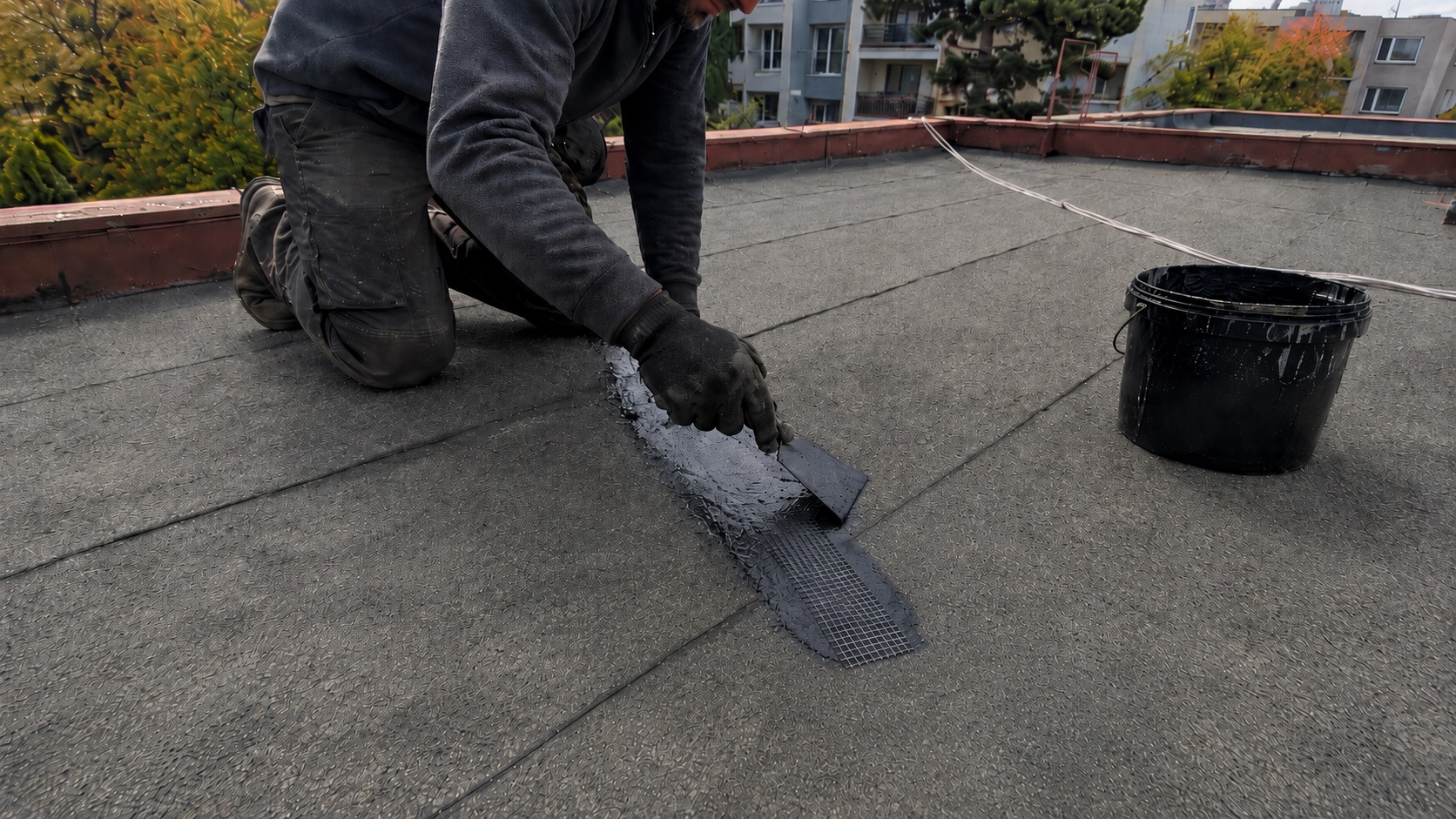
Use the right tool for the product format. For pails, a disposable putty knife or trowel is often easier than trying to use a small scraper. For tubes, use steady pressure from a caulk gun and smooth the bead so water cannot catch behind ridges or gaps. Follow the product label for application thickness, weather limits, safety instructions, and cleanup.
Do not spread roofing tar across a large roof area unless the product is intended for that use. These products are patching materials, not full roof restoration systems. A thick blob in the wrong place can trap water, create ridges, or hide the real failure point.
After the repair, monitor the area after the next rain. Look inside the attic if it is safe to do so, check for new staining, and watch for musty odors or damp insulation. Our guide on how to monitor roof areas after repairs can help you confirm whether the patch solved the problem or only slowed it down.
Roofing Tar Mistakes That Can Make Small Leaks Worse
Using Roofing Tar on the Wrong Type of Problem
Asphalt roof cement is useful for small repairs, but it is not a fix for rotten decking, severe shingle loss, major flashing failure, or a roof that has reached the end of its service life. If the leak keeps returning, the roof may need proper repair rather than another layer of tar.
Confusing Roof Cement with Roof Coating
Roof cement is a patching product. Roof coatings are spread over broader surfaces for different purposes. Do not buy a pail of asphalt roof cement expecting it to behave like an elastomeric roof coating.
Applying Too Much Material
More tar does not always mean a better repair. Heavy buildup can create edges where water collects. The goal is to seal the problem area cleanly, not create a mound that changes water flow.
Ignoring Failed Flashing
If flashing is loose, rusted, missing, or badly installed, roof cement may only provide a temporary patch. Flashing problems often need proper mechanical repair. If chimney flashing is the issue, review signs of chimney flashing failure before relying on patch material alone.
Using a Pail When a Tube Would Be Enough
A full pail makes sense for several small repairs, but it may be unnecessary for one tiny gap. For a very small repair, a tube-style wet/dry roof cement may be cleaner and easier to control.
Using a Tube When a Pail Is Needed
The opposite mistake is also common. If you have multiple seams, old cracked roof cement, or a larger flashing edge, a small tube may run out before the repair is properly covered.
Skipping Post-Repair Moisture Checks
A roof patch is only successful if the interior stays dry afterward. Check the attic, ceiling, insulation, and nearby framing after rain. Hidden moisture can still lead to stains, odors, or mold if the repair did not fully stop the leak.
FAQ About Asphalt Roof Cement
What is the difference between asphalt roof cement and roofing tar?
Homeowners often use the terms interchangeably, but roofing tar is a broad informal phrase. Asphalt roof cement is a specific patching material used for small roof repairs, flashing details, seams, cracks, and minor leak points. This article focuses on asphalt-based roof cement and tar-style patching products.
Can asphalt roof cement stop a small roof leak?
It can help with some small, localized leak points, especially around seams, flashing edges, roof projections, and minor cracks. It should not be treated as a guaranteed fix for structural roof damage, failed decking, widespread shingle failure, or major flashing problems.
Should I choose a pail or a tube?
Choose a pail if you have several small repairs or a larger area that needs trowel-grade roof cement. Choose a tube if you have a narrow gap, small seam, nail hole, or limited flashing detail where controlled application matters more than quantity.
Is rubberized asphalt roof cement better than regular roof cement?
Rubberized asphalt cement can be a better choice when flexibility is helpful, such as around seams or roof details that move slightly with temperature changes. Regular asphalt roof cement can still be a good choice for many basic small repairs.
Can I use asphalt roof cement instead of roof repair tape?
Sometimes, but they are different product types. Roof cement is a tar-like patching compound. Roof repair tape is a self-adhering membrane or tape. If the repair needs tape, flashing membrane, or butyl tape, choose a product from that category rather than forcing roof cement into the job.
Can roofing tar cause moisture problems if used incorrectly?
Yes. If it is applied too thickly, spread in the wrong direction, or used to cover a problem that needs proper repair, it can trap water, hide deterioration, or delay a necessary fix. Use it only for appropriate small repairs and monitor the area afterward.
How do I know if a roof repair is too serious for asphalt roof cement?
If you see sagging, soft roof decking, widespread shingle loss, repeated leaks, damaged flashing, interior mold growth, or long-term moisture stains, the problem may be beyond a small roof cement repair. In those cases, a roofing contractor may be needed.
Should I use these products for emergency roof repairs?
Some wet/dry roof cement products can be used in urgent situations, but this article is not a general emergency roof sealant guide. This guide is specifically about asphalt roof cement and roofing tar products for small repairs.
Conclusion
For most homeowners looking for asphalt roof cement and roofing tar products for small repairs, Henry 208 Wet Patch Roof Leak Repair Cement is the best overall choice because it fits the traditional roof cement use case clearly. Choose Henry 208R Rubberized Wet Patch Roof Cement if you want a rubberized asphalt option with more flexibility.
If you want a 1-gallon alternative from another established brand, Gardner-Gibson Black Jack All Weather Roof Cement is the strongest pail-style alternative. For a smaller, cleaner repair, Black Jack Wet/Dry Surface Roof Cement Exterior is the best tube-style pick.
Red Devil 0636 Blacktop and Roof Repair Sealant and DAP Roof Waterproof Asphalt Filler and Sealant are better treated as backup options rather than primary recommendations. They can work for certain small asphalt-based repairs, but they are not as strong a match for traditional roofing tar and asphalt roof cement as the main picks.
The most important point is to match the product to the repair. A small crack, seam, or flashing edge may be a reasonable DIY patch. Recurring leaks, damaged roof decking, severe flashing failure, or widespread roof deterioration usually require more than another layer of roofing tar.