
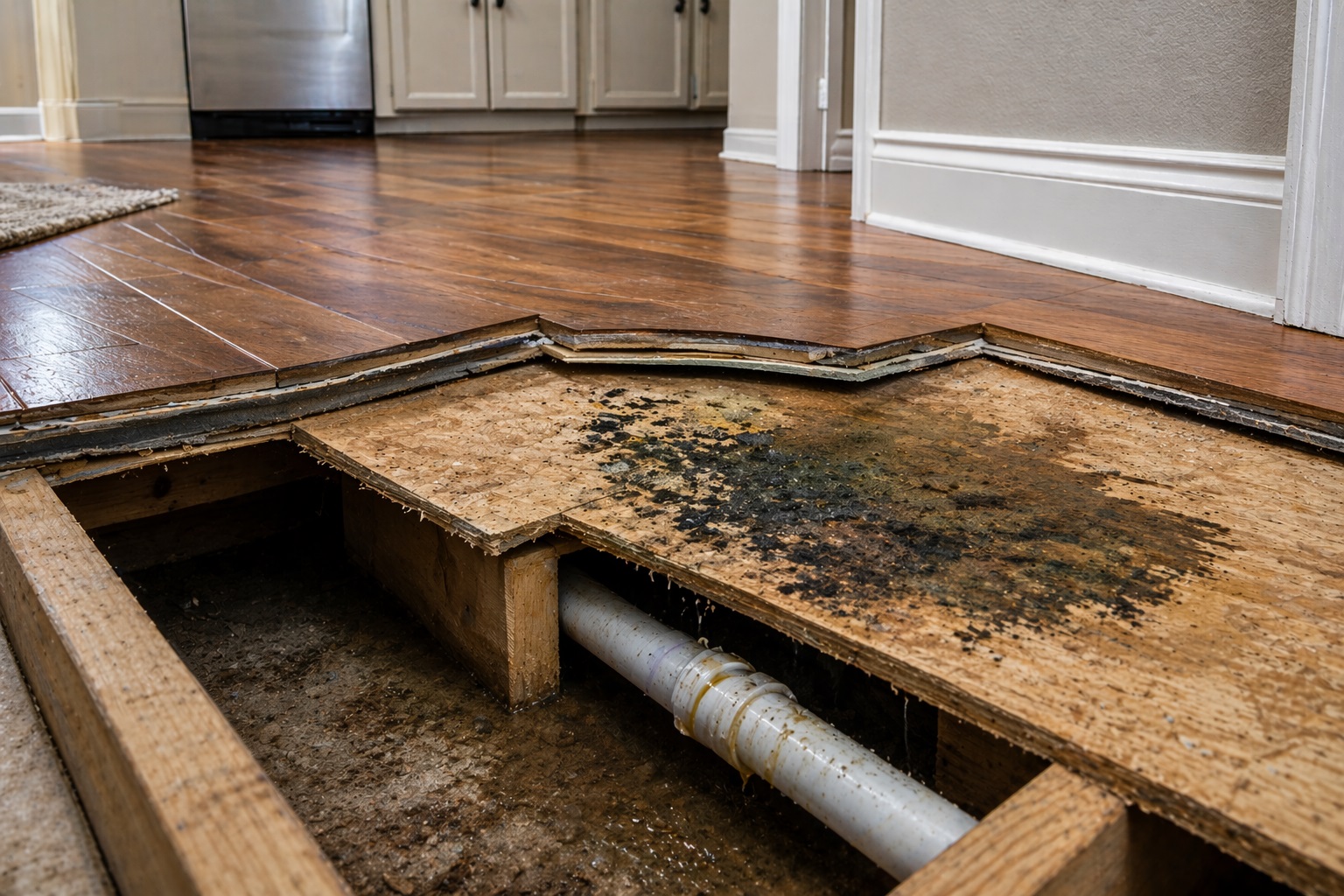
Signs of Mold Under Flooring (How to Detect Hidden Mold Beneath Floors)
The most common signs of mold under flooring are a persistent musty odor, soft or spongy floor areas, dark staining near seams, warped boards, damp spots that return after drying, and visible mold along floor edges or baseboards. These symptoms matter because mold can grow beneath finished flooring before it appears on the surface.
This guide explains the warning signs of hidden floor mold, the areas where it usually develops, and the safest ways to confirm whether moisture or mold may be trapped below the floor.
For a broader room-by-room inspection approach, use how to find hidden moisture in different areas of your home as the parent guide for checking floors, walls, cabinets, bathrooms, and other moisture-prone areas.
How Mold Develops Under Flooring
Mold beneath flooring usually develops when moisture becomes trapped between the finished floor and the subfloor. Limited airflow below flooring allows damp materials to stay wet long enough for mold to grow.
Common moisture sources that lead to mold under flooring include:
- Plumbing leaks beneath sinks or appliances
- Flooding or water damage events
- Spilled water that seeps through flooring seams
- Condensation beneath flooring materials
- High indoor humidity levels
High indoor humidity can make trapped floor moisture harder to dry, especially in bathrooms, kitchens, basements, and rooms with poor ventilation.
When moisture remains trapped beneath flooring, mold can begin developing quickly after water damage. For timing and urgency, see how long mold takes to grow after water damage.
Early Signs of Mold Under Flooring
Many floor mold problems begin with subtle warning signs before visible mold appears.
Persistent Musty Odors
A musty odor is often one of the earliest signs of mold beneath flooring. Mold releases airborne compounds that produce a distinctive smell, even when mold remains hidden.
Musty odors associated with flooring mold often:
- Appear stronger in enclosed rooms
- Persist despite cleaning efforts
- Become more noticeable during humid conditions
- Return after temporary ventilation
If musty odors develop in specific areas, hidden mold beneath flooring may be present.
Warped or Buckling Flooring
Warping or buckling often indicates moisture trapped beneath flooring materials. When moisture accumulates beneath flooring, materials may expand and distort.
Warped flooring may appear as:
- Raised edges between boards
- Uneven floor surfaces
- Curved or lifted flooring sections
- Visible gaps forming between boards
Check whether the raised or warped area is near a plumbing fixture, appliance, exterior door, bathroom, or previous spill location. A localized pattern usually points to trapped moisture beneath that section of flooring.
Soft or Spongy Floor Areas
Soft or spongy flooring areas may indicate moisture damage beneath the surface. When moisture weakens subfloor materials, the flooring above may feel unstable.
Soft flooring commonly develops:
- Near sinks or plumbing fixtures
- Around toilets or showers
- Near washing machines
- In areas previously affected by flooding
If flooring compresses under normal foot pressure, avoid repeatedly walking on that area. Softness can mean the subfloor is wet, weakened, or already damaged enough to need professional inspection.
Common Locations Where Mold Develops Under Flooring
Mold beneath flooring is most likely where water is used, spilled, trapped, or hidden by appliances and fixtures.
Bathrooms and Shower Areas
Bathrooms are among the highest-risk areas for mold beneath flooring due to frequent moisture exposure.
Bathroom flooring mold commonly develops due to:
- Water leaking around toilets
- Damaged shower seals
- Water splashing outside shower enclosures
- Persistent humidity buildup
Because bathrooms produce large amounts of moisture, flooring materials in these areas require careful inspection.
Kitchens and Appliance Locations
Kitchens contain multiple plumbing connections that increase the likelihood of hidden leaks beneath flooring.
Common kitchen-related causes include:
- Dishwasher leaks
- Refrigerator water line failures
- Sink plumbing leaks
- Garbage disposal leaks
Moisture beneath appliances may remain unnoticed until flooring damage becomes visible.
Additional Warning Signs of Mold Under Flooring
As moisture remains trapped beneath flooring, the warning signs often become more visible on the surface and around floor edges.
Flooring Discoloration or Staining
Discoloration on flooring surfaces often indicates moisture damage beneath the surface. As water spreads through materials, it may cause visible changes in color or texture.
Discoloration associated with hidden mold often appears as:
- Darkened patches on wood flooring
- Yellow or brown stains on laminate surfaces
- Uneven color patterns across flooring sections
- Dark spots forming near seams or joints
These stains may indicate moisture trapped beneath flooring materials, which can eventually support mold growth.
Persistent Dampness or Moisture on Floor Surfaces
Moisture appearing repeatedly on flooring surfaces often indicates hidden moisture beneath the material. This condition may occur even when visible leaks are not present.
If dampness appears at the edge where the floor meets the wall, check both the flooring and the lower wall area instead of assuming the problem is limited to the surface you can see.
Recurring dampness may appear as:
- Wet spots that return after drying
- Moisture forming along flooring seams
- Damp areas near appliances or plumbing
- Moisture appearing during humid conditions
If dampness continues returning, hidden moisture beneath flooring is likely present.
Visible Mold Appearing Along Floor Edges
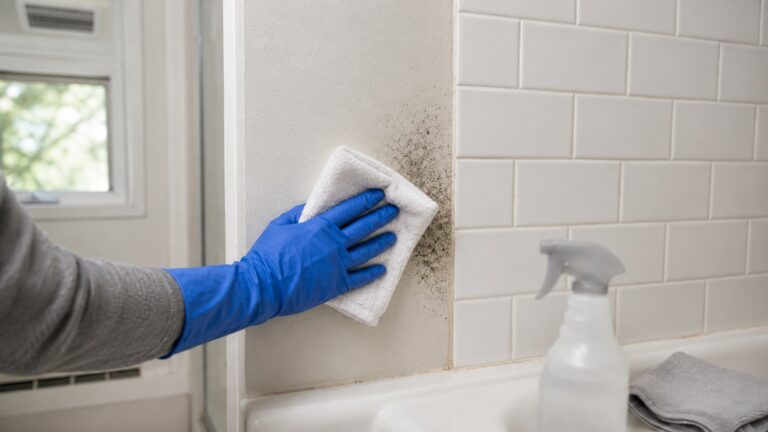
Mold sometimes becomes visible along the edges of flooring materials before spreading across larger areas. These visible signs often indicate hidden mold growth beneath the flooring surface.
Visible mold may appear:
- Along baseboards
- At flooring seams
- Around door frames
- Near plumbing fixtures
If visible mold appears along edges, mold beneath the flooring is likely already established.
Do not sand, scrape, or pull up moldy flooring without protection. Disturbing mold-contaminated materials can release particles into the room, especially if the affected area is large, damp, or connected to a crawl space or subfloor cavity.
Increased Allergy Symptoms Indoors
Mold beneath flooring can release airborne particles that affect indoor air quality. In some cases, health-related symptoms may appear before visible mold becomes obvious.
Possible mold-related symptoms include:
- Increased sneezing or coughing indoors
- Eye irritation or watery eyes
- Nasal congestion
- Persistent throat irritation
- Symptoms improving when leaving the home
Although these symptoms may have multiple causes, persistent indoor symptoms sometimes indicate hidden mold growth.
Signs of Subfloor Damage Caused by Mold
As mold spreads beneath flooring, it may begin damaging structural components such as the subfloor. Subfloor damage often indicates long-term moisture exposure.
Sagging or Uneven Floor Surfaces
Sagging floors often indicate weakened subfloor materials. When moisture remains present for extended periods, wood-based subfloors may lose strength.
Common sagging symptoms include:
- Uneven walking surfaces
- Low spots forming in flooring
- Noticeable dips between support areas
- Floor sections that shift under weight
These structural changes often indicate long-term moisture exposure beneath flooring.
Creaking or Movement When Walking
Unusual sounds such as creaking or movement beneath flooring may indicate subfloor deterioration caused by moisture damage.
These sounds may occur due to:
- Loose fasteners caused by moisture swelling
- Warped subfloor materials
- Structural weakening beneath flooring
- Movement between damaged layers
If flooring begins producing new sounds, hidden moisture problems should be investigated.
Persistent Mold Odors From Floor Vents
Mold beneath flooring may produce odors that travel through ventilation systems. These odors sometimes become noticeable near floor vents.
Warning signs include:
- Musty odors coming from floor vents
- Odors intensifying when ventilation systems run
- Persistent smells that do not improve with cleaning
If odors appear near floor vents, mold growth beneath flooring or inside subfloor cavities may be present.
Signs Mold May Be Spreading Beyond the Floor
If the moisture source continues, floor mold can spread into nearby subfloor areas, baseboards, and lower wall materials.
Spread Into Nearby Walls
Mold beneath flooring often spreads into adjacent wall cavities. Moisture traveling upward allows mold to affect drywall and framing materials.
Warning signs that mold may be spreading into walls include:
- Discoloration near wall bases
- Soft drywall near flooring edges
- Musty odors along wall surfaces
- Visible mold near baseboards
If wall-related symptoms appear, reviewing the signs of mold behind walls helps determine whether mold has spread into structural walls.
Spread Beneath Adjacent Flooring Areas
Mold beneath flooring can spread horizontally across subfloor surfaces. This spreading often occurs when moisture travels along seams or structural supports.
Horizontal spread commonly results in:
- Multiple affected flooring areas
- Growing musty odors across rooms
- Expanding areas of floor damage
- Increasing moisture levels across surfaces
Catching these signs early can limit how much flooring, subflooring, or baseboard material has to be opened or replaced.
How to Check Whether Floor Mold Is Likely
You usually cannot confirm hidden floor mold by looking at the surface alone. Instead, look for moisture patterns that match the symptoms in this guide: musty odor, returning dampness, soft flooring, staining, edge mold, or warped flooring near a likely water source.
A moisture meter can help identify damp areas beneath flooring or along seams, baseboards, doorways, and plumbing fixtures. Compare several nearby readings instead of relying on one spot. Areas with noticeably higher readings are more suspicious, especially when they match visible symptoms.
For interpreting readings, see moisture levels that indicate water damage. For broader non-invasive inspection methods, see how to detect moisture without opening walls.
When Non-Invasive Checks Are Not Enough
Surface checks can point to hidden mold, but they cannot always prove what is happening beneath finished flooring. If odors, dampness, staining, or soft flooring continue after cleaning and drying the surface, the problem may be below the finished floor.
Professional inspection becomes more important when the floor feels soft, moisture keeps returning, mold appears along edges, or the affected area is near plumbing, appliances, bathrooms, crawl spaces, or previous flooding.
When to Suspect Hidden Mold Beneath Flooring
Certain conditions increase the likelihood of mold beneath flooring materials. Recognizing these risk factors helps determine when inspection is necessary.
After Flooding or Major Water Damage
Flooding events often introduce large volumes of moisture beneath flooring materials. Even when surfaces appear dry, moisture may remain trapped beneath layers.
Flood-related mold risks increase when:
- Water exposure lasts several hours
- Drying efforts are delayed
- Carpet padding remains wet
- Subfloor materials absorb moisture
After flooding, recurring odor, soft flooring, or damp seams should be treated as warning signs that moisture may still be trapped below the surface.
After Appliance Leaks
Appliance leaks often release water slowly beneath flooring materials. Because these leaks remain hidden, moisture may accumulate unnoticed.
Common appliance-related risks include:
- Dishwasher failures
- Washing machine hose leaks
- Refrigerator water line damage
- Water heater leaks
Regular inspection after appliance repairs helps confirm whether moisture remains beneath flooring.
After Plumbing Repairs
Plumbing repairs may introduce temporary moisture conditions that support mold growth if materials are not fully dried.
Monitoring repaired areas helps prevent recurring moisture problems.
If moisture problems continue after repairs, inspect nearby plumbing connections, appliance lines, bathroom fixtures, and wall-floor edges for an ongoing hidden leak.
What to Do After You Suspect Mold Under Flooring
If several warning signs point to mold beneath flooring, do not simply clean the visible surface and cover the area back up. Hidden mold usually means moisture is still trapped below the finished floor or inside nearby materials.
First: Stop the Moisture Source
Look for nearby plumbing leaks, appliance leaks, toilet seal problems, shower leaks, flooding history, crawl space moisture, or humidity patterns. Mold under flooring will return if the moisture source is not corrected.
Then: Confirm the Floor Is Actually Dry Beneath the Surface
A floor can feel dry on top while moisture remains trapped beneath it. If the area stays musty, feels soft, or shows recurring dampness, deeper drying or professional moisture inspection may be needed before repairs are made.
Do Not Reinstall or Seal Flooring Too Soon
Do not reinstall flooring, add new underlayment, seal stains, or cover the area until the moisture source is fixed and affected materials are dry. Covering a damp subfloor can trap mold-friendly conditions again.
If widespread mold is discovered beneath flooring, the safest next step is to stop the moisture source, avoid covering the area back up, and follow a proper mold cleanup plan before reinstalling flooring.
For cleanup guidance after hidden mold is confirmed, see how to remove mold permanently. To reduce the chance of the same problem returning, see how to prevent mold under flooring.
One Comment
Comments are closed.