
Signs of Roof Condensation in Attics
Roof condensation inside an attic can look like a roof leak, but the pattern is often different. Instead of one wet spot below a damaged shingle, vent, valley, or flashing area, condensation usually appears as scattered droplets, frost, darkened sheathing, damp nail tips, or wet insulation across wider attic surfaces.
Understanding the signs of roof condensation in attics helps homeowners recognize moisture early without assuming every attic stain requires roof repair. The key clues are where the moisture appears, whether it follows rainfall, and whether it forms during cold nights, humid conditions, or poor attic airflow.
If you are seeing attic moisture along with other home moisture symptoms, this complete guide to finding, fixing, and preventing moisture problems in homes explains how moisture moves through different parts of a house.
What Roof Condensation Looks Like in an Attic
Roof condensation forms when warm, moisture-filled indoor air reaches cold attic surfaces. The most common visible result is moisture on the underside of roof sheathing, rafters, nail tips, and other cold materials.
In many homes, the first visible signs appear during colder seasons. Winter weather creates strong temperature differences between indoor air and outdoor roof surfaces, making condensation more likely. However, condensation can also occur in humid climates, especially when attic airflow is restricted or indoor humidity levels remain high.
Common visual appearances of roof condensation include:
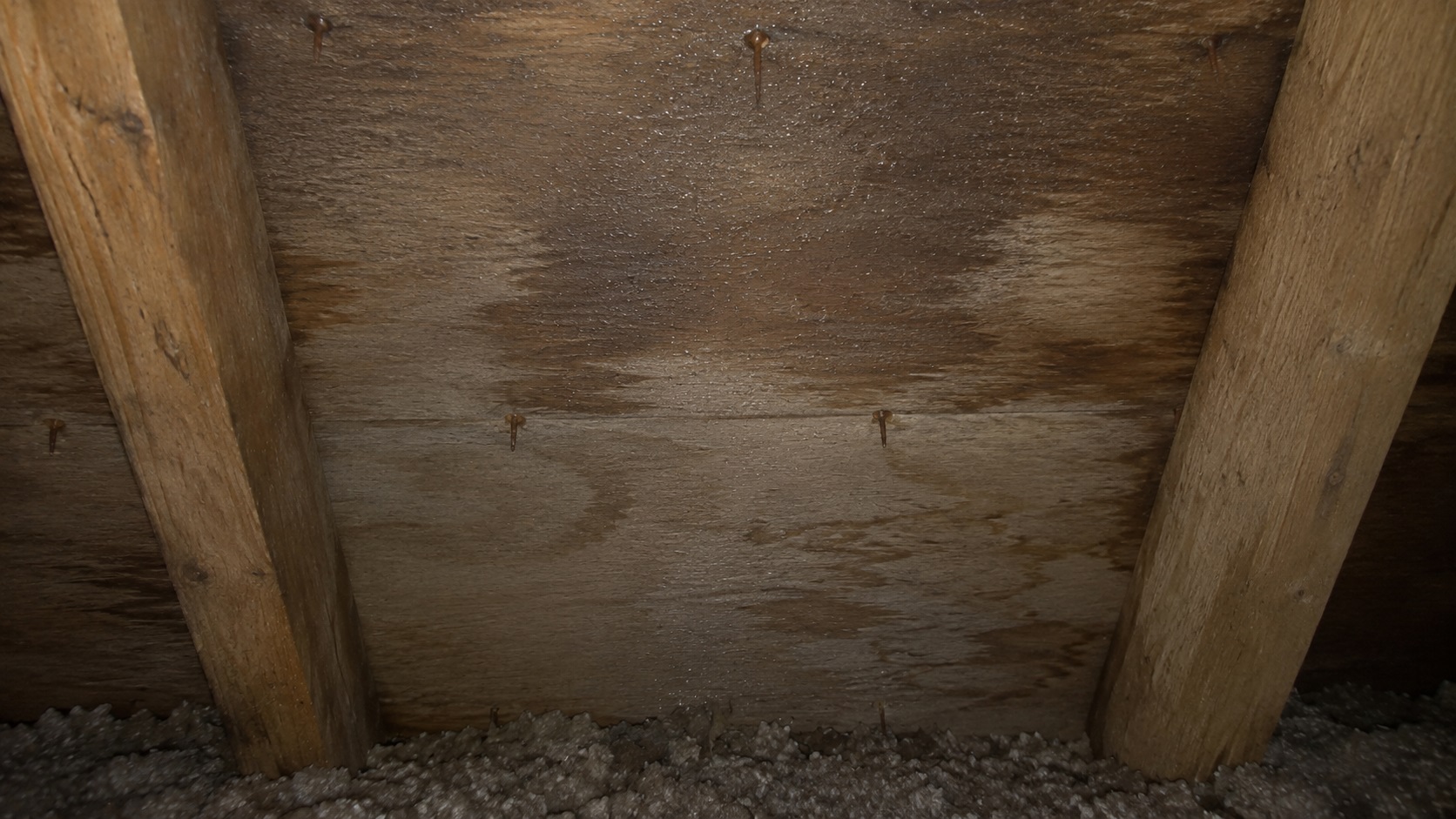
- Water droplets forming on the underside of roof sheathing
- Damp or darkened wood surfaces along rafters
- Moisture forming on exposed nail tips or metal connectors
- Thin films of moisture covering wide roof areas
- Frost buildup on wood or metal during cold weather
These moisture patterns often develop across large areas rather than at a single point. That widespread appearance is one of the most important clues that the moisture is caused by condensation instead of an exterior roof leak.
If the moisture appears scattered across roof surfaces or becomes noticeable during colder nights, it may indicate indoor humidity is reaching attic spaces and condensing on cold materials. Problems like poor airflow are often involved, and recognizing signs of poor attic ventilation can help explain why condensation develops even when the roof itself is intact.
Common Signs of Roof Condensation in Attics
The strongest signs are usually pattern-based: moisture appears across cold attic surfaces, repeats during certain weather conditions, and does not trace back to one obvious roof opening.
Water Droplets on Roof Sheathing
One of the clearest signs of attic condensation is visible droplets forming on the underside of roof sheathing. These droplets may look like beads of water forming across wood surfaces, especially early in the morning or after overnight temperature drops.
Unlike leak-related water, which usually travels along a predictable path, condensation droplets typically appear across wide sections of roof surfaces. The moisture often forms evenly rather than dripping from a single point.
If you notice scattered droplets across roof boards without a clear leak path, the issue may involve humidity buildup instead of roofing failure. For a closer look at this material-specific symptom, see signs of condensation on roof sheathing.
Frost on Nail Tips or Metal Fasteners
In colder climates, condensation often freezes before it becomes visible liquid water. Nail tips that extend through roof sheathing are especially prone to frost formation because metal cools faster than surrounding wood.
Homeowners inspecting their attic during winter months may notice tiny white frost caps forming on exposed nail points. This frost often melts later in the day, creating dripping moisture that can soak nearby insulation.
Repeated freeze-and-thaw cycles can wet nearby insulation, darken wood, and create moisture conditions that should not be dismissed as harmless winter frost.
Dark Staining on Roof Sheathing or Rafters
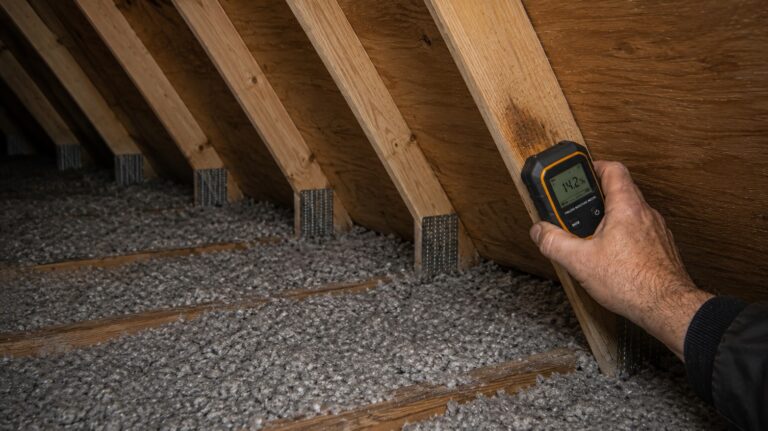
Persistent condensation often leaves visible discoloration on wood surfaces. These stains may appear as darkened areas, streaks, or irregular patches along roof boards or rafters.
Unlike fresh leak stains that often look concentrated near penetrations, condensation stains usually appear across broader areas of the roof structure. The discoloration often spreads slowly, following patterns of airflow and temperature change rather than rainfall paths.
If staining continues to expand, moisture may be recurring often enough to support mold or wood deterioration. For the fuller mold-risk explanation, see why roof condensation causes mold growth.
Damp or Compressed Insulation Near Roof Surfaces
Attic insulation is highly vulnerable to condensation damage. Water droplets forming on roof surfaces often drip downward into nearby insulation layers, reducing their effectiveness and trapping moisture.
When insulation becomes wet, it may appear:
- Flattened or compressed
- Clumped or uneven
- Darker in color than surrounding areas
- Heavier than dry insulation
- Musty in odor
Wet insulation also performs poorly, which can make nearby attic surfaces colder and allow condensation symptoms to repeat.
In some homes, wet insulation also leads to interior ceiling staining. If moisture appears below attic areas, compare those symptoms to signs of roof leaks inside the house to determine whether the moisture source originates inside the attic or from exterior roof damage.
Roof Condensation vs Roof Leak: Key Differences Homeowners Should Know
Roof condensation and roof leaks can both create stains, wet insulation, and dripping water. The best clues are pattern, timing, and location: condensation is usually wider and weather-temperature related, while leaks usually trace back to an exterior entry point.
| Clue | Condensation is more likely when… | A roof leak is more likely when… |
|---|---|---|
| Pattern | Moisture appears across wide roof surfaces. | Moisture follows one path from a roof opening. |
| Timing | Moisture appears after cold nights or humid indoor conditions. | Moisture appears during rain, storms, or snowmelt. |
| Location | Droplets or frost appear on sheathing, rafters, nail tips, or metal fasteners. | Stains align with valleys, flashing, vents, skylights, or penetrations. |
Condensation Usually Appears Across Wide Areas
Roof condensation commonly spreads across large sections of roof sheathing rather than appearing in a single concentrated area. Moisture may cover wide portions of the underside of the roof deck, especially along colder surfaces or areas with restricted airflow.
This broad distribution occurs because warm air carrying moisture spreads throughout the attic before cooling and condensing. The result is often a scattered or evenly distributed pattern of droplets or dampness.
By contrast, roof leaks typically create focused wet areas. Water usually follows gravity from a specific entry point, such as flashing around chimneys, roof valleys, skylights, or plumbing vents. Many homeowners first suspect condensation after noticing widespread dampness rather than a clear drip path.
Leaks Often Follow Rainfall Patterns
Timing plays a major role in distinguishing these problems. Roof leaks typically worsen during or shortly after rainfall, snowmelt, or storms. If moisture appears only during wet weather, exterior roof failure becomes more likely.
Condensation, however, usually forms during cold nights or periods of high indoor humidity. Homeowners may notice new moisture after temperature drops, overnight cooling, or sudden seasonal changes rather than rainfall.
If attic moisture appears regardless of weather conditions, especially during cold mornings, condensation should be strongly considered as the primary cause.
Drip Paths Are Usually More Predictable With Leaks
Roof leaks tend to follow predictable paths as water travels downward from the entry point. You may notice water marks forming in lines or streaks that trace the direction of gravity. In many cases, ceiling stains align with specific roof features above.
Condensation, on the other hand, rarely produces a single defined drip path. Instead, moisture develops wherever surfaces cool enough to trigger condensation. These patterns often look irregular, scattered, or widespread.
If you’re still unsure whether moisture originates from rainwater intrusion, learning how to detect roof condensation problems through careful observation and testing can help confirm the source before major repairs are attempted.
Where Roof Condensation Usually Appears Inside the Attic
Inside an attic, condensation usually shows up first on the coldest materials and in areas with weak airflow.
Underside of Roof Sheathing
The underside of roof sheathing is the most common location for condensation to form. These surfaces are exposed to outdoor temperatures and often become significantly colder than indoor air.
Warm air from living spaces naturally rises into attic areas. When this warm air contacts the cold roof deck, water vapor condenses into liquid droplets. Over time, repeated moisture exposure may darken the wood or encourage mold growth if the moisture remains trapped.
Condensation on roof boards frequently develops in patterns that reflect airflow movement. Areas with restricted airflow, blocked vents, or uneven insulation coverage often show the earliest symptoms.
Nail Tips and Metal Fasteners
Metal components cool more rapidly than surrounding materials, making them prime condensation points. Nail tips extending through roof sheathing are especially vulnerable because they provide small exposed metal surfaces in cold attic environments.
Frost or water droplets forming on nail tips are often early indicators of condensation. These small moisture points may seem insignificant at first but can gradually create larger damp areas as melting water spreads to nearby insulation.
Repeated condensation cycles can also lead to corrosion of metal components. Rust formation on fasteners is often a sign that condensation has been occurring for extended periods.
Roof Rafters and Structural Framing
Wood framing components such as rafters and trusses can also develop condensation, particularly where airflow is restricted. Moisture may collect along edges or corners where air circulation slows.
In some cases, rafters positioned near blocked ventilation pathways show heavier moisture buildup than surrounding areas. These patterns may appear as irregular dark streaks or damp surfaces along framing members.
If condensation continues over time, wood materials may remain damp long enough to support mold development. Understanding how mold forms in these environments is discussed further in why roof condensation causes mold growth.
Insulation Near Roof Edges and Eaves
Insulation located near roof edges and eaves is another frequent condensation zone. These areas often experience cooler temperatures due to outdoor exposure and may receive less consistent airflow.
Water droplets forming above insulation layers can drip downward, gradually saturating the material. Once insulation becomes wet, its ability to regulate temperature decreases, which can make roof surfaces colder and increase condensation risk.
Repeated moisture exposure in these areas can leave insulation compressed, stained, or less effective, which may make the same attic edges more prone to condensation during future cold or humid periods.
Why Roof Condensation Often Appears During Cold or Humid Weather
Timing is one of the clearest clues. Roof condensation often appears after cold nights, sudden temperature changes, or periods of high indoor humidity.
Cold Weather Increases Temperature Differences
During colder months, roof surfaces become significantly colder than indoor air. When warm air from inside the home rises into the attic, it encounters these cold surfaces and cools rapidly.
As the air cools, its ability to hold moisture decreases. Water vapor condenses into droplets on cold materials, forming visible moisture. The greater the temperature difference between indoor air and outdoor roof surfaces, the more condensation can form.
This is why many homeowners first notice condensation symptoms during winter inspections. Frost formation followed by daytime melting can create repeated moisture exposure cycles inside attic spaces.
High Indoor Humidity Accelerates Condensation
High indoor humidity can make attic condensation appear even when the roof is not leaking. Common clues include window condensation, damp indoor air, bathroom fans venting into the attic, or dryer vents that are not directed outdoors.
When Roof Condensation Becomes a Mold or Structural Concern
Not all condensation causes immediate damage, but repeated moisture exposure can slowly weaken attic materials and create conditions that support mold growth. Many homeowners underestimate condensation because it often appears minor at first. Small droplets, light staining, or occasional frost may not seem serious, but long-term moisture cycles can gradually affect insulation, wood framing, and roof sheathing.
Recognizing when condensation has progressed from a nuisance to a risk is essential for protecting both the structure of the home and indoor air quality. Moisture that remains trapped inside attic materials for extended periods creates ideal conditions for biological growth and material deterioration.
Early Risk Stage: Occasional Moisture Without Lasting Damage
In the earliest stages, condensation may appear only during certain weather conditions, such as cold nights or seasonal temperature swings. Moisture may dry naturally during warmer daytime hours, leaving little visible damage behind.
Typical early-stage indicators include:
- Light moisture droplets appearing only during cold weather
- Temporary frost on nail tips that melts during the day
- Small damp areas that dry between weather cycles
- No persistent musty odors
- No visible mold growth
At this stage, the attic may still recover between condensation cycles. However, repeated exposure can gradually move the problem into more serious territory if moisture sources remain unchanged.
Moderate Risk Stage: Persistent Dampness and Material Changes
Moderate condensation problems occur when moisture remains present for longer periods or begins affecting insulation and wood materials. At this stage, attic materials may no longer dry completely between moisture cycles.
Signs of moderate risk include:
- Insulation that stays damp or appears compressed
- Darkening wood surfaces that remain visibly stained
- Musty odors developing inside the attic
- Rust forming on nail tips or metal fasteners
- Repeated dampness in the same areas
This stage is especially important to recognize because prolonged dampness can eventually support mold growth. Homeowners noticing these signs should understand how moisture buildup contributes to biological contamination, as explained in why roof condensation causes mold growth.
Advanced Risk Stage: Mold Growth and Structural Damage
If condensation continues unchecked, advanced damage can develop. Wood materials exposed to long-term moisture may weaken, and mold colonies can spread across roof sheathing or framing members.
Advanced warning signs include:
- Visible mold patches or dark speckling on wood
- Strong musty odors spreading into living areas
- Soft or crumbly roof sheathing
- Insulation that remains saturated
- Ceiling staining appearing below attic spaces
At this point, professional inspection becomes increasingly important. Do not cover stained wood, add insulation, or seal attic openings until the moisture source has been identified, because trapped moisture can continue damaging hidden materials.
What to Check Next After Seeing Signs of Roof Condensation
Once condensation symptoms appear, the next step is to look for the conditions that allow moisture to keep returning: restricted airflow, insulation gaps, air leaks, or excess indoor humidity.
Check for Poor Airflow Conditions
Airflow plays a major role in controlling attic moisture levels. Restricted ventilation prevents moist air from escaping and allows condensation to build over time.
Common airflow issues include:
- Blocked soffit vents
- Obstructed ridge or roof vents
- Insulation covering ventilation openings
- Debris buildup inside vent pathways
- Improper attic air movement patterns
Recognizing signs of poor attic ventilation helps identify whether airflow limitations are contributing to condensation symptoms.
Look for Signs of Excess Indoor Humidity
Indoor humidity levels often contribute to attic condensation. Moisture from kitchens, bathrooms, laundry rooms, and living spaces rises naturally into attic areas.
Clues that indoor humidity may be excessive include:
- Window condensation inside living spaces
- Persistent indoor humidity or damp air
- Bathroom fans exhausting into attic spaces
- Dryer vents not properly directed outdoors
- High humidity during cooking or showering
Addressing humidity sources is often necessary before condensation problems can be fully resolved.
Examine Insulation Coverage
Insulation gaps allow warm air to rise quickly into attic areas, increasing condensation risk. Uneven insulation coverage may also create cold spots where moisture forms more easily.
Homeowners should look for:
- Thin insulation layers
- Exposed ceiling areas
- Compressed or damaged insulation
- Gaps around ceiling fixtures
- Uneven insulation thickness
Improper insulation performance can significantly increase temperature differences inside attic spaces, which accelerates condensation development.
When to Call a Professional for Roof Condensation Problems
Professional evaluation is usually needed when condensation leaves lasting damage, keeps materials wet, creates visible mold, or raises concern about weakened roof sheathing.
Call a Professional If Mold Becomes Visible
Visible mold growth indicates that moisture has remained present long enough to support biological development. Mold growth should not be ignored, especially when it spreads across large attic surfaces.
Professional inspection helps determine:
- How extensive mold growth has become
- Whether structural materials are affected
- What corrective actions are required
- Whether remediation is necessary
Call a Professional If Materials Remain Wet
Attic materials that remain damp over extended periods rarely dry without intervention. Persistent moisture often signals airflow or humidity issues that require adjustments beyond basic observation.
Professional evaluation is recommended when:
- Insulation stays wet for multiple days
- Wood surfaces feel damp repeatedly
- Moisture continues appearing despite dry weather
- Ceiling stains increase over time
Call a Professional If Structural Damage Is Suspected
If roof sheathing begins to soften, crumble, or lose strength, structural repair may be necessary. Continued moisture exposure can weaken wood fibers and reduce load-bearing capacity.
Structural warning signs include:
- Wood that feels soft to the touch
- Flaking or splitting sheathing
- Sagging roof surfaces
- Visible deterioration of framing members
Ignoring these signs can allow small problems to develop into significant repair projects.
How Roof Condensation Patterns Change Over Time
Roof condensation usually becomes more concerning when the pattern changes from occasional seasonal moisture to repeated dampness, lasting stains, musty odors, or visible mold. If frost or droplets dry quickly and do not return often, the risk may be limited. If the same areas stay damp or worsen over time, the attic likely needs closer evaluation.
Persistent condensation patterns often signal the need for corrective action. Understanding how to prevent roof condensation becomes increasingly important once long-term moisture cycles are identified.
How Roof Condensation Fits Into Roof Moisture Problems
Although attic condensation usually starts with indoor moisture, the symptoms appear on roof materials that can also be affected by leaks, aging, flashing failure, or ventilation problems. That is why condensation should be evaluated as part of the larger roof moisture picture, not as an isolated attic issue.
If the attic shows both widespread condensation patterns and localized leak paths near roof penetrations, valleys, or flashing, review the most common roofing material failures before assuming one problem explains every stain.
FAQ: Signs of Roof Condensation in Attics
Can roof condensation look exactly like a roof leak?
Yes. In many cases, roof condensation produces water droplets, ceiling stains, and damp insulation that closely resemble roof leaks. The key difference is pattern behavior. Condensation usually spreads across wider areas and often appears during cold weather rather than rainfall.
Is frost on attic nails always a sign of condensation?
Frost forming on attic nail tips is one of the most reliable signs of condensation. Metal surfaces cool quickly, allowing moisture to freeze before becoming visible liquid water. When the frost melts, it can drip onto insulation and create moisture damage.
Does wet roof sheathing always mean the roof is leaking?
No. Wet roof sheathing can result from condensation, especially when moisture appears across wide sections of the roof deck. Leak-related moisture usually follows predictable paths from specific roof penetrations or damaged materials.
Can roof condensation cause mold growth?
Yes. Repeated condensation cycles create moisture conditions that support mold development. Mold growth becomes more likely when wood surfaces remain damp for extended periods. Understanding how moisture contributes to biological contamination is discussed further in why roof condensation leads to mold development.
Should I ignore small amounts of attic condensation?
Small amounts of attic condensation should not be ignored if they return repeatedly, appear on multiple roof surfaces, wet insulation, or leave staining after they dry. A one-time light frost event is less concerning than moisture that keeps coming back in the same attic areas.
Can attic condensation go away on its own?
Attic condensation may dry when temperatures rise, but that does not prove the problem is solved. If frost, droplets, damp nail tips, or dark roof sheathing return during cold or humid conditions, the attic likely still has an airflow, insulation, humidity, or air-leakage issue.
Conclusion: Recognizing Roof Condensation Early Prevents Larger Problems
Roof condensation in attics often begins with small droplets, frost on nail tips, darkened sheathing, or damp insulation. Because these signs can resemble a roof leak, the most important clues are pattern, timing, and whether the moisture traces back to a specific exterior entry point.
If attic moisture keeps returning, spreads across wide surfaces, or creates musty odors, further evaluation is needed before adding insulation, painting over stains, or assuming the roof itself is the only problem.
Key Takeaways
- Roof condensation forms when warm indoor air contacts cold roof surfaces inside the attic.
- Widespread moisture patterns usually indicate condensation rather than localized roof leaks.
- Frost on nail tips is a common early sign of condensation during cold weather.
- Damp insulation and recurring stains suggest ongoing moisture exposure.
- Persistent condensation can lead to mold growth and structural deterioration if ignored.
- Recognizing early warning signs allows homeowners to prevent long-term attic damage.
4 Comments
Comments are closed.