Common Problems Found During Crawl Space Encapsulation
Common problems found during crawl space encapsulation include standing water, drainage failure, mold, wood rot, damaged insulation, air leaks, foundation cracks, pest damage, unsafe wiring, and hidden plumbing leaks. Many of these issues are not obvious until old insulation, debris, and stored materials are removed.
These discoveries are not unusual. Encapsulation preparation exposes framing, soil, foundation walls, vents, pipes, ducts, and access points that may have been hidden for years. If these problems are sealed inside the crawl space, moisture can become trapped and the encapsulation system may fail sooner than expected.
Understanding these common discoveries helps homeowners plan for realistic timelines, repair costs, and inspection steps. Many of these issues are connected to the broader moisture risks explained in the Structural Moisture Problems in Homes: Causes, Risks, and Repair Guide.
Why Problems Are Often Found During Encapsulation
Encapsulation projects involve removing materials, cleaning surfaces, and exposing areas that were previously hidden. This process reveals conditions that may not have been visible during routine inspections.
Hidden Damage Often Develops Over Time
Many crawl space problems develop slowly because moisture can collect below the floor system without being visible inside the living area. A joist, rim board, duct connection, or insulation bay may stay damp for months before the damage is obvious from above.
Common reasons hidden damage develops include:
- Limited access behind piers, ducts, pipes, and low-clearance areas
- Poor lighting that hides staining, soil dampness, and wood discoloration
- Fiberglass insulation covering joists, rim boards, and subfloor panels
- Debris or stored materials hiding wet soil and pest activity
When insulation and debris are removed during encapsulation preparation, these hidden areas become visible for the first time.
Hidden moisture exposure often produces warning signs similar to those explained in Signs of Moisture in Crawl Spaces, where long-term humidity gradually affects structural materials.
Encapsulation Preparation Exposes Underlying Conditions
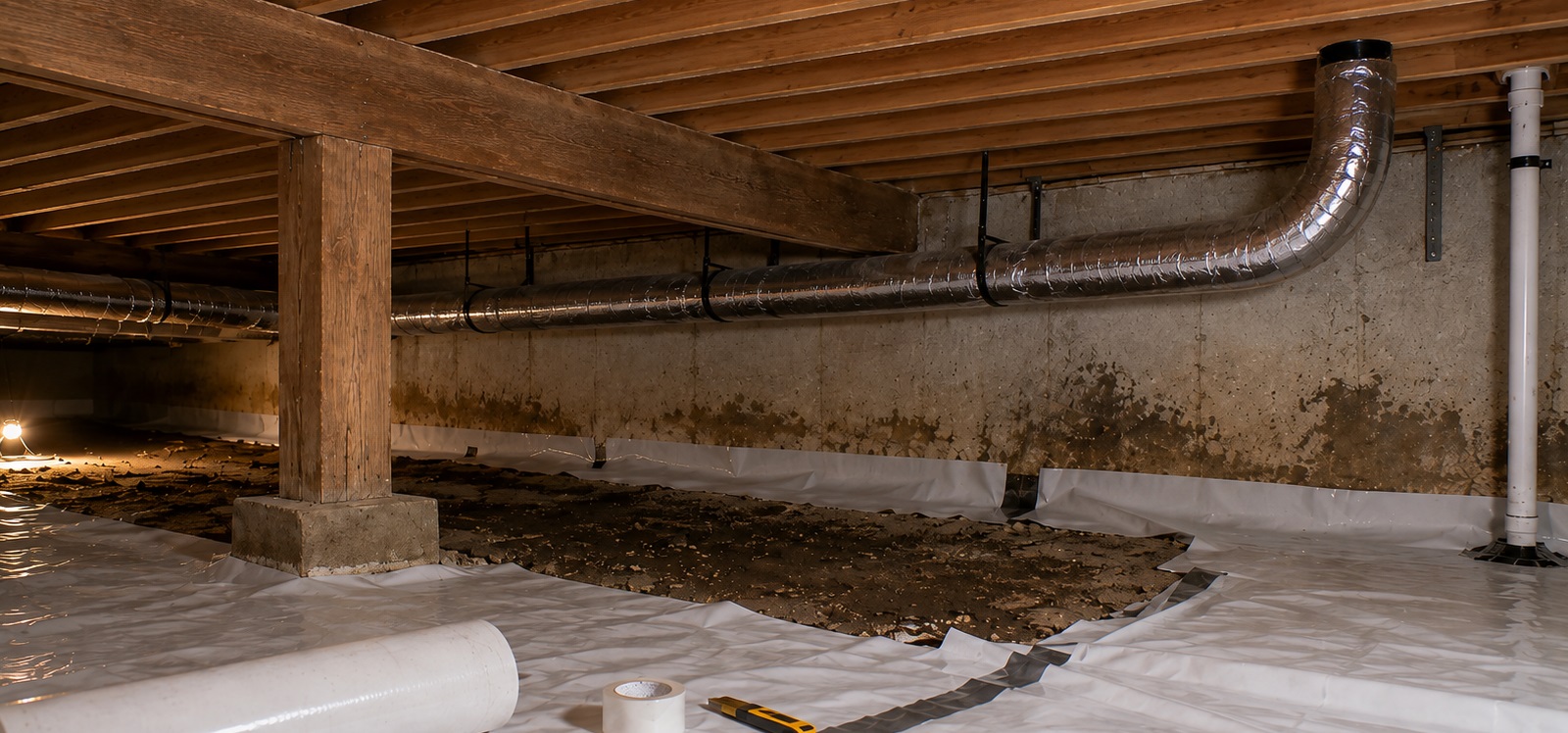
Before installing vapor barriers and sealing materials, crawl spaces must be cleared and cleaned. This preparation process allows contractors to examine surfaces more closely than during routine inspections.
During preparation, contractors typically:
- Remove damaged insulation
- Clear debris from soil surfaces
- Inspect framing components
- Check drainage pathways
Many of the problems discovered during encapsulation could have been predicted through inspection steps similar to those described in How to Inspect a Crawl Space Before Encapsulation.
Standing Water and Drainage Failures
Standing water and drainage failures are among the most common problems discovered during crawl space encapsulation. Even when water is not visible during dry seasons, soil beneath the crawl space may remain saturated.
Encapsulation should not proceed when standing water is present. Water problems should be corrected before sealing the crawl space environment.
Before vapor barrier installation, the crawl space should be checked after rain, around foundation walls, near low soil areas, and below plumbing runs to confirm whether the water source is drainage, groundwater, or a leak.
Why Standing Water Is Often Discovered Late
Water problems may remain hidden until debris and insulation are removed. Moisture trapped beneath materials may not be visible during initial inspections.
Water accumulation often develops due to:
- Poor exterior drainage
- Improper grading around the home
- Clogged gutters directing water toward foundations
- Groundwater intrusion during heavy rainfall
These drainage failures often produce the moisture patterns described in How to Detect Water Intrusion in Crawl Spaces, especially when wet soil, wall staining, or storm-related dampness appears in the same areas repeatedly.
Signs of Hidden Drainage Problems
Even when standing water is not visible, signs of drainage problems may still be present.
Common indicators include:
- Dark or muddy soil patches
- Sediment buildup along foundation walls
- Water stains on structural materials
- Musty odors near soil surfaces
These conditions often resemble those described in Signs of Standing Water in Crawl Spaces, where persistent moisture signals drainage failure.
Correcting drainage problems before encapsulation prevents trapped moisture and long-term structural damage.
Mold Contamination Discovered During Encapsulation Preparation
Mold contamination is one of the most frequently discovered problems during crawl space encapsulation. In many cases, mold is hidden behind insulation or beneath debris, making it difficult to detect during initial inspections.
Once insulation and debris are removed, mold may appear on joists, subfloor panels, foundation walls, or stored materials that were previously covered.
Why Mold Is Often Hidden Before Encapsulation
Mold commonly develops in areas that remain damp but out of sight. Insulation placed between joists can hide mold growth on wood framing and subfloor panels.
Common hidden mold locations include:
- Behind fiberglass insulation
- On the underside of subfloor panels
- Inside insulation layers
- Along foundation walls
- Under stored materials or debris
These mold growth patterns often follow the environmental conditions described in Why Mold Forms in Crawl Spaces, where persistent humidity supports mold development.
When Mold Requires Removal Before Encapsulation
Not all mold requires professional removal, but widespread contamination must be addressed before encapsulation begins. Installing encapsulation materials over heavy mold contamination may trap spores inside the sealed crawl space.
Signs that mold removal may be necessary include:
- Mold covering large areas of wood framing
- Strong musty odors throughout the crawl space
- Mold spreading across multiple surfaces
- Recurring mold after previous cleaning
In these cases, cleanup methods similar to those described in How to Remove Mold Permanently may be required before encapsulation continues.
Structural Wood Rot and Damage
Structural damage is another serious problem frequently discovered during crawl space encapsulation. Moisture exposure weakens wood over time, and damage may remain hidden until encapsulation preparation begins.
Because crawl spaces support the structure above, identifying wood deterioration is essential before sealing the environment.
Why Structural Damage Often Goes Undetected
Structural wood rot develops gradually and may remain hidden behind insulation or debris. Minor damage may not be noticeable from inside the home until advanced deterioration occurs.
Common areas where structural damage is discovered include:
- Floor joists near moisture sources
- Support beams beneath heavy loads
- Rim joists exposed to outdoor air
- Subfloor panels above damp soil
These damage patterns often resemble those described in Signs of Moisture Damage in Crawl Space Joists, where prolonged humidity weakens structural materials below the floor system.
Indicators of Advanced Wood Rot
During encapsulation preparation, contractors carefully inspect wood components for signs of structural weakness.
Advanced warning signs include:
- Soft or spongy wood surfaces
- Crumbling wood fibers
- Visible rot patterns
- Sagging structural components
If structural damage is severe, repairs must be completed before encapsulation continues. Sealing a crawl space without repairing damaged wood can lead to further deterioration.
Damaged or Missing Insulation
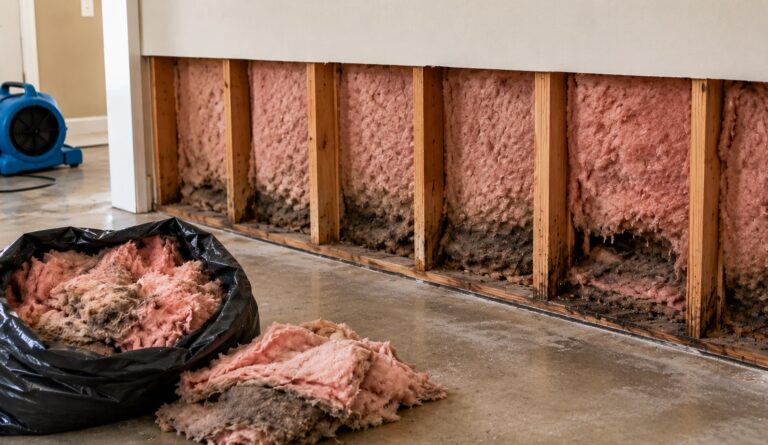
Damaged insulation is one of the most common discoveries during encapsulation projects. Insulation exposed to moisture loses effectiveness and often requires removal before encapsulation can proceed.
Sagging, stained, or compressed insulation often shows where moisture has been collecting against the floor system.
Why Insulation Problems Are Common
Fiberglass insulation absorbs moisture easily. Over time, humidity and condensation cause insulation to sag, collapse, or detach from framing.
Typical insulation problems include:
- Sagging or hanging insulation
- Water-stained insulation materials
- Mold growth on insulation surfaces
- Compressed or deteriorated insulation fibers
Why Insulation Removal Is Often Necessary
Wet insulation traps moisture against wood framing and slows the drying process. Leaving damaged insulation in place increases mold risk and reduces the effectiveness of encapsulation materials.
Damaged insulation may need to be removed before vapor barriers, air sealing, or dehumidification equipment are installed.
Insulation removal also allows hidden mold, rot, pest damage, and moisture stains to be inspected more clearly.
Old Vapor Barriers and Failed Plastic Liners
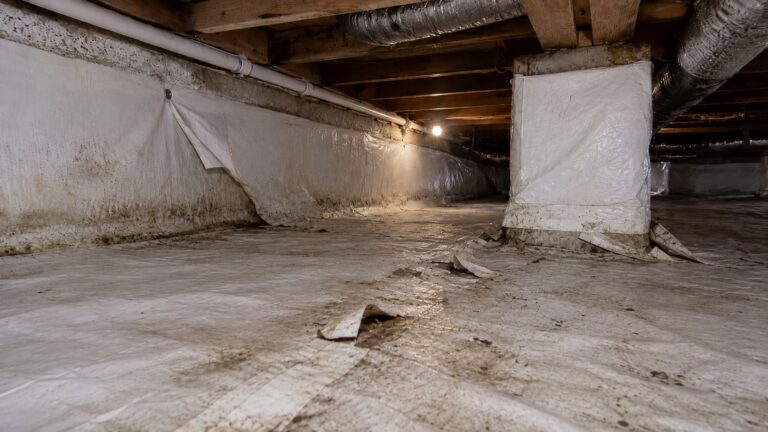
Old plastic sheeting is another common problem found during encapsulation preparation. Thin, loose, torn, or poorly overlapped vapor barriers often hide wet soil instead of controlling it.
Common vapor barrier problems include:
- Torn plastic with exposed soil underneath
- Loose seams that allow ground moisture to escape
- Plastic pulled away from piers or foundation walls
- Water trapped above or below the liner
Failed liner materials usually need to be removed or corrected before a new encapsulation system is installed, especially if water, mud, pests, or mold are trapped beneath the plastic.
Air Leakage and Vent Sealing Challenges
Air leakage problems are commonly discovered during crawl space encapsulation projects. Even small openings allow humid air to enter the crawl space, increasing moisture levels and reducing encapsulation effectiveness.
During preparation, contractors often identify more air leaks than initially expected. Many of these openings remain hidden behind insulation or structural components until work begins.
Why Air Leaks Are Common in Crawl Spaces
Crawl spaces contain numerous penetration points where utilities pass through walls and framing. These openings are rarely sealed completely, allowing air to move freely between the crawl space and outdoor environment.
Common air leak locations include:
- Pipe penetrations through foundation walls
- Electrical wiring openings
- HVAC duct connections
- Rim joist gaps
- Crawl space access doors
These openings allow outdoor humidity to enter and circulate beneath the home. Over time, this airflow contributes to moisture buildup similar to the conditions described in Signs of Poor Crawl Space Ventilation, where uncontrolled airflow increases condensation risk.
Why Sealing Air Leaks Can Delay Encapsulation
Air sealing often takes longer when gaps are hidden behind framing, ducts, plumbing, or old insulation. These gaps must be sealed before the crawl space is fully isolated from outdoor air.
If vents, doors, rim joists, and penetrations are not sealed correctly, humid air can continue entering after the vapor barrier is installed.
Without proper air sealing, the new vapor barrier may be installed correctly but the crawl space can still receive humid outdoor air.
Foundation Cracks and Water Entry Points
Foundation cracks and wall openings are often discovered during crawl space encapsulation preparation. These cracks may allow outside water, humid air, or pests to enter the crawl space.
Hairline cracks may only need monitoring or sealing, but wider cracks, stair-step cracks in block walls, movement, or active seepage may indicate water pressure, settlement, or structural concern.
Common Locations Where Cracks Are Found
Foundation cracks are often found in areas where water collects or where structural movement has occurred.
Common crack locations include:
- Foundation wall corners
- Areas near vents or access doors
- Block wall mortar joints
- Wall bases near wet soil
- Pipe and utility penetrations
These entry points can allow moisture to return after encapsulation unless they are repaired or sealed correctly.
Why Foundation Repairs Are Often Required
Encapsulation cannot stop moisture that continues entering through active foundation cracks. If water is entering through walls or block joints, those sources should be addressed before the crawl space is sealed.
Minor gaps may only require sealing, while structural cracks, movement, or recurring water entry may require professional repair.
Repairing foundation entry points before encapsulation reduces the risk of trapped moisture and repeated system failure.
Pest Damage and Nesting Problems
Pest damage is another common discovery during crawl space encapsulation. Rodents, insects, and other pests often enter through gaps, vents, damaged access doors, or foundation openings.
Because crawl spaces are dark, protected, and often damp, pests may remain active for a long time before the problem is noticed.
Common Types of Pest Damage
Pest activity can damage insulation, wiring, ducts, and structural materials. It can also leave contaminated debris that should not be sealed inside an encapsulated crawl space.
Common pest-related discoveries include:
- Rodent nests inside insulation
- Chewed wiring or vapor barrier materials
- Damaged duct insulation
- Droppings or urine-contaminated materials
- Insect-damaged wood
Why Pest Removal Is Necessary Before Encapsulation
Encapsulation should not seal pests, nests, or contaminated materials inside the crawl space. Removing nests and repairing damage helps ensure the encapsulation system performs correctly.
Cleaning contaminated insulation, nesting materials, droppings, and urine-soaked debris reduces health risks and prevents odors or contamination from being sealed inside the encapsulated space.
Entry points should also be sealed so pests do not return after the crawl space is enclosed.
Electrical and Mechanical Hazards
Electrical and mechanical hazards are sometimes discovered during crawl space encapsulation, especially in older homes. These hazards may not be visible until insulation and debris are removed. Identifying and correcting unsafe conditions is necessary before encapsulation materials are installed.
Encapsulation creates a sealed environment, so damaged electrical components or mechanical systems must be repaired to prevent safety risks.
Safety note: Do not handle exposed wiring, corroded electrical connections, damaged junction boxes, or wet electrical components during a crawl space inspection. Electrical hazards should be corrected by a qualified professional before encapsulation continues.
Common Electrical Problems Found During Encapsulation
Electrical wiring inside crawl spaces is often exposed to moisture, pests, and physical damage. Over time, these conditions weaken protective coverings and increase fire risks.
Typical electrical hazards discovered during encapsulation include:
- Exposed or frayed wiring
- Damaged junction boxes
- Corroded electrical connections
- Loose wiring attachments
Electrical damage may occur alongside pest activity or moisture exposure. These hazards must be corrected before encapsulation continues.
Mechanical System Issues That Affect Encapsulation
Mechanical systems such as HVAC ducts and plumbing lines often run through crawl spaces. Problems affecting these systems may contribute to moisture, air leakage, or energy loss.
Common mechanical issues include:
- Disconnected duct sections
- Condensation on cold pipes
- Leaking plumbing lines
- Loose duct insulation
- Unsealed penetrations around pipes or ducts
Repairing mechanical systems before encapsulation prevents moisture from returning after installation.
Unexpected Moisture Sources
Unexpected moisture sources sometimes become obvious only after insulation, debris, and stored materials are removed. These sources should be identified before sealing the crawl space so new vapor barriers do not trap moisture against soil, wood, or foundation surfaces.
Hidden Plumbing Leaks
Plumbing leaks are a frequent source of unexpected moisture. Small leaks may go unnoticed for extended periods, gradually increasing humidity levels.
Common signs of hidden plumbing leaks include:
- Water stains beneath pipes
- Damp insulation near plumbing lines
- Rust forming on nearby components
- Localized wet soil conditions
If the wet area is concentrated beneath pipes, drains, or fixture lines, the next step is closer leak inspection rather than general drainage work. For a broader leak-detection process, see How to Detect Slow Plumbing Leaks.
Groundwater Seepage
Groundwater seepage may occur in areas with high water tables or poor drainage. This type of moisture intrusion often appears during heavy rainfall or seasonal flooding.
Indicators of groundwater seepage include:
- Damp soil near foundation walls
- Water stains along wall bases
- Recurring wet areas after storms
- Mineral deposits on foundation surfaces
Correcting seepage problems before encapsulation reduces long-term moisture exposure.
When Additional Repairs Delay Encapsulation
Encapsulation projects sometimes take longer than expected because additional repairs are required before installation can continue. While delays may seem inconvenient, correcting underlying problems ensures long-term system performance.
Repairs That Commonly Delay Installation
The most common delays happen when the crawl space cannot be sealed until moisture, safety, or structural problems are corrected.
Common delay-causing repairs include:
- Installing drainage systems
- Repairing foundation cracks
- Replacing damaged structural wood
- Removing mold contamination
- Correcting electrical hazards
These repairs help prevent the new encapsulation system from trapping moisture or failing prematurely.
Why Addressing Problems Improves Long-Term Results
Although repairs increase project time, they significantly improve encapsulation performance. Sealing a crawl space without correcting existing problems often leads to recurring moisture issues.
Repairing hidden damage before installation helps maintain stable humidity levels and reduces long-term maintenance requirements.
Many of these repair-triggering conditions follow the progression described in Signs Your Crawl Space Needs Encapsulation, where environmental problems worsen over time.
Frequently Asked Questions About Problems Found During Crawl Space Encapsulation
Why are hidden problems often found during encapsulation?
Encapsulation preparation involves removing insulation and debris, which exposes areas that were previously hidden. Many moisture and structural problems develop gradually and remain undetected until these materials are removed.
Which unexpected repairs are most common during crawl space encapsulation?
The most common unexpected repairs involve drainage correction, mold cleanup, insulation removal, air sealing, foundation crack repair, pest cleanup, plumbing leak repair, and replacement of moisture-damaged wood.
Can encapsulation continue if problems are found?
Encapsulation may pause temporarily while repairs are completed. Continuing without fixing underlying issues can lead to system failure and ongoing moisture damage.
How can homeowners reduce unexpected problems?
Thorough inspection before encapsulation reduces the likelihood of surprises. Inspection steps similar to those described in How to Inspect a Crawl Space Before Encapsulation help identify many issues early.
What problems should stop encapsulation from moving forward?
Standing water, active leaks, unsafe wiring, widespread mold, sewage or pest contamination, and severe wood rot should stop encapsulation until the source is corrected. Minor air gaps, loose insulation, or small liner defects may still need repair, but they do not always require the same level of delay.
Key Takeaways
- Hidden problems are commonly discovered during crawl space encapsulation preparation.
- Standing water and drainage failures are among the most frequent discoveries.
- Mold contamination and structural wood rot often remain hidden behind insulation.
- Damaged insulation and old vapor barriers often reveal long-term moisture exposure.
- Air leaks and foundation cracks must be sealed before encapsulation.
- Electrical hazards, pest contamination, and plumbing leaks require correction before sealing the crawl space.
- Repairing discovered problems improves long-term encapsulation performance.
Conclusion
Finding problems during crawl space encapsulation is common because preparation exposes areas that have often been hidden for years. Standing water, mold, wood rot, damaged insulation, air leaks, foundation cracks, pests, wiring hazards, and plumbing leaks should be corrected before the crawl space is sealed.
The safest approach is to treat these discoveries as part of the encapsulation process rather than as unrelated delays. When the source of moisture and damage is corrected first, the encapsulation system has a much better chance of protecting the structure long term.