Should You Repair or Replace Crawl Space Insulation?
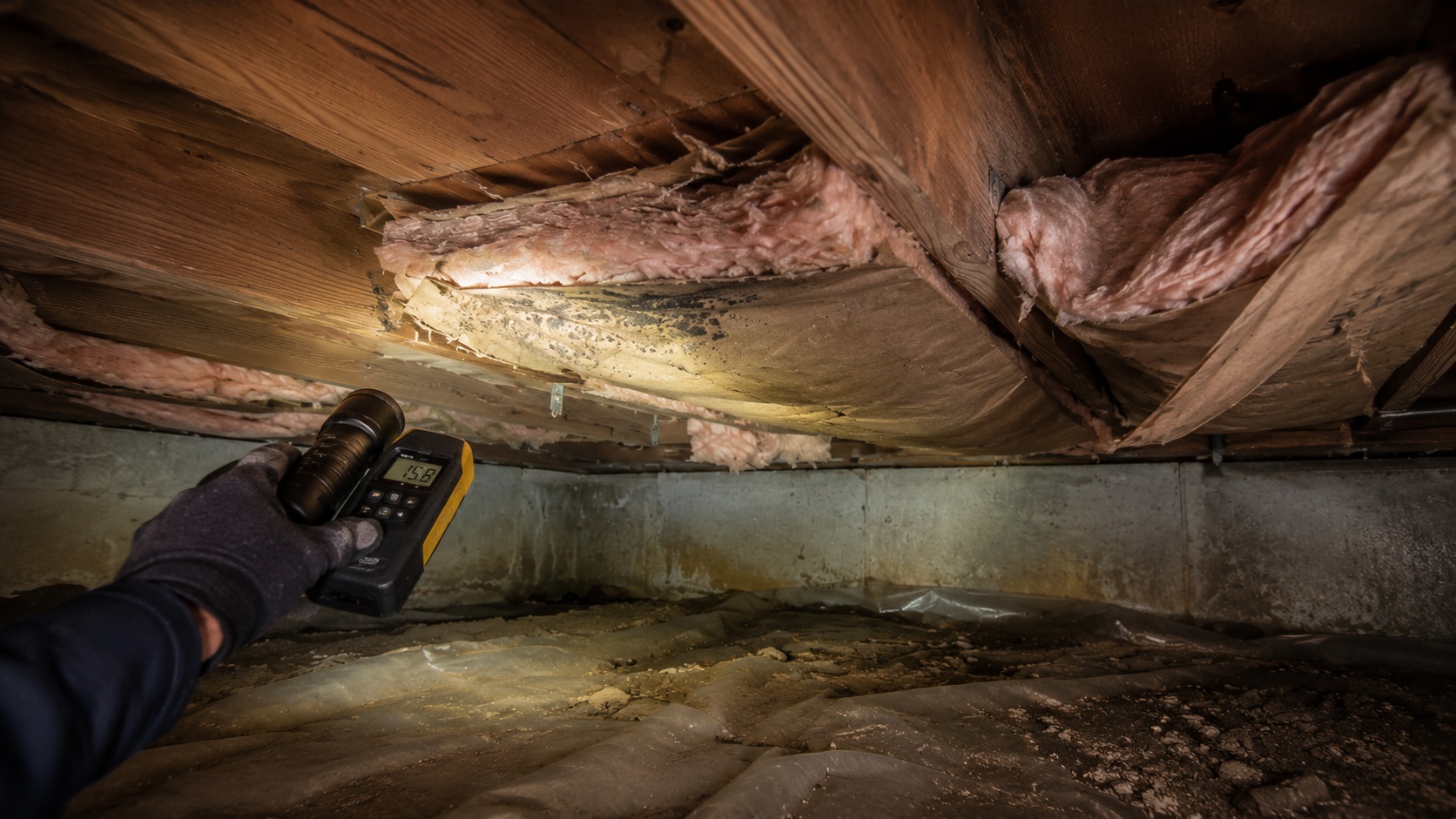
You can usually repair or resecure crawl space insulation when it is dry, clean, intact, fluffy, and only slightly loose or displaced. You should replace crawl space insulation when it is wet, compressed, moldy, musty, pest-contaminated, sewage-contaminated, touching soil, repeatedly falling, or damaged by unresolved crawl space moisture.
The most important distinction is simple: loose insulation is not always failed insulation, but wet or contaminated insulation usually is. A fiberglass batt that slipped down but stayed dry may be reattached. A batt that has absorbed moisture, collapsed, smelled musty, or collected rodent debris should not be treated as a simple fastening problem.
This article focuses on the repair-or-replace decision for existing crawl space insulation. For the broader structural moisture context, see Structural Moisture Problems in Homes: Causes, Risks, and Repair Guide. If the insulation problem is part of a wider moisture pattern, the guide to how to find, fix, and prevent moisture problems in homes explains how leaks, humidity, ground moisture, drying, and prevention work together.
Can Crawl Space Insulation Be Repaired?
Yes, crawl space insulation can sometimes be repaired if the insulation is still clean, dry, and physically intact. In many crawl spaces, insulation fails first by slipping out of place. If the batt still has its shape, has not absorbed moisture, and has not been contaminated by pests or mold, reattaching it may be reasonable.
Repair is most realistic when the problem is limited to attachment. For example, a few fiberglass batts may sag because supports loosened, a worker disturbed them, or the original fasteners were weak. If the insulation is still fluffy and dry, replacement may not be necessary.
However, insulation should not be saved just because it can be pushed back into place. If the crawl space is damp, the insulation smells musty, or the batts have become heavy and compressed, the insulation may no longer perform well. Reattaching failed insulation can hide moisture against the subfloor and joists.
In this article, “repair” usually means reattaching or re-securing insulation that is still usable. It does not mean cleaning, drying, or reusing insulation that has absorbed moisture, developed odor, collected pest debris, or lost its shape.
What Crawl Space Insulation Is Supposed to Do
Crawl space insulation is supposed to improve comfort, reduce heat loss, and separate the living space from crawl space temperature conditions. In many vented crawl spaces, fiberglass batts are installed between floor joists. In sealed or encapsulated crawl spaces, insulation may instead belong along crawl space walls, rim joists, or other parts of the thermal boundary.
That design matters because insulation replacement should not be separated from crawl space conditions. If the crawl space has high humidity, standing water, exposed soil, poor drainage, damp wood, or a failed vapor barrier, new insulation can fail quickly. If you see dampness beyond loose insulation, compare the crawl space conditions with signs of moisture in crawl spaces.
Why Loose Insulation Is Different From Failed Insulation
Loose insulation and failed insulation are not the same thing. This distinction matters because some homeowners replace insulation that could have been resecured, while others reattach insulation that should have been removed.
Loose insulation means the material has shifted, sagged, or pulled away from its original position. If it is still dry, clean, fluffy, and intact, it may still perform after being properly supported. The problem is placement, not necessarily material failure.
Failed insulation means the material can no longer do its job reliably. It may be wet, compressed, moldy, torn apart, contaminated, or repeatedly falling because the crawl space environment keeps damaging it. In that case, reattaching it does not restore its performance.
Clean loose insulation may be repairable when:
- Only a few batts are sagging.
- The insulation has not touched dirt, mud, or standing water.
- The material is still fluffy and fills the cavity.
- The crawl space is not damp or musty.
- The failure appears to be from weak support, not moisture weight.
Failed insulation should usually be replaced when:
- It feels damp, heavy, or compressed.
- It smells musty.
- It has moldy or stained facing.
- It has fallen onto soil, mud, or a wet vapor barrier.
- It contains pest nesting, droppings, or urine odor.
- It keeps falling after previous attempts to resecure it.
- Nearby joists, subflooring, or rim areas show moisture or mold.
If insulation keeps failing, the insulation may not be the root problem. Humidity, drainage, vapor barrier damage, ventilation problems, or encapsulation failure may need correction before new insulation will last.
Signs Crawl Space Insulation Can Usually Be Repaired or Resecured
Crawl space insulation can usually be repaired or resecured when the material is still in good condition and the problem is mainly attachment. Look for signs that the insulation failed mechanically, not because moisture or contamination changed the material.
Repair is more realistic when you see:
- A few batts sagging between floor joists
- Insulation pulled loose by weak supports or old fasteners
- Dry insulation that has not touched soil or standing water
- Fiberglass that is still fluffy and full-depth
- Facing that is not moldy, torn, or deteriorated
- No musty odor from the insulation
- No visible rodent nesting, droppings, or urine staining
- No damp wood, wet vapor barrier, or standing water nearby
In these cases, replacement may be unnecessary. The insulation may simply need to be placed back correctly and supported so it does not sag again. But before reattaching it, check why it came loose. If it fell because supports failed, repair may be fine. If it fell because the insulation became damp and heavy, replacement is more likely.
Also check the wood above the loose section. If the subfloor or joists above the insulation are dark, damp, soft, or mold-stained, treat the insulation problem as a moisture warning rather than a simple fastening issue.
Dry Sagging Batts
Dry sagging batts are often repairable when the insulation is still clean and intact. This is common in older crawl spaces where wire supports, straps, or friction fit no longer hold the batts tightly between joists. If the insulation has not been damaged by moisture, pests, or dirt, reattachment may restore performance.
The insulation should still fill the joist cavity without large gaps. If it has become misshapen, compressed, or torn apart, it may not perform well even if it is pushed back into place.
Loose Rigid Foam Panels
Rigid foam installed on crawl space walls or rim areas may be repairable if the panels are intact but loose. Detached panels can sometimes be resecured when the wall is dry and the material is not damaged. However, loose foam can also hide moisture behind it, so the wall surface should be checked before the panel is fastened again.
Minor Disturbance From Workers
Crawl space insulation is often disturbed by plumbing, HVAC, pest-control, or repair work. A few displaced batts after service work may not need replacement if they remain clean and dry. The problem is usually reattachment, not insulation failure.
Signs Crawl Space Insulation Should Be Replaced
Crawl space insulation should usually be replaced when moisture, contamination, compression, mold, or repeated failure has changed the material itself. In those cases, the insulation is no longer just loose. It is damaged.
Replacement is usually the better choice when:
- The insulation is wet, damp, or has been wet for an unknown period.
- The insulation feels heavy, compressed, matted, or clumped.
- The paper facing is moldy, stained, torn, or deteriorated.
- The insulation smells musty.
- The material has fallen onto dirt, mud, sewage, or standing water.
- Rodents or pests have nested in the insulation.
- Droppings, urine odor, or pest trails are visible.
- The insulation keeps falling after previous repairs.
- Nearby joists, subflooring, or rim areas show moisture or mold.
Damaged insulation can hold moisture against wood framing and hide problems that need inspection. Replacing it is not only about comfort or energy efficiency. It can also be part of restoring a dry, inspectable crawl space.
Wet Fiberglass Insulation
Wet fiberglass insulation is a common replacement candidate. Fiberglass works by trapping air in its fibers. When it becomes wet, heavy, dirty, or compressed, it loses loft and may no longer perform the way it should. Even if it later dries, it may remain matted, contaminated, or musty.
Wet insulation can also hold moisture against subflooring and floor joists. This is especially concerning when the crawl space already has high humidity, ground moisture, plumbing leaks, or standing water. Reattaching wet fiberglass can trap the problem against wood instead of solving it.
If only one small area is damp, look directly above and beside it for a plumbing leak, duct condensation, rim joist leak, or wet subfloor before assuming the whole crawl space has the same problem.
Moldy Paper Facing
Paper-faced insulation is more vulnerable in damp crawl spaces because the facing can support mold when it stays moist. If the paper facing is moldy, stained, fuzzy, or deteriorated, replacement is usually safer than reattachment.
Moldy facing also signals that the crawl space environment may still be too damp. New insulation can develop the same problem if the humidity, vapor barrier, drainage, or airflow issues remain unresolved.
Compressed or Matted Insulation
Compressed insulation has lost much of the air space that helps it work. Fiberglass batts that are flattened, clumped, or packed with dirt are not equivalent to clean, fluffy insulation. If compression is widespread, replacement is usually more effective than trying to reshape damaged material.
Why Wet Insulation Is Different From Loose Insulation
Wet insulation is more serious than loose insulation because moisture changes both performance and risk. A loose dry batt may simply need support. A wet batt may have lost loft, collected dirt, developed odor, or kept nearby wood damp long enough for mold to grow.
Wet crawl space insulation is usually a symptom of another problem, such as ground moisture, standing water, plumbing leaks, condensation, humid outdoor air, poor drainage, or stormwater intrusion.
If crawl space insulation is wet, do not judge it only by whether it later feels dry on the outside. Ask whether it stayed wet long enough to compress, smell, grow mold on facing, or contaminate nearby wood. If it did, replacement is usually the better decision.
Wet insulation also means the crawl space moisture source needs attention. The article Why Crawl Spaces Develop Moisture Problems explains the common causes behind damp crawl spaces, including ground vapor, poor drainage, ventilation issues, and water intrusion.
Sagging Fiberglass Batts: Repair or Replace?
Sagging fiberglass batts are repairable only when they are dry, clean, intact, and still fluffy. If the batt simply slipped because supports failed, it may be resecured. If it sagged because it absorbed moisture, became heavy, or lost shape, replacement is usually better.
Use these clues to separate ordinary sagging from failure:
- If the batt is dry, clean, and fluffy, repair may be enough.
- If the batt is damp, heavy, or matted, replace it.
- If the facing is moldy or stained, replace it.
- If the batt has touched soil, mud, or standing water, replace it.
- If only one section was disturbed by service work, reattachment may be reasonable.
- If many sections are falling across the crawl space, investigate moisture or installation failure.
Repeated sagging is a warning sign. If insulation has been reattached before and keeps falling, something is making it fail. The cause may be humidity, condensation, pests, missing supports, poor installation, or insulation that has lost shape. Replacing the material without solving that cause can lead to another round of sagging insulation.
Moldy or Musty Crawl Space Insulation
Moldy or musty crawl space insulation usually should be removed and replaced, especially when the insulation has paper facing, visible staining, dampness, or odor. Mold on insulation is not only an insulation-performance issue. It usually means the crawl space stayed damp long enough for moisture-sensitive materials to support growth.
Insulation may smell musty even when visible mold is hard to see. That odor can come from damp fiberglass, moldy paper facing, wet dust, pest contamination, or moisture trapped against wood. If the smell returns after the crawl space dries briefly, the insulation may be holding moisture or contamination.
Moldy insulation is more likely to need replacement when:
- The paper facing is stained, fuzzy, spotted, or deteriorated.
- The insulation smells musty.
- The insulation is damp, compressed, or heavy.
- Nearby joists or subflooring show mold or moisture staining.
- The crawl space has high humidity or poor airflow.
- The insulation has been wet from leaks, flooding, or condensation.
- The same area has had recurring mold or odor.
If mold appears on nearby wood framing, the insulation decision should be part of a larger crawl space moisture inspection. The guide to signs of mold growth on crawl space wood can help separate insulation-only damage from a broader framing moisture problem.
Dirty or Pest-Contaminated Insulation
Dirty crawl space insulation does not always need replacement. Light dust is common in older crawl spaces. But insulation that contains rodent droppings, nesting material, urine odor, dead pests, sewage contamination, heavy mud, or flood debris should not be treated as normal dirty insulation.
Contaminated insulation is difficult to clean in place. Fiberglass can trap debris, odors, and contaminants inside the fibers. Paper facing can stain, absorb moisture, and support mold. When contamination is significant, removal and replacement are usually cleaner and safer than trying to resecure the same material.
Wear appropriate protection before disturbing insulation that may contain mold, rodent debris, sewage residue, or flood contamination. If contamination is widespread or the crawl space is tight, wet, or difficult to ventilate, professional removal is safer than pulling material down without containment.
Replacement is usually appropriate when insulation has:
- Rodent nesting or droppings
- Urine odor
- Sewage or wastewater contact
- Flood debris
- Heavy mud or damp soil contamination
- Dead insects or pest trails throughout the material
- Strong musty odor that does not clear after moisture correction
If contamination is present, the crawl space should also be checked for entry points, standing water, vapor barrier damage, and conditions that attracted pests or moisture in the first place. Replacing insulation without correcting those causes can lead to repeat contamination.
Insulation Touching Soil, Vapor Barrier, or Standing Water
Crawl space insulation that falls onto soil, mud, a wet vapor barrier, or standing water usually should be replaced. Once insulation touches the ground, it can pick up moisture, dirt, pests, and organic debris. If it lies on a wet liner, it can absorb moisture and become compressed even if it was clean before it fell.
Insulation touching a dry, clean vapor barrier for a short time may not always be ruined, but the material should be inspected carefully. If it is still dry, clean, fluffy, and odor-free, it may be salvageable. If there is any moisture, mud, odor, pest activity, or compression, replacement is usually the better choice.
Insulation that has touched standing water should not be reinstalled, especially if the water source is unknown. Standing water can involve groundwater, stormwater, plumbing leaks, or contamination, and the insulation may have absorbed moisture or debris. Before replacing it, address why water was present in the crawl space.
Common causes include failed vapor barrier coverage, poor exterior drainage, plumbing leaks, duct or pipe condensation, foundation seepage, groundwater, or stormwater intrusion.
If the vapor barrier below the insulation is torn, missing, or wet, review whether to repair or replace crawl space vapor barriers before installing new insulation. A failed liner can allow moisture to damage replacement insulation quickly.
Repair vs. Replacement Checklist for Crawl Space Insulation
Use this checklist as the quick decision filter after inspecting the material and the crawl space around it.
Repair or Resecuring May Be Enough If:
- The insulation is dry.
- The insulation is clean and odor-free.
- The fiberglass is still fluffy and full-depth.
- The facing is intact and not moldy.
- The material has not touched soil, mud, sewage, or standing water.
- Only a few batts or panels are loose.
- The crawl space is not showing broader moisture symptoms.
- The problem appears to be weak support or minor disturbance.
Replacement Is Usually Better If:
- The insulation is wet, damp, heavy, or compressed.
- The insulation smells musty.
- The facing is stained, moldy, torn, or deteriorated.
- The insulation has fallen onto soil, mud, or a wet liner.
- There is rodent, pest, sewage, or flood contamination.
- Many sections are sagging or falling across the crawl space.
- Nearby wood framing has mold or moisture staining.
- The crawl space has standing water, high humidity, or poor vapor barrier coverage.
The more signs that appear in the replacement list, the less likely reattachment is to solve the problem. Failed insulation is often a symptom of a crawl space environment that needs moisture correction before new material is installed.
When Insulation Replacement Should Become Crawl Space Encapsulation
Replacing crawl space insulation may be enough if the crawl space is otherwise dry and the insulation damage is isolated. But when insulation failure is part of a pattern of moisture, mold, odor, sagging batts, and vapor barrier problems, crawl space encapsulation may be a better long-term strategy.
Encapsulation is not just new insulation. It is a broader crawl space moisture-control approach that can change where insulation belongs, especially if the crawl space is being sealed, lined, air sealed, drained, or conditioned.
Consider a larger crawl space upgrade when:
- Insulation keeps falling across multiple areas.
- The crawl space smells musty even after small repairs.
- Wood joists or subflooring show mold or moisture.
- The vapor barrier is torn, missing, or exposing soil.
- There is condensation on ducts, pipes, or insulation.
- Standing water or damp soil is present.
- The crawl space has open vents and high seasonal humidity.
- New insulation would be installed into the same damp conditions that damaged the old insulation.
If you are deciding whether insulation replacement should be part of a larger crawl space project, see what crawl space encapsulation is and how it works. If the crawl space already has an encapsulation system and insulation or liner problems are returning, compare the situation with signs of failed crawl space encapsulation.
When to Call a Crawl Space Repair Specialist
You should call a crawl space repair specialist when insulation damage is connected to moisture, mold, contamination, standing water, damp framing, or repeated failure. A few loose dry batts may be a simple repair, but widespread sagging, musty odor, moldy facing, wet insulation, or pest contamination usually needs a broader crawl space inspection.
Professional help is especially important when:
- Large sections of insulation are wet, moldy, or falling down.
- The insulation smells musty or has visible staining.
- Rodents, insects, sewage, or floodwater have contaminated the insulation.
- Wood joists, beams, or subflooring show mold or moisture staining.
- The crawl space has standing water or damp soil.
- The vapor barrier is torn, missing, or exposing large areas of soil.
- Insulation has failed more than once after previous repair.
- You are considering crawl space encapsulation.
- The insulation is difficult or unsafe to remove because of tight access, contamination, or hidden moisture.
A crawl space repair specialist can help determine whether the insulation can be resecured, whether it should be removed, and whether moisture control should happen before replacement. For broader contractor-readiness guidance, see when to hire a crawl space repair specialist. If the project may involve insulation removal, vapor barrier replacement, drainage work, or encapsulation, the guide to how much crawl space repair costs can help you understand the larger repair scope.
How to Prevent New Crawl Space Insulation Failure
New crawl space insulation can fail quickly if the crawl space remains damp. Before replacing insulation, correct the condition that damaged the old material.
To prevent new insulation failure:
- Fix plumbing leaks before installing new insulation.
- Correct standing water, poor drainage, and damp soil problems.
- Repair or replace damaged crawl space vapor barriers.
- Seal obvious air leaks where humid air enters the crawl space.
- Address condensation on ducts, pipes, or subflooring.
- Remove wet or moldy insulation instead of covering it with new material.
- Dry damp joists and subflooring before enclosing them again.
- Inspect the crawl space after heavy rain or seasonal humidity changes.
- Choose an insulation approach that matches whether the crawl space is vented, sealed, or encapsulated.
If crawl space moisture keeps returning, insulation replacement should be treated as one part of a moisture-control plan. The guide on how to prevent moisture build-up in crawl spaces explains the prevention side, including ground moisture, humidity, airflow, and water control.
Common Mistakes to Avoid
Reattaching Wet Insulation
Wet insulation should not be pushed back into place just because it still fits between the joists. Wet fiberglass can lose loft, hold moisture, smell musty, and keep wood framing damp. If the insulation has been wet, compressed, or contaminated, replacement is usually safer.
Replacing Insulation Before Fixing Moisture
New insulation does not fix a damp crawl space. If vapor barrier damage, standing water, poor drainage, open vents, plumbing leaks, or high humidity remain, replacement insulation can fail again.
Ignoring Mold on Nearby Wood
If insulation is moldy or musty, check nearby joists, subflooring, and rim areas. Mold on wood framing may show that the moisture problem extends beyond the insulation. In that case, the crawl space needs a broader inspection before new insulation is installed.
Keeping Pest-Contaminated Insulation
Insulation with rodent nesting, droppings, urine odor, or dead pests should not be treated as ordinary dirty material. Contaminated insulation is difficult to clean in place and is usually better removed and replaced after pest entry points are corrected.
Assuming Encapsulation Means Adding More Floor Insulation
Encapsulation may change the insulation strategy. In some crawl spaces, damaged floor insulation is removed and the thermal boundary shifts toward foundation walls or rim joists. The right approach depends on the crawl space design and local requirements.
FAQ: Repairing or Replacing Crawl Space Insulation
Can wet crawl space insulation be saved?
Wet crawl space insulation is usually a replacement candidate, especially if it has been wet for an unknown period, smells musty, is compressed, or has touched dirt, mud, or standing water. A small amount of brief dampness may dry in some situations, but wet fiberglass often loses performance and can hold moisture against wood.
Should sagging crawl space insulation be replaced?
Sagging crawl space insulation does not always need replacement. If it is dry, clean, fluffy, and intact, it may only need to be resecured. If it is damp, heavy, compressed, moldy, contaminated, or repeatedly falling, replacement is usually better.
Is dirty crawl space insulation still effective?
Light dust does not always mean crawl space insulation has failed. However, insulation with heavy dirt, mud, pest debris, urine odor, mold, sewage contact, or flood contamination should usually be replaced. Dirty insulation should be judged by contamination, moisture, odor, and physical condition.
Should moldy insulation under a house be removed?
Moldy insulation under a house should usually be removed and replaced, especially if the mold is on paper facing, the material smells musty, or nearby wood is damp. The crawl space moisture source should be corrected before new insulation is installed.
Why does crawl space insulation keep falling down?
Crawl space insulation may keep falling because of weak supports, poor installation, moisture weight, high humidity, pests, condensation, or repeated service work. If dry insulation falls once, reattachment may be enough. If many sections keep falling, investigate moisture and installation conditions.
Should insulation be removed before crawl space encapsulation?
Damaged, wet, moldy, or contaminated insulation is often removed before encapsulation. Encapsulation may also change where insulation belongs in the crawl space. Instead of keeping floor batts, some systems use foundation wall or rim joist insulation as part of a sealed crawl space design.
Can crawl space insulation make mold problems worse?
Crawl space insulation does not usually create mold by itself, but it can make a damp crawl space harder to inspect and dry. Wet batts can hold moisture against wood, and paper facing can support mold when humidity or leaks remain unresolved.
When should a professional remove crawl space insulation?
A professional should remove crawl space insulation when it is moldy, wet across large areas, pest-contaminated, sewage-contaminated, difficult to access, or connected to damp framing, standing water, or crawl space encapsulation work. Professional removal is also wise when the source of moisture is unclear.
Final Decision: Repair Only Clean, Dry Insulation
You should repair or resecure crawl space insulation when it is dry, clean, intact, fluffy, and only slightly loose. In that situation, the material may still perform once it is properly supported and positioned.
You should replace crawl space insulation when it is wet, compressed, moldy, musty, pest-contaminated, sewage-contaminated, touching soil, or repeatedly falling because of moisture. Damaged insulation is not just an energy problem. It can hide damp wood, hold moisture against framing, and signal a larger crawl space moisture issue.
Before installing new insulation, correct the condition that caused the old insulation to fail. New insulation will only last if the crawl space is dry, stable, and protected from the moisture source that damaged the original material.