How Humidity Causes Odor Problems in Homes
Humidity can make a home smell musty, stale, damp, or sour even when there is no obvious leak or visible mold. That is because humid air changes how moisture behaves inside the home. It slows drying, keeps porous materials slightly damp, strengthens existing odor sources, and allows smells to linger longer than they would in drier air.
In many homes, odor problems are not caused by one dramatic event. They build slowly as carpets, fabrics, cardboard, drywall paper, wood, dust, stored items, and closed rooms absorb moisture from the air. When humidity stays elevated, these materials can hold odors, release trapped smells, and create the damp conditions that make a room feel less fresh. This is why a room may smell worse after rain, during humid weather, or when doors and windows stay closed for long periods.
The first step is not to assume the worst. A musty odor does not automatically prove mold growth, but it does mean the air or nearby materials are staying too damp. If the odor seems to rise and fall with weather, room use, ventilation, or dehumidifier operation, indoor humidity is likely part of the problem. Measuring the air with a hygrometer is one of the simplest ways to confirm the pattern, which is why this topic connects directly to how to test indoor humidity levels.
Odor is often one of the earliest signs that indoor moisture is not clearing well, even before stains, swelling, peeling paint, or visible mold appear. If the odor is part of a larger moisture pattern, it may also fit into the broader process of finding, fixing, and preventing moisture problems in homes.
Why Humidity Makes Indoor Odors Worse
Humidity makes indoor odors worse because damp air reduces the home’s ability to dry itself out. In dry air, moisture evaporates more easily from surfaces and materials. In humid air, evaporation slows down because the air is already holding a high amount of water vapor. That means damp fabrics, carpets, wood, drywall surfaces, dust, and stored items stay damp longer.
This matters because many household odors become stronger when materials stay slightly damp. A carpet that would normally dry quickly after humid weather may hold a stale smell. A closet with poor airflow may develop a musty odor because clothing, shoes, cardboard boxes, and dust absorb moisture from the air. A basement may smell earthy or damp because concrete, wood framing, stored items, and low airflow all respond to humidity at the same time.
Humidity also makes odors feel heavier and more noticeable. In a dry, well-ventilated room, odors can disperse and fade. In a damp room with little air movement, odors collect near surfaces, fabrics, flooring, and corners. The air may feel thick or stale, and the smell may return quickly after opening a window, spraying air freshener, or cleaning visible surfaces.
That is why humidity-related odor problems often seem confusing. Nothing may look wet, but the room can still smell damp because moisture is being held in the air, dust, fabrics, flooring, and nearby materials.
Humidity Usually Strengthens Existing Odor Sources
One of the most important points is that humidity usually does not create an odor from nothing. Instead, it activates or strengthens odor sources that are already present. Dust, organic debris, old spills, pet residue, damp cardboard, stored fabrics, carpet backing, wood surfaces, and laundry areas can all smell worse when the air is humid.
For example, a closet may smell fine during dry weather but become musty during rainy weeks. The odor may not come from a single leak. It may come from shoes, clothing, cardboard boxes, wood shelving, and dust absorbing moisture from damp air. Once those materials stay slightly damp, they release odors more strongly.
The same pattern can happen in bedrooms, basements, garages, laundry rooms, bathrooms, and rooms with poor airflow. The odor may seem sudden, but the conditions often build gradually: humidity rises, materials absorb moisture, airflow stays weak, and odors become noticeable.
This is also why cleaning alone may not solve the problem. Cleaning can remove surface residue, but if the room remains humid, the same materials may continue to absorb moisture and release odor. If the smell returns after cleaning, humidity may be keeping the odor source active rather than allowing the area to dry fully.
How Damp Air Affects Materials Inside Your Home
Many odor problems begin because common household materials are porous or absorbent. They do not need to be soaked to hold moisture. When indoor humidity stays high, these materials can absorb water vapor from the air and remain slightly damp for long periods.
Carpet is one of the most common examples. Carpet fibers, padding, dust, pet dander, and old residue can all hold odor. When the air is humid, the carpet dries more slowly and trapped smells become more noticeable. A room with carpet may smell mustier than a room with hard flooring for this reason.
Fabric furniture behaves in a similar way. Upholstery, cushions, curtains, bedding, and stored clothing can absorb moisture from the air. Once damp air reaches these materials repeatedly, they may release stale or sour odors even if they do not look wet.
Cardboard is another major odor source in humid areas. Storage boxes in basements, garages, closets, and utility rooms often absorb moisture easily. When cardboard stays damp, it can develop a musty smell and transfer that odor to nearby items. This is one reason storage areas often smell worse than open living spaces.
Wood, drywall paper, trim, shelving, and cabinet materials can also hold moisture near the surface. These materials may not show visible damage at first, but they can still contribute to stale or musty air when humidity remains high. If the air in a room feels damp even though no leak is visible, the issue may be similar to the conditions described in why indoor air feels damp even without leaks.
Why Humid Rooms Smell Musty or Stale
Humid rooms often smell musty or stale because moisture, weak airflow, and odor-holding materials work together. A room does not need visible mold to smell unpleasant. It only needs enough dampness for odors to linger and enough still air for those odors to collect.
Closed rooms are especially vulnerable. When doors stay shut, air movement drops. Moisture from the air settles into fabrics, flooring, stored items, and dust. The room may smell stale when opened because the odor has been trapped instead of diluted by fresh air.
Closets often show this pattern first. They usually have little airflow, many absorbent materials, and limited light. Shoes, clothing, boxes, and wood shelving can all hold odor when humidity rises. A closet that smells musty during rainy weather may be reacting to damp air even if there is no visible leak inside the closet.
Basements can also develop strong humidity-related odors because they are cooler, lower in the home, and often surrounded by materials that dry slowly. Concrete, stored items, wood framing, carpet, and limited ventilation can all contribute. If basement odor becomes stronger after rain, the cause may involve humidity, exterior moisture pressure, or both.
Bathrooms and laundry rooms are different because they produce moisture during normal use. Hot showers, damp towels, wet laundry, and poor exhaust ventilation can all raise humidity. If these rooms smell sour, damp, or musty, the odor may come from moisture that never fully clears after use.
In each room, the pattern is similar: humid air keeps materials damp, weak airflow lets odors build, and absorbent surfaces hold the smell. That is why one room may smell mustier than another even when the whole home is exposed to the same weather.
Why Odors Get Worse During Rainy or Humid Weather
Many homeowners notice that odor problems become worse during rain, storms, seasonal humidity, or long stretches of damp weather. This happens because outdoor conditions can affect indoor humidity, especially in homes with weak ventilation, damp basements, crawl space moisture, leaky exterior details, or air leaks around walls and openings.
During humid weather, outdoor air contains more moisture. When that air enters the home through open windows, gaps, vents, crawl spaces, basements, or normal air exchange, indoor humidity may rise. If the home cannot remove that moisture quickly, odor-holding materials begin to react.
Rainy weather can also reduce drying. Even if no water is actively entering the home, damp outdoor conditions can make indoor surfaces and stored materials dry more slowly. A room that normally smells fine may begin to smell musty because the air is no longer helping moisture evaporate from surfaces.
Basements, crawl spaces, garages, and rooms against exterior walls may react first because they are closer to outdoor moisture conditions. These areas may also have cooler surfaces, less airflow, and more stored items. When outdoor humidity rises, these rooms often show odor changes before the main living areas do.
If the odor appears only during humid weather, that does not automatically mean there is a leak. But it does mean the home is sensitive to moisture conditions. If humidity remains high even after normal ventilation or dehumidification, the next step may be to look for ongoing moisture sources, similar to the process used to detect hidden humidity sources.
How Humidity Can Contribute to Mold and Microbial Odors
Humidity-related odor problems become more serious when damp conditions last long enough to support mold, mildew, or other microbial activity. A single humid afternoon does not automatically create mold. The bigger concern is repeated or sustained dampness that keeps materials from drying.
Mold and microbial odors are more likely when humidity stays high in areas with dust, paper, fabric, wood, drywall, insulation surfaces, cardboard, or organic residue. These materials can provide both moisture-holding surfaces and food sources. When airflow is poor, the smell can become stronger because the odor remains trapped near the damp material.
This is why a musty odor should be treated as a warning sign, not as proof by itself. A humid room may smell stale because of damp fabrics, stored items, or poor ventilation. But if the odor is persistent, localized, or strongest near walls, floors, ceilings, cabinets, HVAC equipment, or hidden cavities, the problem may involve moisture that is affecting building materials.
Odor linked to mold often has a more persistent earthy or musty quality, especially when it returns soon after cleaning or ventilation. If the smell is strongest near a specific material or area, compare the situation with signs odors are linked to mold growth instead of treating the problem as ordinary stale air.
The main point is that humidity increases risk by keeping materials damp. It does not guarantee mold, but it can make mold and microbial odors more likely when moisture, organic material, and poor drying conditions remain together long enough.
How to Tell If Humidity Is Causing the Odor
The best way to tell whether humidity is causing an odor problem is to look for patterns. Humidity-related odors usually change with weather, room use, ventilation, and drying conditions. They may be stronger after rain, during summer humidity, after showers, after laundry use, or when a room has stayed closed for several hours.
Start by noticing when the odor appears. If a room smells fine during dry weather but becomes musty during humid days, humidity is probably involved. If the odor improves after running a dehumidifier or increasing airflow, that is another strong clue. If the smell comes back when the room is closed again, damp air and trapped odors are likely part of the cycle.
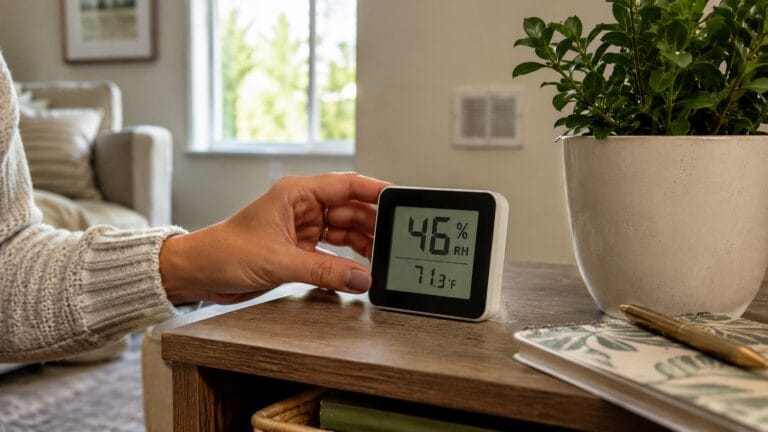
A hygrometer can help confirm the pattern. Place it in the room where the odor is strongest and compare the reading with other parts of the home. A room that consistently reads higher than nearby rooms may have poor airflow, a hidden moisture source, damp storage materials, or an exterior moisture influence.
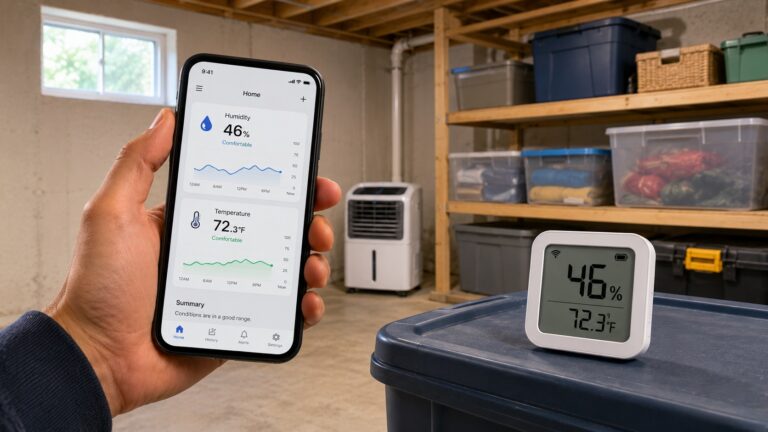
Pay attention to patterns more than one isolated reading. A room that spikes during rain, stays elevated after showers or laundry, or remains higher than nearby rooms after doors are opened is more likely to have a humidity-related odor problem.
Also pay attention to odor location. A general stale smell throughout a room may point to humidity and poor ventilation. A strong odor near one wall, one cabinet, one corner, one section of flooring, or one HVAC register deserves closer inspection. Localized odor is more concerning because it may mean the smell is coming from a damp material rather than from the room air alone.
Humidity may be part of the problem if you notice several of these signs:
- The odor gets stronger during humid or rainy weather.
- The smell improves when a dehumidifier runs.
- The room smells worse after being closed for several hours.
- Stored items, carpet, clothing, or cardboard smell damp.
- The odor is strongest in basements, closets, bathrooms, laundry rooms, garages, or rooms with poor airflow.
- Humidity readings are higher in the smelly room than in other rooms.
- The smell returns after cleaning because the air or materials remain damp.
If odor seems to come from a specific structure, such as flooring, cabinets, wall trim, ceiling materials, or a lower wall area, humidity may not be the only issue. That pattern may require a closer look at signs odors indicate hidden moisture so the source is not dismissed as ordinary stale air.
Why Cleaning Alone Often Does Not Solve Humidity-Related Odors
Cleaning can reduce odor when the smell comes from surface dirt, residue, spills, dust, or damp fabrics. But cleaning does not solve the moisture condition that allowed the odor to return. If the room stays humid, the same materials can absorb moisture again and begin releasing odor again.
This is why a musty room may smell better for a day after cleaning, then return to the same odor pattern. The visible surfaces may be cleaner, but the carpet padding, stored boxes, closet contents, cabinet bases, upholstery, or wall materials may still be holding moisture. Once indoor humidity rises again, those materials can release the smell back into the air.
Air fresheners, candles, sprays, and scented cleaners can make this more confusing. They may cover the odor temporarily without changing the moisture condition. When the fragrance fades, the original odor comes back because the damp material or humid air pattern is still present.
If odors repeatedly return after cleaning, the issue may fit the same pattern described in why musty odors return after cleaning. Cleaning helps only when the room can also dry; without humidity control, odor problems often keep cycling back.
What to Do When Humidity Is Causing Odor Problems
When humidity is causing odor problems, the goal is not to cover the smell. The goal is to lower moisture, improve drying, and deal with materials that are holding odor. If the air stays damp, the odor is likely to return even after cleaning.
Measure humidity before guessing
Start by measuring the room where the odor is strongest. A hygrometer can show whether that area is more humid than the rest of the home. Take readings at different times of day, especially after rain, showers, laundry use, cooking, or long periods with the room closed.
If the odor becomes stronger when humidity readings rise, the pattern is important. It suggests that damp air is activating odor sources or preventing the room from drying. If you are not sure how to interpret the readings, start with testing indoor humidity levels before assuming the problem is mold or hidden water damage.
Improve airflow in closed or stale rooms
Rooms with weak airflow often smell worse because moisture and odors stay trapped. Open interior doors when possible, avoid blocking vents, move furniture slightly away from exterior walls, and use exhaust fans in bathrooms, laundry rooms, and kitchens. In closets, reduce crowding so air can move around clothing, shoes, and stored items.
Airflow does not remove every moisture problem, but it helps the room dry more evenly. A room that smells stale only when closed may improve once air circulation is corrected.
Reduce moisture sources
Humidity-related odors often come from everyday moisture sources. Damp towels, wet laundry, unvented showers, cooking steam, overwatered houseplants, basement moisture, crawl space air, and stored damp items can all raise indoor humidity. If these sources continue, odor control will be difficult.
Look for patterns. If the odor is strongest near laundry, bathrooms, basement stairs, closets, or storage areas, the moisture source may be close by. If the entire home feels damp, the issue may require broader humidity control, such as the steps used to reduce indoor humidity levels.
Dry or remove odor-holding materials
Some materials keep odor even after the air improves. Cardboard boxes, damp carpet padding, old fabrics, stored clothing, paper, and soft furnishings may continue releasing musty smells if they absorbed moisture for a long time. In storage areas, replacing cardboard with sealed plastic bins can reduce odor risk.
If a material smells musty up close, it may be contributing to the room odor. Drying may help if the material is only mildly damp. If the smell remains after the room has dried, cleaning, washing, discarding, or replacing that material may be necessary.
Use dehumidification where appropriate
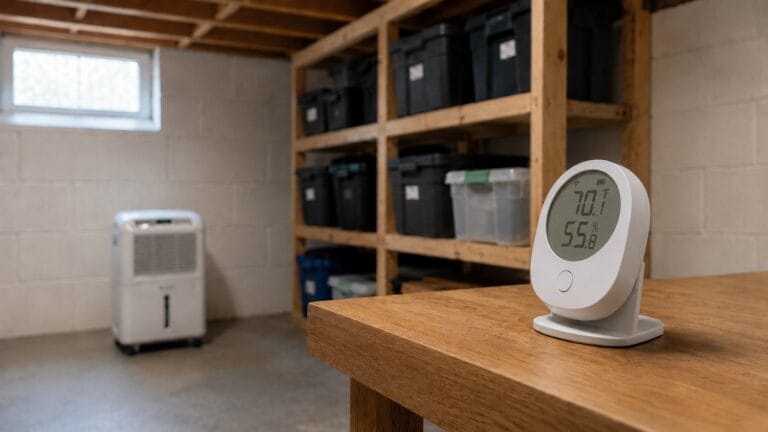
A dehumidifier can help when humidity is the main reason odors are lingering. This is especially useful in basements, enclosed rooms, damp storage areas, and rooms that stay humid after rain. The dehumidifier should be sized for the room and run long enough to stabilize conditions, not just briefly mask the smell. If you are choosing or setting up a unit, start with how to choose and use a dehumidifier effectively.
If odor improves while the dehumidifier runs but returns quickly when it stops, the room may still have an active moisture source, poor airflow, or odor-holding materials. In that case, dehumidification is useful, but it is not the entire solution.
When Odor Means You Should Look Deeper
Humidity-related odor is often manageable, but some odor patterns suggest a deeper moisture problem. The concern is not the smell alone. The concern is odor combined with signs that materials are staying damp or that moisture is trapped inside building components.
Look deeper if the odor is strongest near a specific wall, floor, ceiling, cabinet, HVAC register, exterior corner, or baseboard area. Localized odor can mean moisture is affecting one material or hidden space rather than the room air in general.
You should also inspect more carefully if the odor comes with:
- Visible mold or mildew growth
- Peeling paint or bubbling drywall
- Soft flooring or swollen trim
- Water stains on walls or ceilings
- Condensation that returns repeatedly
- Damp carpet, cardboard, insulation, or stored items
- Odor that remains after humidity has been lowered
- Odor that seems to come from inside a wall, cabinet, floor, or ceiling cavity
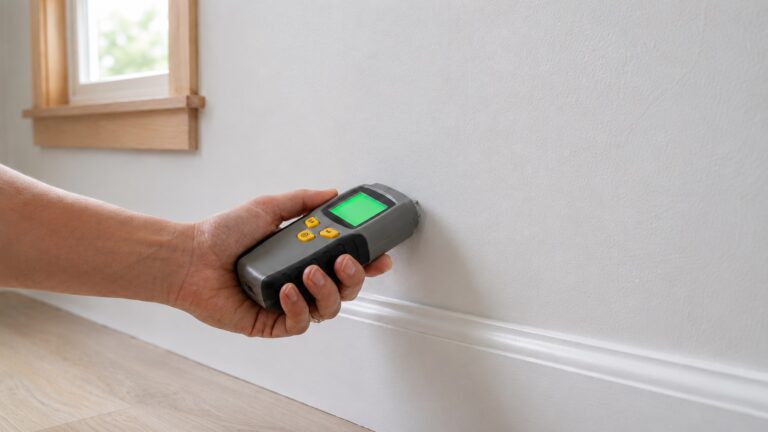
When the odor appears to come from a specific area, the next step is not just more cleaning. It may be source tracing. A more targeted process, such as learning how to trace the source of musty smells, can help separate general humidity odor from hidden damp materials.
Professional inspection may be needed when odor persists after humidity control, when visible mold is spreading, when materials are wet or damaged, or when the odor is tied to a hidden structural area. This is especially important if the smell is near plumbing, exterior walls, crawl space connections, basement walls, HVAC equipment, or areas that have leaked before. Do not paint, seal, or cover a smelly damp area until the moisture source has been found and the affected material has dried or been evaluated.
FAQ About Humidity and Odor Problems
Can high humidity make a house smell musty?
Yes. High humidity can make a house smell musty because damp air slows drying and allows odors to linger in porous materials. Carpets, fabrics, cardboard, wood, drywall paper, dust, and stored items can all smell stronger when they absorb moisture from humid air.
Does a humid smell always mean mold?
No. A humid or musty smell does not always mean mold. It may come from stale air, damp fabrics, stored materials, dust, poor airflow, or moisture absorbed by porous surfaces. However, persistent musty odor can be a warning sign, especially if it is localized or paired with visible moisture damage.
Why does my house smell worse when it rains?
Your house may smell worse when it rains because indoor humidity rises and drying slows down. Damp outdoor air, basement moisture, crawl space air, exterior wall moisture, or poor ventilation can all make odor-holding materials release stronger smells during rainy weather.
Can a dehumidifier remove musty odors?
A dehumidifier can reduce musty odors when high humidity is the main cause. It helps by drying the air and allowing materials to release less odor. However, if the smell comes from mold, hidden moisture, wet carpet padding, damp storage, or contaminated materials, a dehumidifier may help but will not fully remove the source.
Can odor problems start before humidity looks extreme?
Yes. Odor problems can start before a room feels obviously wet because materials, airflow, temperature, and moisture sources all matter. A room that consistently reads higher than the rest of the home deserves attention, especially if the odor rises with the humidity reading or returns after the room has been closed.
Why does one room smell mustier than the rest of the house?
One room may smell mustier because it has less airflow, more porous materials, cooler surfaces, damp storage, an exterior wall, a nearby bathroom, or a hidden moisture source. Room-to-room odor differences often show that moisture conditions are not evenly distributed throughout the home.
Should I clean first or lower humidity first?
Both may be necessary, but lowering humidity is usually the more important first step if the smell keeps returning. Cleaning removes residue and surface odor, but humidity control helps stop materials from staying damp and releasing the smell again.
What to Remember About Humidity and Odors
Humidity-related odors usually improve only when the room can dry more consistently. If the smell rises with humid weather, improves with dehumidification, returns after cleaning, or stays strongest in one area, measure the humidity, improve airflow, reduce moisture sources, and inspect deeper if the odor remains.
- Humidity makes odors worse by slowing drying and keeping materials damp.
- Musty odor does not always mean mold, but it can be an early moisture warning sign.
- Porous materials such as carpet, fabric, cardboard, wood, and drywall paper can hold odor in humid conditions.
- Odors that worsen during rain or humid weather often point to moisture-sensitive rooms.
- Cleaning alone may not solve the problem if humidity stays high.
- Measuring humidity helps confirm whether odor is linked to damp air.
- Persistent, localized, or recurring odor should be checked for hidden moisture or mold risk.