Why Mold Returns After Removal and How to Stop It
Mold returns after removal when the conditions that allowed it to grow were not fully changed. The visible mold may have been wiped away, sprayed, cleaned, painted over, or even professionally removed, but if moisture remains or comes back, mold can return in the same area or nearby.
A surface may look clean for a while, then dark spots, musty odor, staining, or fuzzy growth appear again. The return may happen within days, weeks, or after the next humid season, rain event, shower cycle, leak, or condensation pattern.
The reason is simple: mold removal and mold prevention are not the same thing. Removal addresses visible growth or contaminated material. Prevention addresses the moisture, drying, airflow, humidity, and material conditions that allowed the growth to happen. If those conditions remain favorable, mold can come back even after the cleanup looked successful.
Recurring mold often fits into the larger pattern of why moisture problems keep returning. The mold is the visible symptom, but the moisture pattern is usually the underlying driver. To stop the cycle, the home has to be evaluated as part of a broader moisture-control system, not just as a dirty surface that needs another cleaning.
A useful first check is to ask three questions: did the area get wet again, did the material dry completely, and is the room still humid or poorly ventilated? Those three answers usually point toward the reason mold returned.
That is why lasting mold control connects to finding, fixing, and preventing moisture problems in homes. The goal is to remove the growth, correct the conditions behind it, and monitor the area so the same problem does not restart.
Why Mold Can Come Back After It Was Removed
Mold can come back after removal because mold growth depends on conditions, not just spores. Mold spores are common in indoor and outdoor environments. The reason mold grows on one wall, ceiling, cabinet, carpet, or baseboard area is usually that the surface stayed damp long enough to support growth.
When visible mold is removed but the damp condition remains, the surface may look better temporarily. Then moisture returns, humidity stays high, condensation repeats, or hidden material remains damp. Once the conditions become favorable again, mold can regrow on the same surface or spread from nearby affected materials.
This is why a mold problem should not be treated only as a stain or surface growth. It is usually a moisture behavior problem. A bathroom ceiling may regrow mold because shower humidity and poor ventilation continue. A basement wall may regrow mold because seepage or high humidity remains. A cabinet may regrow mold because the leak was fixed but the particleboard base never fully dried.
For mold removal to last, the cleanup has to be paired with source correction. That may mean fixing a leak, improving ventilation, lowering humidity, drying materials completely, removing contaminated porous materials, or correcting condensation. The broader process is covered in how to remove mold permanently, but this article focuses specifically on why mold returns after removal.
Removal Fixes the Growth, Not Always the Conditions
The biggest mistake is assuming that if mold is gone visually, the problem is solved. Visible removal is only one part of control. If the room still has damp air, poor airflow, wet materials, or a recurring water source, the mold may return because the environment has not changed.
Think of mold recurrence as a chain. Moisture reaches a material, the material stays damp, airflow or drying is not strong enough, and mold growth appears. If cleanup removes the last link but leaves the earlier links in place, the chain can rebuild.
That is why mold often returns after surface cleaning, bathroom scrubbing, basement cleanup, leak repair, or repainting. The surface may have been treated, but the moisture source, hidden dampness, or vulnerable material remained. Until those factors are corrected, repeated removal becomes a cycle instead of a solution.
Reason 1: The Moisture Source Was Not Fixed
The most common reason mold returns after removal is that the moisture source was never fully corrected. Mold can be cleaned from a surface, but if water or damp air keeps reaching that same area, the surface can support new growth again.
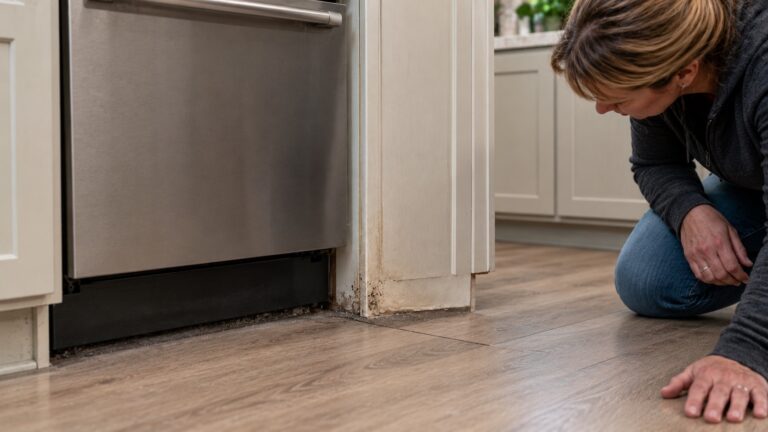
Moisture sources are not always obvious. A homeowner may clean mold from a wall without realizing that condensation is forming behind furniture. A bathroom ceiling may be scrubbed repeatedly while the exhaust fan remains weak. A basement wall may be treated while exterior drainage continues pushing moisture toward the foundation. A cabinet may be cleaned while a slow plumbing drip continues during sink use.
Common moisture sources behind recurring mold include:
- Slow plumbing leaks
- Roof leaks or flashing problems
- Window or door water intrusion
- Basement seepage
- Crawl space moisture
- HVAC condensation or drain problems
- Repeated bathroom humidity
- Condensation on cold walls, ceilings, or windows
- High indoor humidity
- Wet carpet, insulation, or cabinet materials that never fully dried
If mold returns in the same general area, assume the moisture condition should be checked again. The issue may not be that the mold cleaner failed. The issue may be that the surface became damp again. This is why moisture problems that come back are often directly connected to recurring mold.
Reason 2: The Area Was Not Fully Dried
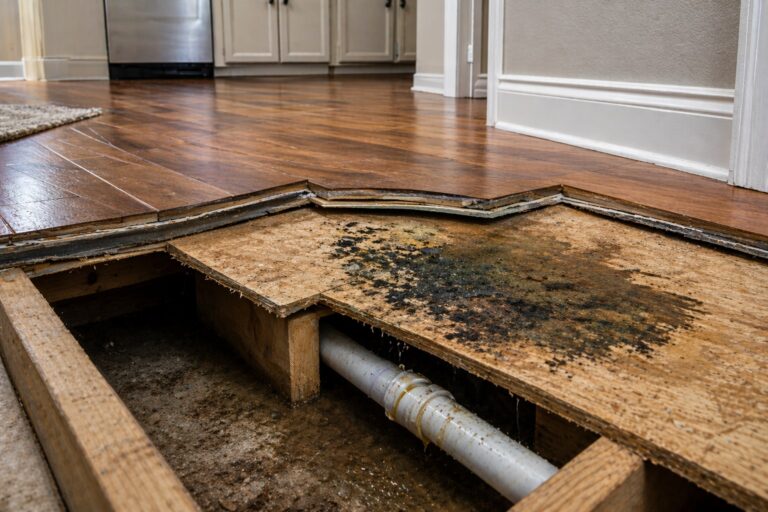
Mold can also return after removal when the affected area was not fully dried. A surface can look clean and dry while deeper layers remain damp. This is especially common with drywall, carpet padding, insulation, baseboards, wood framing, subfloors, cabinets, and porous trim materials.
Surface drying is not the same as full drying. A painted wall may feel dry while the back side of the drywall still holds moisture. Carpet fibers may dry while the padding underneath remains damp. A cabinet shelf may look dry while particleboard inside the base remains swollen and musty. If mold removal happens before the material is fully dry, growth can return from the same damp zone.
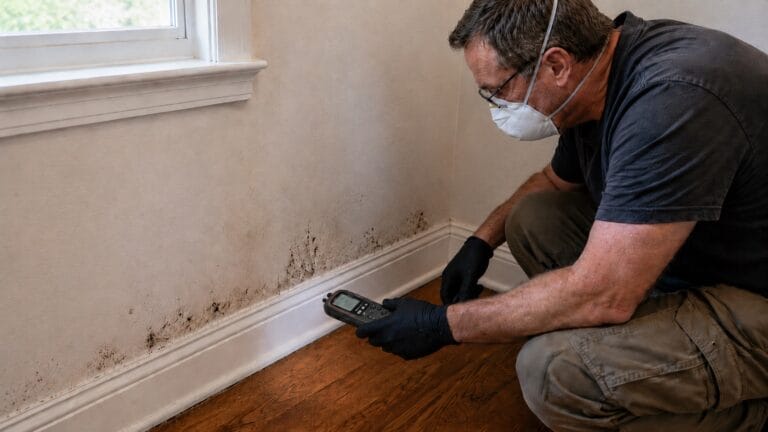
A moisture meter can help check suspicious drywall, trim, cabinets, or flooring, while a hygrometer can show whether the room humidity is staying high enough to slow drying. For broader monitoring guidance, see how to test indoor humidity levels.
Poor drying is especially common after leaks, flooding, plumbing failures, basement water entry, roof leaks, and appliance leaks. Fans may dry the visible surface, but hidden sides and enclosed materials may need more time, airflow, dehumidification, or removal.
If mold came back after a water event, the area may fit the pattern described in how poor drying causes mold recurrence. The key question is whether the affected material was actually dried throughout, not just cleaned on the surface.
Reason 3: Mold Was Only Cleaned From the Surface
Surface-only cleaning is another major reason mold returns. Wiping, spraying, or scrubbing visible mold may remove what you can see, but it may not address growth inside porous materials or behind the surface. This is why mold can return quickly after the area looks clean.
Hard, nonporous surfaces are usually easier to clean than porous materials. Tile, glass, metal, and some sealed surfaces may respond well when the moisture source is corrected. Porous materials are different. Drywall paper, untreated wood, carpet padding, insulation, ceiling materials, fabric, and particleboard can hold moisture and support growth below the surface.
Bleach and mold sprays are often misunderstood in this situation. A cleaner may lighten staining or remove surface growth, but it does not correct dampness behind the material. On porous materials, surface treatment may not reach the deeper growth or moisture source. If the material remains damp, mold can return.
This is why mold that keeps coming back after wiping or spraying should not be treated as a simple cleaning problem. It may be a material problem, a moisture problem, or a hidden-source problem. For the cleaning-specific version of this issue, see why mold keeps coming back after cleaning.
Surface-only cleaning also fails when the affected material should have been removed. If drywall, carpet padding, insulation, or particleboard was wet long enough to support growth, repeated surface cleaning may only delay the return.
Reason 4: Hidden Mold or Hidden Moisture Remains
Mold can return after removal when the visible area was cleaned but hidden moisture or hidden growth remains nearby. This is common when moisture reaches the back side of drywall, the space behind baseboards, the underside of flooring, the inside of cabinets, or insulation inside a wall or ceiling cavity.
The visible surface may look clean while the hidden side of the material is still damp. Mold may then return through the same area because the underlying moisture source was never fully corrected. In other cases, the original visible mold was only part of the problem, and growth behind the material continued after the surface was cleaned.
Hidden moisture is especially likely after slow leaks, roof leaks, window leaks, plumbing leaks, basement seepage, appliance leaks, or condensation inside enclosed areas. Mold may return because moisture remains trapped where airflow is weak and drying is slow.
Warning signs of hidden mold or hidden moisture include recurring musty odor, mold returning along the same edge or seam, staining that comes back through paint, soft drywall, swollen trim, damp cabinet backs, or mold that reappears shortly after cleaning. For a deeper explanation of this mechanism, see how hidden moisture causes recurring mold.
Reason 5: Humidity or Condensation Keeps Returning
Mold does not always return because of a leak. In many homes, recurring mold is caused by high humidity or repeated condensation. This is common in bathrooms, closets, basements, laundry rooms, window areas, exterior wall corners, and rooms with poor airflow.
Condensation forms when warm, moist air meets a cooler surface. If that surface stays damp repeatedly, mold can return even after cleaning. This is why bathroom ceilings, window trim, cold wall corners, and closet walls often develop mold again unless airflow and humidity are improved.
High humidity can also keep materials damp enough for mold to return. A basement wall may not have an active leak, but if the room stays humid, cardboard, wood, drywall paper, dust, and stored items can remain moisture-sensitive. Cleaning the visible mold does not solve the indoor moisture condition.
Recurring humidity or condensation problems often show up as mold returning during certain seasons or after repeated room use. Bathroom mold may return after weeks of showers. Window mold may return during cold weather. Basement mold may return during humid months. Closet mold may return when clothing is packed tightly against exterior walls.
If mold keeps returning in the same area, the issue may be more specific than general recurrence. The recurring location may reveal the exact moisture pattern, airflow weakness, or material vulnerability. That narrower situation is covered in why mold returns in the same locations.
Reason 6: Mold-Resistant Paint or Sealers Were Used Too Soon
Mold-resistant paint, primers, and sealers can be useful in the right situation, but they do not fix mold by themselves. If they are applied over damp, dirty, contaminated, or damaged materials, mold may return because the underlying condition was never corrected.
A coating can hide stains and make a surface look finished, but it cannot dry a wet wall, repair a leak, remove contaminated drywall paper, or improve ventilation. If moisture remains behind the coating, staining, odor, bubbling, or new mold can appear again.
This mistake often happens after bathroom mold, basement wall mold, window condensation, or water-damaged drywall. The homeowner cleans the surface, applies primer or paint, and expects the problem to be sealed away. But if humidity, condensation, or hidden dampness continues, the coating may fail or mold may return at edges, seams, corners, or nearby surfaces.
Mold-resistant products work best after the source is fixed, the material is dry, the affected area is properly cleaned or removed, and the room conditions have been improved. They are a support layer, not a substitute for moisture control, and they should not be used to cover active mold or damp material.
Reason 7: Poor Airflow Allows Damp Conditions to Return
Poor airflow can make mold return even when no major leak exists. Air movement helps surfaces dry. When air stays still, moisture lingers on walls, ceilings, flooring, fabrics, and stored items. That creates the kind of damp surface conditions mold can use again.
Common airflow problems include blocked vents, furniture pushed tightly against exterior walls, overfilled closets, closed doors, weak bathroom fans, poor basement ventilation, and rooms with little circulation. Mold may return behind furniture, inside closets, near corners, or on ceilings because those areas dry slowly.
Bathrooms are a common example. A ceiling may be cleaned repeatedly, but if the exhaust fan is weak or not used long enough, steam continues collecting on the same surface. Closets are another example. Clothing packed against a cool wall can block airflow and trap moisture, allowing mold to return behind stored items.
Improving airflow does not replace leak repair or mold removal, but it helps prevent surfaces from staying damp after moisture is created. Mold recurrence often stops only when moisture source control, drying, and airflow improvement work together.
What the Recurring Location Tells You
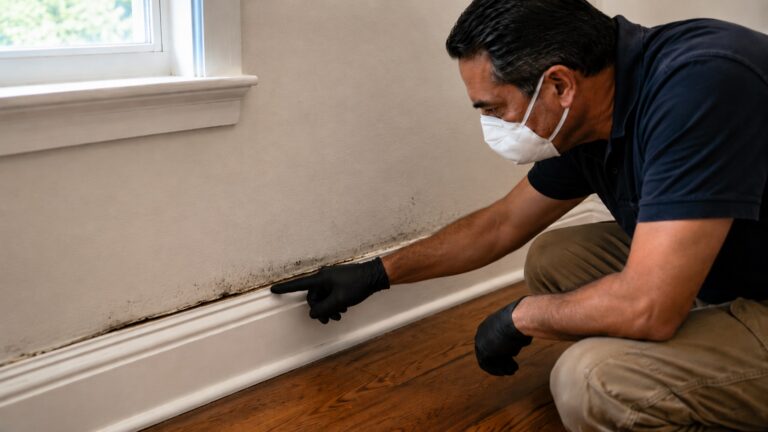
When mold returns in the same spot, the location is a diagnostic clue. The surface may have been cleaned, but the same moisture pattern, material weakness, poor airflow, or hidden source may still be affecting that area.
Use the location to narrow the next check. Mold returning along a baseboard points toward lower-wall moisture, flooring edges, or nearby leaks. Mold around a window points toward condensation, flashing, frame moisture, or airflow. Mold on a bathroom ceiling points toward exhaust fan performance, shower humidity, and ceiling drying time. For the fuller location-based diagnosis, see why mold returns in the same locations.
How to Stop Mold From Returning After Removal
Stopping mold from returning starts with changing the conditions that allowed it to grow. The exact steps depend on the location and moisture source, but the same basic principles apply in most homes.
Fix the moisture source first
Do not start with paint, fragrance, or repeated surface cleaning. Find and correct the moisture source. That may mean repairing a leak, reducing humidity, improving bathroom ventilation, correcting condensation, managing basement moisture, fixing HVAC drainage, or addressing exterior water entry.
Dry the affected area completely
Make sure the material is dry throughout, not just on the surface. Drywall, carpet padding, cabinets, insulation, trim, and subfloors can hold moisture inside. If the material stayed wet too long or cannot be dried fully, it may need removal instead of repeated treatment.
Remove materials that cannot be saved
Some porous materials keep supporting mold because they are damaged, contaminated, or difficult to dry. Carpet padding, insulation, swollen particleboard, moldy cardboard, and badly affected drywall are common examples. If the material keeps smelling, staining, softening, or regrowing mold, surface cleaning may not be enough.
Control humidity and condensation
Recurring mold often depends on repeated damp air, not just leaks. Use exhaust fans, dehumidification, better airflow, and humidity monitoring where needed. Keeping surfaces dry is more important than repeatedly killing mold after it appears.
Improve airflow around vulnerable areas
Move furniture slightly away from exterior walls, avoid overpacking closets, keep vents open, and allow air to reach corners, cabinets, and storage areas. Airflow helps surfaces dry before mold can return.
Use coatings only after the source is corrected
Mold-resistant primers, paints, and sealers should be used only after the material is clean, dry, and suitable to keep. They can support prevention, but they should not be used to hide dampness or seal contaminated material.
Monitor the area after cleanup
Recurring mold often restarts slowly. Check the area after rain, showers, humid weather, HVAC use, or seasonal changes. If the same spot begins to smell musty, stain, darken, or feel damp, act before visible growth spreads. For the fuller long-term prevention system, see how to prevent mold from returning permanently and how to prevent recurring moisture damage.
When to Call a Professional
Recurring mold does not always require professional remediation, but repeated return after cleaning is a sign that the source may be deeper than the visible surface. Professional help is especially useful when the moisture source is hidden, the affected material is porous, or mold keeps returning after more than one cleanup attempt.
Consider calling a professional if:
- Mold returns repeatedly in the same area.
- The source of moisture is unclear.
- Growth appears after a leak, flood, roof issue, plumbing problem, basement seepage, or HVAC condensation issue.
- Mold appears on drywall, insulation, carpet padding, subflooring, cabinets, or structural wood.
- There is a persistent musty odor after removal.
- The mold appears to come from inside a wall, ceiling, floor, cabinet, crawl space, attic, or HVAC system.
- The affected area is large, spreading, or involves contaminated water, sewage, flooding, electrical hazards, or structural damage.
- Mold returned after professional remediation or previous repairs.
If mold keeps returning after removal, it may also be useful to compare the situation with signs mold was not fully removed. Sometimes the problem is not new mold forming from scratch, but incomplete cleanup, hidden growth, or contaminated material that was never fully addressed.
FAQ About Mold Returning After Removal
Why does mold come back after removal or cleaning?
Mold comes back after removal or cleaning when the surface becomes damp again, the material was not fully dried, the moisture source remains, or mold was only removed from the visible surface. Cleaning may remove growth temporarily, but it does not solve leaks, humidity, condensation, hidden moisture, or contaminated porous materials.
Does mold come back if the moisture source is fixed?
Mold is much less likely to return if the moisture source is truly fixed, the affected materials are fully dried, and damaged or contaminated materials are handled correctly. However, mold may still return if materials stayed damp inside, hidden growth remains, humidity stays high, or the surface is exposed to a new moisture source later.
Can mold return after professional remediation?
Yes. Professional remediation can remove mold from affected areas, but mold can return if moisture comes back or if a hidden moisture source was missed. Remediation and moisture correction have to work together. If the home continues to support damp conditions, new growth can develop after the cleanup.
Why does mold return in the same spot?
Mold returns in the same spot because that location is still receiving moisture or drying too slowly. The cause may be condensation, a hidden leak, poor airflow, damp material, exterior water entry, basement moisture, or a recurring humidity pattern.
Can mold-resistant paint stop mold from coming back?
Mold-resistant paint can help protect a clean, dry, properly prepared surface, but it cannot fix damp materials, hidden mold, leaks, or poor ventilation. If paint is applied before the moisture source is corrected, mold or staining may return.
Does bleach stop mold from returning?
Bleach may lighten or clean some surface growth on certain hard materials, but it does not stop mold from returning if moisture remains. It is also not a complete solution for porous materials where growth or moisture may extend below the surface.
When should I call a professional for recurring mold?
Call a professional when mold returns repeatedly, appears in a hidden or hard-to-access area, affects porous building materials, follows water damage, spreads beyond a small area, or comes back after previous remediation. Professional inspection can help identify the moisture source and determine whether materials need removal.
The Best Way to Stop Mold From Returning
Mold returns after removal when the conditions that supported the original growth were not fully changed. The visible mold may have been cleaned away, but moisture, humidity, poor airflow, incomplete drying, hidden growth, or contaminated porous materials may still remain.
The long-term solution is not repeated surface cleaning. It is source correction, complete drying, material evaluation, humidity control, airflow improvement, and monitoring. When mold returns in the same location or comes back after multiple cleanup attempts, treat it as a moisture and material problem that needs deeper diagnosis.