Signs of Ceiling Collapse Risk After Water Damage
A water-damaged ceiling can become dangerous when moisture weakens drywall, plaster, fasteners, insulation, or the framing support above the finished surface. Not every ceiling stain means the ceiling is about to collapse, but sagging, bulging, cracking, active dripping, falling material, or water near electrical fixtures should be treated as serious warning signs.
The safest rule is simple: if a ceiling is bowed, swollen, making cracking sounds, dripping heavily, or visibly pulling away, stay out from under it. Move people and pets away from the area, avoid touching wet electrical fixtures, and call a qualified professional to inspect the damage. Ceiling material can release suddenly, especially when trapped water and wet insulation add weight above the drywall or plaster.
Use the signs below to decide when a water-damaged ceiling should be treated as unsafe, when to stay out of the area, and when professional inspection is needed before drying or repair. For broader moisture diagnosis beyond the ceiling, see this guide to find, fix, and prevent moisture problems throughout the home.
When Water-Damaged Ceilings Become Dangerous
A ceiling becomes dangerous when drywall, plaster, fasteners, insulation, or support materials can no longer safely carry their own weight or the weight of trapped water. As these materials absorb moisture, they may soften, swell, separate, sag, crack, or lose attachment strength.
Water can also collect above the visible ceiling surface before it breaks through. A ceiling may look stained for a while and then suddenly form a bulge as water pools above the drywall. In other cases, water spreads across insulation or framing before it appears as a stain below. That means the visible mark on the ceiling may not show the full size of the wet area.
The risk is higher when the leak is active, the wet area is large, the ceiling is visibly sagging, or the ceiling material is heavy. Older plaster ceilings, textured ceilings, layered repairs, and ceilings with wet insulation above them can become especially hazardous because more weight may be involved.
Water-damaged ceilings also become more concerning when the source has not been stopped. A roof leak, upstairs bathroom leak, plumbing failure, HVAC condensation leak, or attic moisture problem can keep feeding water into the ceiling cavity. Until the source is controlled, the ceiling may continue to weaken.
A ceiling that looked stable yesterday can become unsafe after another rainstorm, another upstairs leak, or another HVAC condensation cycle adds more water above the drywall.
If you are still trying to identify the general symptoms of ceiling moisture, this guide on signs of ceiling water damage covers early visible warning signs. This article focuses specifically on when the ceiling may be unsafe.
The Biggest Warning Signs of Ceiling Collapse Risk
The most urgent signs of ceiling collapse risk are the ones that show the ceiling material is under stress, overloaded with water, or beginning to separate. These signs should not be treated as cosmetic damage.
High-risk warning signs include:
- A sagging or bowed ceiling section
- A round or swollen bulge that may be holding water
- Cracking, popping, tearing, or creaking sounds from the ceiling
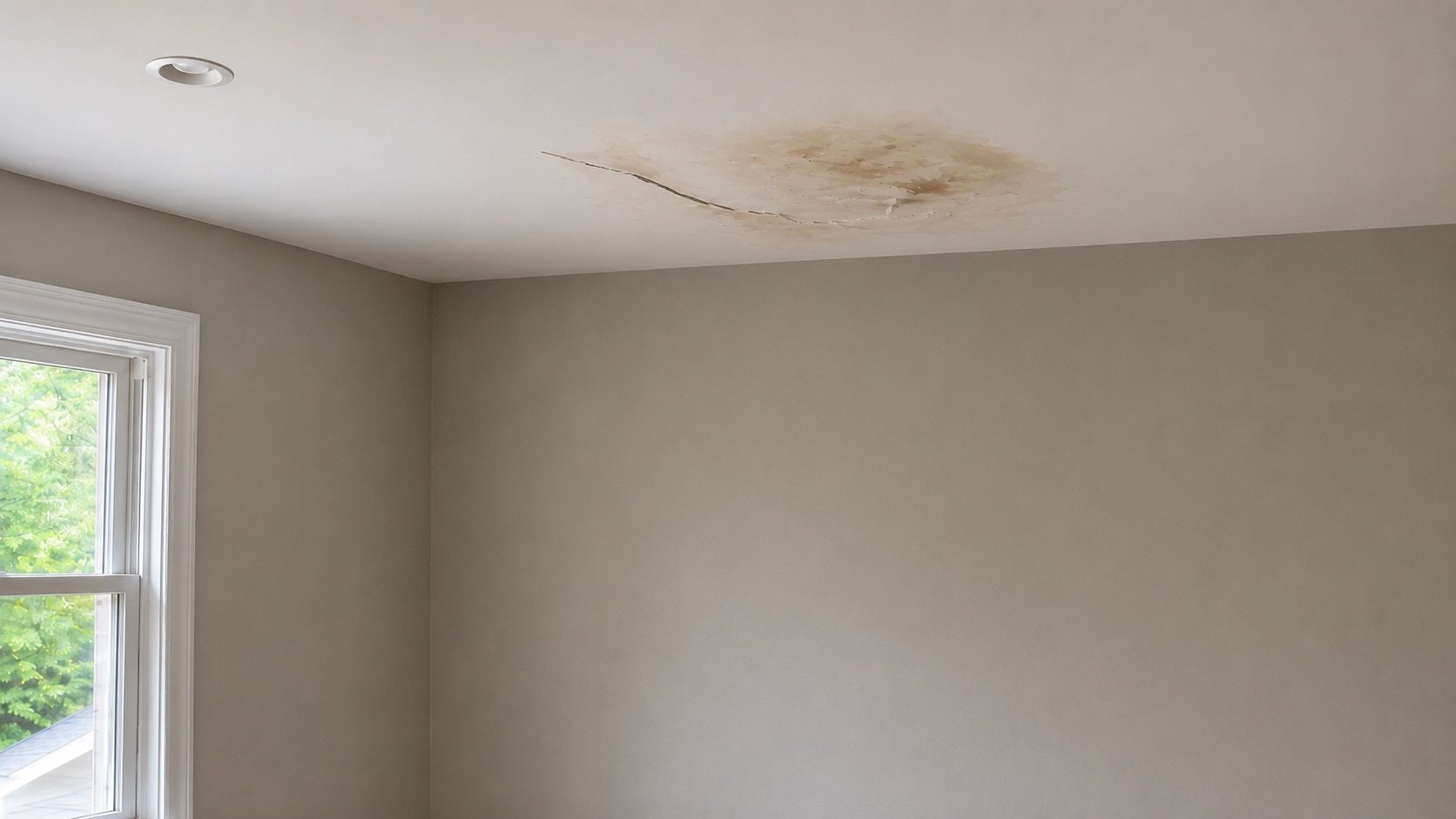
- Cracks spreading from the wet area
- Drywall tape separating at seams
- Ceiling material pulling away from walls, trim, or fixtures
- Active dripping through seams, cracks, light fixtures, or vents
- Water stains that continue to grow
- Falling plaster, drywall pieces, ceiling texture, or wet insulation
- Soft, spongy, or loose ceiling material near the damaged area
One of these signs may be enough to justify caution. Several together should be treated as a serious safety concern. A growing stain may need inspection, but a growing stain with sagging and active dripping should be avoided until it is evaluated.
Do not stand under a damaged ceiling to test it with your hand. A ceiling that is close to failure may release water, debris, insulation, or pieces of drywall without much warning. If you need photos for documentation, take them from a safe distance.
A useful distinction is whether the sign is static or changing. A small, dry stain that has not grown for days is usually less urgent than a stain that expands during rain, drips after an upstairs fixture runs, or appears with new sagging, sounds, or loose material.
Sagging or Bulging Ceiling Areas
Sagging is one of the clearest signs that a ceiling may be structurally compromised. When ceiling drywall or plaster absorbs water, it can lose stiffness and begin to bow downward. If the material above the ceiling is also wet, the added weight can pull the ceiling surface away from fasteners or framing.
A bulge is especially concerning because it may mean water is trapped above the ceiling. The bulge may look like a rounded bubble, swollen patch, or low hanging section. It may be soft, discolored, or actively dripping. Even if the bulge is not dripping yet, it can release suddenly if the material tears.
Do not treat a water-filled ceiling bubble as a casual DIY fix. Puncturing a bulge can release water, wet insulation, dirty debris, and ceiling material, and it can cause a larger section to fail.
If the ceiling is sagging or bulging, stay out from under it. Move people and pets away from the area, protect belongings only if you can do so safely, and contact a professional who can evaluate the source of water and the condition of the ceiling. If the water is coming from a roof leak, you may also need to find the roof leak before mold forms or before more ceiling damage develops.
Cracks, Separation, and Sounds From the Ceiling
Cracks after water damage can mean different things depending on their size, location, and whether the ceiling is also sagging or wet. A small hairline crack in an old ceiling may not be an emergency by itself. But cracks that appear after a leak, widen over time, spread away from the wet area, or occur with sagging should be taken seriously.
Water weakens ceiling materials by softening drywall, loosening joint compound, damaging plaster keys, and reducing the holding strength around fasteners. As the ceiling surface moves under weight, cracks may form along seams, around fixtures, or across the wet section. Drywall tape may bubble or peel away. In plaster ceilings, cracking may appear along older repair lines or around areas where the plaster is separating from its support.
Sounds from the ceiling can be an even stronger warning sign. Cracking, popping, tearing, or creaking sounds may indicate that fasteners, drywall paper, plaster, or ceiling attachments are under stress. If you hear these sounds while the ceiling is wet, sagging, or dripping, leave the area and keep others away.
Ceiling separation is also a serious concern. This may look like:
- Open seams between drywall panels
- Ceiling material pulling away from crown molding or wall edges
- Loose drywall tape hanging down
- Gaps around light fixtures, vents, or ceiling fans
- Cracks radiating outward from a water-stained area
These signs do not always mean the entire ceiling will fall, but they do mean the damaged section may be losing attachment or strength. Do not push on the ceiling to test it. Pressure from below can make a weakened area fail.
Active Dripping, Spreading Stains, and Trapped Water
Active dripping means water is still moving through the ceiling system. It may come through a crack, seam, light fixture, vent opening, or the center of a stain. Even if the amount of water looks small, ongoing dripping can continue saturating drywall, insulation, and framing above the ceiling.
A spreading stain is another warning sign. If a brown, yellow, or gray stain continues to grow, the leak may still be active or water may still be spreading through materials above the ceiling. The stain may not show the full path of the water. Water can travel along framing, ductwork, insulation, or the top side of drywall before appearing in a different spot below.
Trapped water is one of the main reasons ceiling damage becomes dangerous. A ceiling can hold water for a period of time before the surface tears or collapses. The longer water remains above the ceiling, the more weight the material may carry and the more the ceiling can soften.
Common signs of trapped water include:
- A rounded ceiling bubble or bulge
- Dripping from the lowest point of a sagging area
- A stain that grows larger even after surface water is wiped away
- Paint or texture that balloons downward
- A ceiling that looks wavy or uneven compared with nearby areas
- A damp sound or soft feel around the wet section
If the stain is small, dry, and not changing, the risk may be lower, but the source still needs to be identified. If the stain is expanding, dripping, or paired with sagging, treat the area as unsafe. Once the ceiling has been stabilized and the source is controlled, a drying plan may be needed. For that separate process, see this guide on how to dry a ceiling after water damage.
Water Near Light Fixtures, Vents, or Electrical Areas
Water near electrical fixtures is one of the most urgent warning signs after ceiling water damage. If water is dripping from a light fixture, ceiling fan, smoke detector, recessed light, vent, or electrical opening, do not touch the fixture, switch, pull chain, or nearby wet surface. Do not stand in water below it. Do not flip nearby switches to “test” whether the fixture still works.
Water can travel along wires, fixture boxes, and ceiling openings before it appears below. A light fixture may drip even if the main leak source is several feet away. That means the fixture is not necessarily the source of the leak; it may simply be the lowest or easiest exit point for water.
If it is safe to do so, shut off power to the affected area from the breaker panel. If the panel is wet, blocked, damaged, or located in an unsafe area, do not approach it. Call emergency help, the utility company, or a licensed electrician depending on the situation.
Water near vents can also indicate hidden spread. HVAC registers, exhaust vents, and duct openings can allow water to escape from ceiling cavities. If water is dripping near ductwork, the leak may have traveled across the ceiling before finding the opening. This can make the wet area larger than the visible drip point.
Any ceiling that combines water, sagging, and electrical fixtures should be treated as a serious hazard. Keep people away until the water source, electrical risk, and ceiling stability have been evaluated.
Soft Drywall, Falling Texture, or Loose Ceiling Material
Soft ceiling drywall is a warning sign because drywall loses strength when it stays wet. The paper facing can loosen, the gypsum core can soften, and fasteners may no longer hold the panel firmly. Even if the ceiling has not collapsed, soft or loose material can indicate that the ceiling is no longer performing normally.
Falling texture can also be an early sign of moisture damage. Popcorn texture, paint flakes, plaster crumbs, joint compound, or drywall paper may loosen when water breaks the bond between surface layers. A small amount of flaking may not mean collapse is imminent, but falling material combined with sagging, cracking, or active dripping should be treated as a higher-risk condition.
Loose ceiling material may appear as:
- Peeling paint or texture below a wet area
- Drywall paper separating from the surface
- Plaster crumbs or dust falling from cracks
- Wet insulation dropping through openings
- Ceiling tape pulling loose at seams
- Soft spots around vents, fixtures, or stain edges
- Panels that look uneven or detached from nearby sections
Do not press on a wet ceiling to see how soft it is. If the material is already weakened, pressure from below can tear the surface or cause more damage. If you need to inspect the area visually, do it from a safe distance and avoid standing directly under the damaged section.
Material failure can also hide a larger moisture problem above the ceiling. Wet insulation, damp attic sheathing, roof leaks, plumbing leaks, or condensation problems may continue feeding moisture into the ceiling cavity. If the ceiling is below an attic, this guide on how to detect hidden moisture in attics can help identify related moisture sources after the ceiling area is safe to inspect.
What to Do If You Think the Ceiling May Collapse
If you think a water-damaged ceiling may collapse, focus on safety first. Do not start with drying, painting, patching, or removing drywall. The first goal is to keep people away from the area and stop the source of water if it can be done safely.
Take these steps:
- Leave the area under the damaged ceiling. Do not stand beneath sagging, bulging, cracking, or actively dripping sections.
- Move people and pets away. Keep children, pets, and visitors out of the room or affected area.
- Avoid wet electrical fixtures. Do not touch lights, ceiling fans, switches, outlets, or wet cords near the leak.
- Shut off power only if safe. If the breaker panel is dry and safely accessible, turn off power to the affected area. If not, call for professional help.
- Stop the water source if possible. Shut off a plumbing supply, stop using the upstairs fixture, or call a roofer or plumber depending on the source.
- Take photos from a safe distance. Document the ceiling condition without standing directly below the damaged area.
- Call the right professional. Depending on the cause, this may be a plumber, roofer, restoration contractor, drywall contractor, electrician, or structural professional.
If water is actively entering through the roof, plumbing, or an upper floor fixture, the ceiling may continue weakening until the source is stopped. A repair plan should start with the cause of the water, not only the ceiling surface. Otherwise, the same area can become wet again after cosmetic repairs.
When the damaged area is safe to inspect, professionals may need to determine whether the ceiling can be dried, partially removed, or replaced. Saturated ceiling drywall often cannot simply be painted over. The material may need removal if it has sagged, crumbled, separated, trapped contaminated water, or lost fastening strength. If other framing, flooring, or wall areas were also exposed, use this guide to evaluate structural safety after water damage before treating the ceiling as an isolated repair.
What Not to Do Around a Water-Damaged Ceiling
A water-damaged ceiling can look manageable until it fails. Avoid taking actions that place you directly under weakened material or hide the damage before it is understood.
Do not stand under a sagging or bulging ceiling. Even a small-looking bulge may contain more water than expected, and wet drywall or plaster can tear suddenly. If you need to move furniture or valuables, do so only if you can avoid the collapse zone.
Do not poke a ceiling bubble as a casual DIY fix. While controlled drainage may sometimes be performed by professionals under safe conditions, puncturing a bulge without planning can release water, insulation, debris, or ceiling material onto the person below. It can also cause a larger section to fail.
Do not paint over stains before the source is found. Paint may hide discoloration, but it does not restore weakened drywall or stop water from entering above the ceiling. A stain that keeps returning means the moisture source has not been fully corrected.
Do not run fans or heaters directly at an unstable ceiling while the source is still active. Air movement may help with drying after safety has been addressed, but it does not solve trapped water, sagging material, or hidden saturation above the ceiling. Drying belongs after the ceiling is stable enough to evaluate.
Do not ignore mold concerns, but do not treat mold as the first priority when the ceiling may collapse. Immediate safety comes first. After the ceiling is stabilized and opened or dried as needed, you can evaluate whether there are signs of mold inside ceiling cavities.
Who to Call for a Ceiling That May Collapse
You should call a professional when a ceiling shows sagging, bulging, active dripping, spreading cracks, electrical involvement, falling material, or repeated water damage. The right professional depends on where the water originated and whether electrical, structural, or extensive water damage is involved.
Depending on the situation, the right call may be:
- Call a plumber if the damage appears connected to supply lines, drain lines, toilets, tubs, showers, sinks, or water heaters.
- Call a roofer if the damage appears after rain, near an attic, below roof valleys, around chimneys, or near roof penetrations.
- Call a restoration contractor if materials are wet, drying equipment is needed, or water spread into insulation, walls, or flooring.
- Call a drywall or ceiling repair contractor if the ceiling material is sagging, cracked, loose, or needs removal and replacement.
- Call an electrician if water entered lights, ceiling fans, wiring, switches, outlets, or electrical panels.
- Call a structural professional if framing, joists, trusses, or repeated structural moisture damage may be involved.
For serious or repeated ceiling moisture problems, the issue may be part of a larger pattern of structural moisture problems in homes. A ceiling repair will not last if the roof, plumbing, attic, or ventilation problem above it remains unresolved.
After the immediate hazard is handled, homeowners should also think about recurrence. If the same ceiling area has leaked more than once, the long-term goal is not just to patch the drywall. It is to correct the moisture source and prevent recurring moisture damage before the ceiling is closed and finished again.
FAQ About Ceiling Collapse Risk After Water Damage
Can a wet ceiling collapse?
Yes. A wet ceiling can collapse if drywall, plaster, fasteners, insulation, or nearby support materials become too saturated or weakened. The risk is higher when the ceiling is sagging, bulging, cracking, actively dripping, or dropping material. Stay out from under the area until it is inspected.
Is a sagging ceiling after a leak dangerous?
A sagging ceiling after a leak should be treated as dangerous until proven otherwise. Sagging means the ceiling material may be carrying water weight or losing attachment strength. Do not stand under it, press on it, or try to test it by hand. Keep people away and call a professional.
What does a ceiling bulge full of water mean?
A ceiling bulge usually means water is trapped above the drywall, plaster, paint, or ceiling texture. The bulge may release suddenly if the material tears. Do not stand under it or puncture it casually. It needs safe evaluation because water, insulation, and ceiling material can fall at once.
Can a ceiling collapse days after the leak stops?
Yes. A ceiling may remain dangerous even after dripping stops because wet drywall, plaster, or insulation can continue weakening for hours or days. Continue avoiding any sagging or bulging section until it has been inspected and the trapped moisture has been addressed.
Is water dripping from a ceiling light an emergency?
Water dripping from a ceiling light should be treated as an electrical hazard. Do not touch the fixture or use the switch. If it is safe, shut off power from the breaker panel. If the panel is wet or unsafe to access, stay away and call emergency help or a licensed professional.
Ceiling Collapse Risk: Key Takeaways
- Not every ceiling stain means collapse is imminent, but sagging, bulging, cracking, dripping, or falling material should be taken seriously.
- A ceiling bulge may mean water is trapped above the surface and can release suddenly.
- Cracking, popping, or tearing sounds from a wet ceiling are serious warning signs.
- Water near lights, ceiling fans, switches, or electrical openings should be treated as an electrical hazard.
- Do not stand under, press on, or casually puncture a sagging or bulging ceiling.
- After the immediate hazard is handled, the water source must be fixed before the ceiling is repaired.