Best Chimney Waterproofing Sealers for Brick and Masonry
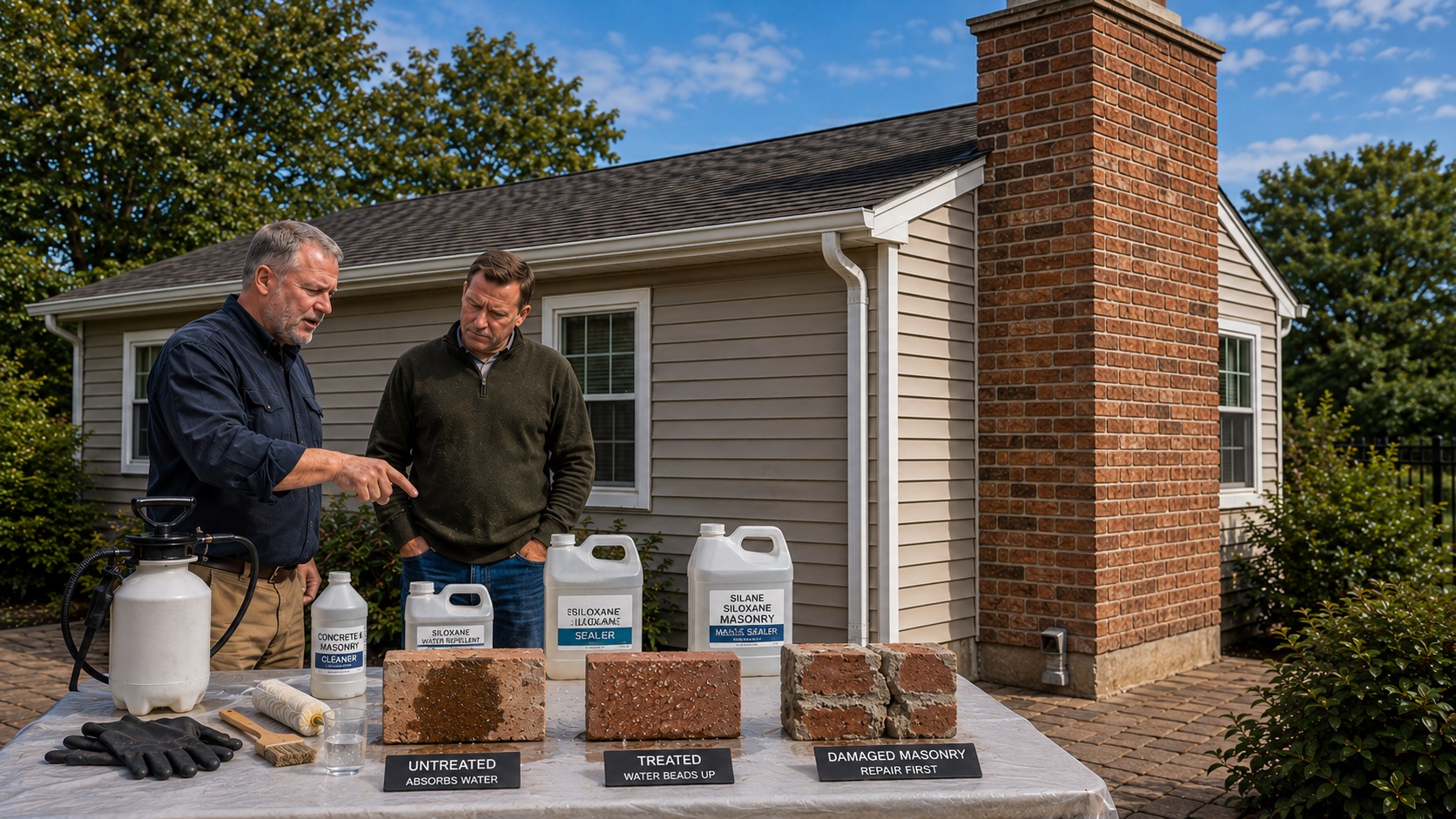
Brick chimneys absorb rain through porous brick faces and mortar joints. Over time, repeated wetting can contribute to staining, efflorescence, mortar erosion, spalling, and freeze-thaw damage. A breathable penetrating water repellent can reduce the amount of rain absorbed by sound masonry without covering the chimney with a visible surface film.
The best chimney waterproofing sealers are not flexible caulks, roof coatings, or heavy waterproof paints. In this context, “waterproofing” means reducing rain absorption with a clear penetrating treatment—not making masonry completely impermeable. These products usually use silane, siloxane, or blended chemistry to repel liquid water while allowing water vapor to escape.
However, a masonry sealer cannot repair open mortar joints, cracked crowns, loose bricks, failed flashing, or structural movement. Before choosing a product, determine whether rain is entering through absorbent masonry or through a physical defect. Our guide to how water enters homes through structural gaps explains why identifying the actual pathway matters before applying any surface treatment.
Important: These recommendations are intended for sound, bare, absorbent chimney masonry. Repair crown cracks, failed flashing, open mortar joints, loose bricks, and structural defects before applying a penetrating water repellent.
As an Amazon Associate, this site earns from qualifying purchases. This does not affect the price you pay. Our recommendations are based on research, product reliability, and real-world usability in moisture-prone environments.
Quick Picks: Chimney Masonry Water Repellents
- Best Overall: ChimneyRx Masonry Chimney Water Repellent
- Best Professional-Grade Water-Based Formula: Foundation Armor SX5000 WB
- Best for Brick and Mortar Together: Rainguard Brick Sealer
- Best Concentrate for Multiple Chimneys: Ghostshield Siloxa-Tek 8500 Ultra Concentrate
- Best for a Single Residential Chimney: MasonryDefender Chimney Brick Sealer
Detailed Reviews of Breathable Chimney Masonry Sealers
Best Overall: ChimneyRx Masonry Chimney Water Repellent
ChimneyRx is the most purpose-specific option in this comparison. Instead of being marketed primarily for driveways, patios, or horizontal concrete, it is formulated for brick chimneys and other vertical masonry surfaces. That makes it a sensible starting point for homeowners who want a breathable treatment designed around the heavy absorption and wind-driven-rain exposure common to chimneys.
The siloxane-based formula penetrates below the surface rather than creating a glossy coating. The application method relies on saturating the brick and mortar with two wet-on-wet passes. Its coverage can be lower than that of general masonry sealers because chimney brick may be highly porous and the product is intended to be applied generously.
What Makes ChimneyRx Suitable for Vertical Masonry
- Siloxane-based penetrating treatment formulated for vertical masonry.
- Clear, breathable, and non-film-forming after proper application.
- Designed for brick chimneys, mortar, and similar porous surfaces.
- Applied in two wet-on-wet passes to promote deeper absorption.
- Offers a more chimney-focused application profile than a general concrete sealer.
Where ChimneyRx Performs Well
- ✔ Purpose-built for chimney masonry.
- ✔ Treats both brick faces and sound mortar joints.
- ✔ Does not intentionally create a glossy or painted appearance.
- ✔ Vapor-permeable design helps masonry release internal moisture.
- ✔ Clear application instructions for vertical surfaces.
ChimneyRx Limitations to Consider
- ✖ Coverage may be limited on highly porous or weathered brick.
- ✖ Requires careful spray application and protection from overspray.
- ✖ Will not close cracks, replace missing mortar, or correct flashing defects.
- ✖ Two-pass saturation can require more material than homeowners expect.
Chimneys That Are a Good Match for ChimneyRx
- Unpainted brick chimneys that remain structurally sound.
- Older chimneys that absorb rain quickly but do not have severe deterioration.
- Projects where a purpose-built vertical masonry formula is preferred.
Check the ChimneyRx Masonry Chimney Water Repellent on Amazon to see current availability.
Best Professional-Grade Water-Based Formula: Foundation Armor SX5000 WB
Foundation Armor SX5000 WB is a professional-grade water-based silane-siloxane treatment for unsealed brick, masonry, concrete, pavers, and porous stone. It works beneath the surface and is intended to preserve a natural appearance rather than leaving a shiny membrane on the chimney.
This formula is particularly useful when homeowners want a well-established masonry treatment that can also be used on other compatible exterior surfaces. The water-based formulation is generally more approachable for residential projects than a solvent-based version, although nearby roofing, windows, metal, plants, and painted surfaces still require protection.
SX5000 WB Formula and Application Details
- Water-based blend of penetrating silane and siloxane chemistry.
- Designed for unsealed brick, mortar, concrete, pavers, and porous natural stone.
- Non-film-forming treatment that retains a natural masonry appearance.
- Two-coat wet-on-wet application is generally recommended.
- Available in sizes suitable for individual chimneys or larger exterior masonry projects.
Advantages of the Water-Based SX5000 Formula
- ✔ Professional-grade formula from an established masonry-sealer brand.
- ✔ Water-based composition avoids many of the handling issues associated with solvent formulas.
- ✔ Suitable for both brick and sound mortar.
- ✔ Useful when the same treatment will be applied to other unsealed masonry.
- ✔ Does not create an intentional decorative sheen.
Preparation Requirements and Drawbacks
- ✖ Surface must be dry, clean, absorbent, and free of previous coatings.
- ✖ Application temperatures and rain-free cure conditions must be followed carefully.
- ✖ Coverage varies considerably between dense newer brick and old porous masonry.
- ✖ Not a substitute for repointing deteriorated joints.
Projects Best Suited to SX5000 WB
- Homeowners who want a professional-grade water-based chimney treatment.
- Projects that include a chimney plus other unsealed exterior brick or masonry.
- Users who prefer silane-siloxane chemistry with a natural-looking finish.
Check the Foundation Armor SX5000 WB on Amazon to see current availability.
Best for Brick and Mortar Together: Rainguard Brick Sealer
Rainguard Brick Sealer is a ready-to-use water-based treatment made specifically for unpainted, unsealed brick and mortar. That clear substrate focus makes it easier to match with a traditional masonry chimney than products advertised mainly for driveways or polished concrete.
Its penetrating silane-siloxane formula is intended to reduce rain absorption while leaving the original brick appearance largely unchanged. It is a practical option for a chimney where both the brick units and mortar joints remain structurally sound but absorb water during wind-driven storms.
Rainguard Features for Brick-and-Mortar Coverage
- Ready-to-use formula intended for brick and mortar surfaces.
- Water-based silane-siloxane chemistry.
- Clear, non-gloss finish for natural-looking masonry.
- Designed to help resist wind-driven rain and weather exposure.
- Suitable for unpainted chimneys, brick walls, and other compatible masonry.
Reasons to Choose the Ready-to-Use Formula
- ✔ Specifically identifies both brick and mortar as compatible substrates.
- ✔ No concentrate mixing is required for the linked version.
- ✔ Appropriate for homeowners treating one chimney or a modest masonry area.
- ✔ Natural finish avoids the coated appearance of acrylic sealers.
- ✔ Water-based formula is practical for residential use.
Rainguard Application Limitations
- ✖ Ready-to-use products may be less economical for very large projects.
- ✖ Porous old brick can absorb more material than the estimated spread rate suggests.
- ✖ It cannot bridge missing mortar or active cracks.
- ✖ Overspray must be kept off glass, roofing, painted surfaces, metal, and plants.
Where Rainguard Brick Sealer Fits Best
- Sound brick chimneys with absorbent brick faces and mortar joints.
- Homeowners who want a ready-to-use product without dilution.
- Projects where retaining the natural color and texture of the masonry is important.
Check the Rainguard Brick Sealer on Amazon to see current availability.
Best Concentrate for Multiple Chimneys: Ghostshield Siloxa-Tek 8500 Ultra Concentrate
Ghostshield Siloxa-Tek 8500 Ultra Concentrate is designed for projects that need more finished solution than a single ready-to-use gallon provides. The concentrate is diluted according to the manufacturer’s instructions, making it more practical for multiple chimneys, a large masonry chimney, or a project that includes additional exterior brick.
The formula uses penetrating silane-siloxane chemistry and is intended to remain breathable and non-film-forming. The main tradeoff is that the user must mix it accurately. Incorrect dilution can affect coverage, penetration, and overall performance, so this option rewards careful preparation.
How the Siloxa-Tek Concentrate Works
- Concentrated water-based silane-siloxane formula.
- Produces a larger volume of usable treatment after correct dilution.
- Suitable for brick, masonry, pavers, and compatible porous surfaces.
- Designed to remain clear, breathable, and non-film-forming.
- Useful for contractors, multiple chimneys, and larger exterior projects.
Advantages for High-Volume Masonry Projects
- ✔ More efficient format for extensive masonry coverage.
- ✔ Reduces the number of ready-to-use containers needed for a large project.
- ✔ Breathable penetrating chemistry is appropriate for unpainted chimney masonry.
- ✔ Can be used on compatible exterior brick beyond the chimney.
- ✔ Natural appearance when applied to a suitable substrate.
Mixing and Project-Size Limitations
- ✖ Requires exact dilution and thorough mixing.
- ✖ Excess finished product may be unnecessary for one small chimney.
- ✖ Actual coverage can fall sharply on soft or highly porous masonry.
- ✖ The formula will not correct an active leak caused by flashing or crown failure.
When the Ultra Concentrate Makes Sense
- Owners with more than one chimney.
- Large chimneys or projects involving extensive exterior brick.
- Contractors and experienced homeowners comfortable mixing concentrate.
Check the Ghostshield Siloxa-Tek 8500 Ultra Concentrate on Amazon to see current availability.
Best for a Single Residential Chimney: MasonryDefender Chimney Brick Sealer
MasonryDefender Chimney Brick Sealer offers another purpose-specific alternative for exterior vertical chimney masonry. It uses a water-based modified-siloxane formula intended to soak into porous brick and mortar without leaving a thick film over the surface.
This product is a better match for a chimney comparison than MasonryDefender’s concrete-focused driveway sealer. It is intended for vertical surfaces and may appeal to homeowners who want a straightforward chimney product without purchasing a high-volume concentrate.
MasonryDefender Chimney Formula Highlights
- Water-based modified-siloxane formula.
- Developed for exterior vertical masonry chimneys.
- Penetrating, breathable, and non-film-forming.
- Suitable for unpainted, absorbent brick and sound mortar.
- Designed to retain the natural appearance of masonry.
Benefits for a Single-Chimney Project
- ✔ Purpose-specific positioning for chimney brick.
- ✔ More relevant than a horizontal concrete or driveway sealer.
- ✔ Water-based formula is practical for residential projects.
- ✔ Treats both brick surfaces and intact mortar joints.
- ✔ Useful when a high-volume concentrate would be unnecessary.
Listing and Application Limitations
- ✖ The Amazon listing is newer than several established alternatives.
- ✖ Coverage will vary with masonry age and porosity.
- ✖ Requires complete surface preparation for reliable penetration.
- ✖ Does not repair cracked, missing, or powdering mortar.
Chimneys Best Matched to MasonryDefender
- Homeowners treating one residential chimney.
- Projects where a large concentrate would create unnecessary leftover material.
- Sound, unpainted brick that becomes noticeably darker during rain.
Check the MasonryDefender Chimney Brick Sealer on Amazon to see current availability.
Compare the Recommended Chimney Sealers at a Glance
| Product | Category | Format | Best Use Case | Key Strengths | Main Limitation | Amazon Link |
|---|---|---|---|---|---|---|
| ChimneyRx Masonry Chimney Water Repellent | Best Overall | Ready to use | Purpose-built treatment for one or more brick chimneys | Chimney-specific, breathable, non-film-forming | Porous masonry may require substantial product | View on Amazon |
| Foundation Armor SX5000 WB | Best Professional-Grade Water-Based Formula | Ready to use | Chimney plus other unsealed exterior masonry | Silane-siloxane chemistry, natural finish, established brand | Requires carefully controlled surface and weather conditions | View on Amazon |
| Rainguard Brick Sealer | Best for Brick and Mortar Together | Ready to use | Sound brick chimneys with absorbent mortar joints | Brick-focused, no mixing, clear finish | Less economical for extensive projects | View on Amazon |
| Ghostshield Siloxa-Tek 8500 Ultra Concentrate | Best Concentrate for Multiple Chimneys | Concentrate | Multiple chimneys or large exterior masonry areas | High finished volume, breathable penetrating formula | Accurate dilution is essential | View on Amazon |
| MasonryDefender Chimney Brick Sealer | Best for a Single Residential Chimney | Ready to use | One sound, unpainted residential chimney | Vertical-masonry focus, water-based, natural appearance | Newer Amazon listing with less purchasing history | View on Amazon |
How to Choose a Sealer That Matches Your Chimney
Confirm That Masonry Absorption Is the Actual Problem
A water repellent is appropriate when sound brick and mortar absorb wind-driven rain. It is not the right first repair when water enters through flashing gaps, an open chimney crown crack, missing mortar, a damaged cap, or separation at the roofline.
Inspect the chimney after rainfall. Masonry that becomes dark across broad sections and remains damp may be absorbing water. A concentrated stain at the base, beside the flashing, or near one roof intersection suggests a more localized defect. Read why chimneys leak during rain before assuming that porous brick is the only cause.
Choose a Penetrating Product Instead of a Surface Film
Exterior chimney masonry needs to release moisture vapor. Silane, siloxane, and blended silane-siloxane treatments penetrate the pore structure and repel liquid water without intentionally creating an impermeable skin.
Acrylic wet-look coatings, elastomeric paints, and generic waterproof films can change the chimney’s appearance and may interfere with drying. They can also peel or trap moisture when applied over damp masonry. Clear does not automatically mean breathable, so check the product chemistry rather than relying only on the word “sealer.”
Match the Formula to Brick Porosity
Old soft brick may absorb much more product than dense modern brick. Mortar joints may also absorb at a different rate than brick faces. Manufacturer coverage figures are therefore planning estimates, not guarantees.
If the chimney is unusually weathered, test a small section and monitor absorption. Masonry that is crumbling, spalling, or powdering should be evaluated before treatment. Our guide to inspecting chimney mortar for moisture damage can help distinguish normal porosity from joints that need repair.
Decide Between Ready-to-Use and Concentrated Sealer
A ready-to-use formula is convenient for one average chimney. There is no dilution step, and the product can be applied once the masonry and weather conditions are suitable.
A concentrate is more practical for multiple chimneys or extensive exterior brick. However, it must be measured and mixed accurately. Buying concentrate for a tiny project may create unnecessary leftover material, while buying too little ready-to-use product can interrupt a wet-on-wet application.
Consider Water-Based Versus Solvent-Based Chemistry
Water-based formulas are generally the practical default for homeowners. They usually have less odor and simpler cleanup, although they still require gloves, eye protection, careful masking, and adherence to the label.
Solvent-based products can provide strong penetration in certain dense substrates, but they introduce additional fumes, flammability concerns, cleanup requirements, and compatibility questions around roofing materials. A solvent-based option is better left to experienced users who understand the product’s technical requirements.
Account for Freeze-Thaw Exposure
In cold climates, absorbed water can freeze within brick and mortar. Repeated expansion and contraction may contribute to surface scaling, spalling, and joint deterioration. A penetrating water repellent can reduce saturation, but it cannot reverse existing freeze-thaw damage.
Repair loose mortar, crown defects, and damaged brick before sealing. Treating structurally deteriorated masonry may hide symptoms without correcting the underlying weakness.
How to Prepare Brick and Apply Chimney Water Repellent
Inspect Before Cleaning
Look for open mortar joints, loose brick, spalling faces, efflorescence, crown cracks, failed flashing, and signs of movement. If the chimney has obvious structural damage, sealing should wait until repairs are completed and cured.
Check the crown as well as the vertical walls. The guide to signs of chimney crown damage explains why a cracked crown can continue admitting water even after the brick faces are treated.
Verify That the Surface Is Unpainted and Absorbent
Most penetrating chimney sealers are intended for bare porous masonry. Painted brick, glazed brick, previously coated masonry, or surfaces treated with an unknown sealer may not absorb the new product evenly.
A simple water-drop test can provide a rough indication. If water beads immediately and remains on the surface, a previous treatment may still be present. Follow the selected manufacturer’s instructions for compatibility testing rather than forcing a penetrating product over a nonabsorbent surface.
Clean Without Leaving Residue
Remove dirt, biological growth, loose mortar particles, soot, and heavy efflorescence using a method suitable for the brick. Aggressive pressure washing can damage soft brick and old mortar. Harsh cleaners may also leave residues that interfere with penetration.
After wet cleaning, allow the chimney to dry for the full period required by the product instructions. Surface dryness alone does not mean the deeper masonry is ready.
Protect the Roof and Nearby Surfaces
Cover or mask windows, skylights, painted trim, metal, vegetation, and roofing materials as directed by the label. Even a clear treatment can leave residue or spotting on nonporous surfaces.
Control spray drift. Wind can carry sealer farther than expected, especially from an elevated chimney. A low-pressure sprayer should produce controlled saturation rather than a fine airborne mist.
Apply Complete Wet-on-Wet Coverage
Many penetrating masonry repellents require two applications while the first remains wet. Work systematically from one section to the next and treat all accessible chimney faces. Waterproofing only the side that is easiest to reach leaves the remaining masonry exposed.
Do not stretch the product into an excessively thin coat to achieve a larger coverage number. Penetrating sealers depend on adequate absorption. Follow the label for the number of coats, timing, runoff control, and required saturation.
Keep the Chimney Dry During Curing
Check the forecast before beginning. Rain shortly after application can interfere with penetration or wash uncured product onto the roof. Temperature, humidity, wind, shade, and masonry porosity all affect drying.
Use the manufacturer’s stated rain-free window rather than assuming the chimney is ready because the surface no longer looks wet.
Put Roof Safety Ahead of the Project
A chimney may be simple to seal but difficult to reach safely. Steep roofs, tall chimneys, fragile roofing, wet surfaces, and awkward ladder positions substantially increase fall risk.
Professional application is the better choice when safe access is uncertain. No reduction in water absorption is worth an unsafe roof setup.
Common Chimney-Sealing Mistakes That Waste Time and Money
Using Sealer to Cover an Unrepaired Leak
A penetrating repellent cannot close a crown crack, reseal flashing, replace missing mortar, or stabilize loose brick. Applying it before diagnosis may delay the repair while water continues entering elsewhere.
Applying Product to Damp Masonry
Moisture already inside the pore structure can prevent even penetration. Trapped moisture, uneven absorption, and premature rain exposure can all reduce the effectiveness of the treatment.
Choosing a Glossy Acrylic Coating
Wet-look coatings may be appropriate for some decorative masonry projects, but they are not the preferred choice for a traditional breathable chimney-waterproofing treatment. They can change the appearance and behave differently from penetrating repellents.
Ignoring Mortar Condition
Sound mortar can be treated along with brick. Missing, deeply recessed, cracked, or powdering mortar should be repaired first. Learn the warning signs in signs chimney mortar is allowing water in.
Trusting Coverage Numbers Too Literally
Coverage depends on porosity, texture, application method, wind, overspray, and the number of required passes. An old chimney can consume far more product than a dense concrete sample used for a general estimate.
Sealing Only One Face
Wind-driven rain can strike the sides and rear of a chimney. Treating only the visible front may leave significant absorption pathways untouched.
Failing to Protect Adjacent Materials
Clear masonry products can still stain glass, metal, roofing, painted trim, or landscaping. Masking and runoff control are part of the application, not optional cleanup steps.
Expecting Permanent Protection
Weather exposure gradually reduces water repellency. Inspect the chimney periodically and perform a water-absorption test when performance appears to decline. Reapplication timing depends on the product, exposure, masonry condition, and quality of the original application.
Frequently Asked Questions About Chimney Masonry Sealers
Should a brick chimney be waterproofed?
A sound, unpainted brick chimney that absorbs rain can benefit from a breathable penetrating water repellent. Waterproofing is not appropriate as a substitute for repairing cracks, missing mortar, failed flashing, loose brick, or crown damage.
What type of sealer is best for a brick chimney?
A clear, penetrating, vapor-permeable silane, siloxane, or silane-siloxane treatment is generally more suitable than a thick surface film. The product should expressly permit use on vertical exterior brick and mortar.
Will chimney sealer stop an active leak?
It may reduce water entry when the leak is caused by rain absorption through sound masonry. It will not stop water entering through flashing gaps, crown cracks, open joints, damaged caps, roof intersections, or structural movement. The broader guide on preventing water leaks around chimneys covers these other pathways.
Can chimney sealer be applied over paint?
Most penetrating repellents require bare, absorbent masonry. Paint and previous film-forming coatings can block penetration. Do not apply a product over painted or previously coated brick unless the manufacturer specifically permits it.
How many coats does a chimney need?
Many penetrating products call for two wet-on-wet applications, but instructions vary. Follow the label for coat count, timing, saturation, runoff, and drying. Applying extra coats after the surface has stopped absorbing may not improve protection.
Can I roll chimney sealer instead of spraying it?
Some products allow a roller or brush, while others are designed for low-pressure spray application. Spraying can cover textured brick and recessed mortar more evenly, but it also increases overspray risk. Use only an application method approved by the manufacturer.
How long must chimney sealer dry before rain?
The required rain-free period differs by formula and weather conditions. Some products require several hours, while others need a longer dry window. Check the exact label and choose a forecast that provides more time than the minimum whenever possible.
How often should a chimney be resealed?
There is no universal schedule. Sun, wind, rainfall, freeze-thaw cycles, brick porosity, and application quality all affect service life. Inspect the masonry periodically and reapply when water begins absorbing readily again, following the manufacturer’s maintenance guidance.
Final Recommendation Based on Chimney Size and Masonry Condition
ChimneyRx Masonry Chimney Water Repellent is the strongest overall choice for homeowners who want a purpose-built treatment for vertical chimney masonry. Its chimney-specific positioning and breathable siloxane formula make it easier to match to the actual project.
Foundation Armor SX5000 WB is the better choice for a professional-grade water-based formula that may also be used on other compatible exterior masonry. Rainguard Brick Sealer is a practical ready-to-use option when both brick and sound mortar need treatment without concentrate mixing.
Choose Ghostshield Siloxa-Tek 8500 Ultra Concentrate for multiple chimneys or a larger masonry project where a high finished volume is useful. MasonryDefender Chimney Brick Sealer is a focused choice for one residential chimney when you want a water-based product intended specifically for vertical chimney brick.
Whichever product you select, diagnose the chimney before sealing it. A penetrating repellent can reduce rain absorption, but it cannot correct physical gaps or structural deterioration. For the complete repair and preparation sequence, see how to waterproof brick chimneys.