Why Mold Problems Often Appear After Seasonal Changes
Mold problems often appear after seasonal changes because several moisture conditions shift at once. Humidity rises or falls, surfaces become warmer or colder, airflow patterns change, heating and cooling systems operate differently, and hidden moisture may become easier to notice. The mold may look sudden, but the damp conditions that allowed it to grow usually started earlier.
A season change does not create mold by itself. Mold needs moisture, suitable material, and enough time to grow. Seasonal transitions matter because they can create the moisture conditions mold needs: condensation on cold surfaces, damp basements after rain, humid summer air, poor ventilation during closed-window weather, or hidden moisture that no longer dries as quickly. That is why long-term mold control is not just about cleaning visible growth. It also requires correcting the moisture source so you can remove mold permanently instead of repeating the same cleanup each season.
When mold appears after a weather shift, the best question is not only “How do I clean this?” The better question is “What changed in the home’s moisture pattern?” Answering that helps you decide whether you are dealing with a small surface issue, a seasonal humidity problem, a condensation pattern, or hidden dampness that needs more attention.
A quick way to narrow the cause is to compare the season with the location of the mold:
| Seasonal change | Most likely moisture trigger | Common mold locations |
|---|---|---|
| Cold weather begins | Condensation on cold surfaces | Windows, exterior corners, closets, attic sheathing, bathroom ceilings |
| Rainy season or spring thaw | Foundation dampness, seepage, roof leaks, crawl space moisture | Basements, crawl spaces, lower walls, stored items, attic areas |
| Hot, humid weather arrives | High indoor humidity and weak dehumidification | Basements, closets, bathrooms, ducts, cold surfaces, stored items |
| Windows stay closed more often | Reduced airflow and trapped indoor moisture | Bedrooms, closets, bathrooms, behind furniture, window trim |
Start with the area where the mold appeared. If the surface is cold, check for condensation. If the mold follows rain, check for water entry. If the room smells musty during humid weather, measure humidity. If the same spot returns each season, treat it as a recurring moisture pattern rather than a one-time cleaning problem.
Why Mold Can Appear After a Weather or Season Change
Mold becomes visible when moisture, organic material, temperature, and time line up. Drywall paper, wood, dust, cardboard, fabrics, trim, insulation facing, stored items, and painted surfaces can all support mold growth if they stay damp. Seasonal changes often shift one or more of those conditions enough for mold to become visible.
Beyond the broad seasonal pattern, several specific triggers can make mold visible:
- Higher indoor humidity during humid or rainy seasons
- Condensation on cold windows, exterior walls, attic surfaces, or pipes
- Basement or crawl space dampness after rain or thaw
- Reduced ventilation when windows stay closed
- Changes in heating or cooling system operation
- Moisture trapped behind furniture, in closets, or in storage areas
- Wet building materials that dry more slowly during cooler seasons
- Recurring leaks or seepage that become active during certain weather patterns
This is why mold after a seasonal change can be misleading. A homeowner may clean a window corner, closet wall, bathroom ceiling, or basement shelf and assume the problem is solved. But cleaning visible growth does not correct condensation, high humidity, poor airflow, drainage issues, or hidden damp materials. If that same moisture condition returns with the weather, the mold may return too.
Seasonal mold should also be viewed as part of the home’s wider moisture behavior. If mold appears in several areas during the same season, the home may be responding to a larger humidity, ventilation, drainage, or condensation pattern. In that case, it helps to step back and find, fix, and prevent moisture problems throughout the home instead of treating each mold spot as unrelated.
Seasonal Humidity Changes Can Create Mold-Friendly Conditions
Humidity is one of the biggest reasons mold problems appear after seasonal changes. When indoor humidity rises and stays elevated, surfaces and materials may hold enough moisture to support mold even without an obvious leak. This is especially common in basements, bathrooms, laundry rooms, closets, crawl spaces, and rooms with weak airflow.
Seasonal humidity can rise for several reasons. Humid outdoor air may enter through open windows, air leaks, crawl spaces, basements, or ventilation systems. Rainy weather can keep soil, foundations, and lower levels damp. Homes may stay closed up during hot, cold, or stormy periods, trapping moisture from showers, cooking, laundry, people, pets, and plants. If the HVAC system is not removing moisture effectively, the air may stay damp even when the temperature feels comfortable.
Common signs that seasonal humidity is contributing to mold include:
- Musty odors during rainy or humid weather
- Mold appearing in closets, corners, or behind furniture
- Bathrooms staying damp long after showers
- Basement or crawl space odors after storms
- Window condensation during seasonal temperature swings
- Dehumidifiers filling more often during certain months
- Mildew on stored items, shoes, boxes, fabrics, or leather
The important detail is persistence. A short humidity spike after a shower is different from a room that stays damp for days. A brief rainy spell may raise humidity temporarily, but recurring musty odors or visible mold after every seasonal shift suggest that the home is not drying well enough.
A single day of window fog, a brief bathroom humidity spike, or a musty smell that disappears after a damp object is removed is less concerning than a pattern that repeats in the same room, on the same surface, or after the same weather change.
This is why humidity should be measured rather than guessed. A room may not feel damp to everyone, yet still have conditions that allow mold on cool or low-airflow surfaces. Understanding how seasonal changes affect indoor moisture makes it easier to tell whether mold is connected to normal seasonal behavior or a moisture pattern that needs correction.
Temperature Swings Can Cause Condensation
Temperature swings are another reason mold appears after seasonal changes. When warm, moist air touches a cold surface, moisture can condense into water droplets or damp films. If that condensation happens repeatedly, the surface may stay damp long enough for mold to grow.
This is common during fall and winter transitions, but it can also happen during humid summer weather when warm air reaches cooler basement surfaces, cold pipes, ducts, or air-conditioned rooms. Mold does not need a dramatic leak to appear. Repeated condensation on the same surface can be enough.
Condensation-related mold often appears in predictable places:
- Window glass, sashes, sills, and corners
- Exterior wall corners
- Behind furniture placed against cold exterior walls
- Closets with poor airflow
- Bathroom ceilings and upper wall corners
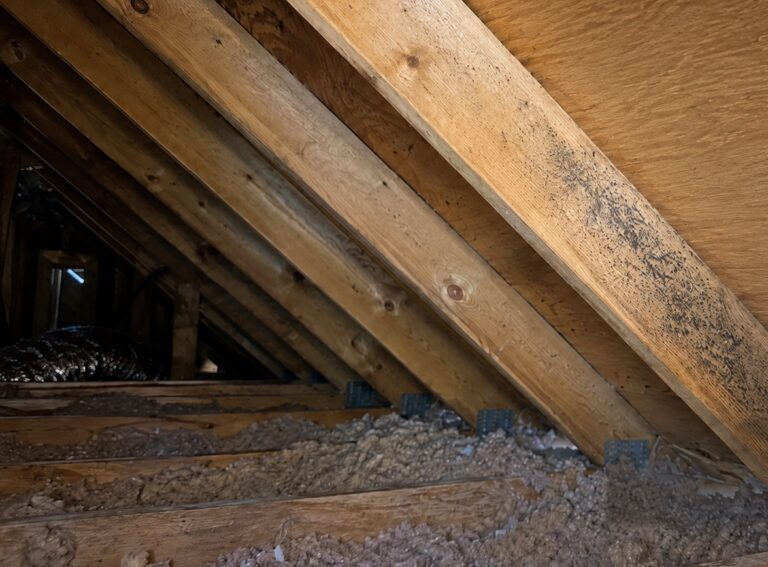
- Attic roof sheathing or rafters
- Cold water pipes, ducts, or basement surfaces
- Rooms where warm indoor air meets poorly insulated surfaces
Condensation can be mistaken for a leak because both can leave stains, peeling paint, damp trim, or mold. The pattern helps separate them. Condensation usually follows cold surfaces, poor airflow, and indoor humidity. A leak usually follows a water path such as a roof penetration, window flashing, plumbing line, or foundation opening. If mold appears every time surfaces get cold, the issue may be seasonal condensation rather than a sudden new leak.
Winter condensation deserves special attention because colder surface temperatures make moisture more likely to collect. If mold appears around windows, exterior corners, attic sheathing, or poorly ventilated rooms during cold weather, review why condensation problems get worse in winter so you can understand the difference between normal surface fogging and moisture that is damaging materials.
Airflow Changes Can Trap Moisture in Certain Rooms
Seasonal changes also affect airflow. In mild weather, windows may be opened more often and rooms may dry naturally. In hot, cold, rainy, or windy weather, the home often stays closed up. Air may not move well through closets, bedrooms, bathrooms, basements, or storage areas.
Mold often appears where air is still. Poor airflow allows moisture to linger near surfaces instead of drying. This is why mold may appear behind furniture, inside closets, near baseboards, behind stored boxes, in bathroom corners, or around window trim. These areas may not be wetter than the rest of the home at first, but they dry more slowly.
Seasonal HVAC changes can also create airflow problems. When air conditioning runs less in fall, the home may lose some dehumidification. When heat begins running in winter, some rooms may become warm and dry while others stay cool and stagnant. Closed bedroom doors, blocked returns, dirty filters, weak exhaust fans, and poorly balanced ductwork can all create rooms where moisture hangs around longer than it should.
Common airflow-related mold patterns include:
- Mold behind beds, dressers, or shelves placed against exterior walls
- Musty closets during humid or cold seasons
- Bathroom ceiling mold where the exhaust fan is weak or rarely used
- Mold around window trim in rooms with closed doors
- Basement corners that stay damp because air does not circulate
- Storage areas where boxes block wall and floor drying
Airflow problems are easy to underestimate because they do not always look like a moisture source. But mold grows based on how damp a surface stays, not only on how moisture arrived there. If a seasonal change reduces drying, a small amount of moisture can become a repeated mold problem.
Spring and Rainy Seasons Can Wake Up Hidden Moisture Problems
Spring and rainy seasons can make hidden moisture problems more obvious. Wet soil, repeated rain, snowmelt, clogged drainage, and higher groundwater can increase dampness around foundations, crawl spaces, basements, exterior walls, and lower-level rooms. Mold may appear after the season changes because the hidden moisture source became active again.
Basements are especially vulnerable during rainy periods. Moisture can enter through foundation cracks, wall-floor joints, porous concrete, window wells, or damp stored materials. Even when there is no standing water, elevated humidity and damp surfaces can support mold growth on walls, shelving, boxes, wood, fabrics, and insulation.
Crawl spaces can also influence seasonal mold problems. Damp soil, missing or damaged vapor barriers, poor drainage, and inadequate airflow can allow moisture to affect floor framing, insulation, and indoor air above the crawl space. Mold may first show up as a musty odor rather than visible growth in a living area.
Spring and rainy-season mold clues include:
- Musty basement odors after rain
- Mold on stored cardboard, wood, fabrics, or leather
- Dark spots near basement walls or lower corners
- Moldy smells near crawl space access points
- Dampness around foundation walls or basement windows
- Humidity readings that rise after storms
- Mold returning in the same lower-level areas each rainy season
When mold appears after rain, do not assume the visible growth is the whole problem. The mold may be a symptom of damp concrete, poor exterior drainage, foundation seepage, or hidden water movement. If the basement is involved, compare what you see with the signs of mold growth in basements so you can decide whether the issue is surface-level or connected to a deeper moisture source.
Summer Heat and Humidity Can Make Mold Grow Faster
Summer can make mold problems more noticeable because warm, humid conditions often keep materials damp longer. Mold still needs moisture to grow, but summer weather can make that moisture more persistent. Humid outdoor air, air leaks, damp basements, crawl spaces, weak bathroom ventilation, and poor dehumidification can all contribute.
Air conditioning can help remove moisture, but only when it runs long enough and drains properly. If the system is oversized, short-cycling, poorly maintained, or unable to manage indoor humidity, the house may feel cool but still damp. That can be especially noticeable in bedrooms, basements, closets, and rooms with poor air circulation.
Summer mold is often seen in places where warm humid air meets cooler surfaces or low-airflow areas:
- Basement walls, floors, shelves, and stored items
- Crawl space framing and insulation
- Closets, especially those against exterior walls
- Bathrooms with weak exhaust fans
- Air-conditioned rooms with poor airflow
- Cold ducts, pipes, or HVAC surfaces
- Window areas where humid air meets cooler indoor surfaces
If mold seems to grow faster during hot, humid weather, the issue is usually not heat alone. The bigger issue is moisture that is not being removed. Humidity, poor airflow, and damp materials work together. For the summer-specific version of this problem, review why mold problems get worse in summer.
Fall and Winter Can Trigger Mold on Cold Surfaces
Fall and winter mold patterns often come from cooler surfaces and reduced ventilation. As outdoor temperatures drop, windows, exterior walls, roof sheathing, rim joists, corners, and poorly insulated areas become colder. If indoor moisture reaches those surfaces, condensation can form. Repeated condensation can keep the surface damp enough for mold.
This is why mold may appear near windows shortly after cold nights begin. It can also show up behind furniture on exterior walls, in closets, along ceiling corners, on bathroom ceilings, or in attics. These areas may not have an active leak. They may simply be cold, poorly ventilated, and exposed to indoor moisture.
Winter mold problems can be confusing because the indoor air may feel dry overall. A living room may feel dry, while a bedroom window, bathroom ceiling, or attic roof deck still collects enough condensation to support mold. The issue is not always whole-house humidity. Sometimes it is the relationship between indoor moisture and cold surface temperatures.
Common fall and winter mold clues include:
- Mold around window corners or sills
- Condensation that wets trim or drywall
- Mold behind furniture on exterior walls
- Musty closets during colder months
- Dark staining or mold-like growth on attic sheathing
- Bathroom ceiling mold that worsens when windows stay closed
- Recurring mold in rooms with poor airflow
If mold tends to appear after cold weather begins, it may help to understand why homes develop mold problems in winter. The key point is that fall and winter mold is often tied to cold surfaces, trapped indoor moisture, weak ventilation, and repeated condensation rather than one sudden seasonal event.
Why Mold Often Appears in the Same Places Each Season
Mold often returns to the same places each season because the same moisture pattern returns. A window corner that gets cold every winter, a basement wall that dampens after spring rain, a closet that loses airflow during humid weather, or a bathroom ceiling that never dries quickly will keep creating the same mold-friendly conditions.
This is one reason cleaning alone often fails. Wiping or spraying visible mold may remove the surface growth, but it does not change the cold surface, high humidity, poor airflow, leak, damp basement, or recurring condensation that allowed the mold to grow. When the season changes again, the same area becomes vulnerable again.
Common reasons mold returns seasonally include:
- The same surface gets cold enough for condensation every year.
- The same room stays humid during summer or rainy seasons.
- The same basement or crawl space becomes damp after seasonal rain.
- Furniture, boxes, or stored items block airflow in the same area.
- An exhaust fan, HVAC issue, or ventilation problem remains unresolved.
- A small leak or seepage path becomes active during certain weather patterns.
- The material absorbs moisture and dries slowly each season.
Recurring mold is a clue that the mold has a recurring moisture source. That source may be seasonal, but it is still real. If the same patch comes back after cleaning, compare the pattern with why mold keeps coming back after cleaning. If several moisture symptoms return around the same time each year, it may also connect to why moisture problems keep returning.
The location of the mold gives useful clues. Mold near windows often points to condensation, air leakage, or water intrusion. Mold in basements often points to damp walls, high humidity, seepage, or stored materials absorbing moisture. Mold in attics may point to roof leaks, poor ventilation, bath fan exhaust, or winter condensation. If attic mold is part of the pattern, compare it with the signs of mold growth in attic spaces.
How to Tell If Seasonal Mold Is a Surface Issue or a Hidden Moisture Problem
Not every seasonal mold spot has the same level of concern. Some mold appears on visible surfaces because humidity, condensation, or poor airflow allowed a small area to stay damp. Other mold points to hidden moisture inside walls, ceilings, floors, attics, basements, or crawl spaces. The difference matters because surface mold may be manageable after the moisture source is corrected, while hidden moisture often requires deeper inspection.
A seasonal surface mold issue is more likely when the growth is small, visible, and directly connected to a known humidity or condensation pattern. For example, a small patch near a bathroom ceiling corner, a window edge that gets damp during cold mornings, or mildew on items stored too tightly in a closet may be surface-level if the material behind it is dry and the problem stops after ventilation, humidity, or airflow is corrected.
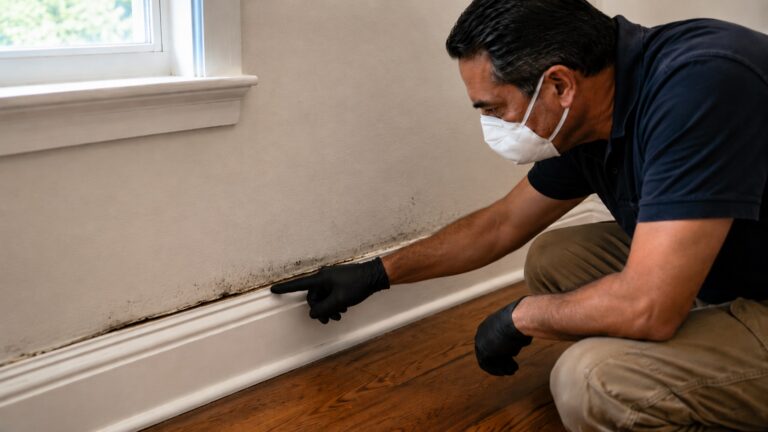
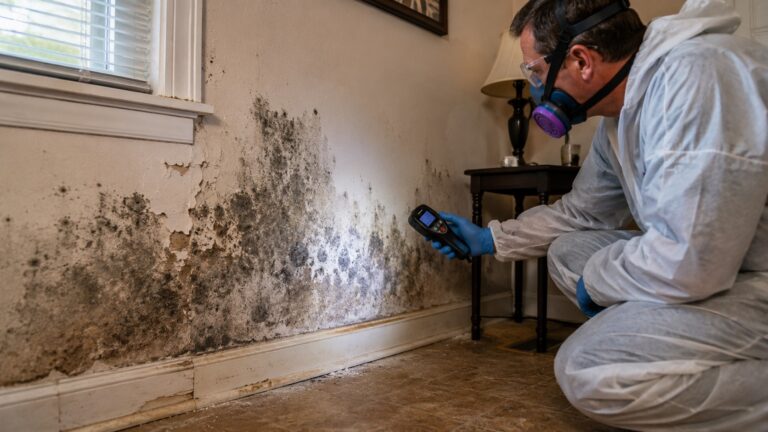
A hidden moisture problem is more likely when mold returns repeatedly, spreads, appears after rain, comes with a musty odor, or affects soft, swollen, stained, or damp materials. Mold behind baseboards, inside wall cavities, under flooring, in insulation, or on attic sheathing may indicate that moisture has been present longer than the visible surface suggests.
Warning signs that seasonal mold may involve hidden moisture include:
- Mold returning in the same place after cleaning
- Musty odors that remain even when visible mold is removed
- Damp drywall, soft trim, swollen baseboards, or peeling paint
- Mold that appears after rain, snowmelt, or roof leakage
- Growth spreading beyond one small surface patch
- Mold near plumbing walls, exterior walls, basement walls, or attic surfaces
- Condensation that repeatedly wets the same material
- Stored items becoming moldy near a damp wall or floor
The safest assumption is that visible mold is a symptom, not the complete diagnosis. Before cleaning or repainting, identify why the surface became damp. If the cause is seasonal humidity, condensation, or poor airflow, those conditions need to change. If the cause is rainwater intrusion, foundation dampness, plumbing leakage, roof moisture, or wet insulation, the visible mold may be only part of the problem.
What to Do When Mold Appears After a Seasonal Change
When mold appears after a seasonal change, start with moisture source control. Cleaning visible mold without correcting moisture usually leads to recurrence. The goal is to find out whether the trigger is humidity, condensation, poor airflow, rainwater intrusion, damp building materials, or a hidden leak.
Use this order:
- Identify when the mold appeared and what weather changed before it showed up.
- Check whether the area is damp, cold, poorly ventilated, or near a water source.
- Measure humidity in the room instead of relying only on how the air feels.
- Look for condensation on nearby windows, walls, pipes, ducts, or attic surfaces.
- Inspect for rain-related clues such as stains, damp trim, basement seepage, or roof leakage.
- Improve ventilation and airflow where moisture is trapped.
- Dry damp materials fully before repainting, storing items, or closing the area back up.
- Clean small surface mold only when the material is appropriate and the moisture source is corrected.
- Do not paint over mold or seal damp materials without solving the cause.
- Call a professional when mold is hidden, recurring, widespread, or tied to water-damaged materials.
Humidity monitoring can help confirm whether the seasonal pattern is still active. If a room stays damp during rainy, humid, or cold weather, a hygrometer can show whether humidity remains high long enough to support mold. If readings stay elevated even after ventilation or dehumidification, look deeper for a moisture source.
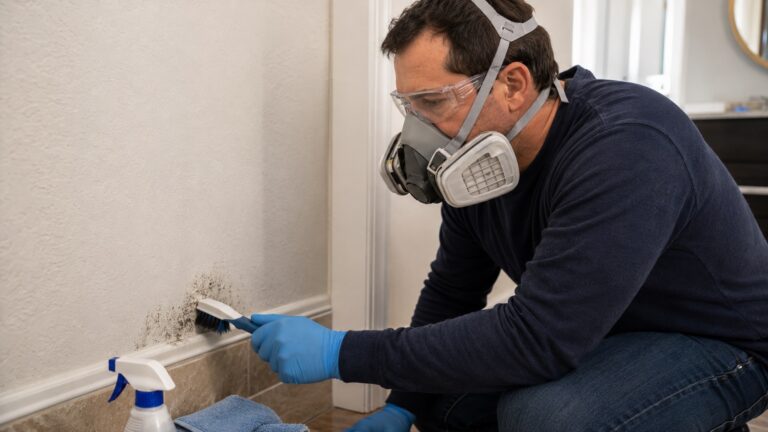
Small surface mold on hard, nonporous or semi-porous surfaces may sometimes be handled with careful cleaning and basic protective gear. Mold on wet drywall, insulation, carpet padding, structural wood, HVAC materials, or hidden cavities is different because those materials can hold moisture and allow growth beyond the visible area. If mold is tied to water damage, strong odors, hidden dampness, sewage, flooding, or repeated seasonal return, avoid disturbing large areas until the source and extent are understood.
For general cleanup guidance and situations that may require professional help, the EPA’s mold resources are a useful external safety reference.
Professional help is wise when mold keeps returning, covers a large area, appears after water intrusion, affects HVAC systems, grows in attics or crawl spaces, or is associated with soft drywall, wet insulation, structural wood, or strong musty odors. The more the mold is tied to recurring seasonal moisture, the more important it is to solve the pattern instead of repeating the same cleaning routine every year.
FAQ About Why Mold Problems Often Appear After Seasonal Changes
Why does mold show up when the weather changes?
Mold shows up when weather changes because humidity, surface temperature, airflow, and hidden moisture patterns shift. Seasonal changes can make surfaces colder, raise indoor humidity, reduce ventilation, or reactivate moisture from rain, snowmelt, basements, crawl spaces, or exterior leaks.
Can seasonal humidity cause mold?
Yes. Seasonal humidity can cause mold when indoor air stays damp long enough for surfaces or materials to absorb moisture. This is common in basements, bathrooms, closets, crawl spaces, and rooms with weak airflow. Humidity is especially risky when it combines with poor ventilation, cool surfaces, stored items, or materials that dry slowly.
Why does mold appear after winter starts?
Mold may appear after winter starts because cold surfaces make condensation more likely. Windows, exterior wall corners, attic roof sheathing, closets, and poorly insulated areas can become damp when indoor moisture contacts cold materials. Closed windows and reduced ventilation can also trap moisture from showers, cooking, laundry, and occupants.
Why does mold get worse after rainy weather?
Mold can get worse after rainy weather because rain can raise indoor humidity, wet soil around the foundation, dampen basements and crawl spaces, or reveal leaks around roofs, walls, windows, and foundations. If the home does not dry quickly, those damp conditions can support mold growth.
Why does mold come back in the same place every season?
Mold comes back in the same place every season because the same moisture condition is returning. The area may have recurring condensation, poor airflow, high humidity, a hidden leak, damp basement conditions, or a cold surface that becomes wet during certain weather. Cleaning removes visible growth, but it does not fix the seasonal moisture pattern.
Why does mold come back on the same wall after the weather changes?
Mold often comes back on the same wall after weather changes because that wall has a repeating moisture condition. It may be colder than nearby surfaces, poorly insulated, blocked by furniture, exposed to rainwater intrusion, or located near a damp basement, crawl space, or plumbing wall. The repeated location is a clue that the surface or wall system is staying damp during certain seasons.
When should I call a professional for seasonal mold problems?
Call a professional if mold is recurring, widespread, hidden, connected to water damage, growing on wet drywall or insulation, affecting attic, crawl space, or HVAC materials, or returning after cleaning. Professional inspection is also wise when there is a strong musty odor, visible structural moisture, sewage or floodwater involvement, or uncertainty about how far the mold extends.
Conclusion
Mold problems often appear after seasonal changes because the home’s moisture balance shifts. Humidity rises, surfaces cool, condensation forms, airflow changes, rain or thaw activates hidden dampness, and some materials dry more slowly. The most important step is to identify the seasonal trigger before cleaning, repainting, or assuming the problem is solved.