How to Prevent Mold After Minor Water Leaks
Minor water leaks often seem harmless at first. A small drip under a sink, a minor appliance overflow, or a brief plumbing leak may leave only a damp patch that dries quickly on the surface. Many homeowners assume that once the visible water disappears, the risk is over. In reality, mold problems often begin after small leaks — not large floods — because moisture quietly remains trapped inside materials.
The key to preventing mold after a minor leak is fast, complete drying. That means more than wiping surfaces. It requires understanding where water travels, how materials absorb moisture, and how long hidden dampness can remain even when everything appears dry. If handled properly within the first 24 to 48 hours, most minor leaks can be resolved without mold forming.
Because minor leaks can lead to recurring dampness if materials are not dried completely, it also helps to understand how to prevent recurring moisture damage after leaks, cleanup, or repairs.
Why Small Water Leaks Can Still Lead to Mold
Minor leaks cause mold when water spreads into absorbent or hidden materials and stays there long enough to support growth. The visible wet spot is often only part of the affected area because water follows gravity, seams, edges, and porous materials.
Water Spreads Beyond the Visible Area
When a minor leak occurs, water typically spreads outward and downward before you ever notice it. It can travel along flooring seams, soak into drywall edges, and move under baseboards or cabinets. This means the visible wet area is often smaller than the actual affected zone.
For example:
- A slow pipe leak under a sink can wet cabinet flooring and spread beneath the cabinet base.
- A small refrigerator leak can move under vinyl flooring seams.
- A minor ceiling drip can spread through insulation before staining drywall.
These spreading patterns explain why mold sometimes appears days or weeks after what seemed like a minor incident.
Porous Materials Hold Moisture Longer Than Expected
Most building materials inside a home are porous. That means they absorb water rather than simply letting it sit on the surface. Once water enters these materials, it takes significantly longer to dry.
Common moisture-absorbing materials include:
- Drywall and wall cavities
- Wood framing and trim
- Cabinet bases and particle board
- Subfloor materials
- Carpet padding
- Insulation
Even if the surface feels dry, moisture may still be present inside these materials. This hidden moisture is one of the most common reasons mold develops after minor leaks.
Mold Can Begin Forming Faster Than Most People Realize
Mold growth does not require large amounts of water. It requires moisture that remains present long enough for spores to activate. In many indoor environments, mold growth can begin surprisingly quickly.
Typical moisture timelines after minor leaks include:
- 0–12 hours — materials begin absorbing moisture
- 12–24 hours — moisture-sensitive materials may remain damp enough for microbial risk to increase
- 24–48 hours — mold growth risk can increase if materials stay damp
- 48+ hours — visible mold may develop
If you’re unsure how quickly mold can develop in specific situations, understanding the timeline helps guide your response. For a deeper breakdown, see how long mold takes to grow after water damage.
Because the window for prevention is short, the actions taken immediately after discovering a minor leak are the most important.
What to Do Immediately After a Minor Leak
The first few hours after a leak determine whether mold prevention succeeds or fails. Fast response reduces how deeply water penetrates materials and shortens drying time. Delays, even small ones, increase the risk that moisture spreads into hidden spaces.
Stop the Water Source First
Before any cleanup begins, the source of water must be stopped. Continuing leaks — even slow ones — allow moisture to spread deeper into materials while you attempt to dry the visible area.
Common steps include:
- Turning off water supply valves
- Tightening leaking connections
- Shutting off appliances
- Temporarily isolating plumbing fixtures
- Covering small roof leaks when possible
If the source cannot be safely stopped, professional assistance may be necessary. Drying without stopping the leak is ineffective and often leads to recurring moisture problems later.
Safety note: Do not use fans, dehumidifiers, or electrical equipment near standing water, wet outlets, damaged wiring, sewage, or contaminated water. Shut off power if electrical exposure is possible and call a qualified professional before entering or drying the area.
Remove Standing Water Quickly
Once the leak stops, removing visible water should happen as quickly as possible. The longer water sits, the deeper it soaks into nearby materials.
For minor leaks, removal methods often include:
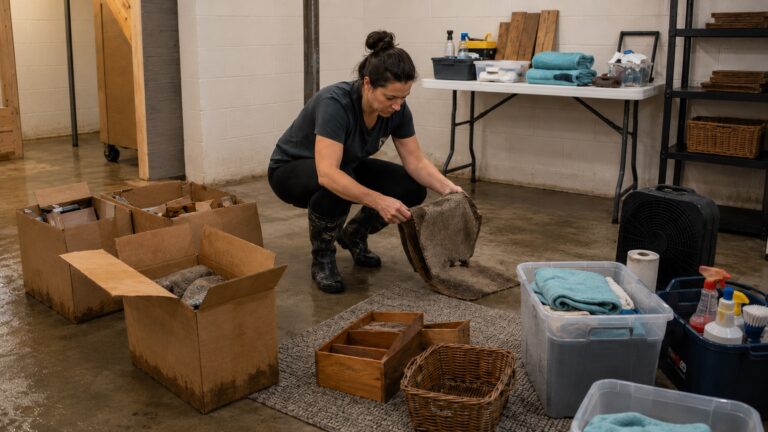
- Using towels or absorbent cloths
- Using a wet/dry vacuum
- Blotting surfaces rather than spreading water
- Moving soaked items to dry areas
Standing water is only part of the problem. After visible water is removed, the focus must shift to drying materials that have already absorbed moisture.
Open the Area for Airflow
Airflow is one of the most important early steps in preventing mold growth. Stagnant air traps humidity and slows evaporation. Opening the affected area helps moisture escape rather than remain trapped.
Practical airflow steps include:
- Opening cabinet doors
- Removing drawers
- Lifting rugs or mats
- Moving furniture away from damp walls
- Opening nearby doors when safe
Creating airflow early reduces how long materials remain damp. This simple step alone can significantly reduce mold risk when done immediately.
How to Dry the Area Properly After a Minor Leak
After visible water has been removed and airflow started, the most important step is thorough drying. This is where many mold prevention efforts fail. Surfaces may look dry within hours, but moisture inside materials can remain long enough to support mold growth if not properly addressed.
Drying requires more than patience. It requires controlled airflow, humidity reduction, and checking areas where moisture commonly becomes trapped. If you skip any of these steps, hidden moisture can remain even when the room appears normal.
Use Fans to Speed Up Surface Drying
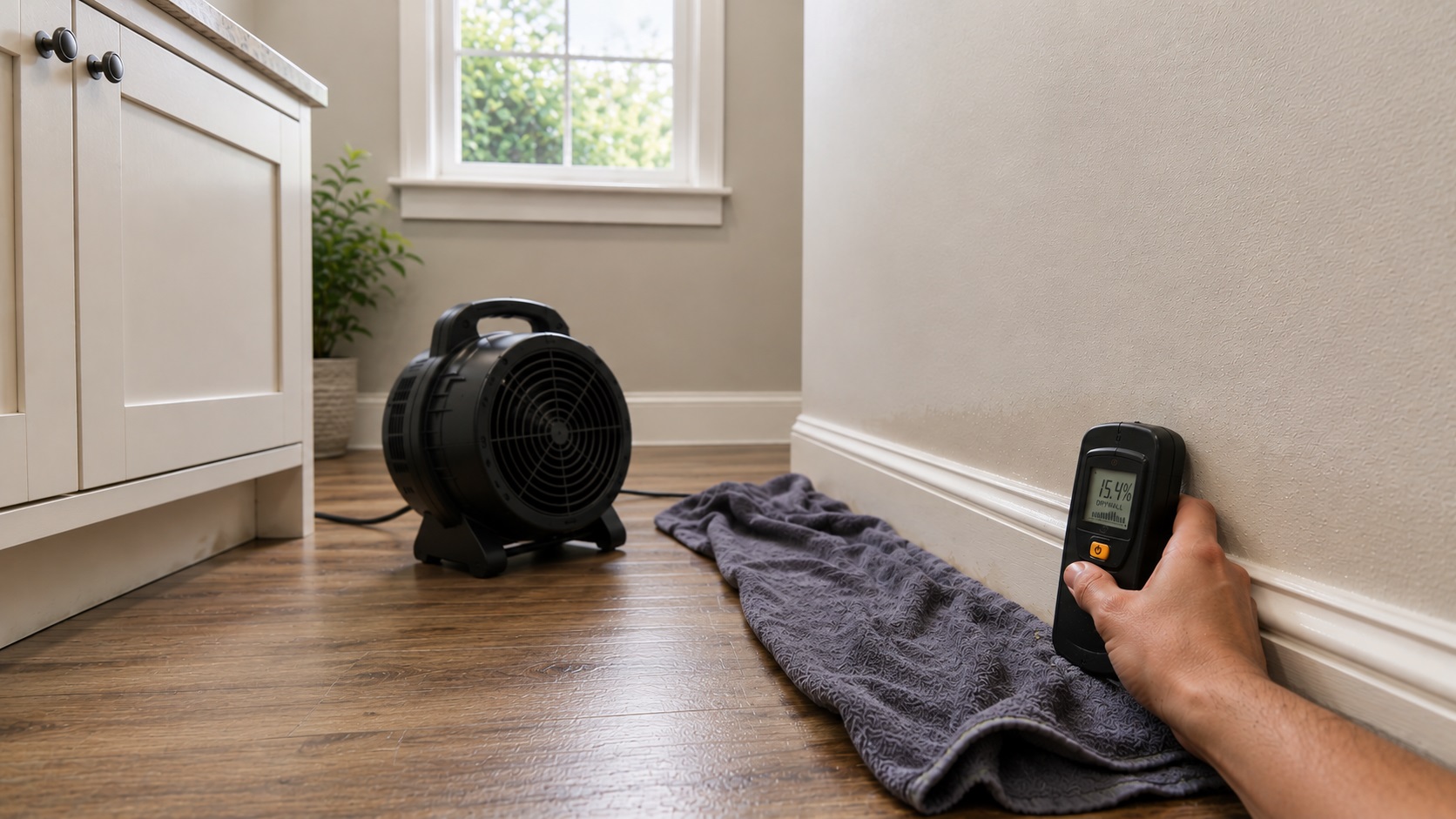
Fans help dry minor leaks by moving air across damp surfaces so moisture evaporates faster. They work best when they create steady airflow across the wet area instead of blowing directly into wall cavities or seams.
Effective fan placement tips include:
- Position fans to blow across surfaces, not directly into walls
- Use multiple fans when possible to create continuous airflow
- Keep cabinet doors open while fans run
- Allow air to circulate freely throughout the room
Fans alone do not remove moisture from the air. They only move it. Without proper humidity control, moisture may simply redistribute instead of leaving the space.
Use a Dehumidifier to Remove Moisture From the Air
A dehumidifier is useful after many minor leaks, especially in enclosed rooms, cabinets, basements, or humid climates. As water evaporates from materials, indoor humidity rises; keeping relative humidity below 50% helps drying continue and reduces mold risk.
Practical dehumidifier usage tips include:
- Place the unit near the affected area
- Empty the collection tank frequently
- Keep doors and windows closed while running
- Continue operation for several days after visible drying
Humidity control is one of the most reliable ways to prevent mold formation after leaks. If you’re unsure how to set equipment properly, see recommended dehumidifier settings to prevent mold.
Expose Hidden Materials Whenever Possible
One of the biggest reasons mold forms after minor leaks is that hidden materials remain wet. Moisture trapped behind coverings dries very slowly without exposure.
Common exposure steps include:
- Removing soaked rugs or carpet sections
- Opening cabinet bases and toe-kick areas
- Removing damp insulation when accessible
- Lifting laminate edges if water entered beneath them
- Removing baseboards if swelling appears
Exposing materials allows trapped moisture to evaporate rather than remain sealed inside. Even small openings can significantly improve drying speed.
Do not reinstall baseboards, close cabinet panels, replace flooring pieces, or repaint stained areas until the material is dry and the leak source has been corrected. Covering damp materials too soon can trap moisture and allow mold to develop behind the finished surface.
Do Not Rely on Surface Dryness Alone
A surface that feels dry to the touch may still contain moisture underneath. This is especially true for drywall, wood, and flooring materials.
Signs that deeper moisture may still exist include:
- Soft or swollen materials
- Persistent damp odors
- Cool spots on walls or floors
- Minor staining that continues to expand
- Warped or lifting flooring edges
In situations where hidden moisture is suspected, testing tools can provide confirmation. Moisture meters are commonly used to detect trapped moisture inside materials. For homeowners considering this option, see how moisture meters help detect hidden water damage.
Keep Drying Equipment Running Long Enough
Stopping drying equipment too soon is one of the most common mistakes after minor leaks. Even when materials appear dry, internal moisture may still be present.
Most minor leak drying periods last:
- 24–48 hours for small surface exposure
- 48–72 hours when porous materials are involved
- Several days when humidity remains elevated
Continuing drying beyond visible moisture removal is one of the most effective ways to prevent delayed mold growth.
How to Clean After a Minor Leak
Cleaning after drying helps remove contaminants left behind by water exposure. While cleaning alone does not prevent mold growth, it helps reduce the organic material that mold feeds on.
Cleaning should occur after visible moisture has been removed and drying is underway. Cleaning wet surfaces without drying first can spread moisture deeper into materials.
Remove Dirt and Residue Left Behind by Water
Even clean water can carry dust, debris, and residue into damp areas. These materials provide nutrients that mold can use once moisture is present.
Focus cleaning efforts on:
- Hard flooring surfaces
- Cabinet interiors
- Wall surfaces near leaks
- Appliance bases
- Exposed trim or framing
Use gentle cleaning methods that avoid saturating surfaces again.
Avoid Oversaturating Materials During Cleaning
One common mistake is using too much water while cleaning. This can reverse drying progress and allow moisture to penetrate materials again.
Safer cleaning approaches include:
- Using lightly damp cloths instead of soaking materials
- Drying surfaces immediately after wiping
- Avoiding excess liquid cleaners
- Using minimal moisture when disinfecting
Cleaning should support drying — not interfere with it.
Pay Attention to Odors During Cleaning
Odors can signal hidden moisture that remains after drying. A musty smell often develops before visible mold appears.
If odors persist after cleaning and drying, it may indicate moisture trapped inside materials. In such cases, additional inspection may be necessary to determine whether moisture remains.
Understanding how moisture behaves after leaks can help determine whether further monitoring is needed. See how to monitor areas after leak repairs for step-by-step guidance.
How Long to Monitor the Area After Drying
Drying the area after a minor leak is only part of the prevention process. Monitoring the area over the next several days is just as important. Moisture does not always behave predictably, and hidden dampness can slowly migrate back to the surface even after initial drying appears successful.
Most mold problems that follow minor leaks occur because monitoring was skipped. The area looked dry, normal routines resumed, and subtle warning signs went unnoticed until mold had already begun forming.
Monitor the Area for at Least 3 to 7 Days
Even after active drying stops, moisture may remain trapped inside materials. Over the following days, that moisture can redistribute and appear in new locations.
Typical monitoring timelines include:
- 3 days — Minimum monitoring period for very small leaks with limited exposure
- 5 days — Recommended period for leaks affecting porous materials
- 7 days or more — Best for cabinet leaks, flooring exposure, or wall moisture
During this period, revisit the affected area several times daily. Early detection of returning moisture can prevent mold formation before it begins.
Check for Visual Changes That Indicate Moisture Return
Some signs of moisture only become visible after drying appears complete. Materials that absorbed water may slowly release it over time, causing delayed changes.
Watch for these visual indicators:
- New discoloration or staining
- Swelling of baseboards or trim
- Minor bubbling in paint
- Warping of cabinet bottoms
- Lifting edges of laminate flooring
These signs often appear gradually. Even subtle changes should be investigated, as they may indicate moisture trapped beneath surfaces.
Use Smell as an Early Warning Indicator
Musty odors often develop before visible mold appears. Smell can be one of the earliest warning signals that drying was incomplete.
If a musty odor develops:
- Reinspect the affected area carefully
- Check hidden spaces such as behind cabinets
- Look for materials that still feel cool or damp
- Restart drying equipment if necessary
Persistent odor is rarely random. It usually indicates moisture still exists somewhere in the structure.
Consider Measuring Moisture When Risk Is Uncertain
When the leak affected flooring, cabinets, or wall cavities, measuring moisture levels can provide useful confirmation. Moisture meters and humidity monitors help verify whether drying is complete.
Measuring becomes especially valuable when:
- The leak duration is unknown
- Water reached hidden materials
- Materials feel slightly cool or damp
- Humidity remains elevated
Monitoring humidity levels is also important during this period. Understanding typical indoor humidity behavior helps prevent mold-friendly conditions from developing. For guidance on humidity patterns, see signs of high humidity inside a home.
High-Risk Locations That Require Extra Attention
After a minor leak, focus extra drying and monitoring on areas that trap water, limit airflow, or contain absorbent materials.
Under Sink Cabinets
Sink cabinets are among the most common locations for minor leaks. Plumbing connections, drain lines, and supply hoses create multiple potential leak points.
Water often spreads under cabinet bases before becoming visible. Because cabinet materials frequently contain particle board or MDF, they absorb moisture quickly and dry slowly.
Extra monitoring steps include:
- Inspecting cabinet bottoms for swelling
- Checking corners where water collects
- Looking beneath removable panels if available
- Feeling surfaces for coolness or softness
If cabinet materials begin to swell, moisture may still be present even after visible water is gone.
Behind Baseboards and Wall Edges
Baseboards often hide moisture because water travels downward along wall surfaces. Once water reaches the wall base, it can wick into drywall and framing.
Areas behind baseboards are especially vulnerable because they receive limited airflow. Even minor leaks can create moisture pockets that take days to dry.
If the leak reached wall trim, moisture may remain behind the board even after the face looks dry. For trim-specific drying guidance, see how to dry baseboards after water damage.
Under Flooring Materials
Flooring materials frequently trap water beneath the surface. Even small leaks can allow moisture to move beneath seams and into subfloor materials.
High-risk flooring types include:
- Laminate flooring
- Vinyl plank flooring
- Carpet with padding
- Engineered wood flooring
These materials often feel dry while hidden moisture remains below them. If flooring begins lifting, warping, or developing odor, additional drying may be required.
Inside Ceiling Cavities
Ceiling leaks sometimes appear minor but spread widely before becoming visible. Water often moves through insulation before reaching drywall surfaces.
Monitor ceilings carefully if:
- A drip originated from above
- A roof leak occurred
- Plumbing leaks were located overhead
Soft spots, discoloration, or sagging areas may indicate hidden moisture still exists inside the ceiling structure.
Warning Signs That Drying Was Incomplete
Incomplete drying is one of the most common causes of mold growth after minor leaks. Recognizing the warning signs early allows corrective action before mold develops.
Persistent Damp Odors
Musty smells rarely disappear without cause. If odors continue days after drying, moisture likely remains hidden somewhere in the affected materials.
Odors may become stronger when:
- The room warms during the day
- Humidity increases
- Airflow decreases
These patterns suggest that moisture is still present and supporting microbial activity.
Materials That Remain Cool to the Touch
Damp materials often feel cooler than surrounding surfaces because evaporation lowers temperature slightly. This temperature difference can signal hidden moisture even when surfaces appear dry.
Check for coolness on:
- Wall surfaces
- Floor edges
- Cabinet interiors
- Baseboards
If surfaces remain noticeably cooler than surrounding materials, further drying may be necessary.
Visible Changes in Material Shape
Water causes many materials to change shape. Swelling, warping, or distortion often appears after moisture exposure.
Watch for:
- Buckling flooring
- Swollen cabinet panels
- Warped trim pieces
- Bubbling paint
These physical changes are often delayed and may appear days after the leak itself.
Humidity That Remains Elevated
If indoor humidity remains above normal levels, moisture may still be evaporating from hidden materials.
Typical safe humidity levels after drying:
- Below 50% humidity in most rooms
- Lower levels in enclosed areas when possible
If humidity stays elevated despite drying efforts, additional ventilation or dehumidification may be required.
When a Minor Leak Requires Professional Inspection
Most minor leaks can be managed successfully with quick drying and careful monitoring. However, some situations exceed what normal household drying methods can safely handle. Knowing when to seek professional help helps prevent long-term structural damage and hidden mold growth.
A leak that appears minor at first can still create hidden moisture in areas that are difficult to access without specialized tools. Professionals use moisture detection equipment, airflow systems, and targeted drying techniques that are not available in typical household settings.
Call a Professional If Moisture Spread Beyond the Immediate Area
If water traveled into walls, ceilings, or flooring systems, professional inspection may be necessary. Moisture trapped inside these structures can remain hidden long after surface drying appears complete.
Professional help may be appropriate if:
- Water entered wall cavities
- Ceiling materials became saturated
- Flooring materials show distortion
- Cabinets or built-in structures absorbed water
- Multiple rooms were affected
Hidden moisture inside building materials is one of the most common causes of delayed mold growth after minor leaks.
Call a Professional If Odors or Moisture Return
If the area smells musty after drying, or if stains, dampness, or swelling return, moisture may still exist behind surfaces. Recurring odors are a strong indicator that drying was incomplete or moisture remains trapped.
Understanding why moisture sometimes returns after cleanup helps identify underlying causes. For a detailed explanation, see why moisture returns after cleanup.
Professional inspection is especially valuable when symptoms repeat despite careful drying efforts.
Professional Inspection Is Recommended When Leak Duration Is Unknown
Sometimes leaks are discovered long after they begin. In these cases, moisture may have spread into materials long before the homeowner notices visible symptoms.
Signs that a leak may have lasted longer than expected include:
- Staining that appears older or layered
- Odors present before the leak was discovered
- Soft or deteriorating materials
- Evidence of repeated moisture exposure
Leaks that go unnoticed for extended periods often require deeper inspection to ensure moisture has been fully removed.
FAQ — Preventing Mold After Minor Water Leaks
Can mold grow after a small leak?
Yes. Mold can grow after even minor leaks if moisture remains inside materials long enough. Small leaks are often more dangerous than expected because they go unnoticed or appear harmless. Mold growth typically begins when materials remain damp for 24 to 48 hours or longer.
How fast should I dry the area after a minor leak?
Drying should begin immediately after the water source is stopped. The first 24 hours are critical for preventing mold growth. Rapid water removal, airflow, and humidity reduction help minimize the risk of moisture remaining inside materials.
Is one fan enough after a small leak?
One fan may help dry very small surface areas, but most leaks require multiple airflow paths and humidity removal. Fans move air but do not remove moisture from the air. A dehumidifier may be needed when humidity stays high, the area is enclosed, or porous materials were affected.
Should I remove baseboards after a minor leak?
Baseboards do not always need to be removed, but removal may be helpful if swelling or staining appears. Moisture often collects behind wall trim, and exposing the area can improve drying and reduce mold risk.
What if the area smells musty days later?
A musty odor days after drying usually indicates hidden moisture. Reinspect the affected area, check behind cabinets or trim, measure humidity if possible, and continue drying. If the odor persists, professional inspection may be needed.
Key Takeaways
- Minor leaks can still cause mold when water enters hidden or porous materials.
- Fast drying within the first 24 to 48 hours is the most important mold prevention step.
- Fans help move air, but humidity control is usually needed to remove moisture from the space.
- Cabinets, baseboards, flooring edges, ceiling cavities, insulation, and wall bases need extra attention.
- Do not reinstall trim, close panels, repaint, or cover stained areas until materials are dry and the leak source is fixed.
- Musty odors, swelling, cool surfaces, stains, and elevated humidity suggest drying may be incomplete.
- Professional inspection is recommended when moisture spread is unknown, symptoms return, or materials show structural change.
For broader prevention planning after leaks, cleanup, or repeat dampness, use how to prevent recurring moisture damage as the main guide.
Final Mold Prevention Steps After a Minor Leak
After a minor leak, mold prevention depends on how quickly and completely the affected area dries. Wiping up visible water is only the first step. The real goal is to stop the source, remove standing water, create airflow, control humidity, expose hidden materials when needed, and monitor the area for several days.
Small leaks become mold problems when hidden dampness is ignored. If the area dries fully, stays dry, and shows no odor, swelling, staining, or elevated humidity, mold risk drops significantly. If symptoms return or the leak duration is uncertain, professional moisture inspection is the safer next step.