
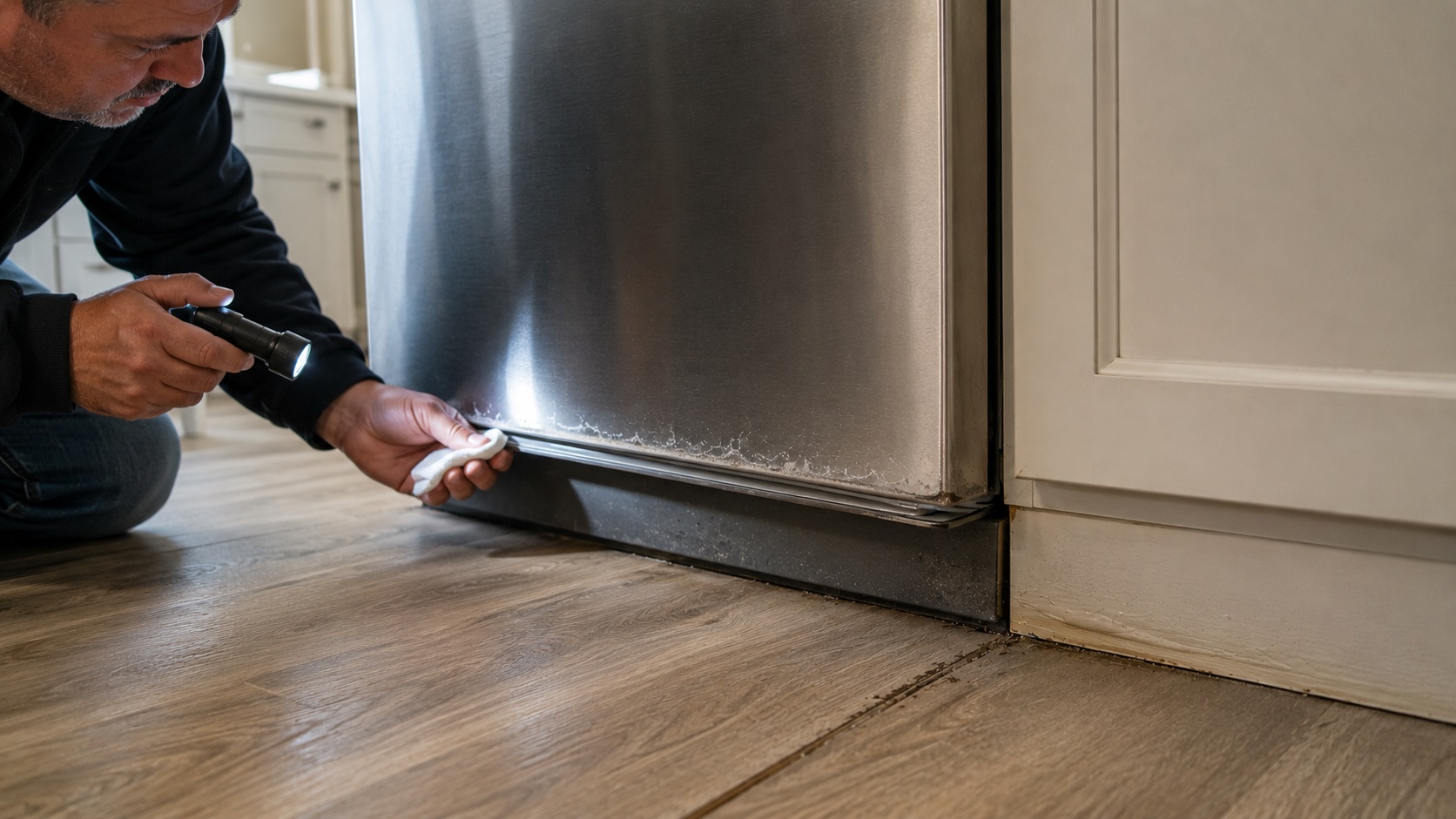
Why Dishwashers Develop Hidden Leaks (Common Causes Most Homeowners Miss)
Dishwashers develop hidden leaks when small mechanical problems release water beneath, behind, or around parts of the appliance that are difficult to see. The most common causes are worn supply hoses, loose fittings, drain hose problems, aging door gaskets, pump seal failures, installation errors, vibration, heat cycles, and excess suds from the wrong detergent. Cabinet designs that trap moisture can make these leaks stay hidden longer.
These leaks often start during one part of the wash cycle and stop before anyone notices. Because the dishwasher sits inside an enclosed cabinet opening, even a small drip can soak cabinet bases, flooring edges, or subfloor materials for weeks before visible water appears.
If you already see damp flooring, cabinet swelling, or musty odors near the appliance, review the early signs of water leaks under dishwashers before assuming the problem is only surface moisture.
This article focuses on causes, not repair steps. For the broader structural-damage context behind appliance and plumbing leaks, see how plumbing leaks cause structural damage.
How Dishwasher Leaks Start Without Being Noticed
Most dishwasher leaks do not begin as dramatic failures. Instead, they develop slowly through minor mechanical wear, vibration, and repeated heating cycles. These small failures produce tiny amounts of moisture that gradually accumulate in hidden areas.
Dishwashers operate in conditions that naturally create long-term stress on components. Every wash cycle exposes hoses, seals, and fittings to pressurized water, heat expansion, and vibration. Over months or years, even small weaknesses can turn into slow leaks.
The Cabinet Enclosure Hides Early Warning Signs
Unlike exposed appliances, dishwashers are installed inside enclosed cabinetry. This installation design improves appearance but also creates conditions where leaks remain hidden. Water that escapes from internal components often travels into spaces that are difficult to see, such as:
- Under the dishwasher base
- Behind the rear cabinet wall
- Along the subfloor beneath the appliance
- Inside toe-kick areas below the front panel
Because these spaces are enclosed, moisture does not evaporate quickly. Instead, it accumulates slowly and spreads into nearby materials. In many cases, homeowners notice secondary damage before ever seeing standing water.
Small Leaks Often Occur Only During Wash Cycles
Another reason dishwasher leaks remain hidden is that many leaks only occur during specific parts of the wash cycle. For example, water may escape only when:
- The machine fills with pressurized water
- The drain pump activates
- The internal temperature rises
- The unit vibrates during operation
Between cycles, the leak may stop entirely. This makes detection difficult, especially if the dishwasher runs while no one is watching.
If hidden moisture continues accumulating, it can eventually lead to mold growth behind the appliance, but the leak source still needs to be found before cleanup or cosmetic repairs can solve the problem.
Moisture Travels Before It Becomes Visible
Water from hidden leaks rarely stays in one place. Instead, it spreads through materials using absorption and capillary movement. Wood cabinets, plywood subfloors, and drywall edges can all pull moisture sideways, allowing damage to develop far from the original source.
This explains why homeowners sometimes notice damage in unexpected areas, such as:
- Cabinet base swelling
- Soft flooring several inches away from the dishwasher
- Musty odors without visible water
- Discoloration along nearby trim
In advanced cases, prolonged moisture exposure can reach flooring edges or subfloor materials. If the leak has already affected the floor near the appliance, how to dry flooring after dishwasher leaks covers the recovery phase without turning this causes article into a drying guide.
Most Common Causes of Hidden Dishwasher Leaks
Hidden dishwasher leaks usually originate from predictable mechanical failures. These failures rarely occur suddenly—instead, they develop gradually through repeated use and aging components. Understanding the most common causes helps explain why leaks appear even in appliances that previously worked without problems.
Worn or Aging Water Supply Hoses
The water supply hose delivers pressurized water into the dishwasher during every wash cycle. Over time, this hose experiences repeated expansion and contraction caused by pressure changes and temperature shifts.
As the hose ages, its internal lining begins to weaken. Small cracks may develop along the material, especially near bends or connection points. These cracks allow tiny amounts of water to escape during operation.
Because the leakage volume is small, moisture typically accumulates slowly rather than forming visible puddles. In many cases, the first warning signs appear as cabinet dampness or slight swelling rather than obvious water pooling.
Loose or Improper Hose Connections
Dishwashers generate vibration during operation, especially when pumps and motors are running. Even minor vibration can gradually loosen hose clamps or threaded connections.
Improper installation increases this risk significantly. If connections are not tightened correctly during installation, the joint may initially hold but weaken over time. This type of leak often develops slowly and may not become noticeable until surrounding materials begin absorbing moisture.
Loose connections typically cause:
- Intermittent dripping
- Small moisture buildup beneath the appliance
- Leaks that occur only during certain wash stages
Because these leaks start gradually, they often go unnoticed until more serious damage develops.
Drain Hose Wear and Misalignment
The drain hose carries wastewater out of the dishwasher after each cycle. Unlike supply hoses, drain hoses handle repeated surges of water under pressure. Over time, this repeated stress can cause weakening or physical damage.
Common drain hose problems include:
- Kinks that restrict water flow
- Plastic fatigue from repeated use
- Improper routing that causes friction against cabinet edges
- Loose mounting points that shift during operation
Drain hose leaks are particularly difficult to detect because they often occur only during draining. Once the cycle ends, the leak stops, leaving behind only residual moisture.
If the likely cause is a supply or drain hose problem, how to inspect dishwasher hoses for leaks covers the physical inspection steps in more detail.
Door Seal (Gasket) Deterioration
The door gasket is one of the most heavily used components in a dishwasher. Each time the dishwasher runs, the door seal compresses tightly to prevent water from escaping. Over hundreds or thousands of cycles, this repeated compression slowly changes the shape and flexibility of the seal.
Heat exposure, detergent chemicals, and moisture all accelerate deterioration. Rubber seals gradually become stiff, flattened, or cracked. Once this happens, water may begin escaping in very small amounts during wash cycles.
Unlike major leaks, gasket failures often produce subtle moisture patterns. Water may collect along the front edge of the dishwasher base and slowly migrate underneath the appliance. Because these leaks are small, they rarely form obvious puddles.
Over time, repeated moisture exposure near the front base can lead to cabinet swelling or hidden mold growth behind nearby materials. If mold becomes a concern, reviewing signs of mold behind dishwashers can help identify early warning indicators.
Excess Suds From the Wrong Detergent
Using the wrong detergent or too much detergent can create excess suds inside the dishwasher. Unlike normal wash water, foam can push past door seals, vent openings, or small gaps more easily, leaving moisture around the front base or underneath the appliance.
This type of leak is easy to miss because the dishwasher may not have a broken part. The machine may only leak when detergent use, water softness, or cycle conditions create more foam than the appliance can control.
Internal Pump Seal Failures
Inside every dishwasher is a pump that circulates water through spray arms during cleaning cycles. This pump relies on internal seals to contain pressurized water. These seals are designed to last for years, but they are still subject to wear and fatigue.
As pump seals degrade, small amounts of water may escape into the dishwasher’s internal base cavity. This area is hidden beneath the visible interior components, making leaks extremely difficult to detect without removing panels.
When pump seal leaks occur, moisture typically accumulates slowly beneath the appliance. Because the leak originates inside the machine, visible signs often appear late in the failure process.
Common early signs of pump seal leakage include:
- Moisture beneath the dishwasher without obvious hose leaks
- Intermittent dampness after heavy wash cycles
- Musty odors developing under cabinetry
- Moisture returning even after surface drying
Left unresolved, this type of hidden moisture may eventually reach surrounding flooring materials, especially when the leak continues through repeated wash cycles before the source is identified.
Improper Dishwasher Installation
Installation errors are one of the most common reasons dishwashers develop hidden leaks early in their lifespan. Even new appliances can leak if fittings are not properly secured or hoses are routed incorrectly.
Common installation-related causes include:
- Over-tightened hose fittings that damage threads
- Under-tightened connections that allow slow seepage
- Sharp hose bends that weaken plastic tubing
- Missing strain relief supports
- Improper leveling that causes water to collect unevenly
These problems often go unnoticed immediately after installation. Instead, they create long-term stress points that fail gradually over time. In many cases, homeowners assume the appliance itself is defective when the real cause is improper setup.
Leaks caused by installation issues may appear months after the dishwasher is first used. This delay makes it difficult to connect the leak to the original installation problem.
Clogged or Restricted Drain Systems
Dishwasher drain systems rely on smooth water flow to remove wastewater effectively. When the drain system becomes restricted, pressure can increase inside hoses and fittings. This pressure may force water out through weak points.
Drain restrictions may come from:
- Food debris buildup
- Grease accumulation
- Clogged filters
- Partially blocked drain hoses
- Improper high-loop or air-gap setup
A restricted drain system does not always cause immediate overflow. Instead, it may create repeated moisture events that appear only during draining. This makes the source difficult to identify unless the dishwasher is inspected while running.
If drain-related problems persist, repeated moisture exposure may cause long-term damage to nearby materials. When the same dampness returns after cleaning or drying, how to fix persistent dishwasher moisture problems is the better next step.
Why Dishwasher Leaks Stay Hidden So Long
Dishwasher leaks often stay hidden because the appliance opening blocks the view of the rear wall, hose connections, underside, and toe-kick area. A leak may only release water during filling, spraying, or draining, then stop before the homeowner checks the area.
Cabinet bases, plywood, trim, and flooring edges can absorb small amounts of water before puddles form. Limited airflow beneath the appliance also slows evaporation, so moisture may remain trapped even when the visible floor looks dry.
This is why dishwasher leaks often show up first as swelling, odor, discoloration, or soft flooring rather than obvious standing water.
Conditions That Make Dishwasher Leaks More Likely
Some homes and appliance setups create higher risk for hidden dishwasher leaks. Environmental conditions may not cause leaks by themselves, but they often accelerate wear on components that are already under stress.
Hard Water Mineral Buildup
Hard water contains minerals that can accumulate inside dishwasher components. Over time, mineral buildup can affect spray arms, filters, valves, and seals. These deposits may interfere with normal water flow or prevent seals from closing properly.
Mineral buildup can also make rubber components less flexible. When gaskets and seals lose flexibility, they become more likely to allow small leaks during operation.
Repeated Heat and Cooling Cycles
Dishwashers repeatedly heat and cool during normal operation. These temperature changes cause materials to expand and contract. Over time, this movement places stress on hoses, seals, fittings, and plastic components.
Heat also accelerates aging in rubber and plastic parts. Components that appear intact from the outside may become brittle or weakened internally. Once weakened, they are more likely to leak under pressure.
Cabinet Design That Traps Moisture
Some kitchen layouts make hidden leaks more damaging. Tight cabinet openings, limited toe-kick access, and poor airflow beneath the dishwasher can all trap moisture.
When moisture cannot evaporate, even a small leak becomes more serious. The area beneath the appliance may remain damp long after the dishwasher stops running, increasing the risk of mold and material deterioration.
Dishwasher Leak Mistakes Homeowners Often Make
Hidden dishwasher leaks are easy to underestimate because they do not always behave like obvious plumbing failures. The most common mistake is assuming there is no leak unless water is standing on the floor.
- No puddle does not mean the area is dry. Cabinet bases and flooring edges may absorb water first.
- New dishwashers can still leak if hose routing, clamp tension, leveling, or fittings were wrong during installation.
- Front-edge water is often a late symptom; many leaks begin behind or underneath the appliance.
- Small leaks rarely dry safely on their own inside enclosed cabinet spaces.
When Hidden Dishwasher Leaks Become Serious
A hidden dishwasher leak becomes serious when moisture keeps returning, spreads into flooring or subfloor materials, produces mold odors, or reaches electrical components. Slow leaks can be more destructive than a one-time spill because they keep feeding moisture into the same enclosed materials.
- Persistent dampness after drying suggests the source is still active.
- Soft, uneven, or swollen flooring may indicate moisture below the finished surface.
- Musty odors or visible growth may mean moisture has remained trapped long enough for mold to develop.
- Water near wiring, outlets, or appliance electrical parts should be treated as an immediate safety concern.
When Hidden Dishwasher Leaks Need Professional Help
Call a professional when the leak source is not obvious, moisture keeps returning, flooring feels soft, mold odor persists, or water appears near electrical components. These signs usually mean the problem has moved beyond a simple surface cleanup.
Signs the Problem Has Moved Beyond Simple Maintenance
Professional evaluation is often needed when signs suggest the leak has spread beyond the appliance itself. Warning signs include:
- Soft or spongy flooring near the dishwasher
- Cabinet panels that remain swollen after drying
- Musty odors that return after cleaning
- Visible mold growth near the appliance
- Moisture beneath the dishwasher after multiple cycles
- Water stains spreading beyond the immediate appliance area
These symptoms may indicate that hidden moisture has already entered surrounding materials or that the appliance is still leaking during part of the cycle.
Stop using the dishwasher and get help quickly if water appears near electrical connections, the appliance shuts off unexpectedly, flooring begins to warp, or moisture keeps returning after multiple cycles. Those signs suggest the leak may involve safety risks, hidden appliance failure, or moisture damage beyond the visible surface.
Frequently Asked Questions About Hidden Dishwasher Leaks
Why does my dishwasher leak only sometimes?
Many dishwasher leaks occur only during specific parts of the wash cycle, such as filling or draining. Because the leak stops once the cycle ends, moisture may remain hidden beneath the appliance without visible pooling.
This cycle-dependent behavior makes intermittent leaks difficult to detect without careful observation or inspection.
Can a dishwasher leak without showing visible water?
Yes. Hidden leaks often release small amounts of moisture that are absorbed into surrounding materials before forming puddles. Cabinet bases and subfloors can hold moisture for extended periods, delaying visible signs.
By the time water becomes visible, damage may already be underway beneath the surface.
How long can a hidden dishwasher leak go unnoticed?
Hidden leaks can remain undetected for weeks or months, depending on how slowly water escapes and how absorbent nearby materials are. Enclosed cabinet spaces allow moisture to accumulate quietly over time.
Routine inspection and early symptom awareness help reduce the likelihood of prolonged unnoticed damage.
Do newer dishwashers still develop leaks?
Yes. While modern appliances are designed to minimize failure risks, installation errors, loose fittings, damaged hoses, or defective components can still lead to leaks.
Even new units should be monitored during their initial months of operation.
What is the most common cause of hidden dishwasher leaks?
Worn hoses and loose connections are among the most frequent causes. Over time, repeated vibration, pressure changes, and temperature cycles weaken fittings and seals.
These failures typically begin as slow leaks that gradually worsen without obvious warning signs.
Can hidden dishwasher leaks cause mold problems?
Yes. Persistent moisture creates ideal conditions for mold growth, especially in dark cabinet spaces with limited airflow. Mold can begin developing quickly when moisture remains trapped.
If mold becomes visible or odors persist, reviewing signs of mold behind dishwashers can help you decide whether trapped moisture has already caused a mold-related problem.
What Dishwasher Leak Causes Tell You About the Next Step
Hidden dishwasher leaks usually begin with small failures in hoses, fittings, seals, drain systems, pumps, or installation details. The leak may only appear during one part of the cycle, but the moisture can remain trapped beneath the appliance long after the machine stops running.
If the cause is not corrected, drying the visible surface will not prevent the problem from returning. Watch for swelling, musty odors, recurring dampness, or soft flooring, and move from cause identification to inspection or repair before the damage spreads.
Key Takeaways
- Most hidden dishwasher leaks begin as small mechanical failures rather than sudden breakage.
- Worn hoses, loose fittings, aging seals, drain restrictions, and excess suds are among the most common causes.
- Enclosed cabinet spaces allow moisture to accumulate without visible signs.
- Environmental factors like hard water and heat cycles accelerate component wear.
- Hidden leaks often remain unnoticed until structural materials begin absorbing moisture.
- Repeated cycle-based leaks can keep cabinet bases, flooring edges, and subfloor materials damp even when the visible floor looks dry.
- Professional evaluation is recommended when moisture returns repeatedly or structural symptoms appear.
2 Comments
Comments are closed.