Why Crawl Space Encapsulation Prevents Mold Growth
Crawl space encapsulation helps prevent mold growth because it controls the moisture conditions mold needs to stay active. Mold can be cleaned from crawl space surfaces, but it often returns when soil vapor, humid outdoor air, condensation, or drainage problems keep the space damp.
Encapsulation works by separating the crawl space from ground moisture, reducing humid air entry, and making humidity easier to control. That matters because crawl spaces already contain wood framing, dust, insulation backing, and moderate temperatures; moisture is the condition homeowners can most directly control.
If mold has appeared beneath your home before, or if crawl space humidity often stays above safe levels, encapsulation may be part of a broader recurring-moisture solution. Those broader prevention steps are covered in How to Prevent Recurring Moisture Damage.
Why Mold Grows in Crawl Spaces
Crawl spaces already contain several mold-friendly conditions, so mold prevention usually comes down to controlling moisture.
Mold growth requires four conditions: moisture, organic material, suitable temperature, and time. Crawl spaces almost always provide the last three conditions, making moisture the most important factor to control.
Moisture Is the Primary Trigger for Mold Growth
Moisture is the condition that makes crawl space mold active. Without damp surfaces or elevated humidity, mold spores are much less likely to expand into visible colonies.
Crawl spaces commonly contain multiple moisture sources operating at the same time. These sources include:
- Soil releasing water vapor into the air
- Outdoor humidity entering through foundation vents
- Condensation forming on cool surfaces
- Water intrusion from drainage problems
- Hidden plumbing leaks
Many of these moisture sources are discussed in Why Mold Forms in Crawl Spaces, where environmental humidity plays a central role in mold development.
Even when liquid water is not visible, elevated humidity alone can provide enough moisture to support mold growth.
A simple hygrometer placed in the crawl space can help confirm whether humidity is staying in the mold-risk range between seasonal inspections.
Organic Materials Provide a Constant Food Source
Mold requires organic material to survive. Crawl spaces naturally contain several materials that mold can feed on, including wood framing, insulation backing, dust, and soil debris.
These materials cannot be removed without affecting the structure of the home. Because organic materials remain present, controlling moisture becomes the only reliable way to prevent mold growth.
Floor joists, beams, and subfloor panels are especially vulnerable because they remain exposed to humid air for extended periods.
Crawl Space Temperatures Support Mold Activity
Most crawl spaces stay within temperature ranges that allow mold activity for much of the year. Because homeowners usually cannot control crawl space temperature as easily as moisture, humidity and water-vapor control become the practical prevention targets.
Time Allows Mold Colonies to Expand
Mold growth does not require years to begin. Under favorable conditions, mold spores can activate within one to three days. Continued exposure allows colonies to expand across surfaces.
When humidity stays high for extended periods, mold can spread across multiple surfaces, especially in crawl spaces with damp framing or insulation.
How Crawl Space Moisture Keeps Mold Active
In a crawl space, moisture can come from the soil, outside air, condensation, leaks, or drainage problems. Encapsulation prevents mold best when it reduces several of those sources at the same time.
Humidity Levels That Support Mold Growth
Mold growth becomes likely when humidity levels rise above safe thresholds. In most crawl spaces, mold risk increases significantly when relative humidity exceeds about 60 percent.
At higher humidity levels, materials such as wood framing absorb moisture from the surrounding air. This moisture creates surface conditions that support mold growth.
Humidity-related moisture patterns often follow the same progression described in Signs of Moisture in Crawl Spaces, where persistent dampness eventually leads to mold formation.
Even when surfaces appear dry, high humidity can still create microscopic moisture layers that support mold activity.
Surface Moisture and Condensation Risks
Condensation occurs when warm, humid air contacts cooler surfaces. Crawl spaces often contain temperature differences that allow condensation to form on ducts, pipes, and framing.
When condensation occurs repeatedly, water droplets accumulate on surfaces. This repeated wetting creates ideal conditions for mold development.
Common condensation surfaces include:
- Metal HVAC ducts
- Cold water pipes
- Wood framing near airflow paths
- Insulated surfaces exposed to humid air
Repeated condensation cycles often produce warning signs similar to those described in Signs of Poor Crawl Space Ventilation, where moisture accumulates due to airflow problems.
Why Moisture Persists Without Intervention
Moisture problems rarely resolve on their own. Even if visible water dries temporarily, humidity often remains trapped inside crawl spaces.
Persistent moisture develops when environmental conditions continuously supply humidity faster than materials can dry. These ongoing sources include soil vapor, outdoor humidity, and water intrusion.
Soil Vapor Rising From the Ground
The soil beneath crawl spaces naturally contains moisture. As temperatures change, this moisture evaporates into the crawl space air.
Even when soil appears dry, it continues releasing water vapor throughout the year. This slow evaporation increases humidity levels inside the crawl space.
Homes with exposed soil often show moisture patterns similar to those explained in Why Crawl Spaces Stay Damp, where ground moisture remains a continuous source of humidity.
Outdoor Humidity Entering Through Vents
Outdoor air entering crawl spaces often carries moisture. During warm weather, outdoor humidity levels may exceed indoor humidity levels.
When humid air enters the crawl space, it spreads moisture across structural materials. Temperature differences between outdoor air and crawl space surfaces often cause condensation.
Vent-related moisture problems frequently follow the patterns described in Why Crawl Space Ventilation Causes Moisture Problems, where airflow increases humidity rather than reducing it.
Water Intrusion From Drainage or Plumbing Problems
Liquid water entering the crawl space creates immediate mold risk. Even small amounts of water can significantly increase humidity levels.
Water intrusion commonly occurs due to:
- Improper drainage around the foundation
- Clogged gutters directing water toward the home
- Leaking plumbing lines
- Foundation cracks allowing water entry
These water entry patterns are explained in How Water Enters Homes Through Structural Gaps, where moisture moves through structural openings.
Why Humidity Thresholds Matter for Mold Prevention
Controlling humidity levels is one of the most effective ways to prevent mold growth. When humidity remains below specific thresholds, mold spores are less likely to expand into colonies.
Humidity Levels That Reduce Mold Risk
Maintaining humidity below approximately 60 percent significantly reduces mold growth potential. Lower humidity levels prevent materials from absorbing moisture and reduce surface wetness.
Relative humidity levels can be grouped into risk categories:
- Below 50 percent: Low mold risk
- 50 to 60 percent: Moderate risk
- Above 60 percent: Increased mold risk
- Above 70 percent: High mold risk
The EPA recommends keeping indoor humidity below 60 percent when possible, ideally between 30 and 50 percent, to help reduce mold risk.
Keeping humidity within safer limits prevents long-term moisture accumulation and helps protect structural materials.
Why Temporary Drying Does Not Stop Mold Permanently
Temporary drying may reduce visible dampness, but mold can return if soil vapor, outdoor humidity, leaks, or drainage problems continue feeding moisture into the crawl space.
Repeated drying and re-wetting cycles are one reason crawl space mold often comes back after surface cleanup.
How Encapsulation Interrupts the Mold Lifecycle
Crawl space encapsulation interrupts mold growth by reducing the steady moisture exposure that allows colonies to expand.
The system works best when the vapor barrier, sealed vents, drainage corrections, and humidity control are treated as one moisture-control strategy rather than separate upgrades.
Instead of addressing mold after it appears, encapsulation focuses on breaking the environmental cycle that allows mold to grow in the first place.
Stopping Moisture Before Mold Can Develop
Encapsulation works by sealing the crawl space environment and limiting moisture entry from multiple sources. When humidity levels stabilize, mold spores are less likely to expand into visible colonies.
This prevention approach targets the root cause of mold problems rather than temporary surface cleanup.
Reducing the Time Mold Has to Grow
Mold spreads when surfaces remain damp for extended periods. By stabilizing humidity levels, encapsulation reduces the amount of time surfaces remain wet.
Shorter moisture exposure periods reduce the opportunity for mold colonies to develop and spread.
Over time, stabilized humidity prevents repeated growth cycles that commonly occur in untreated crawl spaces.
How Vapor Barriers Reduce Mold Risk
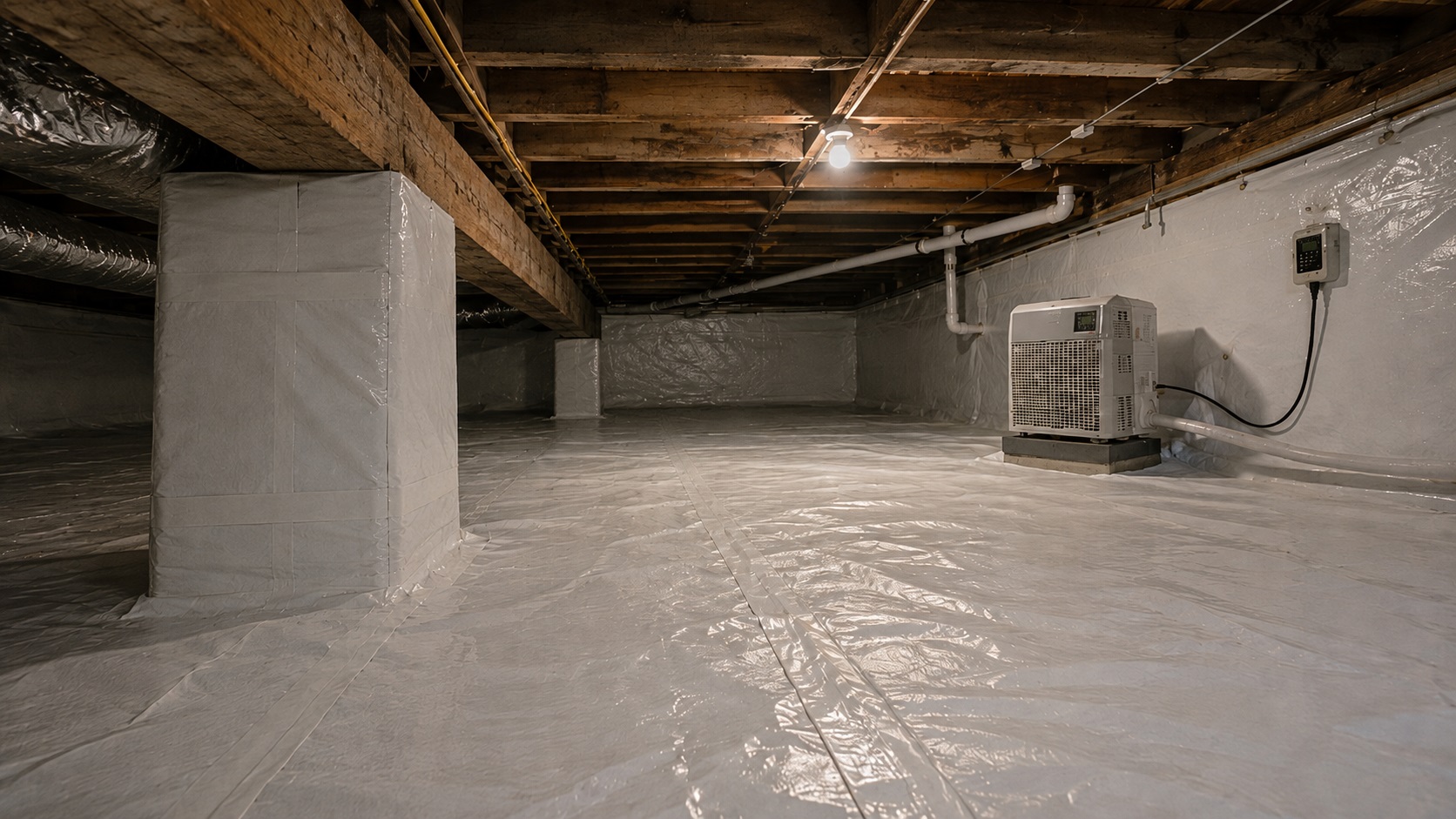
One of the most important components of crawl space encapsulation is the ground vapor barrier. This material prevents moisture vapor from rising from soil into the crawl space air.
Without a vapor barrier, soil releases moisture continuously. Even when surfaces appear dry, this vapor increases humidity levels inside the crawl space.
Blocking Soil Moisture From Entering the Air
Soil beneath crawl spaces naturally contains water. Temperature changes cause this water to evaporate into the surrounding air.
A properly installed vapor barrier covers exposed soil and seals seams between sections. This prevents vapor from entering the crawl space environment.
Homes without effective vapor barriers often experience humidity buildup, where persistent dampness affects structural materials.
Reducing Long-Term Humidity Exposure
When soil vapor remains uncontrolled, humidity levels remain elevated throughout the year. This creates continuous mold risk.
By blocking vapor movement, encapsulation significantly reduces the amount of moisture available to mold colonies.
Reduced humidity also allows materials such as wood framing and insulation to dry gradually over time.
How Controlled Humidity Stops Mold Expansion
Humidity stabilization is one of the most effective ways to prevent mold growth. Encapsulation allows humidity levels to be managed more consistently, reducing the conditions that support mold activity.
Maintaining Safe Humidity Levels
Encapsulated crawl spaces often include humidity control systems such as dehumidifiers. These systems maintain relative humidity levels below thresholds that allow mold growth.
When humidity remains stable, mold spores are less likely to activate and spread.
Maintaining safe humidity levels also prevents repeated condensation cycles that allow mold colonies to develop.
Reducing Condensation That Supports Mold Growth
Condensation provides a direct source of moisture for mold. When warm, humid air contacts cooler surfaces, water droplets form.
Encapsulation reduces condensation by stabilizing airflow and temperature conditions. Fewer condensation cycles mean fewer opportunities for mold colonies to grow.
Condensation-related mold problems often appear alongside warning signs described in Signs of Mold Growth in Crawl Spaces, where damp surfaces allow colonies to expand.
Why Mold Often Returns Without Encapsulation
Cleaning products or localized drying may reduce visible mold, but mold often returns when the crawl space moisture conditions remain unchanged.
Cleaning Mold Does Not Remove Moisture Sources
Mold removal eliminates visible colonies but does not address the environmental conditions that caused mold to grow. If humidity remains elevated, new mold colonies can form quickly.
This cycle often repeats when moisture sources such as soil vapor and outdoor humidity remain uncontrolled.
Moisture Recurrence Leads to Mold Recurrence
When moisture repeatedly enters crawl spaces, mold continues to return after cleaning. This cycle becomes increasingly difficult to manage without long-term moisture control.
Encapsulation breaks this recurrence cycle by controlling the conditions that allow mold to survive.
Once moisture levels stabilize, the likelihood of repeated mold growth declines significantly.
When Encapsulation Becomes Critical for Mold Prevention
Encapsulation is most effective when used before mold problems become severe, but in many homes it becomes necessary after repeated mold growth has already occurred. Recognizing when encapsulation is critical helps prevent long-term structural damage and recurring contamination.
While isolated mold patches can sometimes be managed temporarily, repeated mold activity usually indicates an environmental moisture imbalance that requires a system-level solution.
Recurring Mold After Cleaning or Treatment
One of the strongest indicators that encapsulation is needed is recurring mold growth after cleanup. When mold returns within weeks or months, it usually means moisture conditions remain unchanged.
Cleaning visible mold may temporarily improve appearance, but moisture-driven mold cycles often continue beneath the surface. This recurring pattern is frequently seen in crawl spaces where humidity levels remain elevated.
If mold returns after cleaning, it often signals the same underlying moisture conditions described in Signs Your Crawl Space Needs Encapsulation, where persistent humidity drives repeated damage.
Humidity That Remains Above Safe Levels
Consistently high humidity levels are one of the clearest signs that mold prevention measures are required. When relative humidity stays above recommended levels, structural materials absorb moisture and remain damp for extended periods.
Humidity problems often occur even when visible water is not present. In many homes, crawl spaces remain humid due to ground moisture and outdoor air infiltration.
Encapsulation becomes critical when humidity cannot be stabilized through minor repairs or ventilation adjustments.
Persistent Damp Materials Beneath the Home
Wood framing, insulation, and stored materials that remain damp indicate long-term moisture exposure. Damp materials create conditions where mold spores activate repeatedly.
Encapsulation helps prevent future mold growth by limiting moisture exposure and stabilizing humidity levels.
Material deterioration patterns linked to long-term moisture exposure are often similar to those described in Signs of Moisture Damage in Floor Joists, where humidity leads to structural weakening.
When Mold Removal Is Still Necessary Before Encapsulation
Encapsulation helps prevent future mold growth, but it does not remove existing mold from wood, insulation, debris, or other contaminated materials. In homes where mold has already spread widely, cleanup may be required before encapsulation begins.
Understanding this boundary helps prevent encapsulation from trapping contaminants inside sealed crawl spaces.
Large Areas of Visible Mold
When mold covers large portions of structural surfaces, professional removal may be necessary. Widespread contamination increases the risk of indoor air quality problems and long-term structural damage.
Large, widespread, or disturbed mold growth should be evaluated before encapsulation materials are installed over or around affected areas.
Removing heavy mold contamination before encapsulation improves system effectiveness and reduces health risks.
Cleanup procedures often follow the same safety principles outlined in How to Remove Mold Permanently, where proper removal prevents contamination spread.
Strong Odors That Do Not Improve With Ventilation
Persistent musty odors often indicate hidden mold growth inside materials. When odors remain even after ventilation or cleaning, deeper contamination may exist.
Encapsulation installed over contaminated materials may allow odors to remain trapped inside the crawl space.
Professional mold evaluation may be necessary to determine whether removal should occur before encapsulation begins.
Structural Materials Already Showing Advanced Damage
If structural wood shows signs of rot, softening, or crumbling, repairs may be required before encapsulation is installed. Encapsulation prevents future moisture damage but does not restore weakened materials.
Addressing structural deterioration first ensures the encapsulation system performs as intended and protects the structure moving forward.
Frequently Asked Questions About Crawl Space Encapsulation and Mold Prevention
Does crawl space encapsulation eliminate mold permanently?
No. Encapsulation greatly reduces the moisture conditions that allow mold to grow, but it does not guarantee mold can never return. Mold can still develop if leaks, drainage failures, torn vapor barriers, failed dehumidifiers, or unremoved contamination remain in the crawl space.
Can mold still grow after encapsulation?
Yes. Mold can still grow after encapsulation if humidity rises, the vapor barrier is damaged, vents or access doors leak air, water enters from outside drainage problems, or plumbing leaks are not repaired. Encapsulation reduces risk, but it still needs inspection and maintenance.
What humidity level prevents mold growth?
Keeping crawl space relative humidity below about 60 percent reduces mold risk, and many homes perform better when humidity stays closer to the 30 to 50 percent range. A crawl space hygrometer is useful because humidity can rise seasonally even when surfaces look dry.
Is mold removal required before encapsulation?
Mold removal may be required when contamination covers large areas, produces strong odors, or affects damaged materials. Encapsulation can reduce future moisture exposure, but it should not be used to cover or ignore widespread contamination.
How quickly does mold return without moisture control?
Mold can begin returning within days under damp conditions, but visible recurrence may take longer depending on humidity, temperature, surface material, and how much contamination remained after cleaning. If the crawl space stays humid, cleanup alone usually does not solve the problem.
Conclusion
Crawl space encapsulation prevents mold growth by reducing the moisture sources that keep mold active: soil vapor, humid outdoor air, condensation, and recurring dampness. When those conditions are controlled, cleaned mold is less likely to return.
Encapsulation is most effective when existing mold, drainage problems, plumbing leaks, and damaged materials are addressed first. For a broader explanation of the system itself, see What Is Crawl Space Encapsulation and How It Works.