When Insulation Must Be Replaced After Flooding: What Homeowners Should Know
Insulation must often be replaced after flooding when it becomes saturated, contaminated, compressed, moldy, odor-filled, or trapped inside a wall, floor, or crawl space cavity that cannot dry properly. The surface of the room may look dry while wet insulation remains hidden behind drywall, under flooring, above a crawl space, or inside exterior wall cavities.
The main question is not whether the insulation still looks usable. The real question is whether it absorbed contaminated floodwater, stayed wet long enough to hold moisture against framing, or sits inside a cavity that cannot be verified as dry. In most true flood situations, wet insulation should be removed before the wall, floor, or crawl space is rebuilt.
This guide explains when flood-damaged insulation must be replaced, when limited drying may be possible, how different insulation types respond to water, and why wall, floor, and crawl space cavities should not be closed until hidden materials are dry. For the broader repair path, see this guide to structural moisture problems after flooding.
Why Wet Insulation After Flooding Is Hard to Trust
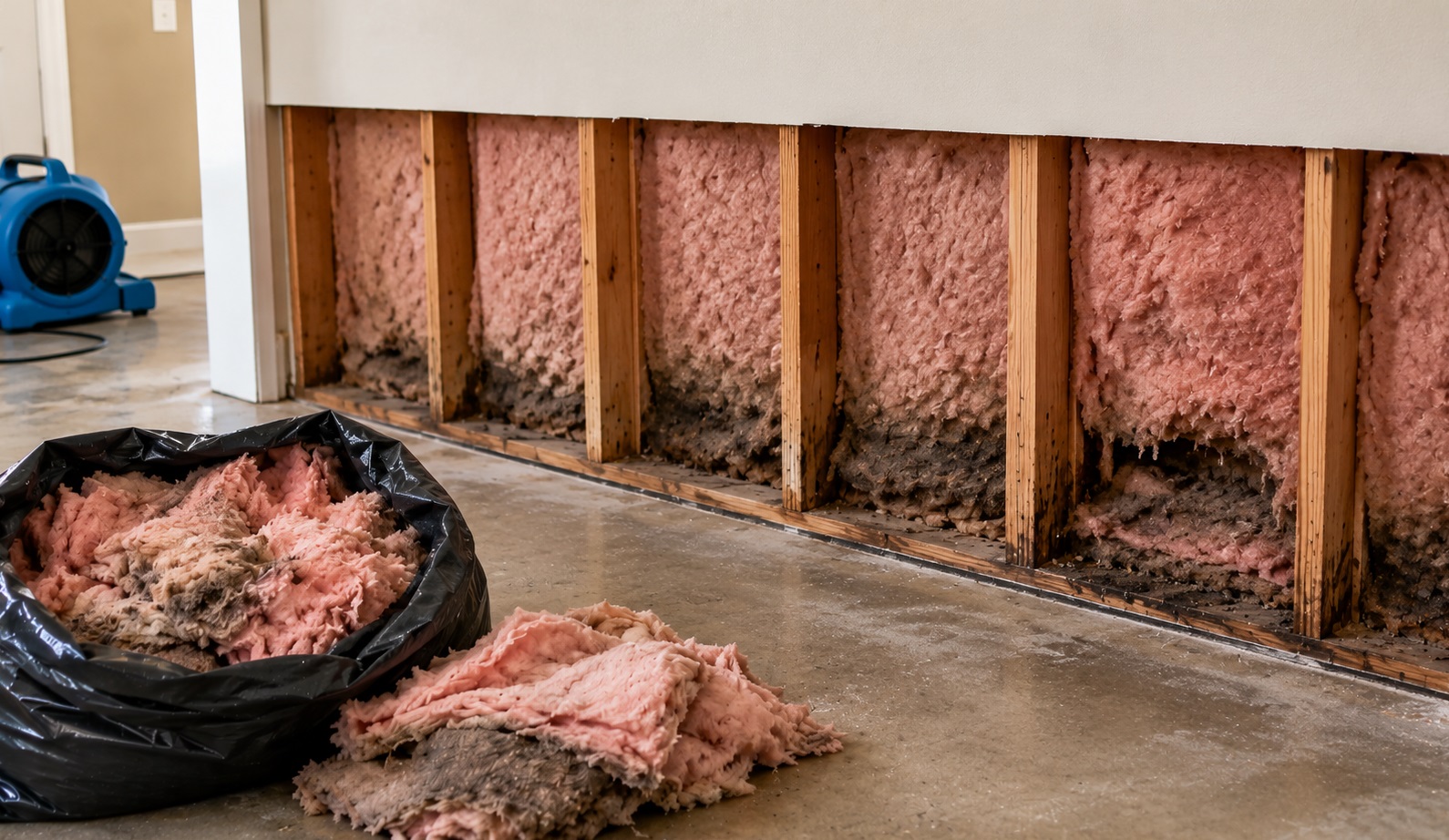
Insulation is easy to overlook because it is usually hidden. Drywall, flooring, sheathing, and crawl space covers may hide the insulation from view, even while it is holding water. A wall can look only lightly stained from the room side while the insulation behind it remains damp. A floor can feel dry on top while insulation below the subfloor is wet. A crawl space can look like the water is gone while batts between joists are still sagging and contaminated.
Wet insulation matters because it can slow the drying of the entire building assembly. Instead of allowing framing, plates, cavities, and subflooring to dry, saturated insulation can hold moisture against them. That moisture can lead to musty odors, mold growth, staining, material deterioration, and recurring repair problems after the visible flood damage appears fixed.
Insulation also loses performance when it becomes wet, compressed, dirty, or collapsed. Batts can sag, cellulose can mat down, and dirty floodwater can leave material too damaged to perform reliably. After flooding, replacement is often about both moisture safety and insulation performance.
Before handling wet insulation, make sure the area is safe. Flood-damaged insulation may contain sewage residue, bacteria, mud, chemicals, mold, or sharp debris from surrounding materials. Wear appropriate protection, avoid disturbing contaminated material unnecessarily, and do not open cavities near electrical hazards, unstable flooring, or active floodwater. If the home has not been checked for utility hazards, contaminated water, unstable floors, or other dangers, review the safety hazards to watch for after flooding before opening wall, floor, or crawl space cavities.
How Insulation Traps Moisture in Walls, Floors, and Crawl Spaces
Insulation can hold moisture in places where air movement is limited. In a wall cavity, wet insulation may sit against studs, sheathing, exterior walls, wiring, and the bottom plate. In a floor system, insulation may hold moisture against joists, subflooring, ducts, pipes, and rim areas. In a crawl space, batts can absorb dirty water, sag downward, and keep wood framing damp.
Closed cavities dry slowly. If wet insulation remains behind drywall, under flooring, or above a crawl space ceiling, surface drying in the room may not reach the material that needs drying most. A fan may dry paint, trim, or flooring surfaces while insulation inside the assembly remains damp.
Insulation can also hide where water traveled. Floodwater may enter at the bottom of a wall and wick above the visible water line. Crawl space water may soak batts from below. A flooded floor may push moisture into rim joists, wall bases, or floor cavities long after the room surface looks dry.
Warning signs that insulation may still be wet include:
- Musty odor near wall bases, floor edges, or crawl space openings.
- Drywall that remains damp, stained, or cool to the touch.
- Insulation that looks sagging, matted, compressed, dirty, or stained.
- Waterline marks inside wall or crawl space cavities.
- Moisture readings that remain elevated near insulated areas.
- Flooring or drywall that keeps drying slowly despite dehumidification.
- Visible mold or dark spotting on facing, framing, sheathing, or insulation.
A practical first check is to compare the flood line with nearby insulated cavities. If water reached the lower wall, rim joist, crawl space ceiling, or floor edge, assume insulation in that zone may be wet until the cavity is opened, inspected, or verified with moisture readings.
If wet insulation is hidden behind flood-damaged drywall, the drywall often has to be opened before the insulation can be evaluated. That is why insulation decisions often overlap with drywall replacement after flooding.
Why Floodwater Contamination Changes the Decision
The water source is one of the most important factors in deciding whether insulation can be saved. A small clean-water leak that briefly dampens insulation is different from storm flooding, groundwater, sewage backup, crawl space flooding, basement floodwater, or water from an unknown source.
Floodwater can carry bacteria, sewage residue, mud, silt, chemicals, fuel, pesticides, animal waste, and organic debris. Once porous or fibrous insulation absorbs that water, drying alone may not remove the contamination. The insulation may continue to hold odor, residue, and moisture even if it no longer feels soaked.
Contamination is especially important when insulation was exposed to:
- Stormwater or groundwater entering the home.
- Sewage backups or drain overflows.
- Crawl space water.
- Basement floodwater with mud or silt.
- Garage flooding near fuel, chemicals, pesticides, or stored products.
- Floodwater from an unknown source.
When the water source is contaminated or uncertain, insulation replacement becomes much more likely. Leaving contaminated insulation in a closed cavity can create persistent odor, indoor air concerns, mold risk, and hidden moisture problems. Even if the insulation could technically dry, it may not be appropriate to keep inside the building assembly.
This is why flood-exposed insulation should be treated more cautiously than insulation dampened by a small clean-water leak. In flood recovery, the goal is to remove contaminated or moisture-trapping materials so the wall, floor, or crawl space can dry safely before rebuilding.
When Insulation Must Be Replaced After Flooding
Insulation usually must be replaced after flooding when it was saturated, contaminated, compressed, moldy, or trapped inside a cavity that cannot dry. The decision is not based only on whether the insulation still looks like insulation. It is based on water source, material type, exposure time, cavity conditions, odor, and whether nearby framing can dry safely.
Insulation replacement is usually needed when:
- Floodwater came from stormwater, groundwater, sewage, crawl space water, basement flooding, or an unknown source.
- The insulation is soaked, heavy, sagging, compressed, matted, dirty, or stained.
- The insulation has a musty, sewage-like, chemical, or persistent damp odor.
- Mold is visible on the insulation, facing, framing, sheathing, or nearby drywall.
- The insulation stayed wet long enough that the cavity could not dry quickly.
- Wet insulation is touching studs, joists, bottom plates, subflooring, or sheathing.
- The wall, floor, or crawl space cavity remains damp after surface drying.
- The insulation is paper-faced and the paper layer became wet.
- Moisture readings near the cavity remain elevated after drying attempts.
- The insulation must be removed so framing, drywall, flooring, or subflooring can dry.
In these cases, trying to dry insulation in place can slow the recovery. Wet insulation can keep wood framing damp, hide contamination, and prevent the cavity from drying evenly. If the insulation blocks airflow or holds water against structural materials, removal is usually part of the drying process.
Signs Insulation Is Too Damaged to Keep
Some insulation clearly cannot remain after flooding. If it has lost its shape, settled, become dirty, or developed odor, it may no longer provide reliable performance even if it eventually dries. Insulation works by trapping air. When it collapses, compresses, or mats down, it loses much of the structure that gives it insulating value.
Watch for these warning signs:
- Fiberglass batts hanging loose, sagging, or pulling away from framing.
- Cellulose insulation that has clumped, settled, or become packed down.
- Paper facing that is stained, wrinkled, torn, moldy, or damp.
- Dirty insulation with mud, silt, sewage residue, or debris embedded in it.
- Insulation that smells musty after the cavity is opened.
- Dark spotting on the insulation surface or surrounding framing.
- Insulation that stays damp even after the room surface dries.
If these signs are present, replacement is usually safer than trying to save the material. Keeping damaged insulation can create hidden odor, moisture, and mold risks after new drywall, flooring, or sheathing is installed.
When Flood-Dampened Insulation Might Be Saved
Some insulation may be saved after limited clean-water exposure, but true flooding makes salvage much less likely. The best candidates are materials that were only briefly dampened, not contaminated, not compressed, and located in a cavity that can be fully opened, dried, and verified.
Insulation is more likely to be salvageable when all of these conditions are true:
- The water came from a clean supply line, not floodwater, sewage, groundwater, or crawl space water.
- The exposure was brief and drying began quickly.
- The insulation was damp but not saturated, sagging, dirty, or compressed.
- The cavity can be opened enough for inspection and airflow.
- Nearby framing, drywall, flooring, and sheathing are drying normally.
- There is no musty odor, visible mold, or contamination.
- Moisture readings confirm that the assembly is drying properly.
Even then, insulation should not be covered until the surrounding cavity is dry. A batt or foam board that appears dry from one side may still be hiding moisture against wood, sheathing, or the backside of drywall. If the material cannot be inspected or verified, replacement is usually safer than guessing.
For non-flood water damage where drying may be possible, this guide on how to dry insulation after water damage can help separate limited dampness from insulation that should not remain in place.
How Different Insulation Types Respond to Flooding
Different insulation materials behave differently after water exposure. Some absorb water readily. Some trap moisture between fibers. Some resist water but hide moisture behind them. The material type matters, but contamination and cavity drying matter just as much.
Fiberglass Batt Insulation
Fiberglass batts are sometimes misunderstood after flooding. The glass fibers themselves do not absorb water the same way paper or cellulose does, but the batt can still trap water, dirt, and contamination between fibers. It can also sag, compress, lose loft, and hold moisture against framing.
Fiberglass may be evaluated for drying only in limited clean-water situations where exposure was brief, the batt is not contaminated, the cavity is open, and moisture can be verified. If fiberglass was exposed to floodwater, crawl space water, sewage, dirty basement water, or unknown water, replacement is usually the safer choice.
Paper-faced fiberglass is higher risk because the kraft paper facing can absorb water, hold contamination, and support mold growth. If the facing became wet during flooding, replacement is usually more likely than drying in place.
Cellulose Insulation
Cellulose insulation is usually a poor candidate for salvage after flooding. It is made from treated paper fibers, so it can absorb and hold water, collapse, settle, clump, and lose insulating value. Once wet, it can keep wall or ceiling cavities damp and may be difficult to dry evenly.
Cellulose exposed to floodwater should usually be removed. Even after drying, it may remain compacted, contaminated, odor-filled, or unevenly distributed inside the cavity. If cellulose is hidden behind drywall or inside a closed wall, removal is often necessary so the framing and cavity can dry.
Mineral Wool Insulation
Mineral wool generally resists moisture better than cellulose and may drain or dry more readily in some situations. However, that does not mean it is automatically safe after flooding. Floodwater can still leave contamination, mud, odor, debris, and moisture inside the cavity.
Mineral wool may be more likely to remain usable after limited clean-water dampness, but it should be replaced or professionally evaluated if it was soaked by contaminated floodwater, compressed, dirty, moldy, or holding moisture against framing.
Rigid Foam Board
Rigid foam board may resist bulk water better than fibrous insulation, but it can still create hidden moisture problems. Water can move behind boards, into seams, around fasteners, along wall edges, and against framing. If the foam board blocks drying, the materials behind it may stay wet.
Foam board may not need replacement simply because the surface got damp, but it should be removed or opened for inspection if floodwater likely reached behind it. Contamination, trapped water, adhesive failure, and wet framing are the main concerns.
Spray Foam Insulation
Spray foam can be complicated after flooding. Closed-cell spray foam may resist water absorption better than many materials, while open-cell foam is more vulnerable to moisture. But even when the foam itself does not appear ruined, floodwater can enter gaps, reach framing, or become trapped behind foam.
Do not assume spray foam makes a flooded wall or rim joist safe. If water entered around the foam, behind it, or into nearby framing, the assembly may still need inspection. Cutting or removing spray foam is often more difficult than removing batt insulation, so professional evaluation may be needed.
Faced Insulation
Faced insulation has a paper, foil, or other facing layer. Paper-facing is especially vulnerable after flooding because it can absorb moisture and hold contamination. If the facing is stained, wrinkled, moldy, torn, or damp, the insulation is usually a replacement candidate.
Foil-facing may resist water better on the surface, but it can also slow drying if moisture gets behind it. Any faced insulation that traps moisture against framing or sheathing should be evaluated carefully before the cavity is closed.
Why Wet Insulation Behind Drywall Usually Needs Removal
Wet insulation behind drywall is one of the most common hidden problems after flooding. The drywall may show a water line, staining, swelling, or soft spots, but the insulation behind it may be holding even more moisture than the surface suggests. If the wall is closed, that moisture has very limited space to escape.
When floodwater reaches wall insulation, the drywall usually needs to be opened so the cavity can be inspected. Without opening the wall, it is difficult to know whether the insulation is damp, compressed, contaminated, moldy, or holding water against the studs and bottom plate.
This is especially important at the lower part of the wall. Floodwater collects near the floor, where bottom plates, lower studs, drywall edges, baseboards, and insulation are most vulnerable. If wet insulation remains pressed against these materials, the wall can stay damp long after the room looks dry.
Wet insulation behind drywall should usually be removed when:
- Floodwater reached the wall cavity.
- The drywall was soft, swollen, stained, or removed because of flood damage.
- The insulation is touching a damp bottom plate or lower studs.
- The wall smells musty after the surface dries.
- Moisture readings remain high near the lower wall.
- The insulation is faced with wet kraft paper.
- The floodwater source was contaminated or unknown.
Leaving wet insulation behind drywall can create a hidden moisture pocket. New drywall may cover the problem temporarily, but odor, staining, mold growth, paint failure, or recurring dampness can appear later. That is why drywall, insulation, and framing decisions should be made together after a flood.
Why Crawl Space and Floor Insulation Often Fails After Flooding
Crawl space and floor insulation are especially vulnerable after flooding because they are often exposed from below. When floodwater enters a crawl space, it can soak insulation between floor joists, push debris into batts, wet ductwork, and keep the subfloor damp from underneath.
Fiberglass batts in crawl spaces often sag after water exposure. Once they become heavy with moisture, they can pull away from the subfloor, fall out of place, or trap humid air against wood framing. If the crawl space water was dirty, muddy, or contaminated, the insulation may also hold residue and odor.
Wet crawl space insulation can affect the living area above. Moisture held against the subfloor can contribute to musty smells, soft flooring, wood swelling, and long-term structural moisture problems. If the floor above was also flooded from the room side, the floor system may be wet from both directions.
Floor insulation should usually be removed or professionally evaluated when:
- Crawl space floodwater touched the insulation.
- Batts are sagging, falling, compressed, dirty, or stained.
- The subfloor above remains damp or musty.
- Joists, beams, rim areas, or sill plates are wet.
- Rodent activity, sewage residue, or mud is present.
- The insulation prevents the floor system from drying.
If flooring above the cavity was also affected, the insulation decision should be coordinated with when flooring must be replaced after flooding. A wet floor system can involve finished flooring, underlayment, subflooring, joists, and insulation at the same time.
Do Not Rebuild Until Cavities Are Dry
New drywall, flooring, trim, or insulation should not be installed over damp cavities. Before rebuilding, the wall or floor assembly needs to be dry enough to close. That means the framing, sheathing, bottom plates, joists, subflooring, and remaining insulation areas should be checked, not just the visible room surface.
Closing a cavity too soon can trap moisture where it is hardest to find. A repaired wall may later develop musty odor, staining, peeling paint, warped trim, or mold growth. A new floor may start cupping, swelling, or smelling because the subfloor or insulation below was still damp.
Before rebuilding, confirm that:
- The original flood source or water entry problem has been corrected.
- Wet or contaminated insulation has been removed or properly evaluated.
- Framing, plates, joists, sheathing, and subflooring are dry enough to close.
- There is no hidden mud, silt, sewage residue, or musty odor in the cavity.
- Moisture readings support rebuilding.
- Room humidity is controlled enough for new materials.
- Drywall, flooring, or trim will not cover unresolved moisture.
General wall drying principles still matter after insulation removal. If you need the broader drying sequence for walls and cavities, review how to dry walls after water damage. In a flood situation, however, drying must be paired with contamination and insulation replacement decisions.
For whole-house flood drying order, use this guide on how to dry a house after flood damage rather than trying to solve every flood-drying step from the insulation cavity alone.
Insulation replacement should come after the cavity is ready. Installing new insulation too early can place fresh material into a damp assembly, reduce performance, and restart the same moisture problem behind the finished surface.
When to Call a Restoration Professional
Insulation replacement after flooding is often more complicated than pulling out a few wet batts. The insulation may be hidden behind drywall, above a crawl space, below flooring, near wiring, around plumbing, or inside exterior wall cavities. If the water was contaminated or the area is difficult to access, professional restoration may be safer.
Call a restoration professional when:
- Floodwater came from stormwater, groundwater, sewage, crawl space water, or an unknown source.
- Insulation is hidden behind drywall or under flooring and cannot be inspected easily.
- Multiple rooms, a basement, a crawl space, or a large wall area is affected.
- Mold is visible or a strong musty odor remains.
- Framing, subflooring, joists, sheathing, or bottom plates are damp.
- Insulation is contaminated with mud, sewage residue, chemicals, or debris.
- Electrical wiring, HVAC equipment, ductwork, or plumbing is in the affected cavity.
- You cannot verify whether the cavity is dry enough to rebuild.
A restoration professional can remove wet insulation, expose hidden cavities, set drying equipment, monitor moisture, and help determine when rebuilding can begin. If the damage is widespread or you are unsure whether the insulation can be safely handled, use this guide on when to call water damage restoration services.
Professional help is also important when insulation damage points to a larger moisture problem. Wet insulation can be a sign that water reached framing, subflooring, exterior sheathing, crawl space wood, or other structural materials. If those materials remain damp, look for broader signs of structural moisture problems before closing the area again.
What to Check After Wet Insulation Is Removed
Removing flood-damaged insulation gives the wall, floor, or crawl space assembly a chance to dry, but it is not the final step. Once the insulation is out, the cavity should be checked for damp framing, contamination, mold, staining, odor, damaged sheathing, wet subflooring, or signs that water entered from another source.
After insulation removal, check for:
- Damp studs, joists, bottom plates, rim joists, or subflooring.
- Mud, silt, sewage residue, or debris inside the cavity.
- Dark, fuzzy, or mold-like spotting on framing, sheathing, drywall paper, or subfloor surfaces.
- Persistent musty odor after the wet insulation is removed.
- Water stains above the original flood line.
- Soft, swollen, or delaminated wood materials.
- Moisture trapped behind foam board, sheathing, or remaining finish materials.
- Electrical wiring, plumbing, ducts, or mechanical components affected by water.
The cavity should be dried and verified before new insulation is installed. This may require airflow, dehumidification, cleaning, moisture readings, and time. If the cavity is closed too soon, the new insulation can trap remaining moisture and recreate the same problem behind the repaired surface.
Insulation replacement should be coordinated with the rest of the repair sequence. If drywall was removed, the wall cavity should be dry before new drywall goes up. If flooring was affected, the subfloor should be dry before new flooring is installed. If the insulation was in a crawl space, the crawl space should be dry enough that the new insulation will not immediately absorb moisture again.
Flood recovery works best in this order: control safety hazards, remove standing water, remove unsalvageable materials, dry hidden cavities, verify moisture conditions, replace insulation, then rebuild finished surfaces. That sequence supports the larger goal of how to find, fix, and prevent moisture problems after water damage.
FAQ: When Insulation Must Be Replaced After Flooding
Does wet insulation always need to be replaced after flooding?
Not always, but insulation exposed to true floodwater usually needs replacement. The decision depends on the water source, insulation type, saturation level, contamination, odor, mold risk, and whether the surrounding cavity can dry completely.
Can fiberglass insulation dry after a flood?
Fiberglass may dry in limited clean-water situations if it was only briefly damp, not contaminated, not compressed, and located in a cavity that can be opened and verified. Fiberglass exposed to floodwater, sewage, crawl space water, mud, or unknown water is usually a replacement candidate.
Can cellulose insulation be saved after flooding?
Cellulose insulation usually should be replaced after flooding. It can absorb water, clump, settle, hold contamination, lose insulating value, and keep cavities damp. Once floodwater reaches cellulose, drying it in place is rarely a reliable solution.
What happens if wet insulation is left in walls?
Wet insulation left in walls can keep studs, bottom plates, sheathing, and drywall damp. That can lead to musty odors, mold growth, staining, paint failure, softened materials, and recurring moisture problems after the wall is closed.
Should insulation behind wet drywall be removed?
If floodwater reached the drywall and insulation behind it, the insulation usually needs to be removed or professionally evaluated. Wet insulation behind drywall can slow cavity drying and keep framing damp even after the room surface looks dry.
Can spray foam insulation survive flooding?
Some spray foam may resist water better than fibrous insulation, especially closed-cell foam, but the surrounding assembly still matters. Floodwater can enter gaps, contaminate surfaces, or become trapped behind foam. Spray foam in flooded areas may need professional evaluation before the cavity is closed.
Can I install drywall over flood-exposed insulation that feels dry?
Not unless the whole cavity is dry, clean, and safe to close. Flood-exposed insulation may feel dry on the room side while moisture or residue remains against framing, sheathing, or the back side of the material. New drywall should wait until the insulation area, studs, plates, and cavity surfaces are verified as dry enough to close.
How soon should wet insulation be removed after flooding?
Wet insulation should be evaluated as soon as the area is safe to enter and utilities are controlled. The longer saturated or contaminated insulation stays in place, the more it can slow drying and hold moisture against structural materials.
Conclusion
Insulation replacement after flooding depends on more than whether the material looks dry. Insulation can hold moisture, contamination, odor, and mold risk inside walls, floors, crawl spaces, rim joists, and other cavities after the visible room surfaces appear recovered.
Flood-exposed cellulose, paper-faced insulation, dirty fiberglass, sagging crawl space batts, contaminated insulation, and insulation trapped inside damp cavities usually need removal. Some insulation may be saved after brief clean-water exposure, but only when it can be inspected, dried, and verified without trapping moisture against framing.
The safest principle is simple: do not seal wet or contaminated insulation inside a wall, floor, or crawl space cavity. Remove questionable material, dry the assembly, verify conditions, and rebuild only when the hidden parts of the structure are ready.
Key Takeaways
- Insulation exposed to floodwater often needs replacement because it can hold moisture and contamination.
- Wet insulation can keep framing, subfloors, sheathing, and wall cavities damp.
- Fiberglass may dry only in limited clean-water cases, and only if it is not contaminated, compressed, sagging, or trapped in a closed cavity.
- Cellulose and paper-faced insulation are high-risk after flood saturation.
- Rigid foam and spray foam may resist water but can still hide trapped moisture behind or around them.
- Wet insulation behind drywall usually requires the wall to be opened and evaluated.
- Crawl space and floor insulation often fails after floodwater exposure.
- New drywall, flooring, or insulation should not be installed until the cavity is dry and safe to close.