
7 Best Basement Dehumidifiers to Prevent Mold and Moisture
Introduction
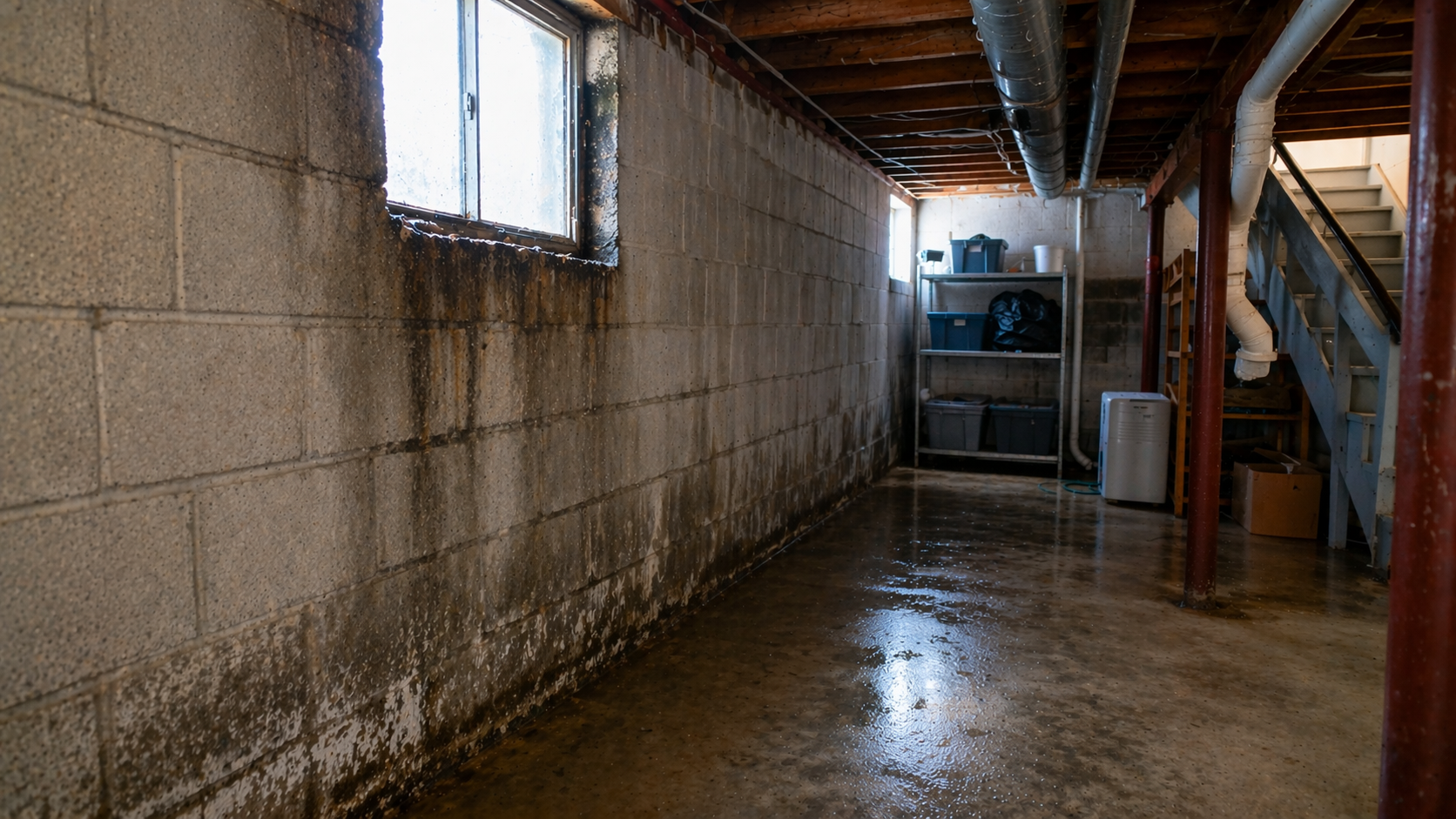
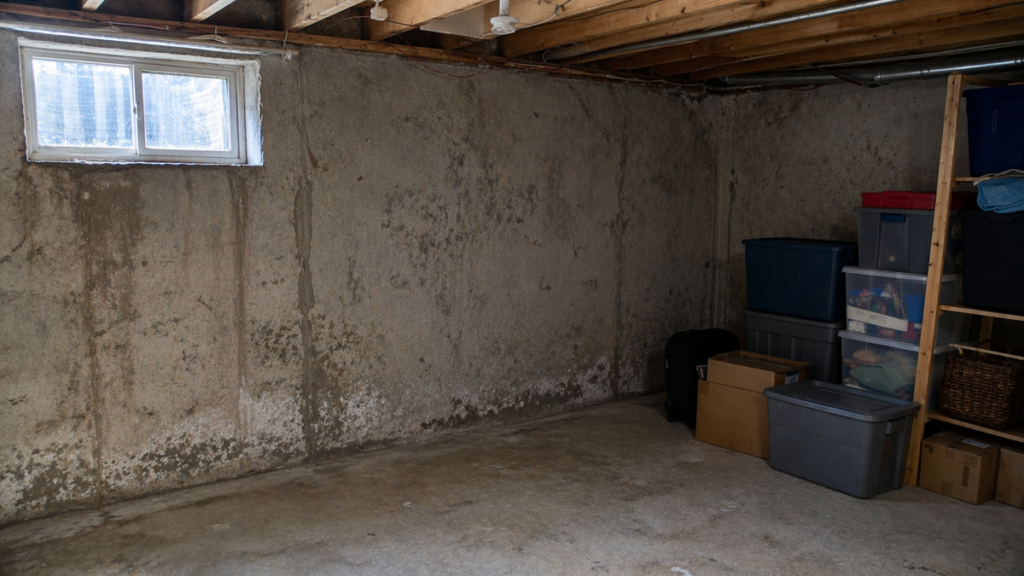
If your basement smells musty, feels damp, or shows early signs of moisture problems, a properly sized dehumidifier can help keep humidity under control. Basement moisture is common in humid climates, older homes, below-grade spaces, and areas with limited airflow.
This guide reviews the best basement dehumidifiers for mold prevention and moisture control. It focuses on practical basement features such as moisture removal capacity, continuous drainage, pump options, reliability, noise level, and long-term usability.
For the broader guide to choosing, sizing, placing, setting, and maintaining a dehumidifier, start with how to choose and use a dehumidifier effectively. For moisture problems beyond dehumidifier selection, see how to find, fix, and prevent moisture problems in homes. If visible mold is already present, review how to remove mold permanently before relying on humidity control alone.
If you are unsure whether your basement needs mechanical moisture removal or more airflow, compare when to use a dehumidifier vs ventilation.
Disclosure: As an Amazon Associate, this site earns from qualifying purchases. This does not affect the price you pay. Our recommendations are based on research, product reliability, and real-world usability in moisture-prone environments.
Quick Picks: Best Basement Dehumidifiers for Mold Prevention
If you’re short on time, these are the top basement dehumidifiers to compare first.
- Best Overall: Midea Cube 50 Pint Smart Dehumidifier — Large capacity with flexible drainage options.
- Best With Pump: GE 50 Pint Dehumidifier with Built-In Pump — Ideal for basements without floor drains.
- Best Traditional Model: Frigidaire FGAC5044W1 50-Pint Dehumidifier — Reliable and straightforward operation.
- Best Quiet Option: Honeywell 50 Pint Dehumidifier — Suitable for finished basements.
- Best Value: hOmeLabs 50 Pint Wi-Fi Dehumidifier — Balanced performance and features.
- Best Mid-Range: Keystone 50 Pint Portable Dehumidifier — Dependable everyday moisture control.
- Best Budget Large Basement: Waykar 50 Pint Dehumidifier — Affordable large-area coverage.
Best Basement Dehumidifiers for Mold Prevention
1. Midea Cube 50 Pint Smart Dehumidifier
Category: Best Overall
The Midea Cube stands out because of its unique expandable tank design and strong moisture removal performance. Unlike many traditional models, this unit can hold significantly more water before needing to be emptied, making it ideal for basements that collect moisture quickly.
This model works well in large basements and spaces where humidity stays consistently high. It also supports continuous drainage, which is one of the most important features for keeping basement humidity stable without constant bucket emptying.
It is the strongest all-around pick in this list for most damp basements.
Key Features:
- Removes up to 50 pints of moisture per day
- Coverage suitable for large basements
- Expandable water tank design
- Continuous drain capability
- Smart controls with Wi-Fi connectivity
- Auto-restart after power outages
Pros:
- ✔ Large tank reduces frequent emptying
- ✔ Strong performance in damp basements
- ✔ Flexible drainage options
- ✔ Smart controls for monitoring humidity
- ✔ Suitable for long runtime periods
Cons:
- ✖ Slightly larger footprint than standard units
- ✖ Smart features may not be necessary for all users
Best For:
- Large basements
- Persistent humidity problems
- Homes with recurring mold risk
- Users who want flexible drainage options
Check the Midea Cube 50 Pint Smart Dehumidifier on Amazon to see current availability.
2. GE 50 Pint Dehumidifier with Built-In Pump
Category: Best With Pump
One of the biggest challenges in basement moisture control is drainage. Many basements don’t have floor drains, making it difficult to remove collected water. That’s where a built-in pump becomes extremely useful.
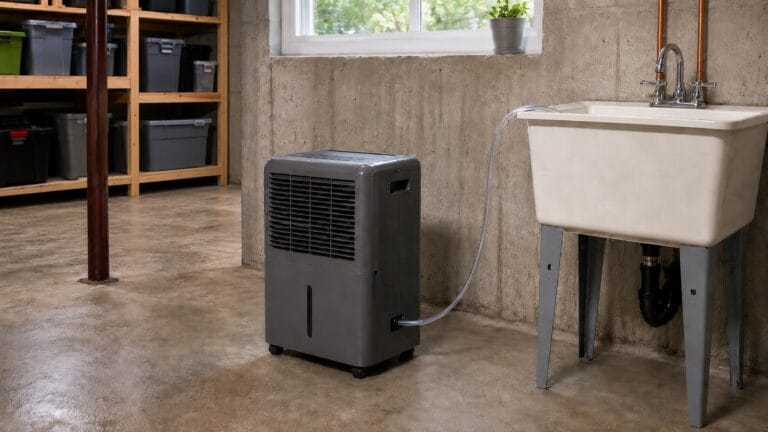
This GE model includes an integrated pump that allows water to be moved vertically — meaning you can drain into a sink, laundry line, or window outlet. That makes it especially valuable for finished basements or homes with limited drainage options.
Beyond the pump, this unit delivers consistent moisture removal performance and includes features designed to keep operation simple and reliable.
Key Features:
- Removes up to 50 pints of moisture per day
- Built-in internal pump
- Continuous drainage support
- Digital humidity controls
- Auto defrost function
- Filter reminder system
Pros:
- ✔ Pump simplifies drainage setup
- ✔ Reliable moisture removal performance
- ✔ Suitable for challenging basement layouts
- ✔ Helpful humidity controls
- ✔ Reduces need for manual emptying
Cons:
- ✖ Slightly more complex setup than gravity drain models
- ✖ Pump components add to overall maintenance needs
Best For:
- Basements without floor drains
- Finished basements
- Long-term continuous use
- Homes requiring vertical drainage
Check the GE 50 Pint Dehumidifier with Built-In Pump on Amazon to see current availability.
3. Frigidaire FGAC5044W1 50-Pint Dehumidifier
Category: Best Traditional Model
If you prefer a straightforward, dependable design without unnecessary complexity, the Frigidaire FGAC5044W1 is a strong traditional option.
It focuses on consistent moisture removal and simple operation, which makes it a good fit for homeowners who want reliable performance without smart features or complicated controls.
Key Features:
- Removes up to 50 pints per day
- Continuous drainage compatibility
- Washable antibacterial filter
- Automatic shutoff when tank is full
- Adjustable humidity settings
- Built-in timer
Pros:
- ✔ Reliable traditional design
- ✔ Easy to operate
- ✔ Good humidity control accuracy
- ✔ Trusted brand reputation
- ✔ Suitable for long-term use
Cons:
- ✖ No advanced smart features
- ✖ Tank may need frequent emptying without drain hose
Best For:
- Homeowners who want simple operation
- Standard basement moisture control
- Users prioritizing reliability over smart features
- Long-term mold prevention setups
Check the Frigidaire FGAC5044W1 50-Pint Dehumidifier on Amazon to see current availability.
4. Honeywell 50 Pint Dehumidifier
Category: Best Quiet Option
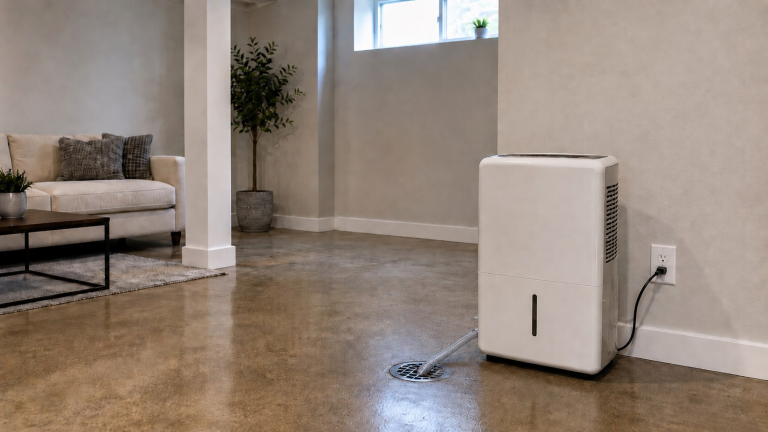
If your basement is finished or used as living space, noise level becomes an important factor. The Honeywell 50 Pint Dehumidifier is known for steady performance combined with relatively quiet operation, making it a strong choice for basements that double as family rooms, offices, or bedrooms.
This unit balances efficiency and usability well. It includes user-friendly controls and reliable moisture removal without requiring complicated setup. For homeowners who want dependable performance without excessive noise, this model is a practical solution.
Key Features:
- Removes up to 50 pints of moisture per day
- Digital humidistat controls
- Continuous drainage capability
- Washable air filter
- Automatic shutoff when tank is full
- Smooth-glide wheels for mobility
Pros:
- ✔ Quiet operation compared to many similar models
- ✔ Reliable humidity control
- ✔ Easy-to-use interface
- ✔ Suitable for finished living spaces
- ✔ Continuous drain support
Cons:
- ✖ Tank capacity may require regular emptying without drain hose
- ✖ Slightly heavier than smaller units
Best For:
- Finished basements
- Living spaces with moisture concerns
- Moderate to heavy humidity environments
- Homes needing quieter operation
Check the Honeywell 50 Pint Dehumidifier on Amazon to see current availability.
5. hOmeLabs 50 Pint Wi-Fi Dehumidifier
Category: Best Value
The hOmeLabs 50 Pint Wi-Fi Dehumidifier offers a strong balance between performance and modern convenience. It works well for larger basements, supports continuous drainage, and adds smart controls without moving into a premium price tier.
Key Features:
- Removes up to 50 pints of moisture daily
- Wi-Fi enabled controls
- Continuous drainage compatibility
- Digital humidity display
- Automatic restart function
- Multiple fan speed settings
Pros:
- ✔ Strong moisture removal capability
- ✔ Smart control options available
- ✔ Reliable coverage for large basements
- ✔ Good overall performance value
- ✔ Flexible operation settings
Cons:
- ✖ Smart features may require setup time
- ✖ Slightly larger footprint
Best For:
- Homeowners wanting smart controls
- Large basement moisture control
- Long-term humidity management
- Users seeking strong performance without premium cost
Check the hOmeLabs 50 Pint Wi-Fi Dehumidifier on Amazon to see current availability.
6. Keystone 50 Pint Portable Dehumidifier
Category: Best Mid-Range
The Keystone 50 Pint Portable Dehumidifier is a dependable mid-range option for everyday basement moisture control. It keeps the controls simple, supports continuous drainage, and is easier to move than heavier basement units.
Key Features:
- Removes up to 50 pints per day
- Continuous drainage support
- Adjustable humidity settings
- Full bucket alert system
- Automatic defrost system
- Easy mobility with caster wheels
Pros:
- ✔ Reliable daily moisture removal
- ✔ Simple controls and operation
- ✔ Suitable for various basement sizes
- ✔ Portable design
- ✔ Good balance of features and usability
Cons:
- ✖ No smart connectivity features
- ✖ May require manual drainage without hose
Best For:
- Standard basement environments
- Mid-range budget users
- Homes needing steady moisture removal
- Users preferring simple operation
Check the Keystone 50 Pint Portable Dehumidifier on Amazon to see current availability.
7. Waykar 50 Pint Dehumidifier
Category: Best Budget Large Basement
The Waykar 50 Pint Dehumidifier is a practical budget option for larger unfinished basements. It offers straightforward controls, continuous drainage support, and solid moisture removal without premium features.
Key Features:
- Removes up to 50 pints of moisture per day
- Continuous drainage support
- Auto shutoff protection
- Digital humidity display
- Adjustable humidity settings
- Portable design with rolling wheels
Pros:
- ✔ Affordable large-area moisture removal
- ✔ Straightforward operation
- ✔ Continuous drain compatibility
- ✔ Suitable for large basement areas
- ✔ Reliable humidity reduction
Cons:
- ✖ Fewer premium features
- ✖ May require regular monitoring without drainage hose
Best For:
- Large unfinished basements
- Budget-conscious homeowners
- Long-term humidity control
- Mold prevention on a budget
Check the Waykar 50 Pint Dehumidifier on Amazon to see current availability.
Basement Dehumidifier Comparison Table
| Product | Category | Daily Capacity | Built-In Pump | Smart Features | Best Use |
|---|---|---|---|---|---|
| Midea Cube 50 Pint | Best Overall | 50 Pint | Optional | Yes | Large damp basements |
| GE 50 Pint with Pump | Best With Pump | 50 Pint | Yes | Limited | Basements without drains |
| Frigidaire FGAC5044W1 | Best Traditional | 50 Pint | No | No | Reliable daily operation |
| Honeywell 50 Pint | Best Quiet | 50 Pint | No | No | Finished basements |
| hOmeLabs 50 Pint | Best Value | 50 Pint | No | Yes | Smart humidity control |
| Keystone 50 Pint | Best Mid-Range | 50 Pint | No | No | Everyday moisture removal |
| Waykar 50 Pint | Best Budget Large Basement | 50 Pint | No | No | Budget-friendly moisture control |
How to Choose a Basement Dehumidifier
Choosing a basement dehumidifier is mostly about matching the unit to the size, dampness, drainage setup, and use of the space. A finished basement used as living space may need a quieter model, while an unfinished basement with heavy humidity may need stronger moisture removal and continuous drainage.
Capacity
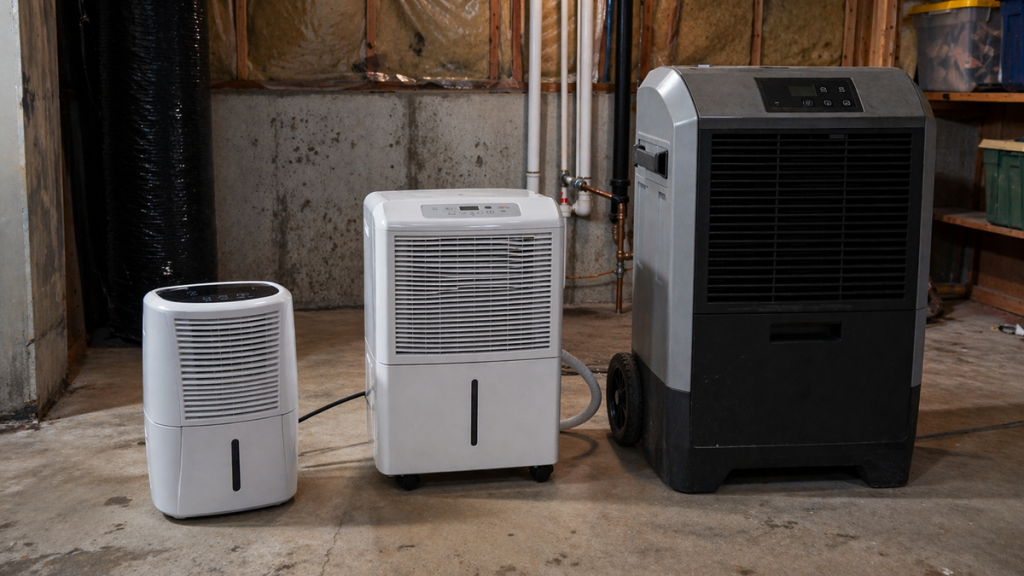
Basements usually need more capacity than ordinary rooms because they are cooler, below grade, and more likely to have moisture entering from concrete, soil, or foundation walls. For persistent dampness or mold-prone conditions, a 50-pint model is usually the safer starting point. For a fuller sizing breakdown, see how to choose the right size dehumidifier.
Drainage
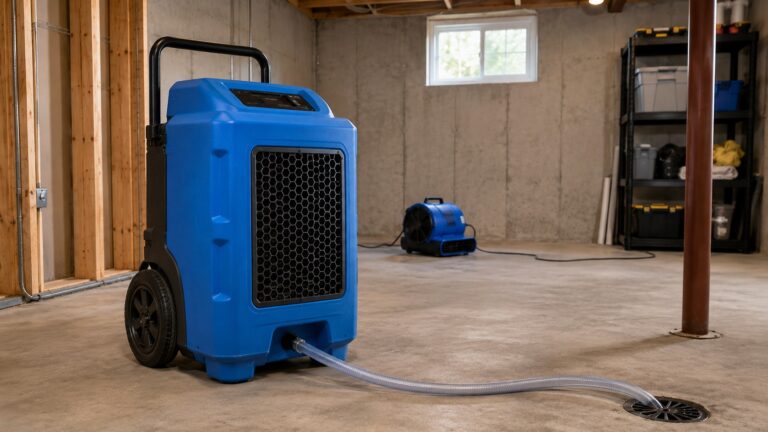
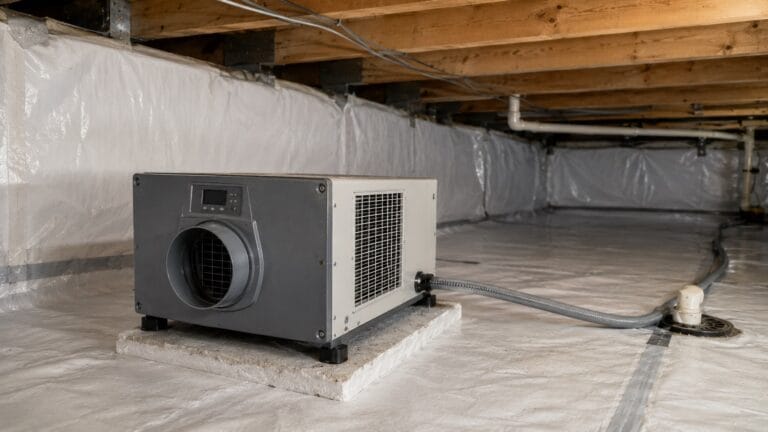
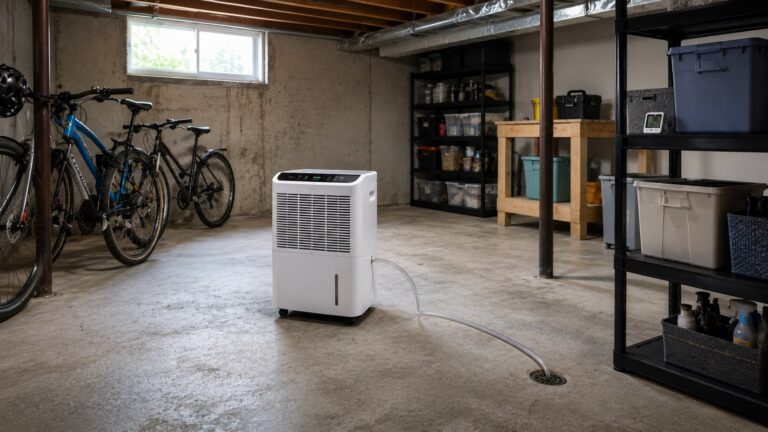
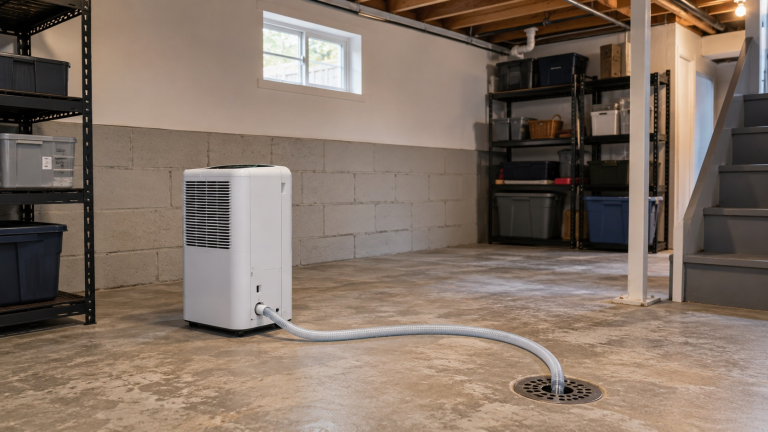
Continuous drainage is one of the most important basement features. If the bucket fills while you are away, the unit shuts off and humidity can rise again. A gravity drain works when the hose can slope downward to a floor drain or sump area. A built-in pump is useful when the water must move upward to a sink, laundry drain, or other outlet.
Noise and Finished Space Use
If the basement is used as a family room, office, gym, or bedroom, noise matters more than it does in an unfinished storage area. Finished basements usually benefit from a quieter model with simple controls and reliable auto operation.
Maintenance
Filters, intake vents, drain hoses, buckets, and pump components need periodic cleaning so the unit can keep moving air and removing water. For a complete care checklist, see how to maintain a dehumidifier.
How to Set Up a Basement Dehumidifier
Even a strong basement dehumidifier needs proper setup. Place the unit where air can circulate, keep it away from walls and stored items, and make sure collected water can drain safely. For more detailed setup guidance, see where to place a dehumidifier in your home.
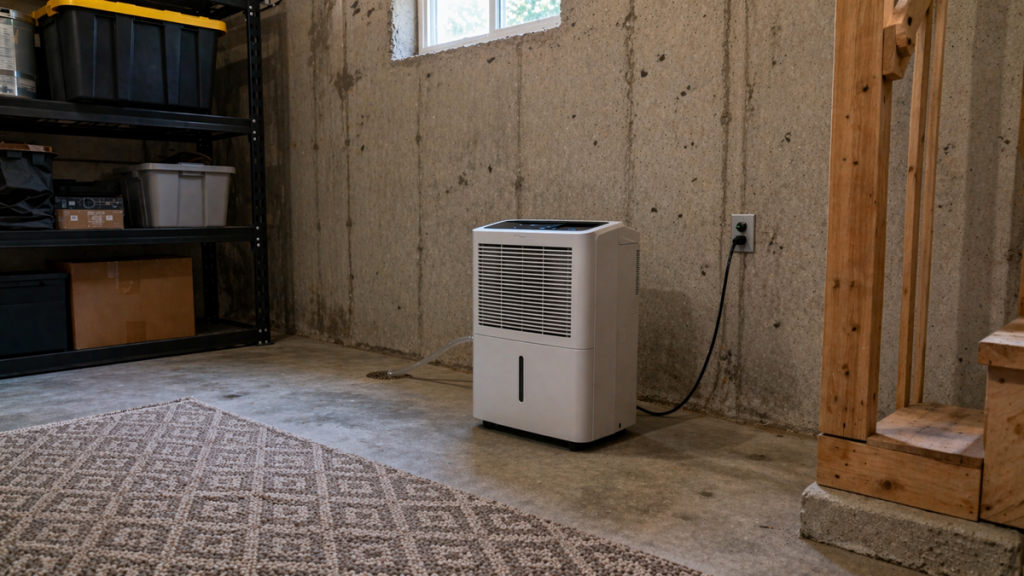
For continuous drainage, route the hose so it slopes toward the drain without kinks or sharp bends. If the drain point is higher than the unit, choose a model with a pump or use an appropriate condensate pump setup.
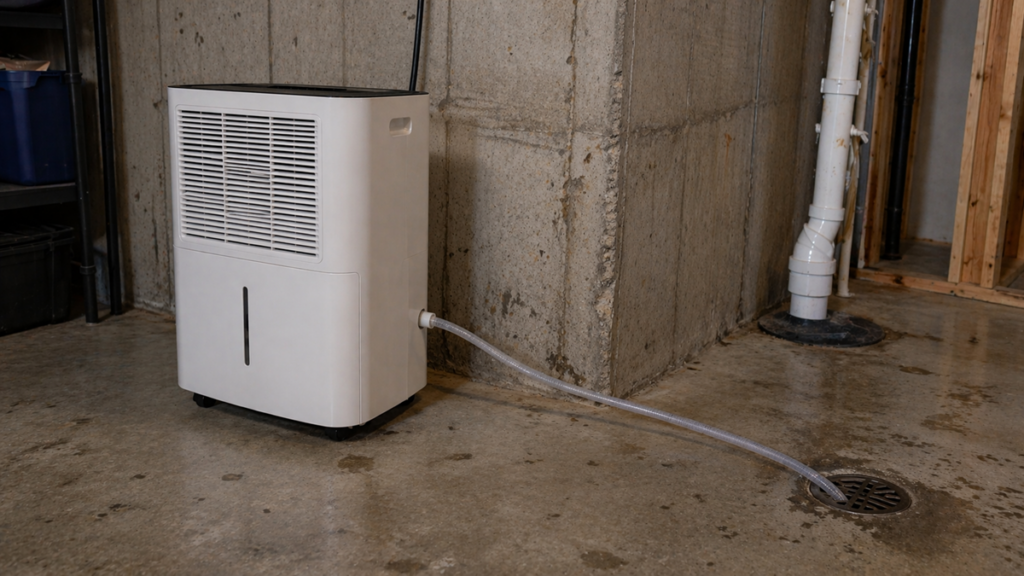
Set the unit to a realistic humidity target and verify the room with a separate humidity monitor. For detailed setpoint guidance, see best dehumidifier settings to prevent mold. For measurement methods, see how to test indoor humidity levels.
Common Basement Dehumidifier Mistakes to Avoid
The most common mistake is expecting a dehumidifier to solve every basement moisture problem. Dehumidifiers control air humidity, but they cannot fix active leaks, foundation cracks, seepage, wet materials, or poor exterior drainage.
Avoid choosing a unit that is too small, blocking airflow around the unit, relying only on manual bucket emptying in a damp basement, or ignoring filter and drain maintenance. These mistakes can make even a good dehumidifier perform poorly.
If water is entering the basement, start with how to waterproof basements and control water intrusion. If mold is already present, use the guide on how to remove mold permanently. Before assuming the problem is solved, verify the room with indoor humidity testing.
Frequently Asked Questions About Basement Dehumidifiers
What humidity level prevents mold in a basement?
For many basements, a target around 40%–50% is a practical range for reducing mold-friendly conditions without forcing the unit to run unnecessarily low.
For more detailed setpoint guidance, see best dehumidifier settings to prevent mold. To verify the room, use indoor humidity testing.
Should I run my basement dehumidifier all the time?
In many cases, yes. Most modern dehumidifiers automatically cycle on and off to maintain the selected humidity level. Running the unit continuously allows it to respond quickly to changes in moisture levels.
If your basement is consistently damp or prone to mold, continuous operation with a drain hose is usually the most effective long-term solution. Many homeowners notice the biggest improvement during humid summer months when moisture levels fluctuate more frequently.
For a more detailed runtime guide, see how long to run a dehumidifier each day.
Is a 50-pint dehumidifier too large for a basement?
For most damp basements, a 50-pint dehumidifier is usually not too large. A slightly larger unit can remove moisture more quickly, cycle less often, and maintain more stable humidity than an undersized unit.
The main exception is a small, mildly damp basement where a lower-capacity unit may be enough.
Do basement dehumidifiers help eliminate musty odors?
Yes, reducing humidity can significantly decrease musty odors. These smells are often caused by mold spores and excess moisture in the air.
By lowering humidity levels, dehumidifiers help reduce the conditions that allow mold and mildew odors to develop. If odors persist even after humidity drops, it may indicate hidden moisture sources that should be investigated.
Where should I place a basement dehumidifier?
Place the dehumidifier in an area where moisture tends to accumulate, such as near exterior walls, sump pumps, or laundry areas. Leave several inches of clearance around the unit to allow proper airflow.
Avoid placing the unit in tight corners or directly against walls, as restricted airflow can reduce efficiency. Positioning the unit near the center of damp areas often improves overall airflow and drying performance.
How often should I empty the water tank?
Tank emptying frequency depends on humidity levels and basement size. In very damp environments, the tank may fill daily.
Using a continuous drain hose can eliminate the need for manual emptying and allow uninterrupted operation. If you’re emptying the tank daily, switching to continuous drainage can save significant time and effort.
How long does it take to dry out a damp basement?
The time required depends on moisture levels, basement size, and the capacity of the dehumidifier. In many cases, noticeable improvements occur within a few days, while full drying may take one to two weeks.
Maintaining consistent operation helps stabilize humidity levels over time. Basements with severe moisture issues may take longer, especially if outdoor humidity remains high.
Can a dehumidifier stop mold completely?
No. A dehumidifier can reduce the damp conditions that allow mold to grow, but it does not remove existing mold.
If mold is already present, correct the moisture source and follow a cleanup process such as how to remove mold permanently. Widespread or hidden mold may require professional remediation.
Final Thoughts
The best basement dehumidifier is the one that matches your basement size, moisture level, drainage setup, and how the space is used. For most damp basements, a 50-pint model with continuous drainage is the safest starting point.
The Midea Cube 50 Pint Smart Dehumidifier is the stongest all-around pick for most homeowners, while the GE 50 Pint Dehumidifier with Built-In Pump is a better fit when you need to move water upward to a sink, drain, or outlet.
A dehumidifier can help control basement humidity, but it should not be used as a substitute for fixing leaks, seepage, standing water, or existing mold. Choose the right unit, set up drainage properly, and monitor humidity so the basement stays dry over time.
7 Comments
Comments are closed.