Best Mold Removal Sprays for Indoor and Household Use
Introduction
Mold and mildew stains are frustrating because they can make a bathroom, laundry room, basement, closet, or utility area look dirty even when you clean regularly.
In many homes, the most frustrating spots are the same ones that never seem to stay clean: shower corners, grout lines, window trim, under-sink cabinets, laundry rooms, and basement utility areas.
The tricky part is choosing the right kind of cleaner, because not every product is made for the same job. Some sprays are designed to remove dark mold and mildew stains quickly from tile, grout, tubs, and shower surfaces. Others are better for bleach-free mold control, deodorizing, disinfecting, or reducing the chance that mold returns on compatible surfaces.
This guide compares the best mold removal sprays for indoor and household use so you can choose the right product for the surface and situation.
A bleach-based stain remover may be best for black shower grout. A bleach-free mold control spray may be better for painted areas, drywall-adjacent surfaces, wood, closets, or places where fumes are a concern. A disinfectant-style mold killer may be more useful after small leaks or recurring moisture problems.
Before using any spray, fix the moisture source first. Mold usually comes back when the surface is still damp, poorly ventilated, or affected by a hidden leak. For broader guidance, see the parent guide: How To Remove Mold Permanently.
Important safety note: Mold sprays are best for small, surface-level cleanup jobs on compatible materials. If mold covers a large area, keeps returning after cleaning, grows on damaged drywall or insulation, or appears after flooding or sewage backup, consider professional guidance before continuing.
Disclosure: As an Amazon Associate, DryHomeGuide may earn from qualifying purchases at no extra cost to you.
Quick Picks: Best Mold Removal Sprays for Indoor and Household Use
- Best Overall Mold Stain Remover: RMR-86 Instant Mold and Mildew Stain Remover Spray
- Best Bleach-Free Mold Control Spray: Concrobium Mold Control Spray, 32 oz
- Best Mold Killer / Disinfectant: RMR-141 EPA Registered Mold and Mildew Killer
- Best for Larger Hard-Surface Areas: MOLD ARMOR Rapid Clean Remediation
- Best Foaming Bathroom Mold Cleaner: OxiClean plus Bleach No Drip Foam Mold & Mildew Bathroom Stain Remover
- Best Budget Bathroom Mold Stain Remover: Zep Mold Stain and Mildew Stain Remover
- Best Bleach-Free Stain Remover: CLR Brands Mold and Mildew Stain Remover
Which Type of Mold Cleaner Should You Choose?
- For dark stains on shower grout: choose a mold and mildew stain remover such as RMR-86, OxiClean foam, or Zep.
- For bleach-free indoor mold control: choose Concrobium.
- For disinfectant-style cleanup: choose RMR-141.
- For larger hard non-porous areas: choose MOLD ARMOR.
- For bleach-free stain removal: choose CLR.
Best Indoor Mold Removal Spray Reviews
RMR-86 Instant Mold and Mildew Stain Remover Spray
Category Label: Best Overall Mold Stain Remover
Quick take: Choose this if your biggest problem is dark mold or mildew staining on compatible bathroom surfaces.
RMR-86 is the first product I would consider when the main goal is making dark mold and mildew stains disappear from compatible hard surfaces. It is best understood as a stain remover, not a complete moisture solution. If the black marks on shower grout, tile, tubs, or other compatible hard surfaces are the main problem, this is the product most readers will expect to see in a mold cleaning product roundup.
For readers searching for a mold stain remover for shower grout or tile, this is the most stain-focused product in the lineup.
It is especially useful in bathrooms, laundry areas, and other damp spaces where surface staining remains after ordinary cleaning. However, because it is a strong chemical cleaner, it needs careful use. Wear gloves and eye protection, ventilate the room, and never mix it with other cleaners.
Key Features
- Designed to remove visible mold and mildew stains from surfaces listed on the label
- Useful for black staining on grout, tile, shower areas, and non-porous bathroom or utility surfaces
- Works without turning the job into a heavy scrubbing project in many situations
- Made for homeowners who want a dramatic cosmetic cleanup before improving ventilation or moisture control
Pros
- ✔ Strong choice for dark mold and mildew stains
- ✔ Very suitable for bathroom surfaces where appearance matters
- ✔ Good first pick when the reader wants a spray-style stain remover
- ✔ Works well as the “before prevention” cleanup step when the underlying dampness problem has already been addressed
Cons
- ✖ Strong smell and chemical intensity
- ✖ Not the right choice for every porous or delicate surface
- ✖ Does not fix the leak, humidity, or ventilation issue that caused mold
- ✖ Should not be mixed with any other cleaner
Best For
- Homeowners dealing with visible black mold or mildew stains on compatible bathroom and household hard surfaces
Check the RMR-86 Instant Mold and Mildew Stain Remover Spray on Amazon to see current availability.
Concrobium Mold Control Spray, 32 oz
Category Label: Best Bleach-Free Mold Control Spray
Quick take: Choose this if you want bleach-free mold control instead of a harsh stain-whitening bathroom spray.
Concrobium Mold Control deserves its place because it is not trying to be another harsh stain-whitening bathroom spray. Instead of focusing only on whitening old stains, it is meant for mold control on a wider range of household materials. That makes it useful when a homeowner wants a lower-odor product for indoor surfaces, enclosed areas, closets, basements, laundry rooms, or places where bleach fumes would be unpleasant.
It is a better fit for people looking for a bleach-free mold spray than for people who simply want to whiten old grout stains as fast as possible.
This is the product I would point readers toward when they are more concerned about controlling mold growth than making grout look bright white instantly. It is also a good fit for readers who have already cleaned a small area and want a product they can use as part of a longer-term mold prevention routine. It should still be paired with moisture correction, airflow, and humidity control. For whole-home moisture strategy, see How to Find, Fix, and Prevent Moisture Problems in Homes.
Key Features
- Bleach-free formula for indoor mold control situations
- Low-odor choice compared with bleach-based stain removers
- Suitable for many household surface types when used according to the label
- Better for mold control and prevention support than instant stain whitening
Pros
- ✔ Good option for readers avoiding bleach
- ✔ Helpful for closets, basements, walls, utility rooms, and general household mold control areas
- ✔ Lower odor than many bleach-based sprays
- ✔ Complements dehumidifiers, ventilation, and leak prevention work
Cons
- ✖ May not remove old black stains as quickly as bleach-based products
- ✖ Requires proper coverage and drying time
- ✖ Not a substitute for removing damaged materials when mold has gone deeper
- ✖ Results depend heavily on whether the surface stays dry afterward
Best For
- Homeowners who want a bleach-free mold control spray for indoor surfaces and recurring damp areas
Check the Concrobium Mold Control Spray on Amazon to see current availability.
RMR-141 EPA Registered Mold and Mildew Killer
Category Label: Best Mold Killer / Disinfectant
Quick take: Choose this when you want a disinfectant-style mold and mildew cleaner rather than a product focused mainly on whitening stains.
RMR-141 is the better fit when you are less concerned with whitening a stain and more concerned with treating a compatible surface after mold or mildew has appeared. A stain remover can make a surface look better, but homeowners also need to understand when they are choosing a product for cleaning, disinfecting, deodorizing, or treating compatible surfaces after moisture exposure.
The simple way to separate the two RMR products is this: RMR-86 is the better stain remover, while RMR-141 is the better disinfectant-style mold and mildew cleaner.
This product makes sense for a homeowner who wants a ready-to-use cleaner that leans more toward treatment and disinfecting than cosmetic whitening. It is a strong fit for small cleanup areas on appropriate surfaces, especially after the dampness source has been corrected. It should not be used to imply that a spray can solve mold inside wall cavities, insulation, subfloors, or HVAC systems. If mold keeps returning after cleaning, see Why Mold Keeps Coming Back After Cleaning.
Key Features
- Designed for mold, mildew, bacteria, and odor control on compatible surfaces
- Useful when the goal is more than cosmetic stain removal
- Ready-to-use format for household cleanup tasks
- Good companion product for small areas after leaks or damp conditions are corrected
Pros
- ✔ Better fit for mold-killer and disinfectant needs than a pure stain remover
- ✔ Useful for utility spaces, damp rooms, and hard surfaces after minor moisture issues
- ✔ Helps round out the article beyond bathroom stain cleaners
- ✔ Good product to discuss when explaining mold removal versus mold stain removal
Cons
- ✖ Not the most dramatic stain whitener in the lineup
- ✖ Must be used only on surfaces allowed by the label
- ✖ Cannot replace professional remediation for major mold contamination
- ✖ May overlap with other RMR products unless the article explains the difference clearly
Best For
- Homeowners who want a mold-killer and disinfectant-style cleaner for small indoor cleanup areas
Check the RMR-141 EPA Registered Mold and Mildew Killer on Amazon to see current availability.
MOLD ARMOR Rapid Clean Remediation
Category Label: Best for Larger Hard-Surface Areas
Quick take: Choose this when the cleanup area is larger than a few small spots and the surface is label-approved.
MOLD ARMOR Rapid Clean Remediation makes more sense when the job is bigger than a few shower grout lines. It is not the pick for delicate materials or uncertain porous surfaces. Its strongest use case is hard, non-porous household surfaces where the reader needs a more remediation-style cleaner rather than a small bathroom bottle.
Not every mold cleanup situation is a small patch of shower grout. Some homeowners are dealing with basement walls, utility areas, sealed surfaces, or a larger hard-surface zone after a moisture problem. Larger visible areas, hidden mold, or mold linked to structural moisture may require professional help.
Key Features
- Useful for larger compatible hard-surface cleanup jobs
- Designed for mold and mildew cleaning on hard non-porous surfaces
- Useful when the cleanup area is larger than a few small spots and the surface is label-approved
- More remediation-oriented than a basic bathroom stain spray
Pros
- ✔ Better choice when a small spray bottle is not enough
- ✔ Works well on label-approved hard non-porous surfaces
- ✔ Useful for utility rooms, basement areas, and larger cleanup tasks
- ✔ Helps the article serve homeowners beyond simple shower cleaning
Cons
- ✖ Not for every material or surface type
- ✖ Should not be used casually on porous building materials unless the label allows it
- ✖ Larger mold areas may require professional assessment
- ✖ Still requires the reason the area stayed wet to be fixed first
Best For
- Homeowners cleaning larger hard non-porous areas in basements, utility spaces, or other damp-prone rooms
Check the MOLD ARMOR Rapid Clean Remediation on Amazon to see current availability.
OxiClean plus Bleach No Drip Foam Mold & Mildew Bathroom Stain Remover
Category Label: Best Foaming Bathroom Mold Cleaner
Quick take: Choose this for shower walls, tubs, and vertical bathroom surfaces where a clinging foam is easier to control.
OxiClean plus Bleach No Drip Foam is the best bathroom-focused foaming cleaner in the lineup. Its biggest advantage is the foam format, which helps it cling to vertical surfaces such as shower walls, tile, grout lines, tubs, and other bathroom areas where liquid sprays can run down too quickly.
This is a practical product for readers who are mostly fighting visible bathroom mildew rather than a whole-home mold issue. It is also useful for textured or vertical surfaces where dwell time matters. Like other bleach-based cleaners, it should be used with ventilation, gloves, and care around fabrics, metals, natural stone, or surfaces not listed on the label. For surface-specific advice, see Best Way to Clean Mold From Bathroom Walls.
Key Features
- No-drip foam format for vertical bathroom surfaces
- Designed for mold and mildew stains in bathrooms
- Useful on compatible tile, grout, tubs, and shower areas
- Better cling than thin liquid sprays on walls and shower surrounds
Pros
- ✔ Foam stays in place better on vertical surfaces
- ✔ Good choice for shower walls and bathroom tile
- ✔ Practical for grout lines and mildew-prone bathroom edges
- ✔ Helps reduce the need for repeated spraying on sloped or vertical areas
Cons
- ✖ Bleach-based product requires ventilation and surface caution
- ✖ Not ideal for non-bathroom materials unless approved by the label
- ✖ Foam format may be less convenient for large flat areas
- ✖ Does not solve poor bathroom ventilation by itself
Best For
- Homeowners who want a clinging foam cleaner for shower walls, tubs, grout, and bathroom mildew stains
Zep Mold Stain and Mildew Stain Remover
Category Label: Best Budget Bathroom Mold Stain Remover
Quick take: Choose this for a straightforward bathroom mold and mildew stain remover on compatible surfaces.
Zep Mold Stain and Mildew Stain Remover is a strong budget-friendly bathroom pick for common stain-removal tasks. It is best for homeowners who want a straightforward mold and mildew stain remover for tile, grout, sinks, tubs, toilets, and other compatible bathroom surfaces.
The reason to include Zep is not that it is the gentlest product. It is included because many readers want an accessible bathroom mold stain remover from a known cleaning brand. The article should be clear about limitations. This type of cleaner is not for every surface, and some listings warn against use on materials such as faucets, vinyl, or marble. When in doubt, readers should test a small hidden area and follow the label exactly.
Key Features
- Ready-to-use mold and mildew stain remover
- Made for the kind of mildew staining many homeowners see around showers, tubs, and grout lines
- Useful for tile, grout, tubs, sinks, and toilet-area stains when compatible
- Good budget-style option for routine bathroom mold stain cleanup
Pros
- ✔ Practical choice for common bathroom mildew stains
- ✔ Good budget category pick
- ✔ Recognizable cleaning brand
- ✔ Useful for homeowners who want a simple spray for bathroom hard surfaces
Cons
- ✖ Surface limitations are important
- ✖ Not suitable for all finishes, metals, stone, or delicate materials
- ✖ Strong cleaner that needs ventilation and protective handling
- ✖ Mainly a stain-removal product, not a hidden mold solution
Best For
- Homeowners who want an affordable bathroom mold and mildew stain remover for compatible hard surfaces
Check the Zep Mold Stain and Mildew Stain Remover on Amazon to see current availability.
CLR Brands Mold and Mildew Stain Remover
Category Label: Best Bleach-Free Stain Remover
Quick take: Choose this if you want a bleach-free stain remover rather than a bleach-based bathroom spray.
CLR Brands Mold and Mildew Stain Remover is the best bleach-free stain-remover alternative in this list. It is different from Concrobium because Concrobium is more of a mold-control product, while CLR is easier to position as a household stain remover for readers who do not want a bleach-based bathroom spray.
This is a good option for homeowners who need a less harsh-feeling cleaner for compatible surfaces and want to avoid bleach smell. It can be useful around bathrooms, laundry rooms, basements, and other household areas where mildew staining appears on surfaces the product label allows. Because it is bleach-free, readers should not expect the same instant whitening effect they may see from stronger bleach-based products.
Key Features
- Bleach-free stain-removal formula
- Good alternative for readers who dislike strong bleach fumes
- Useful on multiple compatible household surfaces
- Better for general household stain cleanup than heavy remediation claims
Pros
- ✔ Good bleach-free alternative to bathroom stain sprays
- ✔ Useful for readers who want a household mold and mildew stain remover
- ✔ Less aggressive option than the strongest bleach cleaners
- ✔ Helps balance the article with a non-bleach stain-removal pick
Cons
- ✖ May require more patience on dark or older staining
- ✖ Not the best choice for heavy black grout stains
- ✖ Still requires label-safe surface selection
- ✖ Does not replace drying, ventilation, or leak repair
Best For
- Homeowners who want a bleach-free mold and mildew stain remover for compatible household surfaces
Check the CLR Brands Mold and Mildew Stain Remover on Amazon to see current availability.
Product Comparison Table
| Product | Category Label | Best Use Case | Key Strengths | Main Limitation | Amazon Link |
|---|---|---|---|---|---|
| RMR-86 Instant Mold and Mildew Stain Remover Spray | Best Overall Mold Stain Remover | Dark mold and mildew stains on label-approved bathroom and household hard surfaces | Fast visible stain-removal focus; strong choice for grout, tile, and shower staining | Strong odor and chemical intensity; not for every surface | View on Amazon |
| Concrobium Mold Control Spray, 32 oz | Best Bleach-Free Mold Control Spray | Bleach-free mold control on indoor household surfaces | Low-odor, bleach-free, good for mold control routines | Not the fastest option for old dark stains | View on Amazon |
| RMR-141 EPA Registered Mold and Mildew Killer | Best Mold Killer / Disinfectant | Small compatible cleanup areas where disinfectant-style cleaning matters | Better for mold-killer and disinfectant needs than a pure stain remover | Not the most dramatic cosmetic stain remover | View on Amazon |
| MOLD ARMOR Rapid Clean Remediation | Best for Larger Hard-Surface Areas | Larger hard non-porous surfaces in basements, utility rooms, and damp-prone areas | Good for larger compatible cleanup tasks | Should be limited to label-approved surfaces, especially hard non-porous materials | View on Amazon |
| OxiClean plus Bleach No Drip Foam Mold & Mildew Bathroom Stain Remover | Best Foaming Bathroom Mold Cleaner | Vertical bathroom surfaces, shower walls, tile, and grout | Foam clings better than thin liquid sprays on vertical surfaces | Bleach-based and bathroom-focused; not ideal for all materials | View on Amazon |
| Zep Mold Stain and Mildew Stain Remover | Best Budget Bathroom Mold Stain Remover | Routine bathroom mold and mildew stain cleanup on compatible hard surfaces | Simple, accessible bathroom stain-removal option | Important surface restrictions; avoid unapproved materials | View on Amazon |
| CLR Brands Mold and Mildew Stain Remover | Best Bleach-Free Stain Remover | Bleach-free stain cleanup on compatible household surfaces | Good alternative for readers who want stain removal without bleach | May be slower on dark or older staining | View on Amazon |
Buying Guide: How to Choose the Right Mold Removal Spray for Your Surface
The best product depends on what problem you are actually trying to solve.
A homeowner with black stains in shower grout needs a different cleaner than someone treating a musty closet wall or a basement utility area after a small leak. Before choosing a spray, identify the surface, the size of the affected area, and whether the mold appears to be only on the surface.
A good rule of thumb is to buy for the surface first and the stain second. The strongest cleaner is not helpful if it damages the material you are trying to save.
Choose a stain remover when the surface looks bad
If the main problem is visible black or gray staining on tile, grout, tub surrounds, shower corners, or other compatible hard bathroom surfaces, choose a stain remover such as RMR-86, OxiClean foam, or Zep. These are the products most likely to improve appearance quickly.
For bathroom mold cleaner needs, look closely at whether the product is made for grout, tile, tubs, shower doors, or painted bathroom walls.
The key is not to confuse stain removal with full moisture control. A stain can fade while the underlying humidity problem remains. If the same spots return, the issue is probably poor ventilation, condensation, a leak, or damp materials behind the surface.
Choose a bleach-free mold control product when fumes or surfaces matter
Concrobium is the better choice when you want a bleach-free mold control spray for indoor use. This is useful in closets, basements, storage areas, laundry rooms, and some wall-adjacent areas where harsh bleach odor is not ideal.
CLR is also bleach-free, but it is better positioned as a stain remover than a mold control product. Choose CLR if you want a bleach-free cleaner for visible mildew staining. Choose Concrobium when prevention and control are more important than instant whitening.
Choose a disinfectant-style product for small cleanup areas after moisture exposure
RMR-141 is the better choice when the reader wants a mold killer and disinfectant-style cleaner rather than a cosmetic stain remover. It belongs in the cleanup stage after the area has been dried and the moisture source has been corrected.
Do not use disinfectant wording to imply that a spray can solve hidden mold inside walls, floors, ceilings, insulation, or HVAC equipment. For hidden mold symptoms, readers should start with inspection-focused articles such as Signs of Mold Behind Walls.
Choose a foam for vertical bathroom surfaces
Thin liquid sprays can run down shower walls before they have enough contact time. A foaming product like OxiClean plus Bleach No Drip Foam can be easier to use on shower surrounds, tile walls, tub edges, and grout lines. That makes it a better bathroom-specific choice than a large-area liquid product.
If mold appears inside cracked or separating caulk, a spray may lighten the surface but not fix the problem. In many cases, failed caulk needs to be removed and replaced after the area is fully dry.
Choose a larger hard-surface product for utility areas
MOLD ARMOR Rapid Clean Remediation is the best fit when the affected area is larger and the surfaces are compatible hard non-porous materials. This may include certain basement, utility room, or laundry room surfaces. Always check the label before using it on painted surfaces, porous materials, wood, drywall, stone, or any surface that may be damaged by a strong cleaner.
Do not use indoor mold sprays as a substitute for fixing moisture
If the mold is caused by a leak, high humidity, condensation, or damp building materials, cleaning the surface is only the first step. The area needs to dry and stay dry, or the same stain can return.
How to Use Mold Removal Sprays Safely Indoors
Good mold cleaning starts before you spray. First, identify why the mold formed. If the area is still damp, a cleaner may improve the appearance temporarily, but the mold can return. Look for condensation, plumbing leaks, poor ventilation, wet building materials, or high indoor humidity. For testing humidity, see How to Test Indoor Humidity Levels.
For example, if mildew keeps returning along the same shower corner every week, the cleaner may not be the main problem. The real issue may be trapped moisture, weak ventilation, or caulk that is no longer sealing properly.
If the area smells musty again a few days after cleaning, the problem is probably not the cleaner — it is usually hidden moisture, poor airflow, or a damp material nearby.
Next, match the product to the surface. Bathroom tile and grout can usually tolerate stronger cleaners better than painted drywall, wood trim, natural stone, metal finishes, or fabrics. Always read the label and test a small hidden area first.
When using a product for the first time, test a small hidden spot before spraying a visible area. This is especially important on painted surfaces, older caulk, metal finishes, natural stone, wood, and textured materials.
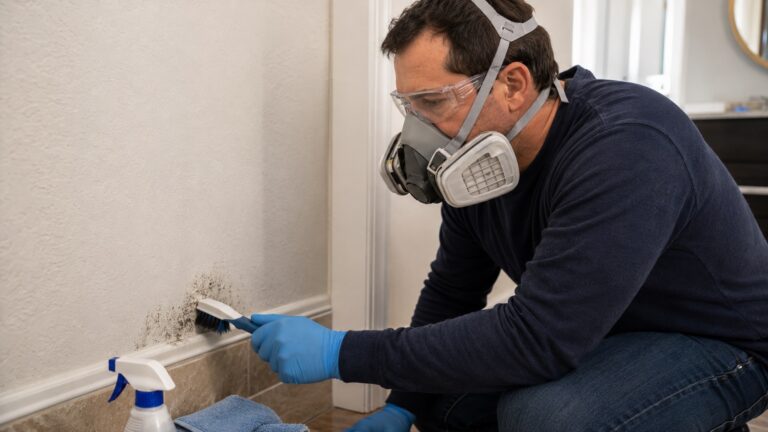
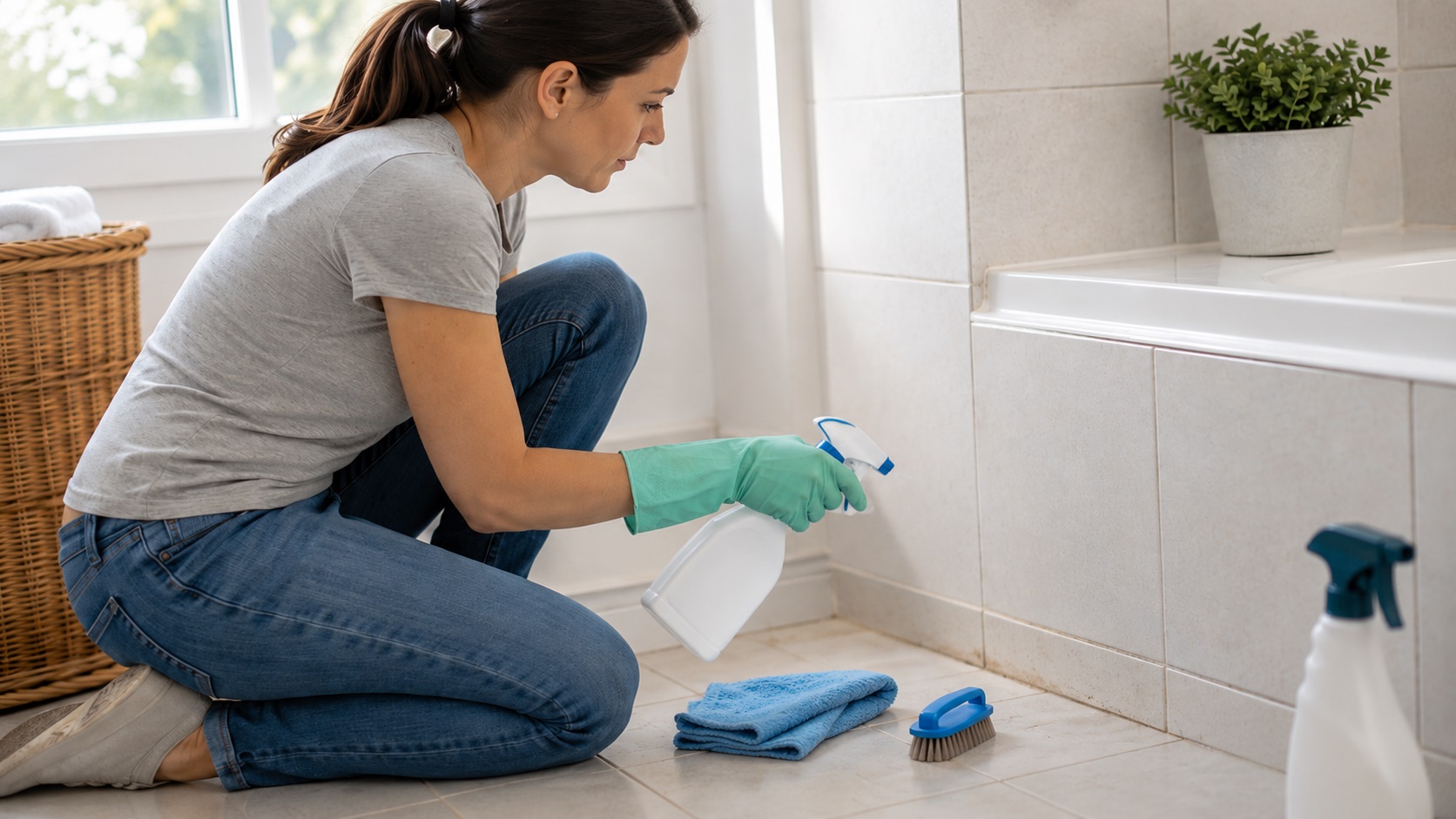
Ventilation matters. Open a window, run an exhaust fan, and keep people and pets away from the treated area while the product is being used. Gloves and eye protection are a good idea for any strong mold cleaner. A respirator may be appropriate for dusty cleanup, strong fumes, or sensitive users, but this article is focused on sprays rather than personal protective equipment.
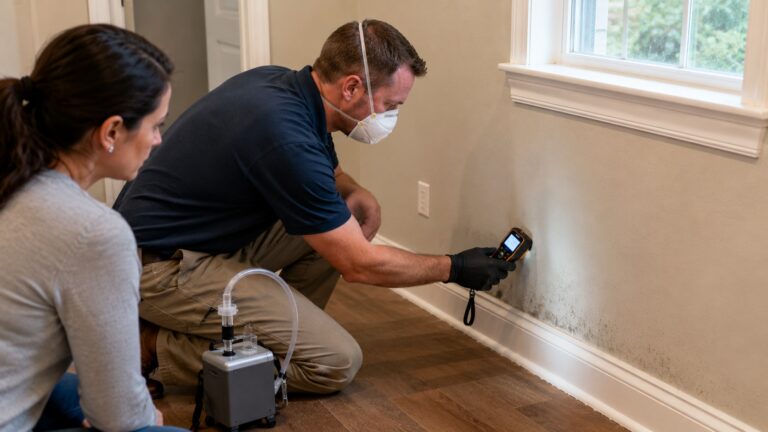
If the mold covers a large area, keeps returning, or appears on damaged drywall, insulation, subfloors, or HVAC components, read When to Hire a Mold Remediation Professional before trying to handle the entire job with a spray.
Give the cleaner enough contact time. Do not let it sit longer than the label allows. After treatment, rinse or wipe if the label requires it. Dry the surface completely. If the material remains damp, use ventilation, fans, dehumidification, or repair work to solve the moisture issue.
A cleaned surface should not feel cool, damp, or tacky afterward. If it does, keep drying the area before closing doors, replacing stored items, or covering the surface again.
For bathrooms, cleaning should be paired with prevention. Run the exhaust fan during and after showers, wipe standing water from corners, repair failed caulk, and keep grout lines clean. For more detail, see How to Prevent Mold on Bathroom Walls.
If the bathroom stays damp even after cleaning, How to Reduce Bathroom Wall Moisture can help you address the humidity problem behind recurring mildew.
Common Mistakes to Avoid
Using a stain remover and thinking the mold problem is solved
A stain remover can make a surface look clean, but it does not fix condensation, leaks, or hidden dampness. If mold returns in the same place, the issue is usually moisture. That is why cleaning should always point back to moisture control, not just stronger chemicals.
If the same black line comes back along the tub edge every month, the spray is probably not failing. The area is likely staying wet too long.
Using bleach-based cleaners on the wrong surfaces
Bleach-based sprays can damage certain materials, discolor fabrics, affect metal finishes, and harm natural stone. Zep, RMR-86, and OxiClean foam should be used only on compatible surfaces. If the surface is marble, natural stone, finished wood, painted trim, fabric, or metal, slow down and read the product label carefully.
Mixing cleaners
Never mix mold sprays with vinegar, ammonia, toilet bowl cleaner, drain cleaner, or another household cleaner. Mixing products can create dangerous fumes. Use one product at a time, rinse if required, and allow the area to ventilate before using anything else.
Ignoring hidden moisture
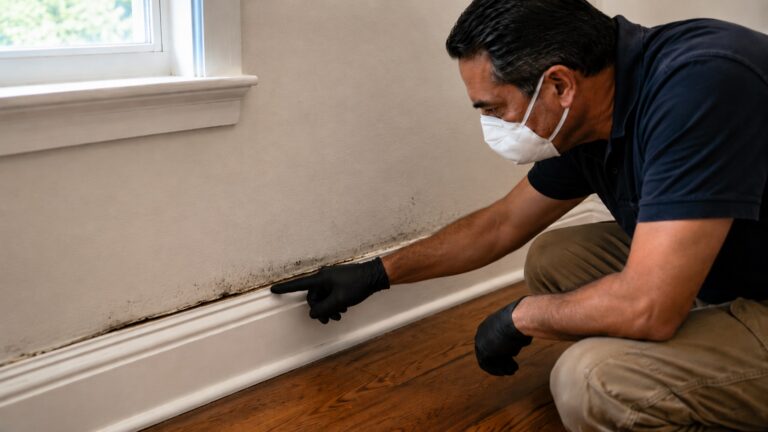
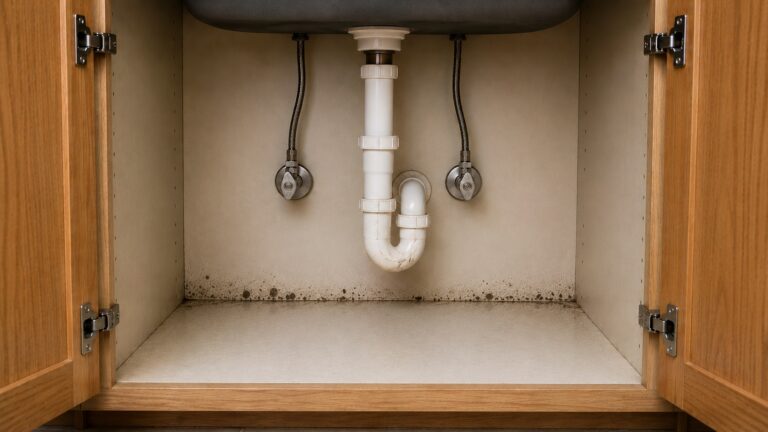
If mold appears near baseboards, behind toilets, under sinks, around windows, or near appliances, the visible stain may only be the symptom. Before repeatedly spraying the same area, inspect for leaks or damp materials. For recurring problems, see Why Moisture Problems Keep Returning.
If you smell mold but cannot see where it is coming from, start with Mold Smell but No Visible Mold before repeatedly spraying visible surfaces.
Scrubbing mold without controlling dust or debris
Heavy scrubbing can spread particles, especially on porous or damaged materials. For small hard-surface stains, a spray may reduce scrubbing. For bigger jobs, damaged drywall, wood, insulation, or visible mold over a larger area, consider professional help instead of trying to solve everything with a stronger cleaner.
Buying the strongest spray for every job
Stronger is not always better. A bathroom bleach spray may be ideal for shower grout but a poor choice for a closet wall, painted surface, or wood trim. Use RMR-86 or Zep for compatible stains, Concrobium for bleach-free control, RMR-141 for disinfectant-style cleanup, and CLR when a bleach-free stain remover makes more sense.
A household mold cleaner that works well on shower tile may be too harsh for painted trim, natural stone, unfinished wood, or older caulk.
Many homeowners keep upgrading to stronger cleaners when the real fix is better drying time, a working exhaust fan, or repairing a small leak.
FAQ About the Best Indoor Mold Removal Sprays
What is the best mold removal spray for indoor use?
For visible mold and mildew stains on compatible hard surfaces, RMR-86 is the best overall stain-removal pick. For bleach-free indoor mold control, Concrobium is the better choice. The best option depends on whether you need stain removal, mold control, disinfectant-style cleanup, or bathroom foam.
What is the difference between a mold stain remover and a mold killer?
A mold stain remover is mainly designed to improve the visible appearance of stained surfaces. A mold killer or disinfectant-style cleaner is intended for treating mold or mildew on compatible surfaces. Some products do both to some degree, but the article should not treat every spray as the same kind of product.
Are bleach-free mold sprays worth using?
Yes, bleach-free sprays can be worth using when fumes, surface compatibility, or general indoor mold control are important. Concrobium is the best bleach-free mold control pick in this lineup, while CLR is the better bleach-free stain remover option. Bleach-free products may not whiten old black stains as quickly as bleach-based sprays.
Can mold removal sprays be used on drywall?
Only if the product label allows it and the drywall is not damaged, soft, crumbling, or deeply contaminated. Surface mildew on painted drywall is different from mold growing into wet drywall. For drywall-specific cleanup, see How to Remove Mold From Painted Walls.
What should I use for mold in shower grout?
For shower grout stains, RMR-86, OxiClean foam, or Zep are the strongest fits from this list. RMR-86 is the best overall stain remover. OxiClean foam is useful on vertical shower surfaces because it clings better. Zep is a practical budget bathroom option for compatible surfaces.
Will mold removal sprays stop mold from coming back?
No spray can guarantee mold will not return. Mold usually comes back when the surface stays damp, humidity remains high, airflow is poor, or a hidden leak continues. A good cleaner can help with the surface, but long-term prevention requires moisture control.
When should I avoid DIY mold sprays?
Avoid relying on DIY sprays when the mold covers a large area, keeps returning, is inside walls or ceilings, affects HVAC systems, involves sewage or floodwater, or appears on soft, damaged, or porous materials. In those cases, the safer path may be inspection or professional remediation.
What is the best mold spray for bathroom walls?
For bathroom walls, choose based on the surface. OxiClean foam is useful for vertical tile and shower surrounds, while Concrobium or CLR may be better choices when you want a bleach-free option for compatible surfaces. If the wall is painted drywall, check the label carefully and avoid soaking the material.
Can I use these products with mold removal brushes?
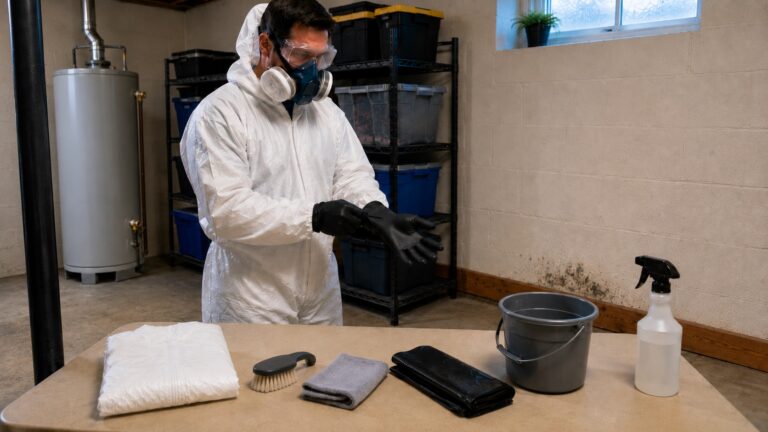
Some surfaces may need light brushing after treatment, but aggressive scrubbing can damage materials or spread debris. If you need tools, use them carefully and only after checking the product label. For tool comparisons, see Best Mold Removal Brushes and Tools.
Conclusion
The best mold removal spray depends on the type of mold problem you are dealing with. If you want the strongest overall visible stain remover, choose RMR-86 Instant Mold and Mildew Stain Remover Spray. If you want bleach-free mold control, choose Concrobium Mold Control Spray.
If you need a mold-killer and disinfectant-style cleaner, RMR-141 is the better fit.
For larger compatible hard-surface areas, MOLD ARMOR Rapid Clean Remediation makes more sense than a small bathroom bottle. For shower walls and vertical bathroom surfaces, OxiClean plus Bleach No Drip Foam is the most practical foam option. For a budget bathroom stain remover, Zep Mold Stain and Mildew Stain Remover is a solid pick. For bleach-free stain cleanup, CLR Mold and Mildew Stain Remover is the best alternative.
Whichever product you choose, remember that cleaning is only one part of mold control. Dry the surface, fix leaks, reduce humidity, and improve ventilation. That is what keeps a mold cleanup from becoming a repeated monthly chore.