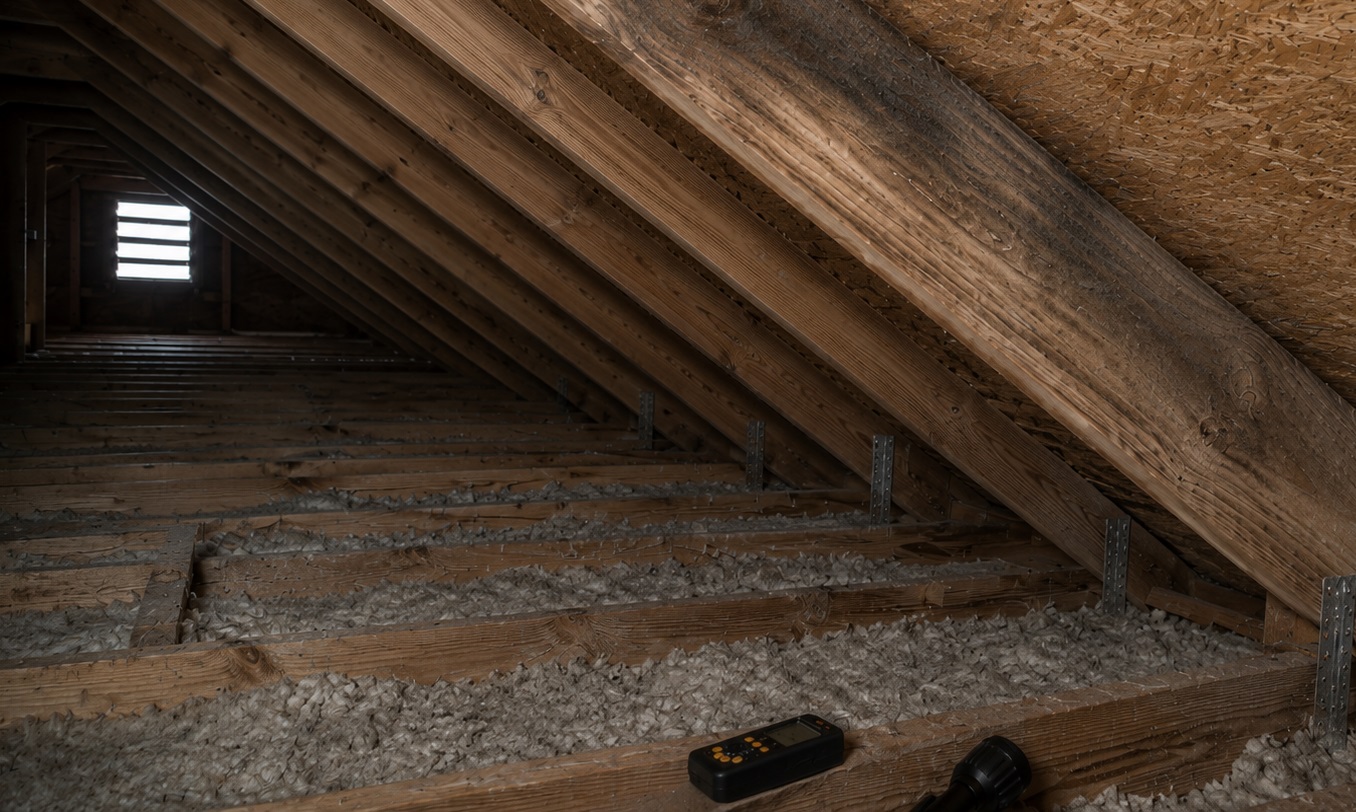
Signs of Moisture Damage in Roof Rafters
Moisture damage in roof rafters often shows up as dark staining, raised wood grain, rusted fasteners, musty attic odors, soft wood, or rafters that look warped, cracked, or out of alignment. Light staining may only show past moisture exposure, but soft, crumbling, sagging, or spreading damage can point to a more serious structural problem.
Because rafters help support the roof deck and transfer roof loads to the walls, moisture signs on rafter wood should not be treated as cosmetic until the source and severity are understood. The goal is to separate old staining from active moisture, and minor surface symptoms from damage that needs professional inspection.
This guide explains the most common visible and physical signs of moisture damage in roof rafters, where those signs usually appear, and when the condition should be escalated beyond homeowner observation. For broader roof-system failure patterns, see Most Common Roofing Material Failures.
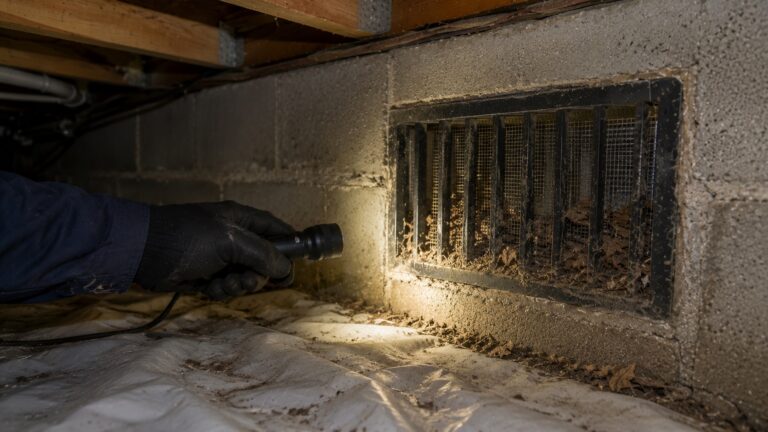
Only inspect attic areas that can be accessed safely, and avoid stepping on insulation, ceiling drywall, or unstable framing while looking for moisture signs.
Key Takeaways
- Dark stains, rough wood, and rusted fasteners are early signs of moisture exposure in roof rafters.
- Soft wood, sagging rafters, and new cracks appearing with stains or decay indicate more advanced deterioration.
- Localized staining after rain usually points toward a roof leak, while widespread staining or rust often suggests condensation or chronic attic humidity.
- Mold, musty odor, wet insulation, and spreading stains indicate that moisture may be ongoing rather than old damage.
- Professional inspection is needed when rafters feel soft, show movement, sag, separate, or remain damp after repeated weather changes.
What Moisture Damage in Roof Rafters Usually Looks Like
Moisture damage in roof rafters usually begins with small visual changes before it becomes a structural concern. Occasional humidity exposure may not harm dimensional lumber, but repeated dampness can leave stains, raise the wood grain, corrode fasteners, support mold growth, and eventually weaken the rafter.
Common Visual Characteristics of Moisture-Damaged Rafters
Homeowners inspecting attic spaces often notice these early visual changes:
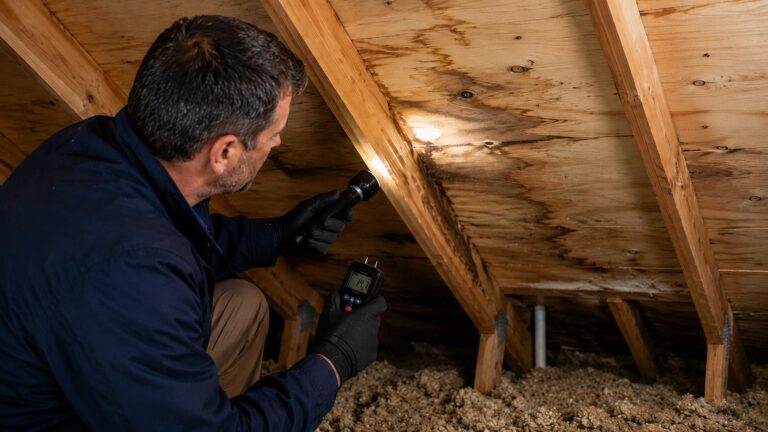
- Dark streaks running with the grain or down the side of a rafter
- Brown, gray, or black staining that is darker than nearby framing
- Discoloration around nail tips, fasteners, or metal connectors
- Water trails below roof penetrations, valleys, chimneys, or skylights
- Stains that become darker, larger, or more defined after rain or cold weather
These signs are often most visible near roof penetrations such as vents, chimneys, or skylights. They may also appear below roof valleys where water runoff is concentrated.
In some cases, these visible patterns overlap with symptoms described in How to Detect Hidden Roof Leaks, particularly when moisture is entering through damaged roofing components.
How Moisture Moves Through Roof Framing
Understanding how moisture travels through attic structures helps explain why certain areas show damage first. Water entering from above usually follows gravity, moving downward along roof sheathing before reaching rafters.
This movement creates distinctive patterns such as:
- Vertical streaking along individual rafters
- Localized wet spots beneath roof openings
- Clusters of staining around flashing areas
- Moisture accumulation at low points along rafters
When condensation is the source rather than leaks, moisture distribution may appear more widespread. This type of moisture pattern is commonly associated with attic ventilation problems, which are explored in Signs of Roof Condensation in Attics.
Early Visual Signs on Rafter Wood
Identifying these early-stage symptoms allows homeowners to investigate moisture sources before damage spreads deeper into the framing system.
Light Discoloration or Surface Staining
One of the earliest signs of moisture exposure is light discoloration on the surface of rafter wood. This discoloration may appear as:
- Light brown or gray patches
- Subtle dark streaks along the wood grain
- Water marks that fade toward the edges
- Slight color variation compared to surrounding rafters
These stains may dry and remain visible long after moisture has evaporated. That means the presence of staining does not always indicate an active leak—but it does confirm that moisture exposure occurred at some point.
If staining appears repeatedly in the same location after rainfall or seasonal weather changes, further investigation is recommended to determine whether structural moisture conditions are continuing.
Old attic wood can also darken from age, dust, smoke residue, or previous leaks that are no longer active. Fresh moisture is more likely when the stain has a sharp edge, feels cool or damp, darkens after weather changes, or appears with rust, odor, wet insulation, or soft wood.
Raised Grain or Rough Wood Texture
Moisture exposure causes wood fibers to swell. When wood dries again, the surface may remain rough or uneven. This effect is known as raised grain and is often noticeable when touching the wood surface.
Common indicators include:
- Wood that feels rougher than surrounding rafters
- Slight splintering along the grain
- Uneven surfaces where moisture has repeatedly contacted the wood
- Texture differences between dry and previously wet areas
Although raised grain does not necessarily mean structural damage has occurred, it indicates repeated moisture exposure that should not be ignored.
Rust Around Nails or Fasteners
Rust on nail tips, hurricane ties, brackets, or other connectors is a strong clue that moisture has been present in the attic. Widespread rust often points more toward condensation or chronic humidity than a single isolated drip.
Look for:
- Rust stains around nail heads
- Dark rings surrounding fasteners
- Corrosion on brackets or metal connectors
- Dripping rust marks on nearby surfaces
Rust patterns often provide early clues about moisture sources. In colder climates, nail rust may indicate condensation forming on cold surfaces. This pattern is sometimes linked to ventilation problems described in Why Roof Framing Develops Mold Problems.
Physical Signs That Roof Rafters May Be Deteriorating
As moisture exposure continues, roof rafters can begin to show physical changes that go beyond surface staining. These signs suggest that the wood has absorbed enough moisture to affect its structure, strength, or durability. Unlike early visual symptoms, physical deterioration usually indicates a longer-term problem that requires closer inspection.
Recognizing these changes early can help limit the spread of moisture damage before it affects a larger section of the roof framing.
Soft or Spongy Wood Surfaces
One of the most concerning physical signs of moisture damage is soft or spongy wood. Wood loses strength when it remains wet for extended periods, allowing decay organisms to weaken its internal fibers.
You may notice this condition when:
- The surface of the rafter feels softer than nearby wood
- A screwdriver pressed lightly into the surface leaves a mark
- The wood feels crumbly or weak when touched
- The rafter dents easily compared to dry framing
Do not dig deeply into a rafter or remove wood to test it. A light surface probe may reveal softness, but any rafter that dents easily, crumbles, or feels weak should be evaluated without further damaging the framing.
Soft wood is often associated with chronic moisture exposure rather than short-term wetting. If multiple rafters feel soft or deteriorated, the problem may extend beyond a single leak and involve long-term moisture conditions.
When structural softness is suspected, a full evaluation like the methods described in How to Inspect Roof Framing for Moisture Damage becomes necessary to determine the extent of damage.
Cracking, Splitting, or Warping
Repeated wetting and drying cycles can place stress on wood fibers. Over time, this may contribute to cracks, splits, or visible deformation, especially when the wood also shows staining, softness, or decay.
Watch for these indicators:
- Long cracks running parallel to the grain
- Splitting at the ends of rafters
- Wood that appears bowed or twisted
- Uneven alignment compared to neighboring rafters
- Rafters that no longer appear straight
While minor cracking may occur naturally as lumber ages, new cracks appearing alongside moisture stains are more likely to be associated with water damage.
Sagging or Drooping Sections of Roof Framing
Structural sagging is one of the most serious signs of rafter deterioration. When moisture weakens the internal strength of wood, the rafter may begin to lose its ability to support roof loads.
This condition may appear as:
- Noticeable drooping along sections of rafters
- Uneven roof lines visible from inside the attic
- Roof decking that appears to sag between rafters
- Misalignment of rafters across a span
Structural sagging should always be treated as a high-priority condition. In advanced cases, this problem may lead to roof deformation or partial collapse if not corrected.
Long-term sagging patterns are often discussed alongside severe deterioration indicators covered in Signs of Long-Term Roof Moisture Damage, which helps homeowners understand when moisture damage has progressed beyond early stages.
Persistent Dampness Around Rafter Ends
Rafter ends near eaves can show moisture symptoms when intake ventilation is blocked, insulation is packed too tightly at the soffit, roof-edge flashing fails, or wind-driven rain reaches the edge of the roof assembly.
Typical symptoms include:
- Damp wood near roof edges
- Localized moisture at rafter ends
- Darkened wood near soffit areas
- Water staining near ventilation openings
Persistent dampness in these areas may indicate blocked airflow, poor ventilation, roof-edge leakage, or insulation contact at the soffit. Prevention strategies like those described in How to Prevent Structural Moisture in Roof Systems can reduce long-term exposure risks once the source is confirmed.
Moisture Patterns That Point to Roof Leaks vs Condensation
Rafter moisture usually points to either a roof leak or attic condensation. The pattern matters: leaks are usually localized, while condensation is often more widespread.
Signs That Suggest a Roof Leak
Roof leaks typically create localized moisture patterns because water enters at a specific point and travels downward along framing members.
Common leak-related indicators include:
- Water stains concentrated below roof penetrations
- Localized wet spots following heavy rain
- Moisture trails running vertically along a rafter
- Damp insulation directly below roof openings
- Damage limited to a small number of rafters
If staining becomes worse after storms or appears in the same location repeatedly, the likelihood of a roof leak increases significantly.
In these situations, following diagnostic steps described in How to Detect Moisture in Roof Framing can help confirm whether active moisture remains present.
Signs That Suggest Condensation Problems
Condensation problems usually create more widespread moisture patterns because humid air affects large surfaces rather than a single entry point.
Indicators of condensation-related moisture include:
- Moisture across multiple rafters
- Rust on nail tips throughout the attic
- Uniform staining across roof framing
- Frost or water droplets on cold surfaces during winter
- Musty odors without visible roof damage
These patterns often occur when warm indoor air escapes into the attic and condenses on cooler roof surfaces. Poor ventilation can worsen this condition by limiting the removal of humid air.
Additional symptoms related to condensation behavior are discussed in Signs of Roof Condensation in Attics, which explains how moisture accumulates even without roof leaks.
Mold, Odor, and Repeated Staining Around Roof Rafters
Mold, musty odor, and repeated staining can mean rafter moisture is more than a one-time event. Mold is treated here as a warning sign of prolonged dampness; for detailed mold identification, see Signs of Mold Growth in Roof Framing.
Surface Mold Growth on Rafter Wood
Surface mold may appear as black, gray, green, or white spotting, powdery patches, fuzzy growth, or irregular discoloration near damp areas. Mold on rafters usually means moisture has remained long enough to support biological growth, especially near insulation contact points, roof leaks, or poorly ventilated roof sections.
For a fuller mold-specific symptom review, see Signs of Mold Growth in Roof Framing.
Musty Odors in the Attic Space
A persistent musty smell in the attic is often one of the earliest sensory warnings of moisture damage. Even when visible mold is minimal, odor can indicate microbial growth or trapped moisture within insulation and wood framing.
Odor-related warning signs include:
- Persistent musty smell when entering the attic
- Strong odors near specific rafter sections
- Smells that worsen during humid weather
- Odors that return after ventilation attempts
Musty odors often accompany moisture buildup inside insulation or enclosed framing cavities. When odors persist without obvious staining, hidden moisture conditions may exist inside roof structures.
In these cases, it may be helpful to evaluate nearby structural components for hidden moisture sources as described in How to Detect Hidden Roof Leaks.
Dark or Spreading Stain Patterns
Stain patterns provide valuable clues about moisture history. Over time, repeated moisture exposure creates layered staining that spreads outward from the original wet area.
Watch for stain patterns that show:
- Multiple layers of discoloration
- Expanding dark zones around existing stains
- Water trails extending downward along rafters
- Stains appearing along multiple adjacent rafters
- Discoloration that continues to grow over time
Stains that grow larger or reappear after rainfall often indicate active moisture intrusion rather than past damage. These patterns are especially concerning when they appear near roof penetrations or structural joints.
Insulation Changes Around Rafters
Insulation located between rafters often reveals hidden moisture problems before visible wood damage occurs. Because insulation absorbs moisture easily, it can hold water against wood surfaces and accelerate deterioration.
Signs of moisture-related insulation problems include:
- Compressed or flattened insulation
- Damp or heavy insulation materials
- Discoloration on insulation surfaces
- Insulation pulling away from rafters
- Cold or wet spots near roof surfaces
Wet insulation dramatically increases the risk of mold growth and structural deterioration. If insulation remains damp for extended periods, it can trap moisture against rafters and accelerate decay.
Moisture conditions affecting insulation often relate to airflow and humidity problems similar to those discussed in Signs of Poor Attic Ventilation.
When Rafter Moisture Damage Becomes a Structural Concern
Not all moisture damage leads to immediate structural risk. However, certain warning signs indicate that rafter deterioration has progressed beyond cosmetic or surface-level changes.
Structural concerns arise when moisture weakens the internal wood fibers or allows decay to develop. At that stage, rafters may no longer perform their intended function safely.
Multiple Rafters Showing Severe Damage
Damage affecting more than one rafter often signals widespread moisture conditions rather than isolated leaks. This situation increases the likelihood of structural instability.
Signs of multi-rafter involvement include:
- Several rafters displaying staining or mold
- Repeated moisture patterns across multiple roof sections
- Uniform discoloration spanning large attic areas
- Damage extending along continuous framing runs
Widespread damage often indicates ventilation problems, persistent leaks, or chronic humidity buildup. These situations require careful evaluation to prevent long-term structural decline.
Visible Structural Movement or Roof Deformation
Structural movement is one of the most serious indicators of rafter failure. When moisture weakens the wood enough to reduce load capacity, the roof system may begin to shift or deform.
Warning signs include:
- Roof lines appearing uneven from inside the attic
- Noticeable sagging between rafters
- Misalignment of roof components
- Gaps forming between structural members
- Movement or shifting noises during weather changes
These symptoms often indicate advanced structural deterioration that requires immediate professional attention.
Homeowners noticing these conditions should treat them as escalation triggers similar to those outlined in Signs of Long-Term Roof Moisture Damage.
What Homeowners Should Check Next After Finding Rafter Moisture Signs
If you notice possible moisture damage in roof rafters, document the location first before assuming the repair. Take photos, note whether the damage is near a roof penetration, valley, eave, or vented area, and check whether the same spot changes after rain, cold weather, or humid conditions.
Do not cover, seal, paint, or reinforce the area until the moisture source is understood. Surface repairs can hide a continuing leak or condensation problem while the wood keeps deteriorating.
Check Areas Directly Above the Damaged Rafters
Because water typically travels downward, moisture damage seen on rafters often originates somewhere above them. This includes roof surfaces, flashing, or penetrations that allow water entry.
Pay attention to:
- Roof penetrations such as vents or chimneys
- Roof valleys where water runoff collects
- Areas beneath skylights
- Sections where shingles appear aged or damaged
- Locations previously repaired after leaks
Many roof-entry failures develop gradually over time. Reviewing common failure points in Most Common Roofing Material Failures helps identify likely sources without requiring invasive inspection.
Inspect Nearby Insulation and Roof Decking
Insulation and roof sheathing often reveal moisture conditions before rafters show severe deterioration. These materials absorb water quickly and may remain wet long after a leak stops.
Look for:
- Damp or compressed insulation
- Water-stained roof sheathing
- Dark spots or soft areas on decking
- Frost buildup during cold weather
- Persistent dampness after rainfall
If multiple materials show moisture symptoms, the problem likely extends beyond a single rafter and may involve larger attic moisture conditions.
Observe Changes Over Time
Tracking how moisture patterns change over time helps distinguish between past damage and ongoing problems.
Important signs to monitor include:
- New stains appearing after rain
- Existing stains becoming darker
- Musty odors growing stronger
- Moisture spreading to nearby rafters
- Insulation remaining wet for long periods
Repeated moisture patterns often indicate unresolved leaks or humidity problems. When recurring symptoms appear, ongoing structural moisture conditions may exist similar to those described in Why Moisture Problems Keep Returning.
When to Call a Roofing or Structural Professional
Professional evaluation is needed when rafter moisture signs move beyond surface staining and suggest decay, movement, active leaks, or loss of structural strength.
Call a Professional Immediately If You Notice:
- Soft or crumbling wood fibers
- Multiple rafters showing severe staining
- Sagging roof lines or uneven framing
- Large areas of visible mold growth
- Water damage appearing after every rainfall
- Rusting fasteners throughout the attic
- Wood splitting or separating at joints
- Any rafter that appears cut, separated, displaced, or no longer bearing properly
These symptoms indicate advanced moisture damage that may already be affecting structural strength.
When severe deterioration is suspected, escalation guidance outlined in How to Fix Persistent Structural Roof Moisture Problems helps determine when professional repair becomes necessary.
Frequently Asked Questions About Signs of Moisture Damage in Roof Rafters
Are dark roof rafters always caused by water damage?
No. Some dark coloration may be caused by natural aging, dust accumulation, or past moisture exposure that has already dried. However, new stains or expanding discoloration often indicate recent moisture activity and should be investigated.
Can wet roof rafters dry out on their own?
Wet rafters may dry if the moisture source stops and attic airflow is adequate. They should not be assumed dry just because the surface looks lighter; repeated dampness, wet insulation, rusted fasteners, or stains that return after weather changes suggest the problem is still active.
Is mold on roof rafters dangerous?
Mold on roof rafters is a warning sign that moisture has been present long enough to support growth. A small isolated patch may stay local, but widespread mold, recurring odor, or mold returning after cleaning should be treated as a moisture-source problem, not just a surface-cleaning issue.
How do I know if moisture is from condensation or a roof leak?
Leak-related moisture usually appears in localized areas and worsens after rainfall. Condensation-related moisture tends to affect larger areas and may appear during cold weather or high humidity conditions.
Understanding these patterns can help identify the source before taking corrective action.
When should damaged roof rafters be replaced?
Replacement may be necessary when rafters lose structural strength, develop severe decay, or show visible deformation. Professional inspection is recommended whenever wood becomes soft, separates at joints, sags, or appears structurally unstable.
Conclusion
Moisture damage in roof rafters usually begins with visible clues: dark staining, raised grain, rusted fasteners, musty odor, wet insulation, or discoloration that returns after weather changes. More serious signs include soft wood, crumbling fibers, spreading damage across multiple rafters, sagging, warping, or roof framing that no longer appears aligned.
Old staining may only show past moisture exposure, but active or worsening symptoms should be traced before repairs are made. If the rafters feel soft, show structural movement, or stay damp after rain or cold-weather condensation, professional inspection is the safest next step.