

How to Find Hidden Moisture in Different Areas of Your Home
Hidden moisture is often difficult to diagnose because it does not always appear where the problem started. A damp baseboard may come from a wall leak, a wet kitchen floor may come from an appliance line, and a musty bathroom wall may be caused by poor ventilation instead of a plumbing failure. The first step is not guessing the repair. The first step is knowing where to look.
This guide explains how to find hidden moisture in different areas of your home by location. Instead of treating every moisture problem the same way, it shows how moisture behaves in walls, floors, ceilings, cabinets, bathrooms, kitchens, attics, crawl spaces, basements, HVAC systems, exterior walls, windows, doors, laundry rooms, and garages.
If moisture keeps showing up after cleanup or repairs, this guide also connects to the broader process of how to detect repeated moisture problems. For a broader overview of moisture causes, repair paths, prevention, and long-term control, see the main guide on how to find, fix, and prevent moisture problems in homes.
Hidden Moisture Usually Shows Up by Location First
Most homeowners do not begin with a clear diagnosis. They begin with a clue. They see a stain on a ceiling, a swollen baseboard, a soft area of drywall, a musty smell near a cabinet, or a damp floor that never seems to dry completely.
That clue matters because hidden moisture is often discovered by location before it is understood by cause. A wall stain tells you where moisture is showing up. It does not automatically tell you whether the source is plumbing, condensation, roof leakage, exterior water entry, or moisture trapped inside the wall cavity.
The same is true in other parts of the home. A damp bathroom wall may be caused by shower vapor, poor ventilation, failed caulk, hidden plumbing, or condensation inside the wall. Moisture under kitchen flooring may come from a dishwasher, refrigerator line, sink drain, supply line, or water trapped beneath flooring after an old leak. Attic moisture may come from roof leaks, indoor air leakage, blocked ventilation, or wet insulation.
That is why a location-based inspection is so useful. It helps you organize the home into moisture zones instead of assuming every damp area has the same cause.
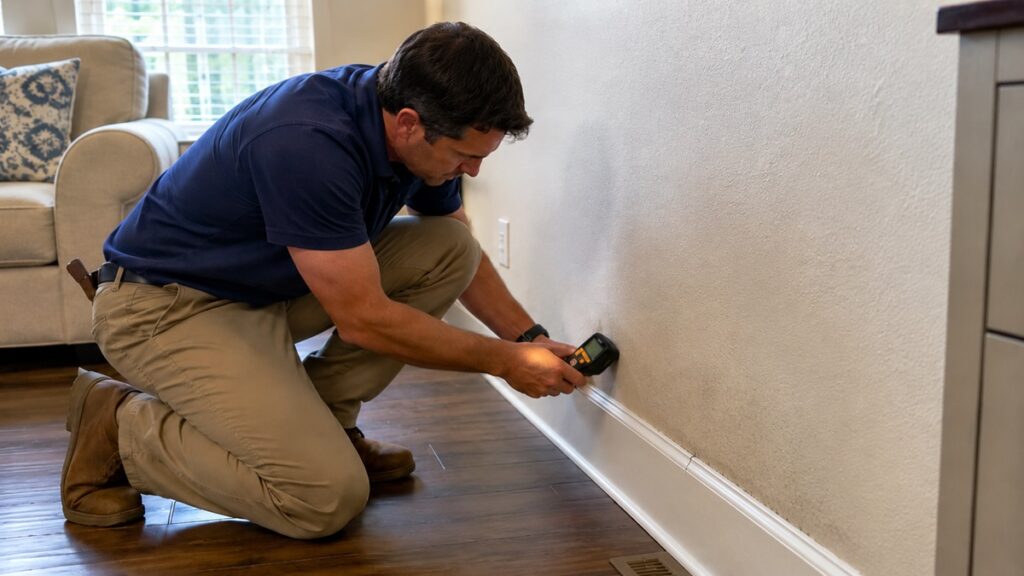
How Hidden Moisture Behaves Differently in Different Parts of a Home
Moisture behaves differently depending on the material, air movement, temperature, and construction assembly around it. Water that reaches drywall may leave a stain or soft surface. Water under flooring may stay hidden until the floor cups, lifts, smells musty, or feels uneven. Moisture in insulation may not show up on the finished ceiling until the insulation has held water long enough to stain nearby materials.
Because of this, hidden moisture should be evaluated by both symptom and location. The same visible clue can mean different things in different parts of the house.
Moisture Can Come From Above, Below, Inside, or Outside
One of the biggest mistakes homeowners make is assuming that moisture starts exactly where it appears. In reality, moisture can travel through building materials, along framing, behind trim, under flooring, or through cavities before becoming visible.
For example, moisture on a lower wall could come from a plumbing leak inside the wall, water wicking up from a wet floor, exterior water entering near siding, or condensation forming on a cold surface. A ceiling stain could come from a roof leak, an upstairs bathroom, attic condensation, HVAC condensation, or a pipe above the ceiling.
When inspecting a moisture problem, think in four directions:
- Above the symptom: roof, attic, upstairs bathroom, plumbing, HVAC, or ceiling cavity.
- Below the symptom: crawl space, basement, slab, subfloor, or damp lower framing.
- Behind the symptom: wall cavity, insulation, hidden pipe, exterior sheathing, or trapped air space.
- Adjacent to the symptom: nearby window, door, cabinet, appliance, plumbing fixture, or exterior wall.
Why the Visible Spot Is Not Always the Source
Water often follows the easiest path, not the most obvious path. It can move along framing, drip from a pipe onto the back of drywall, spread below flooring, or collect behind baseboards before showing up in the room. That means the first visible sign may only be the lowest, weakest, or most absorbent point near the problem.
A stain under a window may come from the window frame, the wall above the window, the exterior siding, or flashing above the opening. A musty smell under a sink cabinet may come from an active drip, old moisture trapped in the cabinet base, a damp wall behind the cabinet, or flooring that absorbed water from a previous leak.
Location helps narrow the search, but it should not create tunnel vision. Always check the surrounding area before deciding the source.
Why Materials Matter
Different materials show moisture differently. Drywall may stain, soften, bubble, or crumble. Wood may swell, darken, cup, rot, or feel soft. Flooring may lift, buckle, separate, or trap odor. Insulation may hold moisture without showing an obvious surface stain at first. Cabinets may swell at the base or delaminate before water is visible.
This is why a hidden moisture inspection should look at the material involved, not just the room. Moisture behind drywall behaves differently than moisture under vinyl flooring. Moisture inside attic insulation behaves differently than moisture behind a kitchen cabinet. Moisture around HVAC ducts behaves differently than moisture behind baseboards.
When you inspect a problem area, ask three questions:
- What material is showing the first clue?
- What moisture source is closest to that material?
- Could the moisture be coming from another direction?
Start With the Area Where You See the First Clue
The best place to begin is the area where the first clue appears. Do not start by tearing open walls or assuming the worst. Start with what you can see, smell, touch safely, and compare.
Common first clues include stains, swelling, softness, bubbling paint, peeling finishes, musty odor, warped flooring, damp trim, recurring condensation, darkened materials, or moisture that returns after cleaning.
Look for Pattern, Not Just One Sign
One stain or odor does not automatically prove hidden damage. The goal is to identify a pattern. A single mark on a wall may be old damage. But a stain combined with softness, odor, peeling paint, and a nearby plumbing line is more concerning. A musty smell near a cabinet may be minor if the area is dry and clean, but more concerning if the cabinet base is swollen or the floor nearby feels soft.
When looking for hidden moisture, compare the suspicious area with a similar dry area. Compare one baseboard to another, one section of flooring to another, one cabinet base to another, or one wall surface to the opposite wall. Differences in texture, odor, shape, color, or firmness often reveal where moisture has affected the material.
Check the Timing of the Moisture
Timing can help identify the source. Moisture that appears after rain may point toward exterior water entry, roof leakage, window leaks, siding issues, flashing problems, basement seepage, or drainage failures. Moisture that appears after showers may point toward bathroom ventilation, failed caulk, shower wall leakage, or condensation. Moisture that appears when the air conditioner runs may point toward HVAC condensation or drainage problems.
If the main clue is a slow pattern, compare it with signs of slow hidden water leaks.
Use timing clues like these:
- After rain: check roof, attic, exterior walls, windows, doors, siding, flashing, basement walls, and crawl spaces.
- After showers: check bathroom walls, shower surrounds, ventilation, ceilings below bathrooms, and adjacent walls.
- After appliance use: check dishwashers, washing machines, refrigerator water lines, water heaters, and sink cabinets.
- During humid weather: check walls, closets, windows, HVAC ducts, basements, crawl spaces, and poorly ventilated rooms.
- During HVAC operation: check condensate lines, drain pans, ducts, vents, and nearby ceilings or walls.
Use Tools Carefully
Visual inspection is useful, but it has limits. Moisture can exist behind surfaces before it becomes obvious. Tools can help, but they should be used correctly.
When the concern is inside a wall but you are not ready to open the cavity, start with how to detect moisture without opening walls before moving to invasive inspection.
A moisture meter can help compare suspicious materials with dry areas, but readings depend on the material and meter type. For more detail on reading interpretation, see moisture levels that indicate water damage.
A thermal camera may help locate temperature differences that suggest possible moisture, missing insulation, air leakage, or evaporation. However, thermal imaging does not prove moisture by itself. Suspicious areas usually need confirmation with a moisture meter, closer inspection, or professional evaluation. If you are comparing tools, see the guide to the best thermal imaging cameras for detecting moisture.
If you are comparing phone-based thermal options, the FLIR ONE thermal camera review and Seek Thermal Compact camera review may help you decide whether a compact thermal camera fits this type of inspection.
A borescope can help inspect inside cavities through small openings, but it should not be used blindly near electrical wiring, plumbing, or structural components. For tool selection, see the guide to the best borescopes for inspecting inside walls.
Hidden Moisture in Walls and Drywall
Walls are one of the most common places hidden moisture appears because they contain plumbing lines, insulation, framing, exterior sheathing, electrical penetrations, and enclosed cavities. Moisture inside a wall may not be visible immediately. It may first show up as paint changes, swelling, odor, soft drywall, staining, or recurring dampness.
If the first clue is on a wall, start by asking what is behind, above, below, and outside that section of wall.
Common Signs of Hidden Moisture in Walls
Wall moisture may show up as:
- Peeling or bubbling paint
- Soft drywall
- Brown, yellow, or gray stains
- Musty odor near one wall
- Swollen baseboards or trim
- Cold or damp-feeling wall sections
- Recurring discoloration after cleaning or repainting
- Mold-like spotting near corners or lower wall areas
For a deeper symptom guide, read signs of hidden moisture in walls.
Common Causes Behind Wall Moisture
Moisture inside walls may come from several different sources. Interior plumbing leaks are common behind bathrooms, kitchens, laundry rooms, and utility areas. Condensation can form inside walls when warm humid air reaches cold surfaces. Exterior water can enter through siding gaps, window openings, flashing failures, roof leaks, or wall penetrations.
Wall moisture can also be related to indoor humidity, especially when wall cavities have air leaks, poor insulation, or cold surfaces. For wall-specific condensation prevention, see how to prevent condensation inside walls.
If mold is developing inside wall systems, the moisture source matters more than the visible growth alone. For cause-focused wall mold diagnosis, see what causes mold in walls.
When Wall Moisture Points to a Hidden Leak
A wall leak is more likely when moisture appears near plumbing fixtures, below bathrooms, behind kitchens, beside laundry rooms, or along pipe routes. It is also more likely when the dampness worsens after water use.
If the wall becomes damp after showers, sink use, toilet use, appliance cycles, or water line operation, the next step is source tracing. For that process, use how to find hidden water leaks inside walls.
How to Judge Whether Drywall Has Water Damage
Drywall can look mostly normal while still being compromised. Warning signs include softness, crumbling, bubbling paint, stains, sagging, and a papery surface that separates from the gypsum core. A wall may also feel cooler or softer than surrounding areas.
For a dedicated drywall diagnosis guide, read how to tell if drywall has water damage.
Hidden Moisture in Floors and Subfloors
Flooring can hide moisture for a long time because the visible surface may not be the first material affected. Water can spread below finished flooring, soak into underlayment, collect around subfloor seams, or remain trapped between layers.
Floor moisture is especially important because homeowners often notice it late. By the time the surface warps, cups, lifts, smells musty, or feels soft, moisture may already have affected the material below.

Why Flooring Can Hide Moisture Under the Surface
Many flooring materials slow evaporation. Vinyl, laminate, tile systems, and some floating floors can trap moisture underneath. Hardwood can absorb moisture and change shape. Subfloors can hold moisture even when the finished surface looks dry.
Moisture under flooring may come from:
- Appliance leaks
- Sink or dishwasher leaks
- Bathroom leaks
- Wet crawl spaces
- Basement or slab moisture
- Spills that were not fully dried
- Condensation in poorly ventilated areas
Warning Signs in Flooring
Look for cupping, buckling, lifting edges, soft spots, musty odor, discoloration, loose flooring, dark seams, or floor movement near plumbing fixtures. If the concern is hidden mold below the flooring surface, see signs of mold under flooring.
Hardwood flooring has its own moisture patterns, including cupping, crowning, gaps, darkened boards, and localized softness. For wood-specific inspection, see how to detect moisture under hardwood floors.
Vinyl flooring can hide moisture because the surface may look intact while water remains underneath. For vinyl-specific symptoms, see signs of moisture under vinyl flooring.
When to Inspect Below the Flooring
If flooring symptoms appear near a kitchen, bathroom, laundry room, exterior door, basement, or crawl space, the moisture may not be limited to the surface. The next step is to inspect the floor system more carefully.
For a broader flooring inspection process, see how to inspect flooring for hidden moisture. If the concern is broader water damage below the floor surface, see how to detect water damage under floors.
Hidden Moisture Behind Baseboards, Trim, and Cabinets
Baseboards, trim, and cabinet bases often reveal moisture before the main wall or floor does. These areas sit at junction points where water collects, wicks, or becomes trapped. They are also easy to overlook because homeowners often focus on the center of the wall or floor instead of the edges.
Why Lower-Wall Edges Matter
Moisture often collects at the bottom of walls because gravity pulls water downward and because baseboards can hide the wall-floor joint. A wall may look acceptable above the trim while the lower drywall, baseboard, or flooring edge is damp behind the surface.
Common signs include swollen trim, dark lines along the floor, peeling paint near the baseboard, separation from the wall, soft lower drywall, musty odor, or staining that follows the wall-floor joint. For a dedicated symptom guide, see signs of water damage behind baseboards.
How Baseboards Trap Moisture
Baseboards can trap moisture because they cover the joint between wall and floor. Water from leaks, spills, condensation, or wet flooring can remain hidden behind trim. Paint, caulk, flooring materials, and tight wall-floor gaps can slow drying.
For more detail on this specific mechanism, read why baseboards trap moisture.
When to Inspect Behind Baseboards and Trim
Inspect baseboards when you see swelling, staining, soft drywall near the floor, musty odor at the wall base, or recurring dampness after cleaning. Also inspect them after plumbing leaks, appliance leaks, basement moisture, or flooring water damage.
For a focused inspection process, see how to detect moisture behind baseboards. If the signs are more trim-specific than baseboard-specific, see signs of moisture behind wall trim. If the concern is mold hidden at the baseboard rather than general dampness, use how to inspect baseboards for hidden mold.
Hidden Moisture Under Cabinets
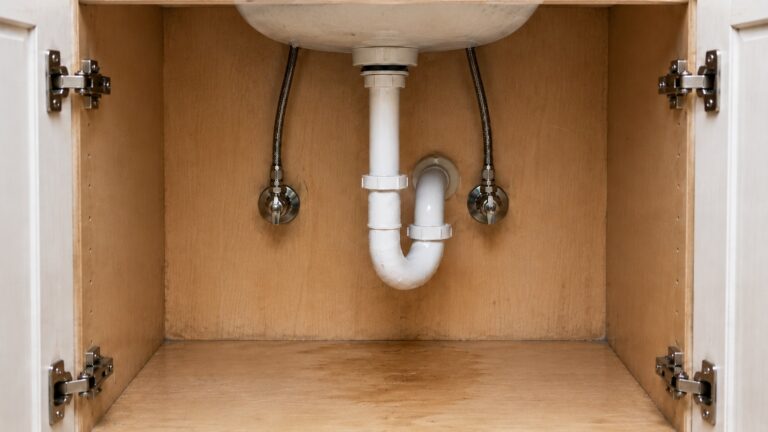
Cabinet bases can hide moisture because they are enclosed, dark, and often close to plumbing fixtures. A slow drip under a sink, dishwasher line, refrigerator water line, or bathroom vanity can damage the cabinet base before water spreads visibly into the room.
Look for swelling, sagging cabinet floors, dark stains, peeling laminate, musty odor, soft toe-kick areas, or damp flooring near the cabinet. For a more specific guide, see how to detect moisture under cabinets.
Hidden Moisture in Kitchens
Kitchens are high-risk moisture areas because they combine plumbing, appliances, cabinets, flooring, wall penetrations, and frequent water use. A kitchen moisture problem may begin under a sink, behind a dishwasher, near a refrigerator line, below flooring, or behind cabinet bases.
The difficulty is that kitchen moisture often spreads into hidden areas before it becomes obvious. Water can run under cabinets, soak into particleboard, enter flooring seams, or spread below finished flooring.
Kitchen Floor Moisture
Kitchen floors often hide moisture because they sit near multiple leak sources. Dishwashers, refrigerators, sinks, ice maker lines, water filters, and supply lines can all leak slowly. The visible floor may stay intact while the underlayment or subfloor absorbs moisture.
Warning signs include lifting flooring, soft spots near appliances, dark seams, musty odor, loose tiles, warped planks, or dampness that appears near the sink or dishwasher. For a location-specific guide, see how to detect moisture under kitchen floors.
If you need a broader inspection process for kitchen flooring, use how to inspect kitchen flooring for hidden moisture. For symptom-only diagnosis, see signs of water damage under kitchen flooring.
Mold Signs Under Kitchen Floors
Moisture under kitchen flooring can eventually create musty odor, discoloration, or mold-like warning signs. The problem is often not visible from above until the flooring has been affected for some time.
If the concern is mold beneath the kitchen floor rather than general moisture, see signs of mold under kitchen floors.
Kitchen Cabinet Moisture
Kitchen cabinets are another common hidden moisture zone. Sink cabinets, dishwasher-adjacent cabinets, and lower cabinets near appliances are especially vulnerable. Water may enter the cabinet base, toe kick, wall behind the cabinet, or flooring underneath.
Look for swelling, staining, sagging shelves, musty odor, peeling cabinet surfaces, or soft material near the floor. For cabinet-specific detection, see how to detect moisture behind kitchen cabinets. If the visible issue is already damage, see signs of water damage behind kitchen cabinets.
If the cabinet area smells musty or has dark spotting rather than only swelling or staining, compare the signs with signs of mold behind kitchen cabinets. For the reason lower cabinets hold dampness so easily, see why kitchen cabinets trap moisture. If you need a closer inspection process, use how to inspect kitchen cabinets for hidden mold.
Hidden Moisture in Bathrooms
Bathrooms are one of the most common places to find hidden moisture because they combine water supply lines, drains, shower walls, vapor, condensation, caulk joints, grout lines, ventilation, and enclosed wall cavities. A bathroom can stay damp even when there is no obvious plumbing leak.
The key is to separate three different possibilities: liquid water leakage, condensation, and trapped humidity. A bathroom wall that stays damp after showers may have a different cause than a wall that becomes wet only after the toilet, sink, or shower valve is used.
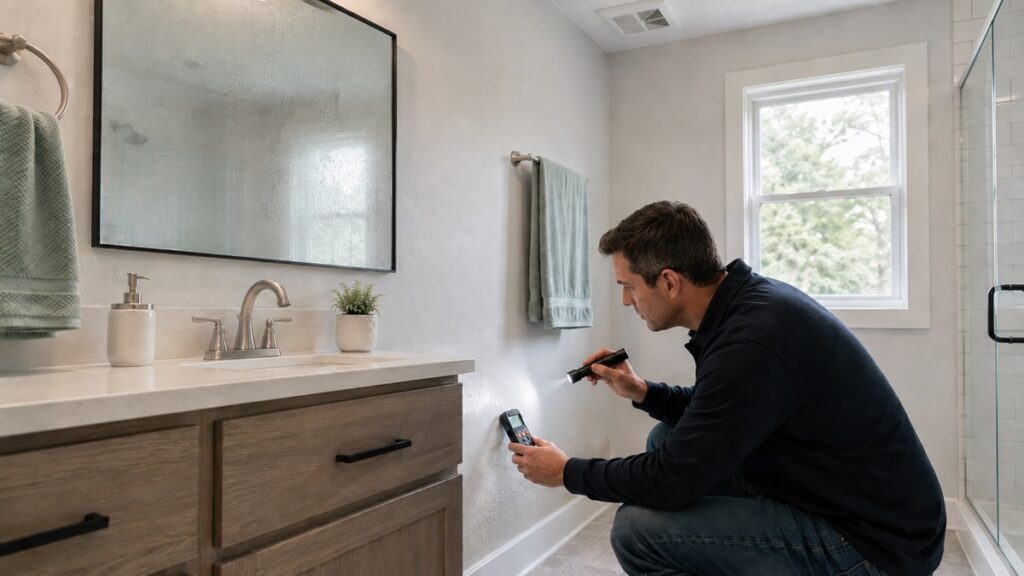
Bathroom Wall Moisture
Bathroom walls often show moisture as peeling paint, bubbling surfaces, soft drywall, discoloration, musty odor, or recurring mildew-like spotting. The moisture may come from shower vapor, poor ventilation, cold wall surfaces, hidden plumbing, or water escaping behind shower surrounds.
If the problem is general bathroom moisture, start with how to detect hidden moisture in bathrooms. If the specific problem is a wall that never seems to dry, see why bathroom walls stay damp.
Shower Wall Moisture
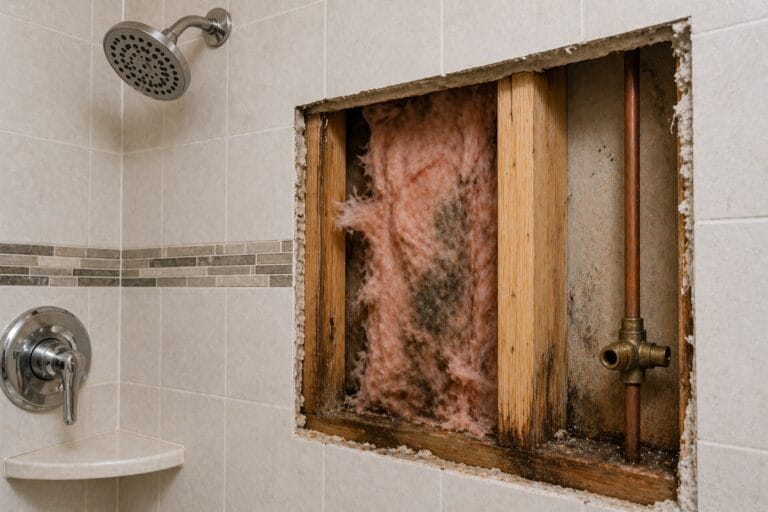
Shower walls deserve special attention because water is repeatedly driven against the same surfaces. Failed caulk, cracked grout, loose tile, damaged backer board, plumbing leaks, and poor sealing around fixtures can allow moisture to move behind the visible shower surface.
Signs may include loose tile, soft wall areas, staining outside the shower, musty odor near the shower wall, or water marks on the wall or ceiling below. For a dedicated shower-wall symptom guide, see signs of water damage behind shower walls.
Condensation Versus Hidden Bathroom Leaks
Bathroom moisture is not always a leak. If dampness appears mostly after hot showers, covers broad wall or ceiling surfaces, and improves with ventilation, condensation may be the main issue. If moisture is localized near a fixture, appears after water use, or worsens in one spot, a hidden leak is more likely.
Humidity testing can help when the problem seems vapor-related. For a broader humidity measurement guide, see how to test indoor humidity levels.
Hidden Moisture in Ceilings and Attics
Ceiling moisture can be confusing because the source may be above the ceiling, inside the ceiling cavity, in the attic, on the roof, or from a room above. A ceiling stain does not always mean a roof leak, but it should never be ignored.
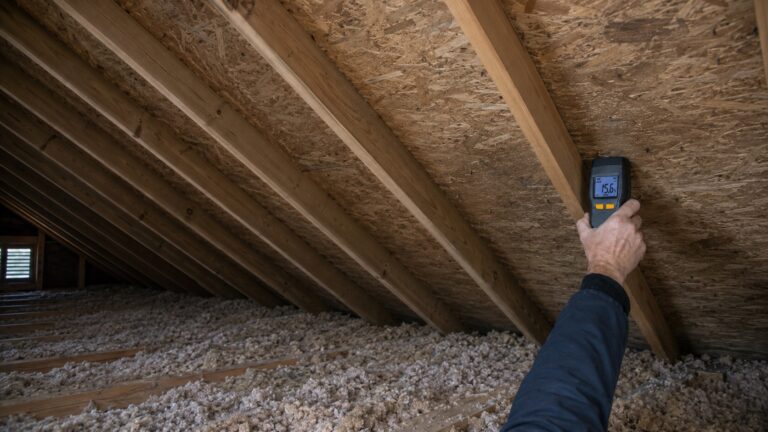
Attics are especially important because they can collect moisture from both outside and inside the home. Roof leaks can wet insulation from above, while indoor air leaks can carry humid air into the attic and cause condensation on cold surfaces.
Ceiling Stains and Overhead Warning Signs
Ceiling moisture may appear as rings, brown stains, sagging drywall, peeling paint, bubbling texture, soft spots, or recurring discoloration. A fresh stain may feel cool or damp. Older stains may look dry but still indicate that moisture entered the ceiling cavity at some point.
If the first clue is on the ceiling, use signs of ceiling water damage to narrow the warning signs before assuming the source.
Attic Insulation Moisture
Insulation can hold moisture without immediately showing a finished-room stain. Wet insulation may look compressed, discolored, matted, clumped, or darker than surrounding insulation. It may also smell musty or feel heavy compared with dry insulation.
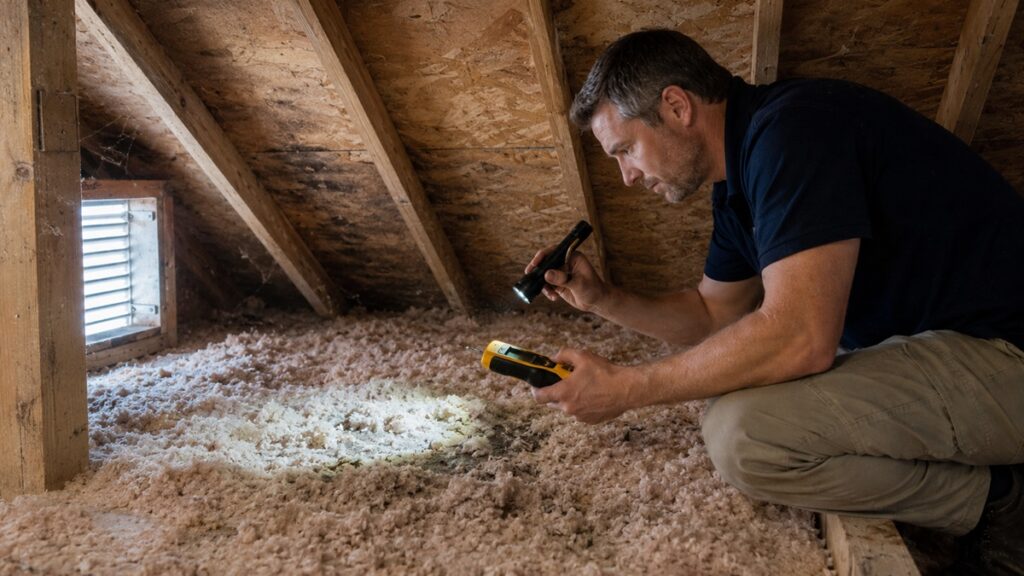
Moist attic insulation can reduce insulation performance and keep nearby wood or drywall damp. For a dedicated guide, see signs of moisture in attic insulation.
Roof Leaks, Air Leaks, Ventilation, and Condensation
Attic moisture can come from several sources. Rain-related stains may point to roof leakage, flashing failure, damaged roofing materials, or water entry around penetrations. Moisture that appears during cold weather may point toward warm indoor air leaking into the attic and condensing on cold surfaces. Moisture that appears with poor airflow may involve blocked vents or inadequate attic ventilation.
For attic-specific detection, see how to detect hidden moisture in attics. For a broader attic inspection process, use how to inspect attic areas for moisture damage. If mold-like symptoms are already visible in the attic, see signs of mold growth in attic spaces.
Hidden Moisture in Crawl Spaces and Basements
Lower areas of the home often influence moisture conditions above them. A damp crawl space can affect subfloors, joists, flooring, indoor odors, and humidity. A damp basement can affect walls, floors, stored belongings, framing, and the overall moisture load of the home.
These areas need careful inspection because moisture may not stay confined to the basement or crawl space. It can move upward through air movement, vapor, wood, insulation, and connected cavities.
Crawl Space Moisture Clues
Crawl space moisture may show up as damp soil, wet insulation, musty odor, condensation on surfaces, wood discoloration, mold-like growth, rusty metal components, standing water, or soft framing. In the living space above, it may show up as musty odors, cold floors, cupping flooring, or persistent humidity.
For symptom-based diagnosis, start with signs of moisture in crawl spaces. If the concern is hidden moisture below the living area, use how to detect hidden moisture in crawl spaces. If the problem seems connected to failed venting, compare it with signs of moisture caused by crawl space vent failure.
If you need a crawl-space inspection process, see how to inspect crawl spaces for moisture damage. If mold-like symptoms are present, see signs of mold growth in crawl spaces.
Crawl Space Airflow and Ventilation Problems
Moisture in crawl spaces is often connected to airflow and ventilation. Poor airflow can allow damp air to stay trapped. In some climates and seasons, outside air entering a crawl space can also increase condensation risk when it meets cooler surfaces.
Look for stagnant air, persistent odor, condensation, wet insulation, or moisture that does not dry after weather changes. For ventilation warning signs, see signs of poor crawl space ventilation. For airflow-specific detection, see how to detect inadequate crawl space airflow.
Basement Wall and Floor Moisture
Basement moisture can show up on walls, floors, corners, cracks, lower wall areas, stored items, or finished basement materials. The cause may be condensation, seepage, hydrostatic pressure, cracks, exterior drainage, plumbing, or foundation-related water entry.
Warning signs include damp walls, efflorescence, musty odor, peeling coatings, dark floor patches, wet corners, recurring puddles, or moisture that appears after rain. For a general basement symptom guide, see signs of moisture problems in basements.
If the concern is hidden wall moisture, use how to detect hidden moisture in basement walls. For a broader basement inspection, see how to inspect basements for moisture damage.
If the moisture appears to be entering through the wall itself, continue with how to detect basement wall leaks or how to inspect basement walls for water intrusion. If the dampness is coming through or across the floor, use how to detect basement floor leaks and how to inspect basement floors for moisture problems.
Hidden Moisture Around Exterior Walls, Windows, Doors, and Flashing
Exterior water entry often appears indoors before the homeowner sees a clear problem outside. Water can enter around siding, flashing, trim, wall penetrations, windows, doors, roof edges, or exterior wall transitions. Once inside, it may show up as interior stains, damp drywall, swollen trim, musty odor, or hidden wall moisture.
This is one of the most important reasons not to assume every interior moisture problem is caused by plumbing. If moisture appears after rain, the exterior side of the wall should be part of the inspection.
Exterior Wall Moisture
Exterior walls can hide moisture behind drywall, insulation, sheathing, siding, and trim. Warning signs inside the home may include staining near exterior walls, damp lower wall areas, musty odor, bubbling paint, or moisture near windows and doors.
For exterior-wall detection, see how to detect hidden moisture in exterior walls. For a broader inspection process, use how to inspect exterior walls for moisture damage.
Moisture Behind Exterior Siding
Siding can hide water entry because moisture may collect behind the outer surface before it reaches the interior wall. Damaged siding, failed seams, missing flashing, improper clearances, and wall penetrations can all contribute to hidden moisture.
If siding is the suspected path, see how to detect moisture behind exterior siding.
Window and Door Moisture
Windows and doors are common moisture entry points because they interrupt the wall assembly. Water can enter through failed seals, flashing problems, frame gaps, trim joints, or deteriorated exterior materials. Inside the home, this may appear as staining below the window, soft trim, peeling paint, warped flooring, or damp drywall near the opening.
If the concern is window-related, see how to detect window leaks inside walls and how to inspect window frames for water damage.
If the concern is door-related, see how to detect door leaks inside walls and how to inspect door frames for water damage.
For the broader window-and-door moisture system, see how windows and doors cause hidden moisture problems.
Flashing-Related Moisture
Flashing is meant to direct water away from vulnerable transitions. When flashing is missing, damaged, poorly installed, or overwhelmed, water may enter behind siding, around windows, near doors, at roof-wall intersections, or around exterior penetrations.
Interior signs may appear far from the flashing defect because water can move behind exterior materials before reaching the inside. For flashing-specific diagnosis, see how to detect water intrusion from flashing failures. For inspection, see how to inspect exterior flashing for damage.
If the broader issue is how water enters through exterior assemblies, see how water enters homes through structural gaps.
Hidden Moisture in HVAC Systems, Ducts, Laundry Rooms, Dryer Vents, and Garages
Hidden moisture is not limited to walls, floors, and basements. Mechanical systems and utility areas can also create moisture problems. HVAC systems, air ducts, laundry rooms, dryer vents, and garages often combine temperature differences, condensation, appliance moisture, and limited airflow.
HVAC Condensation and Drain-Related Moisture
Air conditioning systems remove moisture from indoor air, but that moisture has to drain correctly. If condensate drains clog, pans overflow, insulation is missing, ducts sweat, or airflow is poor, moisture can appear near the HVAC unit, ceiling, walls, flooring, or ducts.
Warning signs include water near the air handler, stains near vents, damp insulation, musty HVAC odors, rust, wet drain pans, or ceiling stains near HVAC equipment. For system-level warning signs, see signs of moisture problems in HVAC systems.
For detection, use how to detect moisture inside HVAC systems. For inspection, see how to inspect HVAC systems for moisture damage.
HVAC Condensation Leaks
Condensation leaks are often different from plumbing leaks because they may only appear when the system runs. Moisture may show up during cooling season, after long run times, or when the condensate drainage system is restricted.
If the signs are specifically condensation-related, see signs of HVAC condensation problems and how to detect HVAC condensation leaks.
Moisture in Air Ducts
Duct moisture may come from condensation, poor insulation, humid air, leaks, dirty duct interiors, or HVAC drainage issues. Moisture inside ducts can contribute to musty odors, staining near vents, and indoor air concerns.
For duct warning signs, see signs of moisture in HVAC ducts. For detection methods, see how to detect moisture inside air ducts.
Laundry Room and Dryer Vent Moisture
Laundry rooms contain water supply hoses, drain lines, washing machines, dryer vents, and warm humid air. Moisture may appear under flooring, behind appliances, in walls, or near dryer vent paths. Dryer vent moisture can also create staining, lint dampness, condensation, or musty odor near the vent route.
If the laundry room itself is the damp area, see why laundry rooms develop mold problems. If the warning signs are under the finished floor, compare them with signs of water damage under laundry room flooring.
If the issue involves dryer vent moisture, see signs of dryer vent moisture damage and how to inspect dryer vents for moisture problems.
Garage Wall and Floor Dampness
Garages can develop moisture from vehicle water, slab moisture, poor ventilation, exterior leaks, wall condensation, roof or flashing problems, and humid air. Because garages are often unfinished or semi-finished, moisture may appear on walls, floors, stored items, or base areas before it is noticed inside the home.
For garage moisture causes, see why garages develop moisture problems. For wall-specific detection, see how to detect moisture on garage walls. If the garage floor stays damp, see why garage floors stay damp.
How to Decide Which Area to Inspect First
When moisture could be coming from several places, the best approach is to start with the most specific clue and work outward. Do not begin by assuming the most expensive cause. Begin with the visible pattern, the timing, the nearby systems, and the materials affected.
A damp wall near a shower should be inspected differently than a damp wall below a window. A musty smell in a crawl space means something different than a musty smell behind a kitchen cabinet. A ceiling stain after heavy rain points in a different direction than a ceiling stain below an upstairs bathroom.
Match the Symptom to the Closest Moisture-Prone System
Start with the closest likely moisture source. If the symptom is near plumbing, check plumbing-related causes first. If it appears after rain, inspect exterior and roof-related areas. If it appears after HVAC use, inspect condensate and duct-related areas. If the symptom appears in a lower-level room, consider basement, crawl space, slab, or floor-system moisture.
Use this simple routing logic:
- Wall stain near plumbing: start with hidden wall leaks, pipe routes, shower walls, sink walls, or laundry walls.
- Floor swelling near appliances: start with dishwasher, refrigerator, washing machine, sink, or water heater areas.
- Ceiling stain below a bathroom: start with the bathroom floor, toilet, shower, tub, drain, and supply lines above.
- Ceiling stain after rain: start with attic, roof, flashing, vents, and roof penetrations.
- Damp lower walls in a basement: start with seepage, exterior drainage, wall cracks, and condensation patterns.
- Musty smell near exterior walls: start with windows, doors, siding, flashing, and wall cavities.
- Moisture near vents or air handlers: start with HVAC condensation, drain pans, condensate lines, and ducts.
Check Timing Before Opening Anything
Timing often narrows the cause before invasive inspection is needed. Moisture that appears after rain suggests a different source than moisture that appears after showers, appliance use, or air conditioning cycles.
If the problem appears after rain, inspect exterior walls, windows, doors, flashing, attic areas, basement walls, crawl spaces, and drainage-related areas. If it appears after shower use, inspect bathroom walls, shower surrounds, caulk, grout, ventilation, and ceilings below. If it appears after appliance use, inspect supply lines, drain lines, and flooring around the appliance.
If the problem appears during humid weather without a clear leak event, humidity and condensation should be considered. In that case, measuring indoor humidity can help. See how to test indoor humidity levels for a more focused guide.
When Multiple Areas Show Moisture
If moisture signs appear in several parts of the home, the issue may not be limited to one leak. Multiple signs can point to whole-home humidity, repeated water entry, poor ventilation, crawl space moisture, basement moisture, roof or exterior problems, or several separate issues happening at once.
For broader source diagnosis, use how to find the source of moisture in your home. If more than one area is affected, see how to diagnose multiple moisture problems in a home.
Use a Whole-Home Inspection When the Pattern Is Unclear
If you cannot tell where the moisture is coming from, a whole-home inspection approach is better than guessing. Work through the home by zones: roof and attic, exterior walls, windows and doors, bathrooms, kitchens, laundry areas, HVAC, basement, crawl space, flooring, and interior walls.
For a full process, see the whole-home moisture inspection guide. If your goal is to identify hidden moisture throughout the house, use how to identify hidden moisture problems throughout a home. To turn the process into a repeatable checklist, see how to create a moisture inspection checklist.
What to Do After You Find Hidden Moisture
Finding hidden moisture is not the same as fixing it. The most important next step is to confirm the source before covering, painting, sealing, or replacing damaged materials. If the source remains active, the damage can return even after the surface looks clean or dry.
If you are trying to judge how serious the hidden damage may be, use how to evaluate hidden water damage before deciding whether the area only needs monitoring, drying, repair, or professional inspection.
Confirm the Source Before Repairing Finishes
Before repairing drywall, flooring, trim, cabinets, or paint, identify where the moisture came from. Otherwise, the same problem may return behind the new material.
Common examples include:
- Painting over a wall stain before fixing the leak behind it
- Replacing flooring before confirming the subfloor is dry
- Cleaning bathroom mold without correcting ventilation or leakage
- Sealing a basement wall without addressing outside drainage or seepage pressure
- Replacing baseboards before checking whether the lower wall is still damp
If the same moisture pattern returns after cleanup or repair, read why moisture problems keep returning.
Dry Materials Before Closing Cavities
Moist materials should be dried before they are covered again. Closing a wall, cabinet, floor, or ceiling cavity too early can trap moisture inside. That can lead to odor, staining, material breakdown, mold growth, or repeated damage.
Drying depends on the material, amount of water, duration of exposure, airflow, humidity, and whether porous materials were affected. Some materials can dry safely. Others may need removal or replacement if they stayed wet too long or became contaminated.
Prevent the Moisture From Returning
After the source is corrected and materials are dry, the next priority is recurrence prevention. Prevention may involve plumbing repair, better ventilation, humidity control, exterior drainage, flashing repair, crawl space moisture control, basement waterproofing, or HVAC condensate correction.
For the broader prevention framework, see how to prevent recurring moisture damage.
Know When to Call a Professional
DIY inspection is useful for early clues, but some moisture problems require professional evaluation. Call a qualified professional when moisture affects structural materials, electrical areas, large wall or ceiling sections, suspected mold contamination, recurring leaks, sewage, contaminated water, or areas you cannot safely access.
You should also get professional help if hidden moisture has reached framing, subfloors, roof sheathing, crawl space joists, basement walls, or other structural components. For broader structural warning signs and repair-readiness guidance, see structural moisture problems in homes.
Frequently Asked Questions About Finding Hidden Moisture
What is the first place to check for hidden moisture in a home?
Start where the first clue appears, then inspect nearby moisture sources. If the clue is a wall stain, check what is above, behind, below, outside, and adjacent to that wall. If the clue is flooring damage, check nearby plumbing, appliances, bathrooms, crawl spaces, basements, or exterior doors. The first visible clue is the starting point, but it is not always the source.
Can hidden moisture exist if the surface feels dry?
Yes. A surface can feel dry while moisture remains inside a wall cavity, under flooring, behind trim, inside insulation, or beneath a cabinet base. Some materials dry on the surface faster than they dry internally. That is why moisture readings, comparison checks, and careful inspection may be needed when symptoms continue.
How do I know whether moisture is from a leak or condensation?
Look at timing, location, and pattern. Moisture that appears after rain, plumbing use, or appliance operation may point toward a leak. Moisture that appears during humid weather, after showers, on cold surfaces, or near poorly ventilated areas may point toward condensation. Some problems involve both, so the source should be confirmed before repairs.
Where does hidden moisture usually appear after rain?
After rain, hidden moisture often appears near exterior walls, windows, doors, ceilings, attics, basements, crawl spaces, siding transitions, roof penetrations, and flashing areas. If a stain or damp spot appears only after storms, inspect the exterior water-entry path as well as the interior symptom.
Where does hidden moisture usually appear after plumbing leaks?
Plumbing-related moisture often appears near kitchens, bathrooms, laundry rooms, water heaters, sink cabinets, shower walls, toilet areas, ceilings below bathrooms, and walls that contain supply or drain lines. Slow leaks may first show up as swelling, staining, musty odor, soft materials, or damp flooring.
Can a musty smell mean hidden moisture?
A musty smell can be a clue that moisture is trapped somewhere, but it does not identify the source by itself. Check enclosed areas such as cabinets, wall cavities, crawl spaces, basements, closets, flooring edges, HVAC systems, and areas behind trim. Odor becomes more concerning when it appears with staining, swelling, condensation, or recurring dampness.
For a more focused odor-based diagnosis, see signs odors indicate hidden moisture.
Do moisture meters always prove water damage?
No. A moisture meter can help compare suspicious areas with dry areas, but readings depend on the material, meter type, surface conditions, and user technique. A high reading is a clue that needs interpretation. It should be combined with visual signs, location, timing, and source investigation.
When should hidden moisture be inspected by a professional?
Hidden moisture should be inspected by a professional when it affects structural materials, electrical areas, large areas of drywall or flooring, suspected mold contamination, recurring water entry, sewage, contaminated water, or inaccessible cavities. Professional evaluation is also wise when you cannot identify the source or when the same moisture returns after repairs.
Final Thoughts
Finding hidden moisture is easier when you stop treating the house as one single system and start inspecting it by location. Moisture in a wall, floor, ceiling, attic, crawl space, basement, bathroom, kitchen, cabinet, HVAC system, or exterior wall can all look different because the materials and sources are different.
Start with the first clue, check the surrounding area, consider the timing, and follow the moisture path before repairing finishes. When the location points to a more specific problem, use the dedicated inspection guides linked throughout this article. That approach helps you move from a vague warning sign to a clearer diagnosis without guessing, overreacting, or covering up a moisture source that still needs to be fixed.
16 Comments
Comments are closed.